
 Deutsch
 Español
 Français
 Italiano
 Magyar
 Polski
 Slovenčina
 Čeština
A loyal customer isn't just someone who buys twice. In the UK, 42.1% of shoppers say it takes five or more purchases before they consider themselves loyal, and 68% of loyal customers choose brands over competitors even when better deals exist.
That gap matters more than most small business owners realise. A café owner sees the same face every weekday and assumes loyalty. A salon owner books a client in every six weeks and thinks the relationship is secure. Then a new place opens nearby, runs a launch offer, and some of those “regulars” disappear.
That's the daily frustration behind the search to define loyal customer. The label sounds simple, but in practice it isn't. Some customers return because the location is handy, the queue is short, or the discount works. Others come back because they trust the business, talk about it to friends, and stick around when a competitor tries to tempt them away.
That second group is the one that changes a business.
For a neighbourhood café, salon, or restaurant, the key question isn't “Who came back?” It's “Who would still choose this business if another option was cheaper, closer, or louder on social media?” Once that question gets answered properly, retention stops feeling vague and starts becoming manageable.
More Than Just Another Regular
A familiar scene plays out every week in local businesses. Someone comes in often enough that staff know the order, maybe even the name. The owner starts thinking, “That customer's loyal.”
Sometimes that's true. Sometimes it's just habit.
A commuter may stop at the same café because it sits between the station and the office. A salon client may rebook because changing stylists feels inconvenient. A restaurant guest may come back because the family already knows the menu. None of that is bad. Repeat custom keeps the till moving. But repeat custom and loyalty aren't the same thing.
When regulars are only regulars
The confusion starts because many shoppers define loyalty in broad terms. In the UK, 67.2% of shoppers define loyalty as buying from the same brand, 42.1% say they need to make five or more purchases before considering themselves loyal, and loyalty to physical retailers sits at 39.5% compared with 20.3% for online brands, according to Yotpo's UK consumer loyalty report.
That tells a small business owner two useful things.
- Repeat buying matters: Customers often use repeat visits as their own test for loyalty.
- Offline businesses have an edge: Physical venues like cafés, salons, and restaurants are in a stronger position to build loyalty than online-only brands.
- The threshold is higher than one or two visits: A customer who's only just started returning hasn't reached loyalty yet in their own mind.
A regular customer is familiar. A loyal customer is committed.
Why the distinction matters on a busy Tuesday
A business owner usually notices loyalty only when it's under pressure. The nearby competitor offers a launch discount. A delivery app promotes someone else. A customer asks whether points can be used next time, then vanishes for a month.
That's when vague definitions stop being useful.
If a business treats every repeat customer as equally loyal, it makes poor decisions. It hands out discounts to people who'd leave anyway. It misses the customers who are becoming advocates. It mistakes convenience for commitment.
For a small business with limited time and budget, that mistake is expensive. The goal isn't to collect more casual repeat visits at any cost. The goal is to spot the people who are becoming part of the business's long-term base and give them reasons to stay.
What Is a Loyal Customer Really
A practical definition has to separate two different behaviours. One customer returns because the offer is good enough. Another returns because the business means something to them.
Those aren't the same relationship.
The two types of loyalty
The easiest way to define loyal customer behaviour is to split it into two groups.
| Customer type | What drives them | What they do | Main risk |
|---|---|---|---|
| Transactional loyalist | Price, convenience, routine | Comes back when it's easy or rewarding | Leaves when a better offer appears |
| Emotional advocate | Trust, preference, identity, experience | Repeats, recommends, forgives small mistakes | Harder to win, but far harder to lose |
This is the difference between an acquaintance and a close friend. Both may show up. Only one chooses the relationship on purpose.
The transactional loyalist
A transactional loyalist isn't worthless. Far from it. This customer may visit often, redeem offers, and respond well to simple rewards. For many businesses, they form a large part of weekly revenue.
But they are price-sensitive and situation-sensitive. If parking gets easier somewhere else, if the rival café adds a stronger discount, or if booking becomes simpler at another salon, they can move quickly.
That's why businesses need a clearer view of customer loyalty than just “they've been here a few times.”
The emotional advocate
The emotional advocate is the customer most owners talk about when they say, “They're one of our best.” This person doesn't just buy. They choose.
Data from Visa UK says 68% of loyal UK customers choose brands over competitors even when better deals exist, and the same source says 42% of UK retailers offer identical rewards to ‘repeat' and ‘committed' customers, wasting an average of £12,500 annually in the process, according to Visa UK's guidance on loyal customers.
That's the missed opportunity. A business gives the same reward to the customer who's bargain-hunting and the customer who's already advocating. One may need a nudge to return. The other may need recognition, access, and a reason to deepen the relationship.
Practical rule: If two customers spend similarly but only one recommends the business, defends it, or keeps choosing it when competitors discount heavily, they should not be treated the same.
What works and what doesn't
What works:
- Separate reward logic: Use one set of incentives to prompt repeat visits and another to recognise advocacy.
- Track behaviour beyond purchases: Recommendations, review activity, pre-booking, and wider category buying all matter.
- Reduce friction: Emotional loyalty grows faster when the customer experience feels easy and consistent.
What doesn't:
- Blanket discounts for everyone
- Paper cards with no customer history
- Assuming frequency equals commitment
A loyal customer, in the useful business sense, is a repeat buyer who has moved into preference and advocacy. That's the customer worth identifying on purpose.
The True Value of a Loyal Customer to Your Business
Many owners still treat loyalty as a discount problem. They think the job is to give away just enough to keep people returning.
That framing misses the true value.
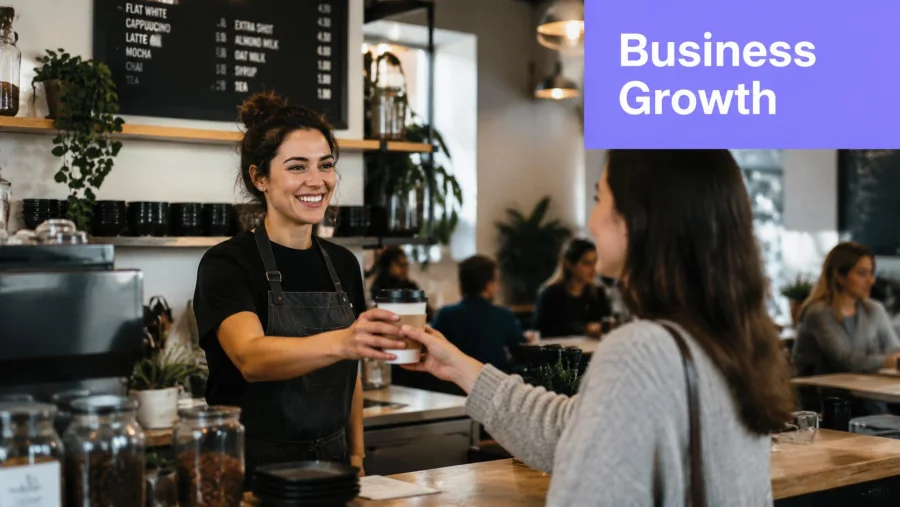
Loyal customers stabilise the business
A genuine advocate gives a business something every owner wants more of. Predictability. They don't just appear when a coupon lands. They build a pattern the business can plan around.
That changes everyday decisions:
- staffing gets easier
- stock planning gets tighter
- cash flow becomes less erratic
- marketing feels less desperate
A loyal customer also tends to buy across more moments. In a café, that might mean weekday coffee, weekend brunch, and a bag of beans to take home. In a salon, it can mean regular appointments plus retail products. In a restaurant, it may mean date night, family meals, and special occasions.
Loyal customers lower the cost of growth
Small businesses often overspend trying to replace people they should have kept. Loyal customers reduce that pressure because they create their own momentum.
They do things paid ads can't do well:
- They reassure new buyers: A recommendation from a friend carries more weight than a promotion.
- They forgive small slips: One off-day doesn't automatically end the relationship.
- They give useful feedback: They care enough to point out what needs fixing.
A loyal customer isn't a cost centre for discounts. They're one of the business's most profitable marketing assets.
Loyal customers protect reputation
The highest-value customers often become informal brand defenders. They reply to a friend asking for a recommendation. They mention the business in a group chat. They leave a positive review after a problem gets handled well.
That doesn't show up neatly on a paper stamp card, but it affects revenue.
A business with a base of advocates is also less exposed to copycat competitors. Another café can match price. Another salon can copy a treatment menu. Another restaurant can run opening offers. What they can't easily copy is the customer relationship that has been built through consistency, trust, and recognition.
What owners should take from this
The most valuable loyalty isn't just repeat spend. It's repeat spend with preference attached.
That means the smartest loyalty investment often isn't a deeper discount. It's a better experience, easier redemption, and clearer recognition of customers who are already leaning in.
How to Measure Real Customer Loyalty
Most owners don't need complicated dashboards to get started. They need a way to stop guessing.
The cleanest approach is to track two things separately. First, what customers do. Second, what customers feel.
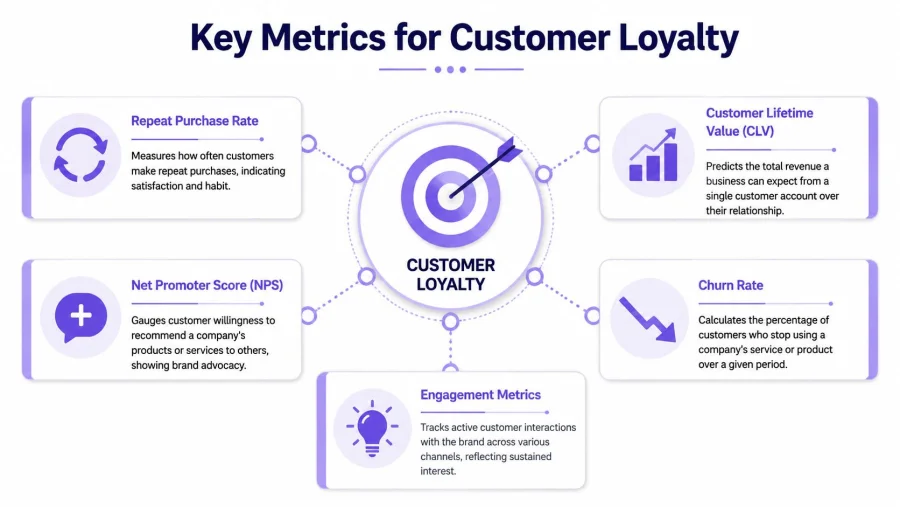
Behavioural metrics
Behavioural metrics show whether the customer is building a pattern with the business.
A useful benchmark comes from CustomerGauge's guide to measuring customer loyalty, which notes that a loyal customer is defined by Customer Retention Rate over 85% and a high Customer Lifetime Value. The same source states that, in the UK café sector, customers with an NPS of +70 or higher are 4.2 times more likely to become repeat buyers, and that low Customer Effort Score is a top predictor of loyalty.
For an owner, those ideas become practical when translated into simple questions.
Repeat purchase pattern
This is the first place to look. Is the customer coming back often enough to show habit, not coincidence?
Signs to watch:
- Steady frequency: They return on a recognisable rhythm.
- Broadening spend: They start trying more than one product or service.
- Consistent redemption: They use rewards because they understand them, not because staff had to explain them three times.
Retention
Retention answers a tougher question. Are customers staying with the business over time?
For restaurants and cafés, that often means looking at visit gaps. If someone used to come weekly and now hasn't appeared in a month, that matters. For salons, it means tracking whether clients rebook within a normal cycle. For anyone who wants a straightforward walkthrough, this guide on calculating retention for restaurants makes the process easier to apply.
Customer lifetime value
CLV sounds technical, but the logic is simple. Which customers are worth the most across the whole relationship, not just one transaction?
A customer who spends modestly but returns for years can be more valuable than one customer with a single large bill.
Attitudinal metrics
Behaviour tells part of the story. Attitude tells the rest.
Net Promoter Score
NPS measures whether a customer would recommend the business. It's not perfect on its own, but it's useful because recommendation signals advocacy, not just satisfaction.
Ask a simple question after a visit or service: how likely are they to recommend the business? Then compare the answer with actual repeat behaviour. The strongest advocates usually score highly and act like it.
Customer Effort Score
This metric matters because customers often stay loyal to businesses that feel easy to deal with. If signing up, earning, redeeming, booking, or checking rewards feels awkward, loyalty weakens.
A low-effort experience usually means:
- Joining is quick
- Rewards are clear
- Redemption doesn't create staff confusion
- Customers can see progress without asking
If a reward takes too much explaining at the till, the business is creating friction where it should be building loyalty.
A simple scorecard for small businesses
A small business doesn't need a data team. It needs a basic review habit. Once a month, sort customers into a short scorecard:
| Signal | What it suggests |
|---|---|
| Repeats often | Habit is forming |
| Spend broadens over time | Trust is increasing |
| Recommends others | Advocacy is present |
| Engages with offers without confusion | Experience is low effort |
| Returns after a mistake or problem | Relationship is resilient |
Customers who only show the first signal are likely repeat buyers. Customers who show several are closer to real loyalty.
What not to measure in isolation
Some businesses make loyalty decisions based on one number only. That's where things go wrong.
Avoid these traps:
- Counting visits alone: Frequency can come from convenience.
- Watching redemption alone: A customer may love offers, not the business.
- Using positive feedback alone: A pleasant comment isn't the same as long-term commitment.
The strongest definition combines behaviour and attitude. That's how a business can define loyal customer value in a way that supports better decisions.
Loyalty in Action Examples from Your Sector
Theory matters less than recognition. Owners usually know loyalty when they can picture it in their own shop.
In a café
The obvious regular is the person who buys a flat white every weekday at 8:15. That customer matters, but the deeper signal comes from what happens next.
The stronger loyalty pattern looks like this:
- They widen the relationship: They start buying lunch, pastries, or retail beans.
- They bring people in: Colleagues get introduced to the café because this customer suggested it.
- They stay through small inconveniences: A queue, a changed shift pattern, or one off drink mistake doesn't send them elsewhere.
That's closer to advocacy than routine.
In a salon
A repeat client books, turns up, pays, and leaves. A loyal client behaves differently. They pre-book future appointments, ask for the same stylist by name, buy recommended products, and mention the salon to friends.
They also tend to trust guidance. If the stylist suggests a treatment plan instead of a one-off appointment, they listen. That trust is a sign of loyalty because it shows confidence in the business, not just the transaction.
Salon owners who want a practical outside perspective on service and retention may find this guide to enhancing salon client loyalty useful, especially when reviewing the client journey from booking to follow-up.
In a restaurant
A repeat guest may come back because the menu is nearby and familiar. A loyal guest makes the restaurant part of family life. They book birthdays, bring visiting friends, recommend specific dishes, and return for occasions that matter.
That customer doesn't just remember the food. They remember how the place made people feel.
The strongest loyalty shows up when customers attach personal moments to the business.
Why loyalty programmes still matter
Even in highly price-sensitive sectors, structured loyalty still shapes behaviour. In the UK, 97% of shoppers belong to at least one supermarket loyalty scheme, and those programmes accounted for over £5 billion in sales between November 2023 and January 2024, according to the UK government review of grocery loyalty pricing.
That matters because it proves a simple point. Customers are already trained to engage with loyalty mechanics. The challenge for small businesses isn't convincing people that rewards exist. It's building a scheme that moves customers from repeat purchase into genuine preference.
For a café, salon, or restaurant, the best examples of loyalty are usually visible before they're ever measured. The customer uses more of the business, talks about it to other people, and keeps returning for reasons that go beyond the deal.
Your Next Steps Identify and Grow Loyalty with BonusQR
Most small businesses still run loyalty in a black box. A paper card gets stamped. A discount gets given. The owner knows some customers come back more often than others, but can't clearly tell who's drifting, who's growing, and who's becoming an advocate.
That's the core problem.
Start with identification
Before trying to “improve loyalty”, a business needs to sort customers into practical groups:
- New and unproven
- Repeating but price-sensitive
- Consistent and growing
- Advocating and worth protecting
That sorting can be done with any organised system that tracks visit history, redemption behaviour, and customer response over time. Good loyalty tracking should also support low-effort use at the counter because complexity undermines the relationship.
Then make loyalty easier to act on
A digital system helps because it turns vague impressions into usable signals. Staff can see who visits often, which rewards get used, and whether customers respond to targeted offers or ignore them.
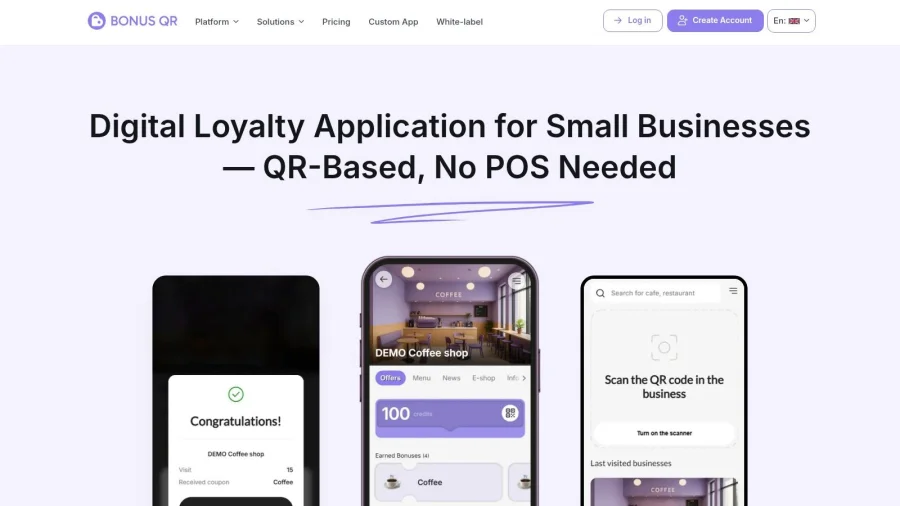
One option is digital loyalty solutions such as BonusQR, which lets brick-and-mortar businesses run QR-based rewards without extra hardware, track customer history, and send targeted offers through a single system. That kind of setup is useful because it links earning, redemption, and customer data in one place instead of scattering it across paper cards, staff memory, and till notes.
For owners comparing ways to improve repeat visits and keep programmes practical, this article on customer retention strategies is also a worthwhile read.
What to do this week
A business doesn't need a big relaunch to start improving loyalty. It needs a short list of actions.
- List ten best customers: Not just highest spenders. Include the people who recommend, rebook, and return steadily.
- Mark the signs of advocacy: Who brings others, buys across categories, or sticks with the business when something goes wrong?
- Remove friction from rewards: If customers or staff get confused, simplify the process.
- Stop treating every repeat buyer the same: Different behaviours deserve different follow-up.
- Review monthly: Look for movement from repeat purchase into preference and advocacy.
Businesses grow more safely when they stop guessing who is loyal and start recognising loyalty as a pattern.
If the goal is to define loyal customer behaviour in a way that improves retention, the answer is simple. Don't stop at repeat visits. Look for preference, trust, ease, and advocacy. Once those signals are visible, loyalty stops being a vague hope and becomes something the business can measure, strengthen, and protect.