
 Deutsch
 Español
 Français
 Italiano
 Magyar
 Polski
 Slovenčina
 Čeština
Customer retention strategies for small businesses are proven methods to increase repeat business and profitability through consistent, attentive customer engagement. Retaining an existing customer costs far less than acquiring a new one, and the financial case is clear: boosting retention by just 5% can increase profits by 25–95%. Returning customers also purchase 4.22 times more frequently than new ones. That frequency advantage compounds over time, making retention the single most reliable driver of sustainable revenue for a small business. This guide covers the strategies, metrics, and practical steps that actually work in 2026.
What are the most effective customer retention strategies for small businesses?
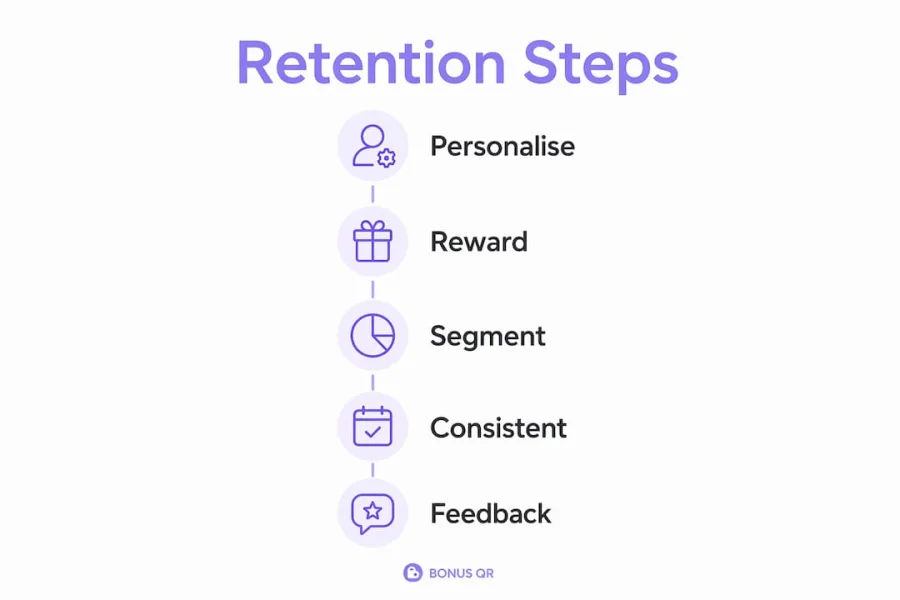
The most effective customer retention strategies for small businesses combine personalised communication, structured loyalty programmes, and consistent follow-up. None of these require expensive software or a large marketing budget. What they do require is discipline and a genuine interest in your customers’ experience.
Personalised communication
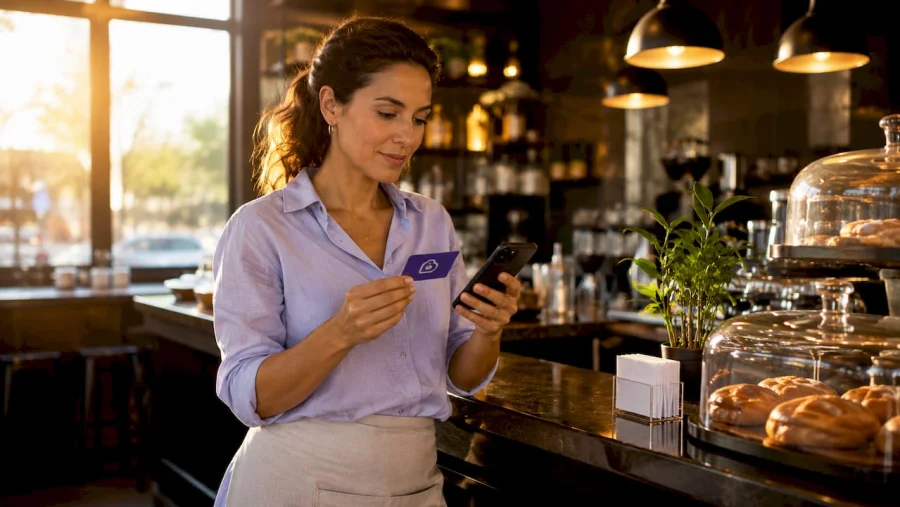
Customers respond to being treated as individuals, not as order numbers. Address customers by name in emails, reference their previous purchases, and send relevant offers rather than blanket promotions. A local bakery that messages a customer on their birthday with a discount on their favourite product creates a moment of connection that no paid advert can replicate. Personalisation signals that you pay attention, and that signal builds loyalty.
Loyalty programmes and reward systems
A well-designed loyalty programme gives customers a concrete reason to return. Points systems, stamp cards, cashback rewards, and visit-based incentives all work by making the next purchase feel like progress toward something valuable. The key is simplicity. If customers cannot explain how your programme works in one sentence, it is too complicated. Start with a digital stamp card or a straightforward points system before adding layers.
Email marketing with segmentation
Email marketing delivers an average return of £36 for every £1 spent when segmentation and automation are applied. That return is achievable for small businesses using basic email platforms. Segment your list by purchase history, visit frequency, or product category. Then send targeted messages that match each group’s behaviour. A customer who bought once six months ago needs a different message than one who buys every fortnight.
Consistency and clear communication
Retention succeeds through small, consistent positive experiences rather than costly one-off campaigns. Reliable communication, professional courtesy, and predictable service quality matter more than any single promotion. Customers return to businesses they trust, and trust is built through repetition. Set a regular communication rhythm, whether that is a monthly newsletter, a post-purchase follow-up email, or a simple thank-you message after a visit.
Here is a summary of the core tactics and what each one delivers:
- Personalised outreach: Increases emotional connection and reduces the likelihood of switching to a competitor.
- Loyalty rewards: Creates a financial incentive to return and raises the perceived cost of leaving.
- Segmented email campaigns: Delivers relevant content that drives repeat purchases without annoying customers with irrelevant messages.
- Consistent service quality: Builds the trust that underpins all other retention efforts.
- Referral incentives: Turns loyal customers into advocates who bring in new buyers at low acquisition cost.
- Post-purchase follow-up: Catches problems early and signals that you value the relationship beyond the transaction.
Pro Tip: Focus your first retention efforts on customers who have made two or more purchases. Customers with repeat purchases deliver better ROI than price-sensitive first-time buyers who were attracted by a discount.
How can small businesses measure and improve customer retention?
Measuring retention does not require a data analyst or expensive software. Three metrics give you a clear picture of where you stand and where to focus.
Key retention metrics explained
Purchase frequency measures how often a customer buys from you within a set period. A rising purchase frequency means your retention efforts are working. A flat or falling frequency is an early warning sign.
Customer churn rate is the percentage of customers who stop buying within a given timeframe. Calculate it by dividing lost customers by your total customers at the start of the period. A high churn rate tells you that customers are not finding enough reason to return.
Net Revenue Retention (NRR) tracks whether your existing customer base is generating more or less revenue over time. An NRR above 100% means expansion from existing customers offsets any losses from churn. This metric is most relevant for subscription-based or service businesses, but any small business can adapt the principle by tracking average spend per returning customer.
| Metric | What it measures | Healthy benchmark | How to track it |
|---|---|---|---|
| Purchase frequency | How often customers return | Rising month on month | Point-of-sale or CRM records |
| Churn rate | Percentage of customers lost | As low as possible; varies by sector | Customer list comparison |
| Net Revenue Retention | Revenue growth from existing customers | Above 100% for subscription models | Revenue reports by customer segment |
| Customer satisfaction score | How happy customers are after a purchase | Above 8 out of 10 | Post-purchase survey |
The 30–90 day window
Early value validation within 30–90 days significantly reduces churn. This means ensuring a new customer experiences a clear benefit from your product or service within their first three months. For a café, that might mean a stamp card that rewards a free drink after ten visits, giving the customer a goal to work towards from day one. For a service business, it means delivering a visible result early in the relationship.
Feedback collection without complexity
Simple tools like Google Forms provide sufficient data for meaningful retention improvements without advanced analytics. Send a three-question survey after every purchase or service interaction. Ask what went well, what could be better, and whether the customer would recommend you. The answers will surface patterns you cannot see from sales data alone. Customer feedback consistently drives measurable revenue growth when acted upon systematically.
Pro Tip: Review your feedback responses every month and identify the single most common complaint. Fix that one issue before adding any new retention initiative. Removing friction is more powerful than adding rewards.
What common mistakes should small businesses avoid in customer retention?
Most retention failures come from neglecting the basics, not from a lack of technology. Recognising these mistakes early saves time, money, and customers.
-
Prioritising acquisition over retention. Spending the majority of your marketing budget on attracting new customers while ignoring existing ones is the most common and costly error. A new customer costs significantly more to acquire than it costs to keep an existing one happy.
-
Over-investing in technology before mastering communication. Small business owners often misunderstand retention as requiring complex software. A well-timed personal phone call or a handwritten thank-you note often outperforms an automated email sequence in building genuine loyalty.
-
Ignoring or not collecting feedback. The absence of structured feedback systems is a major retention failure in small businesses. Without feedback, you cannot identify the problems that are quietly pushing customers away.
-
Targeting the wrong customers. Directing retention spend at price-sensitive bargain hunters who only bought during a sale wastes resources. These customers leave the moment a cheaper option appears. Focus your loyalty efforts on customers who have demonstrated genuine interest by returning at full price.
-
Inconsistent communication. Going silent between purchases and then sending a promotional message feels transactional. Customers notice when contact only happens when you want something from them. Build a rhythm of communication that includes value, not just offers.
-
Making loyalty programmes too complicated. A programme with too many tiers, confusing point calculations, or hard-to-redeem rewards frustrates customers rather than rewarding them. Simplicity drives participation.
-
Failing to personalise at scale. Sending the same message to every customer on your list signals that you do not know them. Even basic segmentation by purchase history makes a measurable difference to open rates and repeat purchases.
How to build a practical customer retention plan for your small business
A customer retention plan does not need to be a lengthy document. It needs to be a set of habits and processes you can actually maintain. Follow these steps to build one that works at small business scale.
-
Audit your current customer base. Pull your sales records and identify customers who have bought more than once in the past six months. These are your most valuable customers. Note their purchase frequency, average spend, and any patterns in what they buy. This group is your retention priority.
-
Set up a simple feedback loop. Create a short post-purchase survey using Google Forms or a similar free tool. Send it automatically after every transaction. Review responses monthly and log recurring themes. This gives you a live signal of what is working and what is not.
-
Choose one loyalty mechanism and launch it. A digital stamp card, a points programme, or a cashback offer are all viable starting points. Pick the one that fits your business model and your customers’ habits. Loyalty card programmes work particularly well for businesses with frequent, low-value transactions such as cafés, salons, and retail shops. Launch it, communicate it clearly, and give it three months before evaluating results.
-
Build a communication calendar. Decide how often you will contact customers and what each message will contain. A monthly newsletter, a post-purchase thank-you, and a birthday offer are a solid starting framework. Write the templates in advance so the habit is easy to maintain. Consistency matters more than creativity here.
-
Segment your email list. Divide your customers into at least two groups: those who have bought recently and those who have not purchased in 90 days or more. Send different messages to each group. Recent buyers need reinforcement and upsell opportunities. Lapsed customers need a reason to return, such as a time-limited offer or a personal check-in.
-
Track purchase frequency monthly. Set a reminder on the first of each month to compare this month’s repeat purchase rate with last month’s. A rising number confirms your retention efforts are working. A falling number tells you to revisit your communication or loyalty offer before the trend worsens.
-
Maintain the human touch alongside any automation. Authentic human connection must not be lost to automation if you want to maintain trust and reduce churn. Automate the routine tasks, such as post-purchase emails and birthday messages, but make time for personal interactions with your highest-value customers. A phone call or a face-to-face conversation with a loyal customer is worth more than any automated sequence.
The purchase probability triples from the first to the sixth customer interaction. That means every follow-up, every loyalty reward, and every personalised message moves a customer closer to becoming a reliable, long-term buyer. The plan above is designed to generate those interactions systematically, without requiring a large team or a significant budget. You can find a detailed breakdown of practical retention tactics worth implementing alongside this framework.
Key takeaways
Consistent, personalised engagement with existing customers delivers a higher return on investment than any acquisition campaign a small business can run.
| Point | Details |
|---|---|
| Retention ROI is significant | A 5% increase in retention can raise profits by 25–95%, making it the highest-return marketing activity. |
| Focus on repeat buyers first | Customers with two or more purchases deliver better ROI than price-sensitive first-time buyers. |
| Measure three core metrics | Track purchase frequency, churn rate, and customer satisfaction to identify problems early. |
| Simplicity drives loyalty programme success | A stamp card or points system customers can explain in one sentence outperforms complex tiered schemes. |
| Consistency beats campaigns | Daily communication habits and reliable service quality retain customers more effectively than one-off promotions. |
Why retention is a daily habit, not a quarterly campaign
I have worked with small business owners who spent months planning a loyalty programme launch, complete with printed cards, a social media push, and a special event. Six months later, the programme had stalled. The cards sat in a drawer, the social posts had stopped, and customers had forgotten it existed. The problem was not the programme. The problem was that retention had been treated as a project with a start date and an end date, rather than a permanent part of how the business operates.
The businesses I have seen retain customers most effectively do not have the flashiest loyalty schemes. They have owners who remember customers’ names, staff who follow up after a complaint without being asked, and communication that arrives reliably rather than sporadically. Daily consistency and clarity in communication are what make customers feel valued beyond the transaction. That feeling is what keeps them coming back.
One insight I would stress to any small business owner is the importance of knowing which customers are actually worth retaining. Not every customer deserves equal attention. The ones who buy regularly, refer friends, and engage with your communications are your real asset. Spending retention budget on customers who only appear during sales events is a poor use of limited resources. Segment your list, identify your loyal core, and invest your energy there first.
Technology has a role to play, but it should support your human relationships, not replace them. A push notification from a loyalty app is useful. A personal message from the owner is memorable. The small business advantage is proximity to customers. Use it.
— Michal
How Bonusqr helps small businesses retain more customers
Building a retention system from scratch takes time, but the right tools make it significantly faster. Bonusqr is a loyalty platform built specifically for small businesses that want to launch a customer loyalty card programme without complex setup or POS integration. It supports stamp cards, points collection, cashback, and coupon distribution, all managed through a mobile and web app your customers can use immediately. Push notifications and real-time analytics give you visibility into who is engaging and who is drifting. For businesses that want a fully branded experience, Bonusqr also offers a white-label loyalty app that carries your business identity. Pricing starts with a free tier, making it accessible at any stage of growth.
FAQ
What is the most cost-effective retention strategy for a small business?
Consistent, personalised communication combined with a simple loyalty programme delivers the highest return for the lowest cost. Email marketing with basic segmentation produces strong results without significant spend.
How quickly can retention strategies show results?
Initial improvements in purchase frequency are typically visible within 30–60 days of implementing structured retention efforts. Full results from a loyalty programme or segmented email strategy usually emerge within 3–6 months.
How do I measure whether my retention efforts are working?
Track purchase frequency and churn rate monthly. A rising purchase frequency and a falling churn rate confirm that your retention programme is having a positive effect.
Do small businesses need special software to retain customers?
No. Simple tools such as Google Forms for feedback, a basic email platform for segmented campaigns, and a digital stamp card cover the core requirements. Software helps at scale, but consistent communication matters more than the tools you use.
How often should I contact existing customers?
Contact existing customers at least once a month with content that is relevant to their purchase history or interests. Post-purchase follow-ups should go out within 48 hours of a transaction to reinforce the relationship while the experience is still fresh.