
 Deutsch
 Español
 Français
 Italiano
 Magyar
 Polski
 Slovenčina
 Čeština
Coupon abuse is a solvable, measurable leakage problem. It is also widespread, often automated and sometimes simply a policy gap rather than deliberate fraud. The fastest fixes are limiting redemptions per customer, rate limiting code entry, adding bot checks and aligning promo rules with your product catalogue. These changes span both engineering and campaign design, and none of them work without ongoing measurement.
TL;DR:
- Flag codes whose redemptions exceed their distribution size, cluster by device or IP, surge rapidly, or coincide with rising conversion costs and falling order values.
- Use tokens validated on the server, rate limits, and idempotent redemption logic, and reserve CAPTCHA checks for suspicious activity rather than every customer.
- Use named, single use codes for targeted campaigns and generic codes only for broad, modest offers; cap redemptions and verify partner activity.
- Keep ecommerce, point of sale, and promotion systems synchronized, then quarantine suspicious bursts and track prevented loss, conversion cost, and false positives monthly.
At-a-glance checklist: immediate controls to apply before your next campaign
Before your next promotion goes live, run through a short list of controls that catch most abuse without slowing down genuine shoppers.
- Set a per-customer and per-code redemption limit so one account or one code cannot be reused indefinitely.
- Choose the right code type for the risk level: single-use, user-bound codes for high-value offers; generic codes only for low-risk, broadly publicised campaigns.
- Rate-limit code-entry endpoints and add bot checks when entry attempts spike or come from suspicious patterns.
- Lock promo eligibility to specific SKUs or categories so a code cannot be applied to products it was never meant to discount.
- Restrict which channels can distribute a code and audit partner or affiliate activity regularly.
None of these controls needs to be perfect on day one. Applying even three or four consistently will close most of the obvious gaps that cost-inflation fraud and casual misuse rely on.
How to spot coupon abuse: detection signals, metrics and examples
Abuse rarely announces itself. It hides inside numbers that look almost normal, so the signals worth tracking are relative, not absolute.
- Redemption rate per code: a healthy campaign has a predictable ceiling; a code redeemed far beyond its distribution size is a red flag.
- Redemptions clustered by IP address or device fingerprint, especially many redemptions from a small number of devices.
- Redemption velocity: a burst of redemptions in minutes rather than the hours or days a normal campaign takes to spread.
- Refund or return rates that climb alongside a promotion, suggesting the discount itself is being gamed rather than the product being wanted.
A sudden rise in cost per conversion alongside flat or falling average order value is one of the clearest outcome-ratio warnings described in OWASP’s cost-inflation fraud guidance, because attackers script valid features to inflate charges while traffic still looks ordinary. Build a dashboard that plots redemptions against conversion cost and order value together, and set alerts for divergence rather than for raw volume alone.
Technical controls: engineering measures that stop automated and mass abuse
Operational rules only hold if the underlying systems enforce them. OWASP’s Cornucopia BOT2 companion describes how attackers abuse legitimate application features at scale to inflate costs, and recommends monitoring usage, enforcing limits and blocking bots at the infrastructure level.
- Apply rate limits and throttles to redemption APIs so no single session can attempt hundreds of codes per minute.
- Deploy bot detection and device fingerprinting, reserving CAPTCHAs for flows that already show suspicious velocity rather than for every customer.
- Use single-use tokens or HMAC-signed voucher codes validated server-side, so a code cannot be guessed, replayed or shared beyond its intended use.
- Guard against race conditions with idempotent redemption logic, so two near-simultaneous requests cannot both succeed against a one-time code.
- Log enough telemetry (timestamps, device IDs, IP ranges, order values) to support rules-based or machine-learning anomaly detection later.
OWASP’s Cornucopia C9 card makes a related point: features used too quickly or too often become functionality misuse, and the fix is the same combination of rate limiting and usage monitoring rather than blanket restrictions that frustrate genuine customers.
Pro Tip: Log redemption attempts, not just successful redemptions, so you can see throttled or blocked attempts and spot a scripted attack before it succeeds.
Operational controls: how marketing and ops should design campaigns to limit exposure
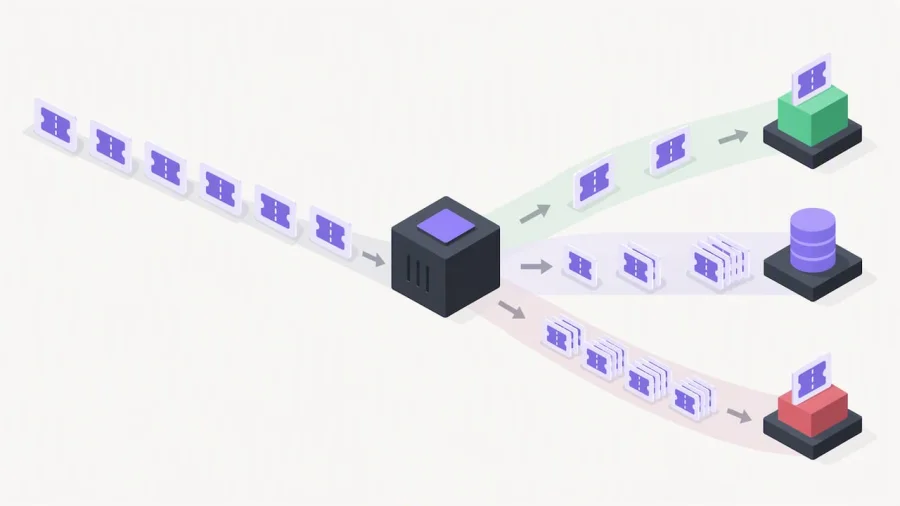
Engineering controls stop automated attacks; campaign design stops policy abuse, and both need to be decided before launch, not patched afterwards.
- Match the code format to the distribution channel: single-use, named codes for influencer or email campaigns; generic codes only when the audience is broad and the discount is modest.
- Set per-order and per-customer caps, and add a minimum spend threshold where it makes sense, so a discount cannot be stacked into a loss-making order.
- Vet affiliates and partners before giving them codes to distribute, and keep issuance logs auditable so you can trace a leak back to its source.
- Write clear terms and conditions with explicit expiry windows and eligibility rules, which also keeps you aligned with guidance from the Federal Trade Commission on avoiding misleading or unenforceable promotion terms.
These rules cost little to design but save real margin once a campaign scales beyond a handful of redemptions.
Systems integration: aligning catalogue, loyalty and promo systems to avoid accidental leakage
Most accidental coupon leakage is not fraud at all. It is a sync failure between the systems that define what a promotion covers and the systems that actually process it.
- Keep SKU, price and eligibility data synchronised across your ecommerce platform, point of sale and promo engine, so a code cannot apply to a product it was never meant to touch.
- Bind promo rules directly to catalogue attributes (category, brand, price tier) rather than to a static product list that goes stale.
- Integrate loyalty and coupon systems so points and discounts cannot be double-counted or combined into an unintended stack.
- Test promo logic in staging and roll it out behind feature flags, catching mismatches before a campaign goes live rather than after redemptions start.
A promotion that behaves correctly in isolation can still leak money the moment it meets an out-of-date catalogue feed.
Monitoring and response: detect, triage and recover from abuse incidents
Detection only pays off with a response process behind it. Build a short, repeatable workflow rather than reacting case by case.
- Define automated quarantine thresholds (redemption velocity, device clustering) that pause a code automatically rather than waiting for a human to notice.
- Create a manual-review queue with a clear decision checklist: confirm the pattern, check for a legitimate explanation, then approve, void or escalate.
- Recovery options include voiding specific redemptions, reversing credits, blocking the accounts or devices involved and updating the rule that let the pattern through.
- Escalate confirmed organised schemes, counterfeit codes or identity fraud to the relevant authority; the FBI’s investigations resources outline when large-scale or organised fraud moves from a business problem into a criminal one.
Prevented loss, change in cost per conversion and false-positive rate are the three KPIs worth tracking monthly, because they show whether your controls are catching real abuse without penalising genuine customers.
Publisher perspective: how a configurable loyalty platform supports abuse prevention
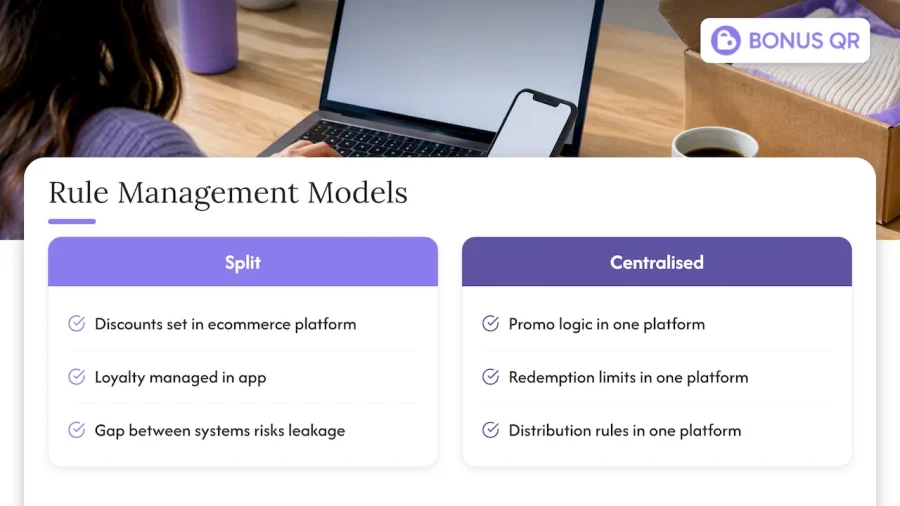
Most coupon abuse we see in loyalty programmes traces back to fragmented rule management rather than clever fraud: one team configures a discount in the ecommerce platform, another manages it in the loyalty app, and the gap between them is where leakage happens. Centralising promo logic, redemption limits and distribution rules in a single platform removes that gap by design, because there is only one place a rule can be set incorrectly rather than three.
The uncomfortable truth is that most businesses discover their exposure only after a campaign has already been exploited, usually through a spike in redemptions nobody was watching for. Catching that earlier depends less on sophisticated fraud scoring and more on having redemption data visible in one dashboard from day one.
— Michal
How BonusQR helps with coupon abuse prevention
We built our loyalty platform around the same controls this article describes: single-use and user-bound codes, redemption limits, and centralised rule management that keeps promo logic consistent across your stamp cards, cashback offers and coupon distribution rather than scattered across separate systems. You can launch a controlled campaign and watch its analytics in real time without waiting on a technical project.
- Set per-customer redemption limits and choose single-use or multi-use codes in the platform.
- Monitor redemption activity through analytics rather than exporting data to a separate tool.
- Scale into a branded app or a custom build as your promotions grow more complex.
Our Free, Basic and Premium plans start with no published price for the Free tier, €19 a month for Basic and €69 a month for Premium, and larger businesses can add a White-label Setup for a €690 one-off fee with a €69 monthly subscription. If you would rather have a bespoke build, our Custom App Development service starts from €1,500 one-off with Monthly Maintenance from €69 a month. Check the pricing page to see which tier fits your next campaign.
FAQ
Is couponing still a thing in 2026?
Yes, coupons remain a standard part of retail and ecommerce marketing, though distribution has shifted heavily towards digital codes, loyalty apps and personalised offers rather than printed inserts. Businesses still use coupons to drive trial, clear stock and reward loyalty, which keeps abuse prevention relevant.
Is couponing illegal?
Couponing itself is legal, but counterfeiting, reproducing or redeeming coupons fraudulently is not, and schemes involving physical coupon tampering have been investigated by agencies such as the United States Postal Inspection Service. Large-scale or organised fraud can also become a matter for federal law enforcement.
What are the rules and regulations for couponing?
There is no single coupon law, but merchants are expected to keep terms clear, honest and enforceable under general consumer-protection standards from bodies such as the Federal Trade Commission, which polices deceptive or unfair promotional practices. Clear expiry dates, eligibility rules and redemption limits in your own terms and conditions reduce both abuse and disputes.
What is promotional abuse?
Promotional abuse is any use of a discount, coupon or offer outside its intended terms, ranging from one customer reusing a single-use code to organised, automated mass redemption that inflates a brand’s promotional costs. It covers both deliberate fraud and accidental misuse caused by poorly defined rules.