
 Deutsch
 Español
 Français
 Italiano
 Magyar
 Polski
 Slovenčina
 Čeština

TL;DR:
- Wellness rewards should be simple, relevant, and easy to redeem to effectively boost loyalty.
- Customizing rewards based on audience preferences and industry-specific needs enhances engagement and results.
- Businesses see ROI of $3 to $6 for every dollar spent, with reduced sick days and increased retention.
Choosing wellness rewards that actually move the needle on loyalty and engagement is harder than it looks. Many business owners invest in programs that feel good on paper but fail to change customer or employee behavior. The right approach can make a real difference: wellness programs can reduce sick days by 25% and yield $3 to $6 for every dollar spent. This article walks you through how to select rewards, showcases standout real-world examples, compares reward types by category, and gives you industry-specific tips to help your program succeed from day one.
Key Takeaways
| Point | Details |
|---|---|
| Align rewards with audience | Choose wellness rewards that match your business goals and customers’ needs for maximum engagement. |
| Use proven program models | Fitness, retail, and hospitality brands succeed with points, payroll incentives, and wellness experiences. |
| Leverage simple customization | Keep rules flexible and redemptions easy to maintain high participation and satisfaction. |
| Measure and adapt | Track ROI and participant feedback to refine your wellness rewards strategy over time. |
How to select wellness rewards that motivate
Not every reward motivates every audience. Before you pick a wellness reward structure, you need to get clear on what your business is trying to achieve and who you are designing it for.
Start with your business goals. Are you trying to increase customer retention, reduce employee absenteeism, or build long-term engagement? Each goal points to a different reward strategy. A fitness center trying to reduce churn will approach reward design differently than a hotel trying to keep staff healthy and present.
Next, assess your audience’s preferences. Wellness rewards generally fall into three categories:
- Physical rewards: Gym access, fitness classes, step challenges, and health screenings
- Mental and emotional rewards: Mindfulness sessions, recognition programs, social events, and relaxation perks
- Financial rewards: Payroll incentives, discounts, cashback, and free services
Knowing which category resonates with your audience shapes everything else. Over 60% engagement is achievable when payroll incentives are structured well, making them the most redeemed wellness reward type across programs.
Flexibility and ease of redemption are critical. A reward that requires five steps to claim is a reward most people will skip. Keep the path to redemption simple, and make sure customers or employees can access their rewards through a channel they already use, whether that is a mobile app, a web portal, or a QR code at your location.
Your rewards also need to reflect your brand values. A sustainable clothing retailer offering eco-friendly wellness experiences reinforces their identity. A luxury spa offering premium relaxation add-ons does the same. When rewards feel authentic to your brand, customers trust them more.
Finally, use real-time tracking and tiered reward rules to drive ongoing engagement. Tiering rewards, where higher spending or more check-ins unlock better perks, gives customers a visible goal to work toward. You can explore the range of reward types for retailers to see how these structures play out across different business models.
“The best wellness rewards are ones your audience actually wants and can use without friction. Simplicity scales; complexity stalls.”
Pro Tip: Survey your customers or employees before launching. A quick three-question poll asking what perks they value most can save you months of guessing and wasted budget.
Effective wellness reward program examples
With the right selection criteria in mind, let’s see how real businesses are successfully applying these strategies.
Some of the most instructive programs come from businesses that have already worked through the trial and error phase. These examples give you a clear picture of what works across retail, fitness, and hospitality.
Wellyx fitness loyalty program
Wellyx rewards points for check-ins, class attendance, purchases, and referrals, with redemption options including discounts and free classes. The program is built around flexibility. Members can earn through multiple behaviors, not just spending, which keeps engagement high across different customer types. Casual visitors earn for showing up. Power users earn for referrals and purchases. The structure accommodates both without alienating either.
Ulta Beauty Rewards
Ulta’s program is a retail benchmark. 95% of sales come from its 44 million members, powered by personalized AI recommendations and exclusive elite events. The tiered system rewards higher spenders with better perks, and personalization keeps the experience feeling individual rather than generic. You can find more inspiration in these loyalty program examples that highlight what top brands are doing differently.
Marriott TakeCare
Marriott built a wellness culture around walking breaks, on-site fitness access, relaxation resources, and financial planning support. The program addresses all three wellness dimensions: physical, mental, and financial, which is rare and powerful.
Hilton Thrive
Hilton’s program similarly covers physical, mental, and financial well-being for employees, combining gym benefits with mental health resources and financial planning tools.
| Program | Reward types | Audience | Standout feature |
|---|---|---|---|
| Wellyx | Points, discounts, free classes | Fitness customers | Multi-behavior earning |
| Ulta Beauty | Tiered perks, AI personalization | Retail customers | 44M member base |
| Marriott TakeCare | Fitness, relaxation, financial | Hotel employees | Full wellness coverage |
| Hilton Thrive | Physical, mental, financial | Hotel employees | Holistic support model |
These programs share one common trait: they give members multiple ways to earn and redeem, which keeps the relationship active. For more benchmarks across sectors, review these top retail loyalty programs to see where the industry is heading.
Key takeaway: The most effective programs earn loyalty by making wellness feel like a benefit, not a task.
Comparing top wellness reward types
After seeing standout programs, you might wonder how rewards compare across different wellness dimensions. Here’s a breakdown.
Not all wellness rewards deliver equal results for every audience. The category of reward matters, and so does who you are targeting: customers or employees.
| Reward type | Best for | Strength | Limitation |
|---|---|---|---|
| Points and check-in rewards | Customers | Drives frequency | Needs easy redemption |
| Fitness classes and gear | Customers and employees | High perceived value | Requires logistics |
| Relaxation and mental wellness | Employees | Reduces burnout | Harder to quantify ROI |
| Payroll incentives | Employees | Highest redemption rate | Budget-dependent |
| Discounts and cashback | Both | Universally appealing | Can feel transactional |
| Free passes and trials | Customers | Lowers barrier to entry | Short-term impact |
Physical rewards like check-in points, fitness classes, and health challenges work well for fitness businesses and any employer looking to promote active lifestyles. They are visible, tangible, and easy to track.
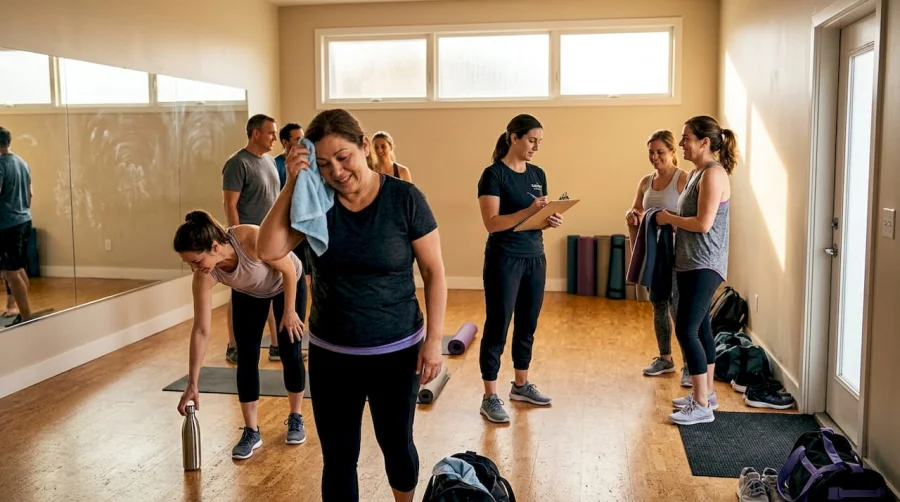
Mental and emotional rewards including relaxation spaces, recognition programs, and employee appreciation events are powerful for reducing burnout, especially in high-pressure hospitality environments. Wellness programs in hospitality reduce sick days by 25%, making the ROI on these softer rewards more concrete than many managers expect.
Financial rewards tend to drive the highest redemption rates. Payroll incentives are most redeemed for employees, while points and free passes attract customers most effectively.
When comparing employee-focused versus customer-focused programs, the metrics shift. Employee programs track absenteeism, retention, and productivity. Customer programs track lifetime value, visit frequency, and referral rates. You can build toward both with the right customer loyalty reward systems in place.
Pro Tip: Start with one reward category that fits your strongest business pain point, then expand. Adding too many reward types at launch creates confusion for both staff and customers.
For wellness-specific businesses, look into dedicated wellness center loyalty solutions that are purpose-built for this sector.
Situational tips: Tailoring rewards by industry
Rewards need to fit your environment. Here are industry-specific tips to help you maximize results.
For retail businesses:
- Use tiered rewards based on cumulative spend, with clear thresholds customers can see and target.
- Offer exclusive wellness-themed events like in-store health demos or product sampling nights for top-tier members.
- Add spend-based perks like free wellness product samples when customers hit monthly purchase milestones.
- Use push notifications to remind customers of their points balance and what they can unlock next.
- Tie seasonal promotions to wellness themes, such as a January fitness challenge with double points on activewear purchases.
For fitness businesses:
- Reward check-ins, class attendance, and referrals with points that redeem for free classes or branded gear.
- Run short-term challenges, like a 30-day attendance streak, with a meaningful prize at the finish.
- Use milestone rewards to celebrate member anniversaries, which builds emotional connection and reduces cancellations.
For hospitality businesses:
- Offer relaxation perks as recognition rewards for high-attendance or long-tenure staff.
- Create wellness recognition programs that celebrate healthy behaviors publicly, like team step challenges.
- Provide fitness session credits or spa access as performance bonuses rather than generic cash awards.
Real-time tracking and customized reward rules can boost engagement without creating complexity, which is especially valuable when you are managing programs across multiple locations or departments.
“The businesses that outperform in loyalty are not the ones with the most rewards. They are the ones whose rewards feel personally relevant to each member.”
Pro Tip: Review your redemption data every 90 days. If a reward is not being claimed, it is not motivating anyone. Replace it with something your data shows members actually want.
If you run a food and beverage operation alongside your wellness offering, check out these restaurant reward ideas for ways to blend dining perks with wellness rewards. And if you are evaluating platforms, this guide to loyalty app alternatives can help you find the right fit.
Our take: Why simple, customizable rewards win
Here is something that experience in loyalty program management consistently confirms: overengineered programs fail more often than simple ones. Business owners sometimes equate complexity with quality. They add layers, create intricate earning rules, and build in dozens of redemption options. The result is a program that confuses customers and frustrates staff.
The programs that actually move retention numbers are the ones where members can answer two questions instantly: How do I earn? What do I get? When those answers are obvious, engagement follows naturally.
Customization is equally important, but it works best when it is used to match rewards to your specific audience, not to add complexity. A custom wellness loyalty setup that fits your business type, redemption cycle, and customer behavior will outperform a one-size-fits-all solution every time.
Also, avoid the set-it-and-forget-it trap. The most successful operators monitor performance monthly, test new reward types in limited pilots, and adjust based on what the data shows. Loyalty programs are not static products. They are living systems that need attention and refinement to stay effective.
Launch your wellness rewards with BonusQR
Ready to apply these best practices? BonusQR makes launching and managing a wellness rewards program straightforward, whether you run a retail store, a fitness studio, or a hospitality operation. The platform lets you build customizable reward structures with points, stamps, cashback, and tier-based perks, all without complex POS integration. You can explore loyalty tools for services that fit your industry, review the full range of essential loyalty features available on the platform, or check out the electronic reward platform built for digital-first reward delivery. BonusQR helps you move from concept to active program quickly, so you can start building real loyalty right away.
Frequently asked questions
What are the most popular types of wellness rewards?
Payroll incentives, points, and free classes top the list, alongside discounts and wellness experiences like relaxation spaces that appeal to both employees and customers.
How do wellness rewards improve customer loyalty?
Wellness rewards create positive, repeat interactions that make customers feel recognized. Wellyx’s loyalty program demonstrates how structured points and redemption increase customer lifetime value over time.
What ROI can be expected from implementing wellness rewards?
Businesses typically see $3 to $6 returned for every dollar invested in wellness programs, along with measurable reductions in sick days and improved employee retention.
How do you customize rewards for different business types?
Match the reward structure to your audience’s primary needs: customizable rules and flexible redemptions work best when aligned with how your customers or employees naturally interact with your business.