
 Deutsch
 Español
 Français
 Italiano
 Magyar
 Polski
 Slovenčina
 Čeština
Small businesses don't need a complex app, expensive POS integration or a long list of rewards to build customer loyalty. The strongest loyalty scheme examples usually solve one clear problem: encouraging more visits, increasing spend, bringing back lapsed customers or generating referrals. A scheme that looks impressive but takes too long to understand will struggle, especially when customers already belong to several programmes.
UK shoppers are highly familiar with loyalty pricing. A government review found that 97% of UK shoppers belong to at least one supermarket loyalty scheme, and shoppers hold an average of 3 supermarket memberships. Loyalty-priced grocery products generated more than £5 billion between November 2023 and January 2024, representing about 22% of grocery revenue for supermarkets using those promotions (UK loyalty programme statistics). Yet participation doesn't guarantee engagement. Research found that only 61% of registered UK loyalty members purchased in the last 12 months, while 52% actively used programme features (Loyalty Landscape 2025).
The practical answer is a simple rule customers can remember. The ten examples below adapt points, stamps, tiers, cashback, welcome offers, birthdays, referrals, milestones, visits and personalisation to cafés, restaurants, salons, gyms and retail businesses. Each includes a sample rule, suitable industries, customer-facing messaging, trade-offs, KPIs and a realistic BonusQR setup.
1. Points-Based Loyalty Programmes
Points-based loyalty gives customers visible progress towards a reward. A café might award one point per pound, a salon might award points for each appointment, and a retailer might add points for reviews or referrals. The customer understands the basic exchange, then chooses whether to redeem for a free product, discount or experience.
Starbucks Rewards, Costa Coffee Club and Tesco Clubcard demonstrate how familiar this model is. Tesco Clubcard has operated for about 30 years, and Tesco gives one point per £1 spent in-store and online, according to UK loyalty scheme benchmarking (UK supermarket loyalty schemes). Tesco also reported 10.7 million new Clubcard members between 2020 and 2023, £627 million in incremental sales and a £3.38 profit return for every £1 invested (Tesco Clubcard case study).
A small business shouldn't copy the scale. It should copy the clarity.
A workable points rule
A coffee shop could use, “Earn 1 point for every £1 spent. Collect 30 points for a free drink.” A beauty salon could offer, “Earn 10 points after every appointment and 20 points for referring a friend.” Off-peak multipliers can move demand without discounting every transaction.
Practical rule: Customers should understand how to earn, what the reward is and how close they are to it without asking staff.
Track repeat purchase rate, points issued, redemption rate, average order value and off-peak visits. Margin can disappear if points are awarded on low-margin products, so higher multipliers should support profitable categories or quieter trading periods.
With BonusQR, staff scan a customer's personal QR code to award points without POS integration. The business can launch a campaign quickly, display progress in the customer's profile and use creating a successful loyalty programme as a planning reference.
2. Stamp and Punch Card Loyalty
Digital stamp cards work best when the desired behaviour is simple and frequent. A customer buys a coffee, attends a class or completes an appointment, then receives one visible stamp. After the final stamp, the reward arrives without conversion maths or confusing conditions.
An independent café could offer, “Buy 9 hot drinks, get the 10th free.” A yoga studio might reward every 10th class with a complimentary session. A hairdresser could provide a free cut after 8 paid appointments. The same mechanic works for a nail salon, car wash or local bakery where visits matter more than basket value.
The main advantage is low cognitive load. The main risk is setting the target too far away. A customer who visits weekly may tolerate a longer card than someone who buys coffee several times a week, so the reward should match natural frequency.
The customer message
“Your next coffee is closer than you think. Scan after every visit and get a free drink when your card is complete.”
Track stamps issued per active member, completion rate, time between visits, reward redemption and post-reward return rate. A high completion rate with weak return visits may mean the reward attracts one-off behaviour rather than loyalty. A low completion rate usually points to an overly long card, poor visibility or inconsistent scanning.
BonusQR's digital stamp cards replace paper cards and keep the customer's visit history in one profile. Staff scan the customer's QR code, and the stamp appears immediately. A business can also create separate cards for coffee and pastries, then use milestone messaging such as “One stamp away from a free coffee.” The approach supports customer loyalty with punch cards without paper waste or extra hardware.
A useful launch message is, “Join the digital stamp card today. Your first stamp is waiting, and your progress stays on your phone.”
3. Tiered Membership Loyalty
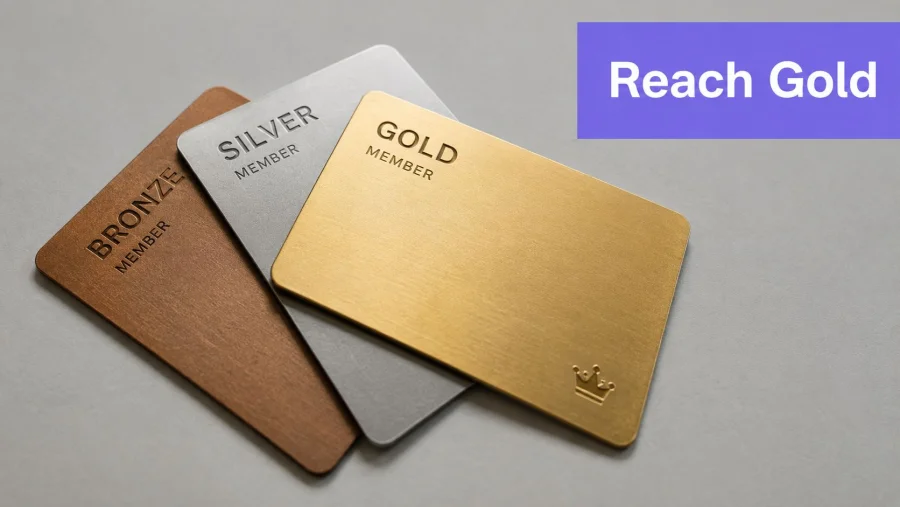
Tiered loyalty gives customers a reason to increase engagement after joining. Bronze, Silver and Gold members receive progressively stronger benefits based on spend, visits or a combination of both. The mechanic suits businesses where a loyal customer is worth substantially more than an occasional visitor, including restaurants, gyms, salons and premium retail.
Sephora's VIB Rouge programme uses spend-based progression and exclusive beauty launches. Equinox uses premium access and amenities to support a high-value membership model. A restaurant group could offer Bronze after joining, Silver after a defined annual spend and Gold after sustained visits, with benefits focused on priority booking, complimentary extras or invitations rather than blanket discounts.
Keep status attainable
Tiered schemes fail when customers see the upper levels as unreachable. A café might use visit counts, while a salon or gym might use rolling 12-month spend. A restaurant could combine both, rewarding regular bookings and higher-value occasions.
“Reach Silver and get priority booking plus a complimentary dessert on your next visit” is clearer than a long list of abstract perks. Monthly status messages can create momentum, but they shouldn't pressure customers into spending they wouldn't otherwise make.
Track tier progression, revenue by tier, benefit redemption, retention, average order value and contribution margin. The critical question is whether higher tiers create profitable behaviour or only provide discounts to customers who were already loyal.
BonusQR can assign membership tiers from defined thresholds and show each customer's status in their profile. A café might create Bronze, Silver and Gold cards, while a gym could link status to attendance or membership duration. For a practical model, see loyalty tiers for coffee shops.
4. Cashback and Percentage Discount Loyalty
Cashback is easy to explain because the reward relates directly to spending. Customers receive credit or a percentage back in their account, then use it on a later purchase. The model can work for retail, restaurants, groceries, beauty and fitness, provided the reward doesn't consume more margin than the repeat visit creates.
Tesco Clubcard Prices show how member-specific price reductions can make value visible at the shelf. The UK government's grocery review found average savings on loyalty-priced products ranging from 17% to 25% across the five supermarkets examined (government review of loyalty pricing). That level of saving isn't a sensible default for a small business, but it demonstrates why customers notice clear member value.
A restaurant might offer, “Receive 2% of every order back as credit.” A salon could give 3% credit on product purchases while keeping service pricing intact. A retailer might apply a higher rate to profitable accessories and a lower rate to discounted stock.
Protect the margin
Cashback should be earned but not necessarily redeemed immediately. A balance that becomes available on the next visit creates a reason to return. Category-specific rates, off-peak bonus days and minimum redemption thresholds can keep the scheme commercially controlled.
Track cashback issued, cashback redeemed, repeat visits after redemption, average basket value, gross margin by category and unused balances. The customer message should remain direct: “Earn credit every time you shop. Use it on your next visit.”
BonusQR lets a merchant configure cashback, fixed discounts and category-based rewards without a POS connection. Staff scan the customer's QR code, and the balance can be monitored through built-in analytics. That makes it easier to compare the cost of cashback with the revenue from returning customers.
5. Welcome Bonuses and Sign-Up Incentives
A welcome bonus gives a new member an immediate reason to join. It works particularly well in coffee, quick-service food, fitness and beauty, where customers can switch providers easily and the first repeat visit matters.
The reward might be a free drink with a purchase, introductory credit, bonus points or a discounted first class. A gym could offer a welcome consultation. A salon could provide a product sample or a small service upgrade. The most effective offer has a clear redemption condition, such as “Join today and receive £5 off your next appointment when you spend £25.”
The trade-off is acquisition quality. A large unconditional reward can attract customers who only want the deal. A smaller reward tied to a genuine purchase gives the business more control while still reducing sign-up friction.
Design the first repeat visit
The offer should have enough time to be useful but not so much time that the customer forgets. A café might send, “Your welcome reward is ready. Use it on your next coffee visit.” A gym could say, “Your new-member bonus includes one complimentary class. Book it this month.”
Track sign-up rate, welcome reward redemption, second-visit rate, time to second visit, average order value and cost per activated member. Compare different reward formats, such as a free add-on versus account credit, rather than assuming the most expensive reward performs best.
BonusQR can include a welcome coupon in the onboarding flow. Customers sign up from a QR code at the counter, receive their personal QR profile and present it when redeeming. The business can then identify whether the welcome offer leads to a second purchase, not just a first redemption.
6. Birthday and Seasonal Loyalty Rewards
Personal occasions can make a loyalty scheme feel more human. Birthday rewards, seasonal offers and member-only events create reasons to visit when a standard points balance may not be enough. The mechanic suits cafés, restaurants, salons, gyms and wellness businesses with regular customer contact.
A salon could offer a birthday-month service upgrade. A café could send a complimentary pastry with a drink. A gym might provide a guest pass or recovery session. Seasonal offers can support demand around Christmas, spring treatments, summer classes or back-to-school shopping.
The important distinction is between personal value and indiscriminate discounting. A birthday reward should feel like recognition, while a seasonal campaign should match a relevant product or service.
Ask for data with a clear exchange
Customers are more likely to provide a birth month when the benefit is obvious. The sign-up message might say, “Add your birthday month to receive a member gift.” A birthday offer sent early gives the customer time to plan, and a month-long redemption window avoids penalising people who can't visit on one specific day.
Track profile completion, birthday offer delivery, redemption, birthday-month revenue, average order value and post-offer retention. For seasonal activity, compare campaign performance with the same trading period without repeating unsupported assumptions about lift.
BonusQR can automate birthday notifications and seasonal coupons, while its profile can hold customer details, offers and visit history. A restaurant could send a birthday reward with a booking prompt. A salon could combine the offer with a feedback request after the appointment.
7. Referral and Social Sharing Loyalty
Referral loyalty turns satisfied customers into a source of new business. The customer receives a reward when a friend joins or makes a qualifying purchase, and the referred person receives a clear welcome benefit. The structure suits experience-led businesses because customers often trust recommendations for salons, gyms, cafés and restaurants.
A salon might use, “Refer a friend. Both receive 10% off a future appointment.” A gym could offer a guest pass to the existing member and a joining credit to the new member. A restaurant could provide a shared dessert or account credit after the referred customer completes a first booking.
Referral schemes often fail because sharing takes too many steps. The customer shouldn't need to search for a code, copy a long link or explain complicated conditions.
Trigger the request at the right moment
The best prompt follows a positive experience. A post-visit message could say, “Enjoyed today's appointment? Share this referral link. Your friend receives a welcome offer, and your account receives credit after their first visit.”
Track referral shares, referred sign-ups, first purchases, referral redemption, acquisition cost and referred-customer retention. Set an expiry or sensible cap so the reward remains financially predictable. Public leaderboards may suit a gym community, but they can feel uncomfortable in a private salon, so the presentation should match the brand.
BonusQR can issue unique referral codes, record which customer generated each referral and track whether the new customer redeems. The personal QR profile also gives staff a simple way to confirm the reward without manual spreadsheets.
8. Spend Thresholds and Milestone Rewards
Spend milestones create a destination rather than a continuous points balance. A restaurant might offer account credit after cumulative spending. A salon could reward a premium treatment after several appointments. A retailer might award a free accessory when a customer reaches a quarterly threshold.
A sample rule could be, “Spend £100 across your next three visits and receive £15 credit.” Another could be, “Reach the annual member threshold and gain access to priority booking.” These rewards make sense when transaction values vary and the business wants to increase spend velocity without offering a discount on every order.
The risk is an arbitrary target. If customers regularly spend £30, a £500 threshold may feel irrelevant. The milestone should reflect normal purchasing patterns and give customers a visible next step.
Make progress useful
A message such as “You're £25 from your next reward” turns a hidden balance into a reason to return. Rollover progress can reduce frustration when a customer misses a period, while a quarterly window may suit occasional restaurant diners better than a weekly target.
Track customers reaching each milestone, revenue before and after milestone completion, reward cost, repeat purchase rate and average order value. Compare milestones by behaviour, not just by the number of rewards claimed.
BonusQR can trigger rewards automatically when a customer reaches a spend threshold. A restaurant can configure several thresholds, while a gym can connect spending on classes, merchandise or personal training to an upgrade. The customer's profile provides a visible record of progress, reducing disputes at redemption.
9. Visit Frequency and Habit-Stacking Loyalty
Visit-based loyalty rewards attendance rather than spending. That distinction matters for businesses where regular presence drives value, including cafés, gyms, yoga studios, salons and wellness centres. A customer receives credit for showing up, even when the transaction is small.
An independent coffee shop might offer, “Visit 10 times and receive a free coffee.” A gym could reward a consistent attendance pattern with access to a premium class. A salon could encourage a four-week maintenance cycle with bonus points for returning within the recommended period.
The model can increase traffic from price-conscious customers, but it may also encourage low-value visits. Businesses should decide whether the priority is footfall, total spend or a profitable combination.
Reward consistency without punishing absence
A streak can be motivating, but a harsh reset can make customers abandon the scheme. A better message is, “Two more visits earn your reward,” followed by a gentle reactivation prompt if the customer goes quiet. New members might receive an accelerated first milestone, then move to the normal rule.
Track visits per member, visit interval, active-member rate, streak completion, reward redemption and revenue per visit. Segment customers by behaviour. High-frequency members may need recognition, while occasional members may need a reminder or a lower first milestone.
BonusQR increments a visit counter each time staff scan the customer's QR code. No spend entry is required. Analytics can distinguish habit-forming members from customers who only visit when an offer appears, allowing targeted campaigns rather than one message for everyone.
10. Personalised and Dynamic Loyalty
Personalised loyalty uses customer behaviour to make offers more relevant. A new customer may receive a prompt to complete a second visit. A regular café customer may receive an offer for a quieter morning. A salon customer may get a reminder based on their usual appointment cycle. A lapsed gym member may receive a class recommendation rather than a generic discount.
Large brands such as Amazon, Netflix, Spotify and Sephora use recommendations, preferences and engagement signals to shape customer experiences. Small businesses don't need advanced machine learning to apply the principle. Simple segments often provide enough value: new members, high spenders, high-frequency visitors and inactive customers.
Start with useful segmentation
A restaurant might send a midweek booking offer to customers who usually dine at weekends. A beauty business could promote a product category linked to a customer's previous purchase. A gym could separate members interested in strength classes from those attending yoga sessions.
Track campaign open rate, offer redemption, repeat visits, revenue per recipient, unsubscribe rate and incremental behaviour compared with a similar unmessaged group. Privacy should be clear, and businesses should collect only information that supports a useful customer experience.
Personalisation should make the offer feel relevant, not make the customer wonder how much the business knows.
BonusQR's analytics can support manual segments such as new, high-spend and inactive customers. Merchants can then send targeted email or push campaigns through the platform. Businesses seeking more advanced personalisation can connect loyalty data with tools such as Segment or Mixpanel, while keeping consent and GDPR obligations visible. More practical ideas appear in these personalisation strategies for local businesses.
10 Loyalty Scheme Types: Side-by-Side Comparison
| Program | Implementation Complexity 🔄 | Resource & Tech Needs ⚡ | Expected Outcomes 📊 / ⭐ | Ideal Use Cases | Key Advantages 💡 |
|---|---|---|---|---|---|
| Points-Based Loyalty | Medium 🔄: Configurable rules, optional integrations | Low–Medium ⚡: CRM/app or QR tool, reporting | 📊 Increases repeat visits and AOV; measurable product engagement ⭐⭐⭐ | Coffee shops, restaurants, retail, salons | Simple to understand; flexible reward structures; visible progress |
| Stamp & Punch Card (Digital) | Low 🔄: Simple scan → stamp flow | Low ⚡: QR stamps, basic backend, visual UI | 📊 High completion rates; strong habitual visits ⭐⭐⭐ | Cafés, salons, gyms, QSR | Extremely low cognitive load; high completion & anticipation |
| Tiered Membership (Bronze/Silver/Gold) | High 🔄: Tier logic, automated assignments & communication | High ⚡: CRM, analytics, membership management | 📊 Drives CLV and retention; status motivation ⭐⭐⭐⭐ | Gyms, fine dining, salons, retail | Encourages spend velocity; enables VIP experiences |
| Cashback & Percentage Discount | Medium 🔄: Accounting and payout rules | Medium ⚡: POS tagging, finance controls, reporting | 📊 Immediate perceived value; repeat habit but margin sensitive ⭐⭐⭐ | Retail, grocery, restaurants, coffee | Transparent value; easy to communicate; broad appeal |
| Welcome Bonuses & Sign‑Up Incentives | Low–Medium 🔄: Onboarding flow, expiration rules | Low ⚡: Marketing budget, automated issuance | 📊 Boosts sign-ups and time-to-first-repeat; strong acquisition lift ⭐⭐⭐⭐ | Coffee, QSR, gyms, retail | Improves conversion; accelerates habit formation; drives app installs |
| Birthday & Seasonal Rewards | Low–Medium 🔄: Data collection + scheduled campaigns | Low ⚡: CRM/email/push scheduling | 📊 High engagement and emotional loyalty; timely uplift ⭐⭐⭐ | Salons, gyms, cafés, restaurants, retail | Personalized touch; high open/response rates; companion visits |
| Referral & Social Sharing | Medium 🔄: Referral tracking, fraud controls | Medium ⚡: Unique links/codes, tracking dashboard | 📊 Potential viral growth; lowers CAC if satisfied users refer ⭐⭐⭐⭐ | Gyms, salons, restaurants, retail, coffee | Leverages peer trust; highly measurable acquisition channel |
| Spend Thresholds & Milestones | Medium 🔄: Cumulative tracking, reset windows | Medium ⚡: Analytics, notifications, reward triggers | 📊 Drives spending velocity; deadline-driven spikes ⭐⭐⭐ | Restaurants, gyms, retail, salons | Clear psychological targets; perceived big-value rewards |
| Visit Frequency & Habit‑Stacking | Low–Medium 🔄: Visit counters, streak logic | Low ⚡: QR scans, push reminders, simple tracking | 📊 Boosts visit frequency and routine behaviour ⭐⭐⭐ | Coffee shops, gyms, salons, QSR | Encourages habitual visits; decouples traffic from spend |
| Personalized & Dynamic (AI‑Driven) | Very High 🔄: ML models, real‑time orchestration | High ⚡: Data pipelines, DS expertise, integrations | 📊 Highest ROI when mature; churn reduction & targeted uplift ⭐⭐⭐⭐⭐ | Large retailers, restaurants, data‑rich SMBs | Hyper-relevance; reduces wasted spend; scalable personalization |
Turn One Good Rule Into Repeat Visits
The strongest loyalty scheme examples don't try to solve every commercial problem at once. They choose one behaviour, attach a reward customers can reach, then measure whether that behaviour changes. A café focused on frequency may need stamps. A restaurant focused on larger bookings may need spend milestones. A salon may benefit from birthday rewards and referral credit, while a gym may need visit challenges and reactivation messages.
The choice becomes simpler when the desired action is explicit:
- Choose stamps or visits when the priority is more frequent attendance.
- Choose points when the business needs flexible earning across purchases, referrals or actions.
- Choose spend thresholds when basket value or cumulative revenue matters most.
- Choose referrals when customer acquisition is the immediate challenge.
- Choose birthday and seasonal rewards when relationship-building and timely visits matter.
- Choose tiers when high-value members justify differentiated access.
- Choose personalisation when the business has enough customer history to make targeted offers useful.
The reward must feel valuable without weakening margin. UK evidence shows that members notice meaningful price differences, with average loyalty-price savings ranging from 17% to 25% across the major supermarkets examined in the government review (UK loyalty pricing review). Smaller businesses don't need to match those savings. They need to make the benefit clear, restrict costly offers where necessary and connect every reward to a measurable commercial objective.
Fairness also matters. UK consumer research found that 43% of shoppers consider member-only lower prices unfair, while 64% of non-members feel excluded by membership pricing (UK shopper loyalty report). A transparent alternative is to explain the value plainly, provide a useful joining benefit and avoid making non-members feel penalised at the till.
A practical BonusQR rollout
A small business can launch a first scheme without replacing its existing systems:
- Define the behaviour: Choose visits, spend, referrals, retention or another single objective.
- Set a reachable reward: Make the first milestone close enough to maintain motivation.
- Create the QR journey: Add a sign-up QR code, customer profile and scan rule in BonusQR.
- Train staff: Show employees how to scan, award rewards and confirm redemptions.
- Promote at the point of sale: Use counter cards, receipts, menus, windows, booking confirmations and social posts.
- Review performance: Monitor visits, redemptions, repeat rate, average order value, active members and campaign results.
- Improve one variable: Change the reward, message, milestone or timing, then compare the next period.
BonusQR supports stamps, points, cashback, visit rewards, spend thresholds, fixed discounts, welcome coupons, birthday offers and seasonal campaigns. Customers can sign up on mobile or web, receive a personal QR code and keep rewards and visit history in one profile. Staff can scan and redeem without POS integration or extra hardware, while wallet passes, automated campaigns and built-in analytics support ongoing promotion and measurement.
Businesses can start a free BonusQR loyalty programme with one clear rule, test it with real customers and use the results to decide what deserves expansion. A simple scheme that gets scanned consistently will usually outperform a programme that customers and staff can't explain.
Choose the loyalty mechanic that matches the next behaviour the business needs, create the first QR campaign in BonusQR and invite every customer to join at the next visit. Start with one reward, measure the result and improve the rule using actual redemption and repeat-visit data.