A loyalty card is a physical or digital card issued by a business to reward customers for repeat purchases and track their buying behaviour. Known formally as part of a customer retention scheme, loyalty cards sit at the heart of modern marketing for retailers, hospitality businesses, and service providers alike. The European loyalty market is set to reach US$18.8 billion in 2026, growing at 11.9% CAGR through 2030. That figure signals just how central loyalty cards have become to business strategy. Whether you are a consumer wanting to get more value from your spending, or a business owner considering launching a rewards scheme, understanding how loyalty cards work is the starting point.
What is a loyalty card and how does it work?
A loyalty card is a tool that records a customer’s purchases and converts that activity into rewards. The card can be a plastic card with a barcode, a digital pass stored in a mobile wallet, or an account linked to a phone number. Each time a customer shops, the card captures the transaction and adds value to their account.
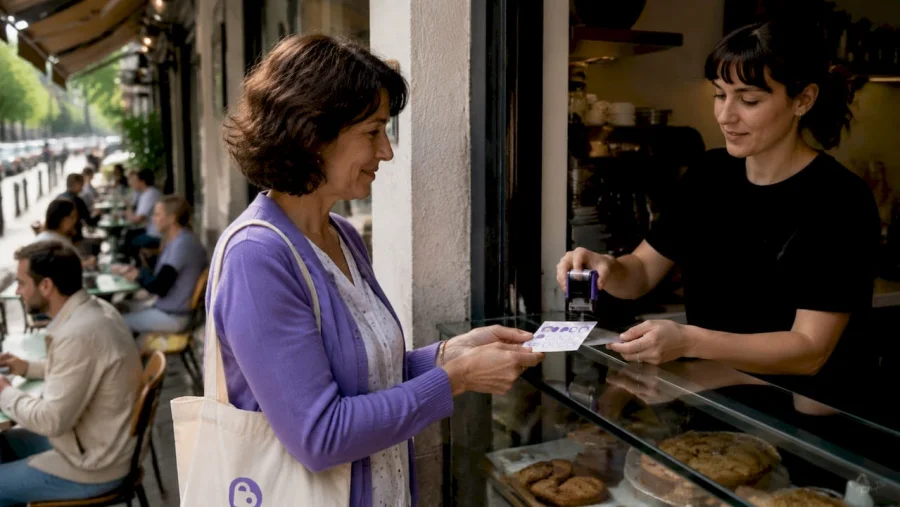
The mechanics vary by programme design, but most loyalty cards follow one of three models. Points accumulation programmes assign a points value to every pound spent. Stamp card programmes record individual visits or purchases until a threshold is reached. Cashback programmes return a percentage of spend as credit or cash. Each model creates a different type of incentive, and the right choice depends on your industry and customer base.
Customers find loyalty cards attractive because they create a sense of progress. A coffee shop stamp card that rewards every tenth drink gives customers a clear goal. A points programme at a supermarket builds value over time and encourages larger basket sizes. The loyalty card benefits for consumers are straightforward: spend money you would spend anyway and receive something back.
Common reward types and what motivates customers
Reward structures shape customer behaviour directly. The most common types include:
- Points redeemable for discounts or free products — rewards spending volume and encourages return visits
- Stamp cards — simple and transparent, ideal for cafés, bakeries, and fast food
- Cashback — perceived as high value because it feels like real money returned
- Tier upgrades — silver, gold, and platinum levels create aspiration and status
- Surprise rewards and birthday offers — 77% of consumers want recognition, yet only 55% feel uniquely seen by the brands they support
- Visit rewards — incentivise frequency rather than spend size
Surprise rewards and anniversary recognition consistently rank as the most memorable loyalty experiences. That matters because memorable experiences drive word of mouth, not just repeat visits.
Pro Tip: Check whether your loyalty card programme allows you to stack rewards. Many digital programmes let you combine a points earn with a promotional discount on the same transaction, doubling the value you receive.
How do loyalty cards differ from loyalty programmes and rewards schemes?
A loyalty card is a single tool within a broader loyalty programme. The distinction matters because confusing the two leads to poor programme design and customer confusion.
A loyalty programme is the full strategic framework: the goals, the reward structure, the communication plan, and the technology behind it. A loyalty card is the customer-facing mechanism that connects the customer to that programme. You can run a loyalty programme without a physical card, but every loyalty card belongs to a programme of some kind.
Rewards schemes and loyalty schemes are broader terms that encompass any structured approach to rewarding customer behaviour. They include subscription models, referral incentive programmes, and coalition schemes. Understanding where loyalty cards sit within this wider picture helps businesses choose the right tool.
Single-merchant cards versus coalition models
Single-merchant loyalty cards tie rewards to one brand. A coffee chain’s stamp card is the clearest example. The customer earns and redeems rewards only within that brand’s ecosystem. This model builds strong brand attachment but limits the earning opportunities for customers.
Coalition models allow customers to accumulate points across multiple brands. A customer might earn points at a supermarket, a petrol station, and a pharmacy, then redeem them anywhere within the coalition. This model increases perceived value and broadens the programme’s reach beyond a single retailer.
| Feature | Single-merchant card | Coalition scheme | Subscription model |
|---|---|---|---|
| Earning scope | One brand only | Multiple brands | Fixed fee, unlimited access |
| Redemption flexibility | Low | High | Not applicable |
| Customer effort | Low | Medium | Very low |
| Brand attachment | High | Moderate | High |
| Best suited for | Cafés, salons, boutiques | Supermarkets, travel, fuel | Streaming, food delivery |
Membership cards and subscription programmes overlap with loyalty cards in some contexts. A subscription that includes exclusive discounts functions like a loyalty programme, even without a points mechanism. The key difference is that loyalty cards reward behaviour, while subscriptions reward payment of a recurring fee.
How is the loyalty card market evolving in 2026?
The loyalty card market is growing fast and changing shape. The European market alone is forecast to reach US$29.5 billion by 2030, up from US$16.5 billion in 2025. That growth reflects both rising consumer participation and deeper business investment in retention technology.
Consumer behaviour is shifting in a notable direction. Rather than collecting as many loyalty cards as possible, consumers are focusing on fewer programmes they find genuinely useful. This trend, visible clearly among Swedish consumers, signals a quality-over-quantity shift. Businesses that offer clear, consistent value will retain members. Those that bury rewards in complexity will see disengagement.
| Metric | 2025 figure | 2026 projection | 2030 forecast |
|---|---|---|---|
| European market value | US$16.5 billion | US$18.8 billion | US$29.5 billion |
| Market CAGR (2026–2030) | Not applicable | 11.9% | 11.9% |
| Consumer priority | Card collection | Focused engagement | Personalised experiences |
Embedded loyalty is the most significant structural shift in the market. Loyalty benefits are now being triggered automatically at checkout, without requiring the customer to present a card or scan an app. Carrefour in France integrates loyalty benefits directly into its omnichannel checkout process. That frictionless experience raises the bar for every business running a loyalty scheme.
AI-powered personalisation is the other major force. Aligning programmes with AI-driven personalisation is now a key competitive differentiator. Businesses that use purchase data to send relevant offers, rather than generic promotions, see stronger engagement and higher redemption rates. Data privacy remains a concern for consumers, and transparent communication about how data is used builds the trust that sustains long-term loyalty.
For more on how technology is reshaping retention, the loyalty technology trends for 2026 offer a detailed breakdown of what is driving change across the industry.
How to implement a loyalty card programme across industries
A loyalty card programme delivers results when it is built on a clear strategy, not just a card design. The implementation process has distinct phases, and skipping any of them creates gaps that show up later as low enrolment or poor redemption rates.
A structured implementation plan typically spans 14 weeks. The phases break down as follows:
- Strategy (weeks 1–4): Define your business goals, target customer behaviour, and reward structure. Decide whether you want to drive frequency, basket size, or new customer acquisition. Set measurable KPIs at this stage.
- Technology setup (weeks 5–8): Choose your platform, configure point rules, and integrate with your point-of-sale or online checkout. Digital-only programmes can launch without POS integration, which reduces setup time significantly.
- Creative design (weeks 7–10): Design the card, app interface, and customer communications. Branding consistency across physical and digital touchpoints builds recognition and trust.
- Launch campaign (weeks 13–14): Announce the programme through email, social media, and in-store signage. Offer an enrolment incentive to drive sign-ups quickly.
Setting KPIs that actually measure success
Effective loyalty programmes target an enrolment rate of 40–60% of eligible customers and an activity rate of 50–70% among members within any 90-day period. An ROI target above 300% is the standard benchmark for a well-run programme. These figures give you a clear baseline for evaluating performance in the first quarter after launch.
Industries best suited to loyalty card programmes include:
- Retail: High purchase frequency makes points accumulation natural and motivating
- Hospitality and food service: Stamp cards and visit rewards drive repeat footfall
- Health and beauty: Tier systems reward high-spend customers and build brand affinity
- Petrol and convenience: Cashback models align with high-frequency, low-margin transactions
- Professional services: Visit rewards and referral incentives work well for salons, clinics, and gyms
Small businesses benefit most from simple, transparent programmes. A single stamp card with a clear reward is easier to explain at the counter and easier for customers to engage with than a multi-tier points system. Larger organisations can layer in personalisation, coalition partnerships, and AI-driven offers once the foundation is solid.
Pro Tip: Launch with a double-points period in the first two weeks. This drives early enrolment and gives customers a reason to return before the novelty wears off.
For a practical roadmap, the loyalty programme card guide from Bonusqr covers the key decisions from structure to launch in detail.
Key takeaways
A loyalty card is the most direct tool a business has for converting one-time buyers into repeat customers, and its value grows when it is backed by a clear programme strategy and genuine personalisation.
| Point | Details |
|---|---|
| Definition is precise | A loyalty card records purchases and converts activity into rewards, either physically or digitally. |
| Market is growing fast | The European loyalty market reaches US$18.8 billion in 2026, with 11.9% annual growth forecast through 2030. |
| Cards sit within programmes | A loyalty card is a tool; a loyalty programme is the full strategy, structure, and technology behind it. |
| Consumers want fewer, better programmes | Customers are dropping cards they find low-value and concentrating on schemes that offer genuine, personalised rewards. |
| Implementation needs structure | A 14-week phased plan covering strategy, technology, design, and launch gives programmes the best chance of hitting KPI targets. |
Why loyalty cards still matter more than most businesses realise
I have watched businesses launch loyalty cards as an afterthought, printing a stack of stamp cards and leaving them by the till without any real plan. The cards get used sporadically, the data goes uncaptured, and the business concludes that loyalty schemes “don’t work for us.” That conclusion is almost always wrong. The card was not the problem. The absence of a programme behind it was.
What I find most interesting about the 2026 market is the convergence of two trends that pull in opposite directions. Consumers want less friction and more automation, which points toward embedded loyalty and AI personalisation. At the same time, they want to feel genuinely recognised, not just tracked. Brands that invest in emotional resonance rather than mere points collection are the ones building durable loyalty. Those two demands are not contradictory. They require businesses to use technology intelligently while keeping the human element visible.
The businesses I see succeeding with loyalty cards in 2026 share one quality: they treat the card as the start of a relationship, not the relationship itself. The card gets the customer to return. What happens at that second and third visit determines whether they stay. Transparent data practices, relevant offers, and the occasional surprise reward do more for retention than any points multiplier.
My honest prediction is that physical loyalty cards will continue to decline in volume, but digital loyalty cards embedded in apps and payment systems will grow significantly. Small businesses that make the switch now, before their customers expect it, will have a clear advantage over those that wait.
— Michal
Bonusqr’s loyalty card solutions for your business
Bonusqr is a SaaS platform built for businesses that want to launch and manage customisable loyalty cards without complex POS integration or lengthy development timelines. The platform supports points collection, stamp cards, cashback, visit rewards, and coupon distribution across mobile and web apps. You can configure your programme, brand your card, and go live quickly, whether you run a single café or a multi-site retail operation. Bonusqr’s white-label loyalty app lets larger businesses present a fully branded experience to their customers. Real-time analytics and push notification tools keep your programme active between visits, turning occasional buyers into regulars.
FAQ
What is a loyalty card in simple terms?
A loyalty card is a card issued by a business that records your purchases and rewards you with points, stamps, or cashback when you shop repeatedly. It can be physical or digital.
How do loyalty cards work for businesses?
Loyalty cards track customer purchases and trigger rewards automatically, giving businesses data on buying behaviour and a direct channel to encourage repeat visits.
What is the difference between a loyalty card and a loyalty programme?
A loyalty card is the customer-facing tool that captures transactions. A loyalty programme is the full strategy, including goals, reward rules, technology, and communications, that the card operates within.
What are the main types of loyalty cards?
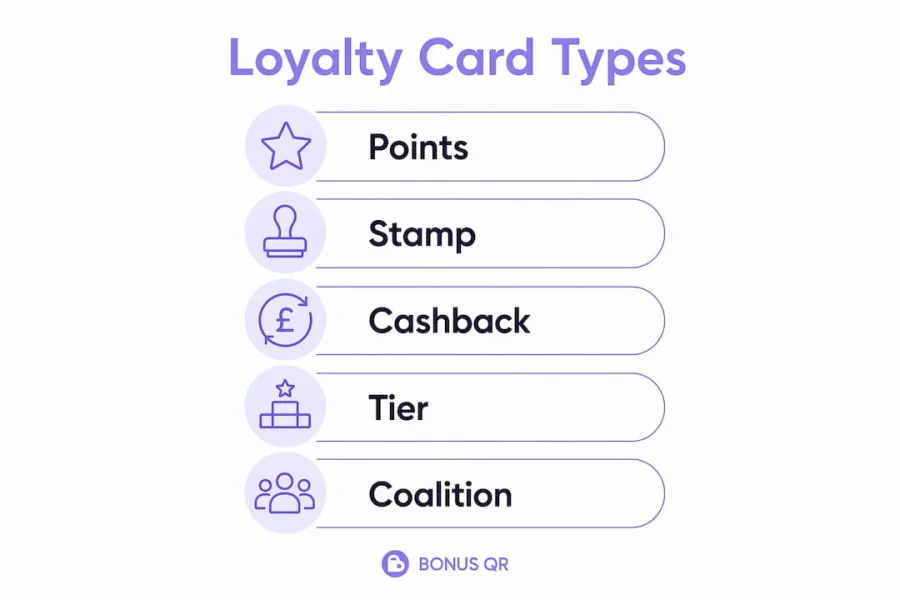
The main types are points accumulation cards, stamp cards, cashback cards, and tier-based cards. Coalition cards allow customers to earn rewards across multiple brands rather than a single retailer.
Are loyalty cards worth it for small businesses?
Yes. A simple stamp card or digital points programme drives repeat visits without requiring large investment. Bonusqr offers free-tier options that let small businesses launch a reward for visit programme with no upfront cost.


