What Are Customer Needs? a Practical Guide for 2026
A regular walks in mid-morning on a Tuesday, orders the same flat white, and is out of the door before the next person reaches the till. She didn't come for the coffee alone. She came because she has eleven minutes between the bus and a meeting, and this is the one place that hands her a hot drink without making her late.
Ask the owner what that customer needs and the answer usually comes back as a product. Oat milk. A pastry. A stamp card. The truer answer is an outcome: speed, warmth, no queue, and the small pleasure of being recognised.
That distinction decides where a small business spends its loyalty budget. Get it right and the reward lands on something the customer already values. Get it wrong and the discount teaches people to wait for the next one. The question of what are customers needs sounds basic. It's the one that separates a programme that pays for itself from one that eats your margin.
What Customer Needs Are and Why They Matter
A customer need is the outcome a person is trying to get from a visit, not the item they hand over money for.
A need is the job the customer hires your business to do. The coffee, the cut, the class is only the tool that does it.
A flat white is a want. Being warm, awake and on time for a 9am meeting is the need behind it. Demand is a third thing entirely. It's how many people buy and when, which tells you plenty about volume and almost nothing about why anyone came back a second time.
Owners miss needs for three predictable reasons:
- They assume they already know. Years behind the same counter feel like research, but the owner sees the queue from the staff side, not the customer side.
- They listen to the loudest customers. The person who complains most is often the one with the most free time and the least typical habits.
- They buy a discount when the problem is operational. A queue, a cold drink or a booking page that fails on a phone won't be fixed by 10% off.
An unmet need rarely produces a complaint. It produces a quiet exit, and the customer who leaves is usually the one who never said anything. A met need produces something better than satisfaction, which is a habit.
Write down the three things your regulars came in for last week. Then compare that list with what you assume they want.
The Main Types of Customer Needs at a Glance
Six need types cover nearly everything a café, salon, gym or shop is asked to deliver. Each row is one need, the example shows how a small venue might meet it, and the warning sign shows what it looks like when it goes unmet.
| Need type | What the customer wants | Small-business example | Warning sign |
|---|---|---|---|
| Functional | The product works and does its job | Coffee made to order and served hot within five minutes | Repeat complaints about speed or quality |
| Emotional | Feeling welcomed, calm or valued | Staff remember a regular's name and usual order | Customers rarely stay to talk or sit down |
| Social | Being seen with others and belonging | Group booking discount or a shared reward for friends | Customers never bring anyone new |
| Convenience | Saving time and effort | Online booking and a quick-scan reward at the till | Queues, missed bookings or drop-off after first visit |
| Value | A fair price for what they get | A reward that matches their normal spend and is shown against the regular price | Questions about whether deals are real or how prices compare |
| Trust and privacy | Feeling safe sharing personal details | A plain explanation of what data is used and why | Hesitation at sign-up or requests to opt out |
Reading the Table
Start with the warning sign column, not the need column. Missed needs leave marks you can already see on a busy Saturday, while a need named in advance is often a guess dressed up as insight.
Now take two rows and follow them through a real shift. Functional is the row owners skip because it feels too obvious to count, yet the customer judges it in seconds. If the flat white arrives cold, no stamp card rescues the visit.
Emotional is the row owners underestimate. The same coffee served by someone who says "the usual?" lands differently from the same coffee handed over in silence, and the customer pays the same price for both.
The Need That Decides Whether They Return
Most visits involve three or four needs at once. Someone booking a colour wants convenience (an evening slot), value (a price that matches the last visit) and emotional recognition (the stylist remembers the formula). The strongest need in that visit usually decides whether there's a next one.
Ask a blunt question about your own business. Which single need, if it went missed next week, would stop a regular from coming back? That answer is where your next change belongs.
How to Find Out What Your Customers Really Need
A regular at the café counter hesitates, then asks whether the stamp card stores a phone number. They wanted the free drink. They also wanted the data kept small. Wants are easy to name: a bigger slice, a later appointment, a free class. The need shows up in the pause, the booking that never finishes, and the offer nobody uses.
Three inputs are enough: a short conversation, what you watch on the floor, and records you already keep. Agree those three before you pay for anything else.
The Six-Step Routine
- Pick one moment in the visit. The till, the booking form, or the bag at the door. One moment repeats, so this Saturday sits beside the next.
- Ask three questions, then stop. What brought you in, what nearly stopped you, and what would make the next visit easier. The middle one names the need that almost lost the visit. A form that also wants a birthday and a postcode teaches people to refuse, and you still learn nothing about the queue.
- Mine reviews and messages for repeated words. Slow, confusing, expensive, cold, rude, or "I could not book without the app." A word that appears three times matters more than one furious paragraph. People smile through friction in person and write it down later. "Expensive" often means the reward does not match what they normally spend.
- Read the records you already have. Who comes back after a few weeks, who stops, which offers get used. A short prompt in the app, like the loyalty program feedback surveys that let members rate a visit and leave a comment, gives you that signal without a clipboard. If someone never opens the app, the spoken question and a paper note still count.
- Sort the findings under the six need types. Grouping stops a pile of unrelated complaints. It shows whether the same gap keeps returning: trust at sign-up, fair value on the offer, or a step that only works on a phone.
- Test one change for two weeks. One change, one budget, one period. Two changes in the same fortnight tell you nothing about either. If the test asks for more personal data than the problem needs, drop it.
What Counts as a Real Signal
One strong opinion is an anecdote. A pattern is the same need from at least three customers, across two channels: said at the counter and written in a review, or left on a booking and in a feedback comment.
Wait for that overlap before you spend. It is the cheapest filter you have, and it stops a menu rebuild around one bad Tuesday.
Real Examples From Cafés, Salons and Gyms
Three venues, three different needs, one shared lesson about where to put the reward.
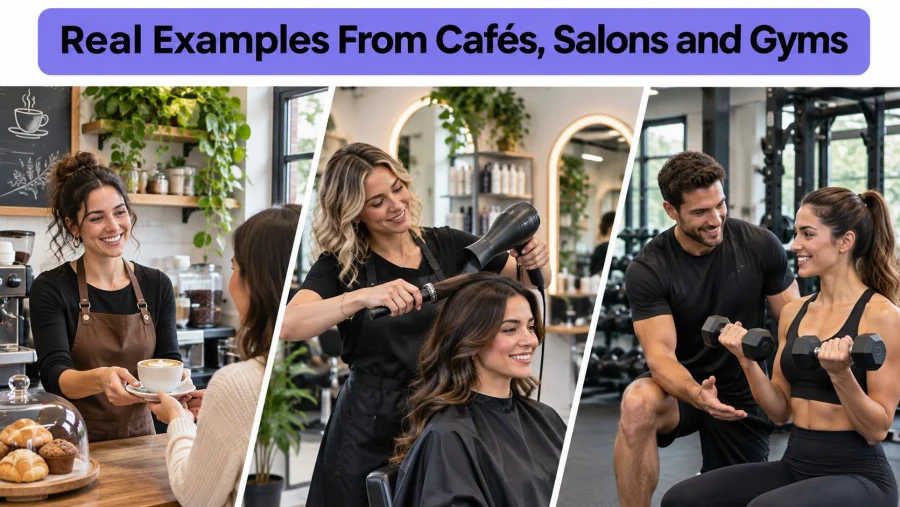
The café. A commuter orders the same drink at 8am every weekday. The need is speed and a drink that tastes the same each time. The owner drops a broad pastry discount that mostly attracted afternoon browsers and adds a quick-stamp reward for morning visits instead. Notice what the reward does here. It costs little, it speaks to the exact moment the need appears, and it asks nothing extra from the customer, no app to dig for, no form to fill in.
The salon. A client books a colour every six weeks, misses one appointment and drifts away. The need is recognition and convenience rather than a bigger discount. The salon sends a rebooking reminder with a small reward attached to the next appointment, and the six-week gap stops turning into six months. Records that live in one place make that gap visible in the first place, which is why salons running booking, payment and client history from a single system, such as Sambapay POS for Singapore salons, spot it before it becomes a loss. Even a paper diary works if someone reads it for patterns.
The gym. A member attends twice a month and says the sessions feel lonely. The need is belonging. The gym runs a monthly group class and gives a visit-based reward for turning up with a friend, so the reward funds the connection rather than the transaction.
Why do these work? A 2024 UK study of 2,000 consumers found that 51% preferred buying from brands after a positive previous interaction, while 41% named personalised offers, promotions and discounts as the most effective way to encourage repeat purchases. The same study found 56% said loyalty programmes could secure brand loyalty, rising to 71% among Gen Z and 60% among Millennials.
Each of the three examples also shares something quieter. None of the fixes required more personal data than the business already had, and none punished customers who prefer to stay offline. A stamp card and a phone-number lookup carry the same reward as an app. Fair value is part of the need itself: people notice when the trade feels one-sided.
Practical rule: if a reward needs a longer explanation than it takes to hand over the drink, it's the wrong reward.
Pick the story closest to your own customers and write down which need it points to.
Why Trust and Fair Value Are Easy to Miss
Most owners file trust under compliance and get on with the fun part, which is designing the reward. That's backwards. Trust is a customer need in its own right, and it decides whether anyone joins at all.
The gap is measurable. Deloitte's 2024 UK consumer loyalty survey found that 65% of respondents considered personalisation an important attribute of loyalty programmes, yet only 51% were satisfied with the personalisation they received. The same research found that only one in five UK consumers was happy for businesses to use personal information to provide more personalised products or services.
That isn't a contradiction. It's a condition. Recognition is welcome when the reason for it is visible and the customer can see what they get back.
A Trust Checklist That Costs Nothing
- Name each data field and its purpose. Name, phone number, birthday, and one line on what each is used for. If you can't explain a field in a sentence, don't collect it.
- Separate marketing from joining. Programme messages (points, vouchers, expiry) and promotional messages are different choices, and customers should be able to take one without the other.
- Offer a route that doesn't need an app. A printed card or a phone-number lookup keeps the reward open to everyone.
- State expiry in plain words. "Valid for 30 days from your visit" beats a paragraph of terms.
- Show the regular price beside the member price. A saving the customer can check is a saving they trust.
- Let people leave and delete their details. An exit that works makes the sign-up feel safer.
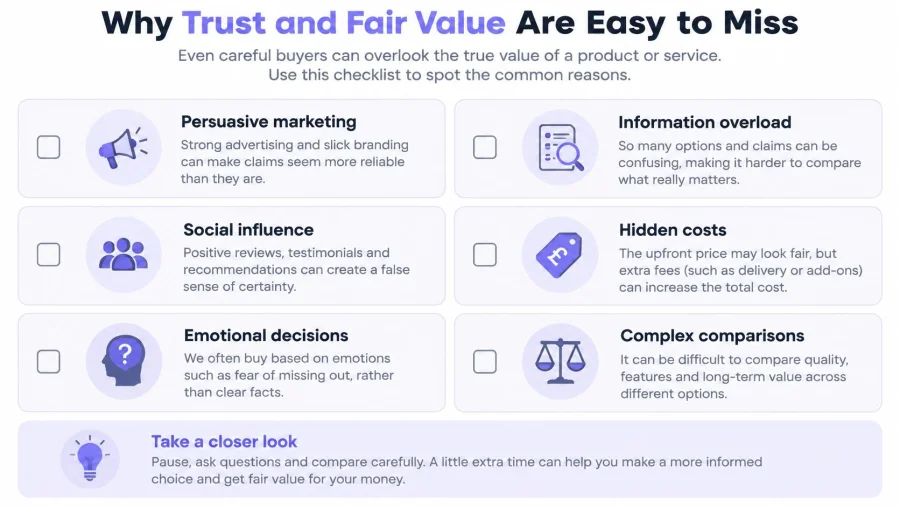
The suspicion runs deep. A UK loyalty programmes market intelligence report found that 54% of Britons believe supermarket loyalty cards benefit the supermarket more than the customer, 38% are uncomfortable with the amount of data collected, and half suspect non-member prices are inflated to make member offers look better.
The Legal Floor
The ICO guidance on marketing lists sets out the baseline. Customers should understand what messages they'll receive when they join, and each later electronic marketing message needs a clear opt-out where the soft opt-in applies. Messages about points or vouchers are administration of the scheme and sit apart from broader marketing, which generally needs clear consent.
There's a harder rule too. The ICO's UK GDPR guidance is clear that a business can't make collecting points conditional on agreeing to marketing when earning and redeeming points is the scheme's core function. Keep core rewards available to anyone who joins, whatever they decide about promotions.
A QR-based points rewards program can meet all of this without extra work, because the trust comes from what you explain rather than what you collect. BonusQR sends customers notifications only about important or helpful updates, such as earned rewards, upcoming coupon expiry, or new offers from the business, which keeps the admin messages useful and the marketing messages separate.
Digital Access Without Digital Exclusion
A regular who always books the same colour still pays the walk-in price, because the only way to join is an app she will not install. The scheme then serves the till, not her.
A UK research on loyalty schemes as a retail draw found that people without smartphones and under-18s may not know how to access loyalty prices, and that 43% of shoppers considered member-only pricing unfair while 40% didn't trust that loyalty prices were genuine savings.
Three low-cost routes cover most of that gap, and none of them needs a second app.
Staff can type a membership number from a printed card, the same way they would scan a code. A customer can give a phone number, the record appears, and the reward is applied. Or a member of staff can finish sign-up and redemption on one familiar screen, so a fumbled scan does not hold the queue.
Show the same regular price to everyone. Member offers stay an extra, not the only way to a fair price.
Then name who is easiest to miss: older customers, teenagers without a smartphone, visitors without a local account, and anyone who finds a small screen awkward. A BonusQR mobile web loyalty app runs in the browser as well as on iOS and Android, so customers can join and see their rewards without downloading anything.
Ask three people who never joined, or joined and never redeemed, what stopped them. Sort each answer as a missing phone, a confusing screen, or a price only members can see.
Respond to Each Need and Act This Week
Every need has a first response that costs little. The trap is choosing one response for all six, then wondering why the campaign only moved the customers who were already coming.
| Need type | First low-cost response |
|---|---|
| Functional | Fix the slow or inconsistent step before adding any reward |
| Emotional | Staff use customers' names, plus a handwritten thank-you or birthday reward |
| Social | Referral reward or group booking offer |
| Convenience | Online booking and quick redemption at the till |
| Value | Reward matched to the customer's spend level, shown against the regular price |
| Trust and privacy | Plain explanation of data use and a real choice of messages |
Start with functional, because the numbers are unforgiving. A 2024 survey of 2,000 UK consumers found that 51% had stopped shopping with a retailer because of poor product quality or unhelpful staff. No reward scheme outruns a cold drink served by someone who doesn't look up.
Segment Instead of Broadcasting
Generic coupons are the expensive habit. UK consumer research reported in 2026 found that 79% of 2,000 UK shoppers wanted personalised loyalty offers, but 61% said they had belonged to a programme while feeling no different from ordinary customers. Irrelevant offers were the leading frustration at 55%, and 52% said they were less loyal to retailers than three years earlier.
Segment on what you already have: visit frequency, product preference, birthday, location, or average spend. A weekday-morning coffee reward and a Saturday brunch offer are two different products, even when both come from the same kitchen.
Run One Change and Check It
Set the review date before you launch. Four weeks, same customers, compared with the weeks before.
Apply a cost test to every response you keep. If a change doesn't bring the same customers back inside the period you set, it doesn't stay, however much people said they liked it.
- Choose the need your regulars named most often, using the six types as your shortlist.
- Choose one response that fits a fixed, small budget. A fixed budget forces a decision about what the reward is really for.
- Book a review date four weeks out and compare repeat visits from those customers with the weeks before.
BonusQR lets a small venue launch that reward in an afternoon, with no POS integration and no new hardware. You create an account, set up your programme, share it with customers, and watch the loyalty build from there. The analytics show which offers perform best and help identify the most loyal customers, so the next decision rests on repeat visits rather than instinct.
That's the whole point of understanding needs. A discount can buy you one transaction. A reward aimed at the need behind it tells you whether the change worked, and it's free to start with BonusQR.


