
 Deutsch
 Español
 Français
 Italiano
 Magyar
 Polski
 Slovenčina
 Čeština
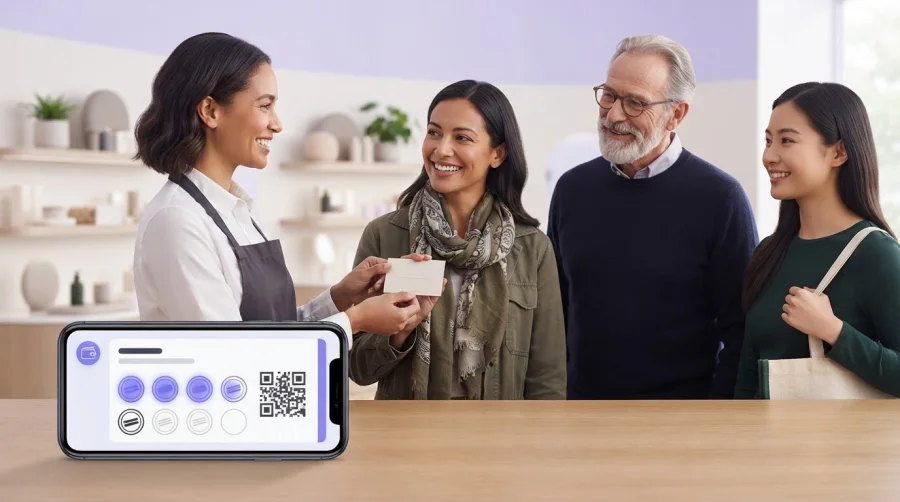
What if the reward customers remember isn’t a discount, but a moment that makes them feel recognized? Non-monetary rewards for customers can offer meaningful value without cutting prices or making every visit feel like a transaction.
Discounts are easy to understand, but they can squeeze margins or lower the perceived value of what you sell. A generic perk may not appeal to everyone, either. Choose rewards that fit your customers, feel attainable, and give people a clear reason to come back.
This guide shares 15 practical ideas, from personal recognition and exclusive access to experiences and charitable giving. You’ll learn how to compare options, set clear reward rules, and use customer feedback to make your program more relevant. You’ll also see how digital stamps or points can make progress easier to follow and help you understand which rewards customers use.
Key Takeaways
- Non-monetary rewards for customers can recognize loyalty without relying on discounts. Choose rewards your customers value and your business can deliver consistently.
- Explore 15 reward ideas across recognition, access, convenience, experiences, and community participation.
- Compare each idea by customer relevance, delivery effort, clarity, and repeatability before adding it to your program.
- Start with one goal, one audience, and a manageable set of rewards. Pilot the program, explain the rules clearly, and use customer feedback to improve it.
- Digital stamp cards and points systems can show progress toward a chosen perk. BonusQR integrates with Apple Wallet and Google Wallet.
What Are Non-Monetary Rewards for Customers, and Why Do They Matter?
Customers don’t always need a lower price to feel appreciated. Recognition, useful access, added convenience, or a memorable experience can make a visit feel more personal while keeping the product’s price intact. The right reward helps customers feel valued, rather than simply compensated for spending.
Non-monetary customer rewards are benefits, recognition, access, or experiences offered to customers that don’t directly reduce the price they pay. Examples include a personal thank-you, early access to a new product, priority booking, or an invitation to a customer event. These rewards can support a customer loyalty strategy by making the relationship feel more distinctive. Their value, however, depends on whether customers want them and can use them.
How non-monetary rewards differ from discounts
A coupon, cashback offer, or price reduction changes the financial cost of a purchase. A non-monetary perk changes another part of the experience: a customer might save time with convenient service, feel recognized by name, gain access to something exclusive, or enjoy an added experience. Both approaches can have a place in a loyalty program, but they offer different kinds of value.
Non-monetary doesn’t mean cost-free for the business. An event takes planning and staff time. Priority service uses operational capacity. A personal consultation requires someone’s attention. Before offering a perk, consider what it takes to deliver consistently and whether that effort fits the value customers receive. The overview of non-monetary rewards in incentive programs provides broader context on how these benefits can work alongside other incentives.
What makes a reward feel valuable to customers?
Relevance is the starting point. A regular café guest might appreciate an invitation to sample a new menu item, while a customer who books appointments may value a convenient priority slot. The same perk won’t appeal to every audience. Consider customer preferences, when the reward is offered, and whether it fits the experience your brand wants to create.
Clarity matters just as much. Customers should understand who qualifies, what they receive, and how to claim it without chasing down details. A reward can lose its appeal if the rules are confusing or redemption takes too much effort. Make the benefit specific, state expectations plainly, and keep the steps manageable.
To assess an idea, weigh its perceived value against the effort required to deliver it. Would a customer describe the perk as useful, personal, or enjoyable? Can your team provide it reliably without disrupting service? Digital stamps or points can show progress toward a chosen non-cash perk, making the reward structure easier to follow. The goal isn’t to assume a non-monetary reward will outperform a discount. Choose a benefit that feels relevant, is straightforward to redeem, and works for your business.
15 Non-Monetary Reward Ideas Customers Can Actually Use
The strongest non-monetary rewards for customers fit naturally into the experience you already provide. Use these ideas as a menu, not a checklist. Choose perks your audience will value and your team can deliver consistently.
Recognition
- Personal thank-you: Send a brief, genuine note after a meaningful purchase or visit. This suits businesses where staff can recognize returning customers without adding a complicated process.
- Milestone recognition: Acknowledge a customer’s anniversary or loyalty milestone with a message or small gesture. This works well when repeat visits or membership history are easy to track.
- Customer spotlight: With permission, feature a customer or their story in a newsletter or social post. This can suit community-oriented brands, especially when customers enjoy public recognition.
Access
- Early access: Let customers see a new product, menu item, or service before its general release. This fits businesses with launches and customers who value being first.
- Invitation-only preview: Invite a small group to preview an upcoming change or offer feedback. Keep the format simple and choose a group likely to appreciate having a voice.
- Member-only information: Share useful tips, product guidance, or behind-the-scenes updates with loyal customers. This works when the information is genuinely helpful, not just promotional.
Convenience
- Priority booking: Give eligible customers earlier access to appointment slots. This can be valuable for appointment-based businesses, provided it doesn’t disrupt service for other customers.
- Flexible service options: Offer a choice of appointment format or service timing where your operations allow it. Set clear limits so the option remains manageable.
- Simpler pickup or check-in: Create a convenient collection or arrival process for returning customers. This is most useful when your business can deliver it smoothly during busy periods.
Experiences
- Product tasting or demonstration: Let customers sample a new flavor or try a product in person. This suits businesses where a hands-on introduction adds to the experience.
- Short workshop: Share a practical skill related to your products or services. A workshop can deepen engagement, but it requires staff time and suitable capacity.
- Personalized consultation: Offer tailored guidance to help a customer choose or use a product. This fits businesses where expert advice is part of the brand experience.
Community participation
- Customer vote: Invite customers to choose between upcoming options, such as a seasonal flavor or event theme. Make the choice meaningful and explain how you’ll use the feedback.
- Small customer gathering: Host a casual event where customers can meet, learn, or share ideas. This suits businesses with an audience that values connection, but requires planning and space.
- Charitable choice: Let customers direct a business contribution toward one of a few causes. Choose a cause that aligns with your brand and clearly explain the arrangement.
Visible progress can make a perk easier to anticipate. A digital stamp card can show customers how close they are to a chosen reward, while BonusQR’s points systems can structure loyalty progress. Pick one or two ideas to test first, then explore research on the psychological benefits of non-monetary incentives as you consider which experience may resonate. If a digital format suits your program, you can set up a loyalty experience around your selected perk.
How to Compare Reward Ideas and Choose the Right Fit
A promising perk needs to work for customers and for the team delivering it. Compare ideas using four practical factors: relevance, delivery effort, clarity, and repeatability. This helps you weigh a memorable one-off gesture against a benefit customers can earn over time.
Match the reward to customer motivations
Start with what customers say and do. Ask a few simple questions in conversation, review feedback you already receive, and note which services or experiences customers request. Regular customers may appreciate recognition of their history, while occasional visitors might respond better to a clear first-step benefit. First-time customers may need an easy introduction rather than a perk that only long-term members can reach. Treat these as hypotheses and check them with your audience. Rewards work best as part of a broader customer loyalty strategy, not as disconnected gestures.
Check effort, fairness, and ease of redemption
Separate perceived value from operational effort. A personal acknowledgment may feel meaningful but depend on staff remembering customer details. A progress-based perk may be easier to explain consistently, but customers need a realistic path to earn it. One-off recognition can suit a special milestone; recurring benefits can reward ongoing participation. Neither format is automatically better. Choose based on customer interest and your ability to deliver it fairly.
Before launch, write down who qualifies, what progress is required, when the reward can be used, and how customers redeem it. Consider access barriers: a perk tied to a narrow time window may exclude customers with limited availability, while an event may not suit people who can’t attend in person. Clear alternatives can make the experience more inclusive.
Then test the idea on a manageable scale. Invite feedback, explain the reward, and observe whether eligible customers participate and complete redemption. Look for questions, hesitation, and points where the process breaks down. Use those signals to refine the offer rather than relying on an invented industry benchmark. If you want to organize progress with digital stamps or points, explore a digital loyalty program setup that fits your chosen reward.
How to Test and Improve a Non-Monetary Rewards Program
A small pilot helps you find out whether a reward works in practice, not just on paper. Set one goal, choose a reward for one audience, explain the rules, run the pilot, and review the results. This keeps the test manageable and gives you clear signals about what to adjust.
- Choose a goal. Decide what you want the reward to encourage, such as repeat visits, participation in a new service, or stronger engagement from a specific customer group. Pick an outcome you can observe, and note a baseline if you have relevant records.
- Select one reward and audience. Start with a perk that suits a defined group, such as regular customers or first-time visitors. Keep the options limited so customers know what’s available and your team can deliver the experience consistently.
- Explain the rules. State who qualifies, how progress is earned, what the reward includes, and how to redeem it. Keep the written terms and staff explanation aligned. If visible progress fits the reward, a digital stamp or points mechanic can show customers how they’re advancing toward it.
- Run the pilot. Make the reward available to the selected audience and record participation, redemption, and any repeat behavior relevant to your goal. Note the questions staff hear and the steps customers find difficult.
- Review and adjust. Compare what happened with your stated goal and baseline, where available. Gather customer feedback, then decide whether to keep, refine, or stop the offer.
Set clear rules and launch a manageable pilot
Before launch, walk through the process as a customer would. Can someone tell whether they qualify, understand what counts toward progress, and redeem the reward without extra explanation? Brief staff on the same steps and terms. A short, consistent explanation reduces confusion and helps customers receive the benefit as described.
Keep the first test focused. If you change the audience, reward, and rules at once, it becomes harder to understand which change shaped the response. A clear pilot gives you useful observations without turning a simple reward into a complex program.
Review participation and refine the offer
Participation and redemption tell different parts of the story. Customers may show interest but stop before claiming the reward. That could point to unclear terms, access barriers, or a perk that takes too much effort to use. Ask a few direct questions: What felt useful? What was confusing? Was anything difficult to redeem?
Look at repeat behavior alongside feedback, but don’t assume the reward caused a change. Other factors may have influenced customer visits or engagement. Change one element at a time, such as the explanation or redemption steps, then observe whether the experience improves. For broader planning, use a customer loyalty program management guide to consider how the reward fits into your overall program.
Use what you learn to make the next version clearer and more useful. To structure a pilot with digital stamps or points, set up a digital loyalty program that reflects the reward you want to test.
Turn Reward Ideas Into a Digital Customer Loyalty Experience
A reward is easier to follow when customers can see how they’re progressing toward it. A digital loyalty experience can give structure to non-monetary rewards for customers, whether the perk is early access, a special experience, or personal recognition. The format should support the reward, not add steps that make it harder to earn or redeem.
Choose a digital format that supports the reward
A digital stamp card can suit a straightforward visit- or purchase-based journey. Customers collect stamps as they meet the program’s stated requirements, then use their progress toward a selected perk. For example, a business might connect completed visits with access to a customer event. The reward doesn’t have to be a discount; stamps simply make progress visible.
A points system offers another way to structure progress. It may fit a program where customers accumulate points toward a choice of benefits, provided the earning and redemption rules are easy to understand. Choose the mechanic based on the customer journey: how people qualify, what progress they need to see, and how your team can explain and deliver the reward.
BonusQR’s digital loyalty platform includes digital stamp cards and points systems, with integration for Apple Wallet and Google Wallet. These capabilities can support a clear reward structure without making it more complicated. Choose a wallet-integrated option if it fits how your customers prefer to access the program, and explain where they can find their progress.
For a more distinct branded experience, BonusQR also offers custom white-label app development. This can suit a business that wants its loyalty experience to reflect its own identity. Consider the value of that branded journey alongside the work required to maintain the program. A simpler format may be a better fit if it serves customers well and matches your team’s capacity.
Make the next step simple for your business
Start by mapping the reward from the customer’s point of view. What action makes them eligible? How will they understand their progress? What happens when they’re ready to claim the perk? Then consider the staff process: how will the team describe the offer, recognize eligibility, and deliver it consistently? A digital format is most useful when it makes these steps clearer without adding unnecessary complexity.
Keep the program focused. Choose a mechanic that matches your reward, write down its rules, and make sure the customer-facing explanation and staff process align. A digital stamp card can show progress toward a selected reward, while a points system can organize a points-based structure. The right choice depends on the perk, customer journey, and operational capacity you’ve identified.
Ready to put your reward structure into practice? Start building your digital loyalty program with a format that fits your business and the experience you want customers to have.
Make Your First Reward a Starting Point
The best loyalty program isn’t finished at launch. It grows as you learn what customers value, what your team can deliver well, and which moments make people feel appreciated. Treat your first reward as a thoughtful starting point, not a permanent formula. Pay attention to how customers respond, invite honest feedback, and adjust the experience if it feels confusing or less useful than expected.
That steady learning can make non-monetary rewards for customers a more personal part of your relationship with them. Start with one clear idea, make the benefit easy to understand, and give customers a simple way to take part. Small, considered improvements can help your program stay relevant as your audience and business evolve.
Ready to put your idea into action? Start building your digital loyalty program and shape a reward experience that fits your customers. Begin with one idea, then keep refining it as you learn.
Frequently Asked Questions
Can non-monetary rewards work for small businesses?
Yes. A small business can offer a thoughtful reward without building a complicated program. For example, a neighborhood bookstore could invite regulars to a short author talk, while a salon might recognize a customer milestone with a personalized note. Choose an idea that suits your customers and fits your team’s capacity. Try it with a clearly defined group first, then use customer responses to decide whether to continue.
How often should a business offer non-monetary rewards?
Set a schedule that reflects how often customers visit and how long it takes them to qualify. A reward tied to frequent visits may feel attainable on a shorter cycle, while an invitation to a seasonal event may work less often. Review the program at a consistent interval, such as after a campaign or service season. If customers lose interest before qualifying, reconsider the timing or the steps required.
Can non-monetary rewards replace discounts completely?
They can replace some discounts, but they don’t have to replace every promotion. A practical perk or special access may suit customers who value convenience, while a price offer may be more relevant for a short-term promotion or a product customers are hesitant to try. Give each offer a clear purpose. Compare customer response and the effort involved before deciding whether to use one approach or a mix.
What happens if customers do not redeem a reward?
First, find out where customers drop off. If few people begin earning the reward, the offer may not be compelling or visible. If customers qualify but don’t claim it, check whether the instructions, timing, or redemption location create friction. A simple tracking record can separate these stages. Then ask a few eligible customers what stopped them. Their answers can point to a specific fix without treating low redemption as a verdict on your business.
Are experiences better rewards than practical perks?
Neither is automatically better. A customer who enjoys learning may value a demonstration or workshop, while someone with a tight schedule may prefer a practical benefit that makes a visit easier. Consider who can realistically use the reward, what it takes to deliver, and whether it suits your brand. If you’re unsure, test one experience-based option and one practical perk with similar customer groups, then compare feedback and participation.
Can a customer loyalty program reward actions beyond purchases?
Yes, a program can recognize actions such as sharing feedback, referring a friend, or joining a community activity, if those actions fit your business and customer experience. For example, a local class studio might recognize attendees who contribute ideas for future sessions. Explain what action qualifies and what recognition follows. Keep participation voluntary, and don’t make a reward depend on positive feedback. Review whether the activity feels worthwhile to customers and manageable for your team.