Marketing Loyalty Schemes: How to Drive Repeat Sales
97% of shoppers belonged to at least one supermarket loyalty scheme, according to the UK government's review of grocery loyalty pricing. Membership is familiar behaviour, not proof that a business has earned anyone's loyalty.
For cafés, salons, restaurants and independent shops, the useful question is narrower: does the reward create a profitable visit that wouldn't otherwise happen? Effective marketing loyalty schemes treat every offer as a behavioural experiment, not a race to collect registrations.
Why Marketing Loyalty Schemes Pay Off for Repeat Business
A YouGov study of British adults found that 77% subscribed to at least one loyalty programme, while membership stood at 25% for restaurants and coffee shops and 3% for beauty parlours or salons. Those category figures describe British adults, not a subset of programme members.
That leaves local businesses room to build customer recognition. It doesn't guarantee demand for another card, especially if the benefit is difficult to understand.
A marketing loyalty scheme is a repeatable reward for returning customers that also records who came back and how often. Its main commercial jobs are recovering lapsed customers, encouraging more frequent visits and increasing spend per visit.
Marketing goals a loyalty scheme can serve
| Marketing goal | Customers it targets | Why it matters |
|---|---|---|
| Win back lapsed customers | People who have not visited for several weeks | Recovering a customer can cost less than finding a new one |
| Raise visit frequency | Occasional visitors | Visit frequency drives much of a local business's revenue |
| Lift spend per visit | Regular customers with steady visits | Small increases in each transaction compound over time |
| Win new customers | First-time visitors | A welcome reward gives a one-off visitor a reason to return |
| Reward top customers | Highest-spending members | Protects commercially important customer relationships |
The cheapest-looking offer isn't necessarily the most economical. A discount sent to a committed regular may reduce margin, while a modest incentive sent to someone who has stopped visiting could recover a sale.
Practical rule: Choose the customer behaviour first. Choose the reward second.
Comparisons outside local retail can help expose confusing eligibility rules. Danza Academy of Social Dance's resource to compare player reward programs offers an adjacent example, though gambling incentives aren't a template for everyday customer relationships.
For service businesses, QR loyalty ideas for gyms offer a more relevant starting point for connecting recognition with attendance.
The owner should write down the single commercial goal that matters most this quarter. A scheme is only a means of reaching it. Trying to solve acquisition, retention and basket size simultaneously makes the results harder to interpret.
Matching a Scheme Type to Your Goal
The best scheme type is the simplest one that records and rewards the intended behaviour. A café trying to increase return visits doesn't automatically need points, tiers and a subscription.
Treat each option as a small experiment. The mechanic you pick decides which behaviour you can measure, so a scheme that tracks visits tells you nothing about basket size. A growing member count, on its own, proves neither moved.
Loyalty scheme types compared
| Scheme type | Best for | Set-up effort | Watch out for |
|---|---|---|---|
| Stamp card | Visit frequency in cafés and salons | Low | Rewards can feel distant if the card is too long |
| Points system | Spend across varied purchases | Medium | Points take time to feel valuable |
| Visit reward | Occasional visitors who need a nudge | Low | Gives the same reward to everyone |
| Spend threshold | Lifting average transaction value | Low | Customers may stretch orders just to qualify |
| Tiered cashback | Rewarding top customers | Medium | Tiers need simple, clearly stated rules |
| Welcome bonus | Winning new customers | Low | A one-time reward must lead towards another visit |
| Paid membership | Businesses with a strong loyal base | High | Members need clear ongoing value |
A stamp card adds a stamp for each qualifying purchase, so progress towards the reward is visible at a glance. It records visit behaviour without any spending calculation, which makes the result easy to read: did stamped customers come back sooner?
A points system converts purchases into credits that customers later redeem. It suits mixed baskets where visit counts alone miss the big spenders, but it needs reliable spend records and a plain explanation of what a point is worth.
A visit reward grants a benefit after a qualifying attendance or transaction. A spend threshold works the other way round, paying out when a basket or accumulated spend reaches a stated amount. The first measures frequency, the second measures value per visit.
Tiered cashback raises the credit earned as customers qualify for higher levels. It recognises your most valuable relationships, but staff must explain qualification and redemption without a lengthy script.
A welcome bonus rewards joining or an initial purchase. Sign-ups tell you the offer was attractive; only a subsequent purchase tells you it retained anyone.
Paid membership charges for continuing benefits. The Nanak Car Wash membership guide provides a useful service-business comparison when weighing a recurring-use proposition.
Choose according to the missing behaviour
A visit-frequency gap calls for stamps or visit rewards. A basket-size gap calls for a spending threshold. Protecting top-customer relationships may justify a tier.
I'd postpone paid membership until the ongoing value is easy to explain and the promised benefits can be delivered consistently. Fees introduce cancellation questions and service obligations that a young scheme rarely needs.
For attendance-led businesses, these practical loyalty options for gyms can help narrow the choice.
Start with one mechanic. Overlapping schemes add administration and blur attribution, because you can no longer tell which incentive changed the behaviour you were testing.
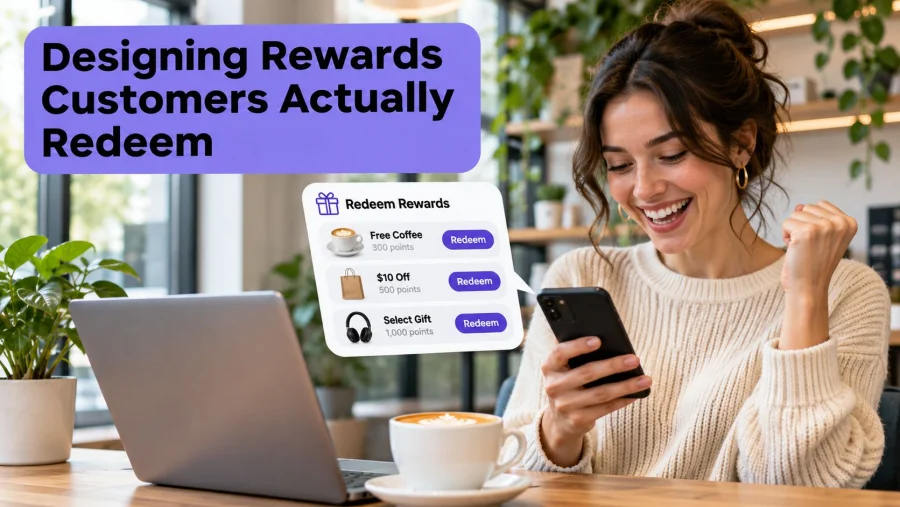
Designing Rewards Customers Actually Redeem
Membership can coexist with disappointment. A Retail Gazette analysis of loyalty value reports that 26% of members surveyed didn't feel they received real value, while a separate analysis cited there found 57% felt rewards took too long to earn and 47% found rewards unattractive.
A reward needs both a desirable benefit and a believable route to earning it. Making an unappealing reward easier to collect won't solve the underlying problem.
Match the timing to the purchase cycle
Instant rewards provide an early benefit during registration or an initial purchase. Milestone rewards recognise a qualifying visit count or spending total. Delayed discounts provide a benefit later, such as during a future booking period.
Consider a hypothetical café comparing a free drink after the second visit with one after the tenth. The earlier reward tests whether a quick win encourages a return; the later reward tests sustained activity, but risks losing occasional visitors before they qualify.
A salon needs a different calendar from a takeaway coffee counter. Reward timing should reflect normal booking intervals, not impose a café's purchasing rhythm on infrequent services.
Calculate margin, not just reward value
Suppose a drink costs £1 to provide and the café's average transaction is £3.50. These are illustrative assumptions, not market benchmarks.
The transaction's full selling price isn't available to fund the reward. Ingredients, packaging, payment costs and any additional labour still need paying, so the comparison must use extra contribution margin, not revenue alone.
A reward is affordable only when the additional contribution it generates exceeds its cost, administration and software expense.
A small immediate benefit can sit alongside a threshold for something larger. That provides an early success without teaching customers to expect a discount on every purchase.
After registration, BonusQR automatically sends a welcome coupon, such as a welcome drink, discount, free coffee or another reward chosen by the business. The practical choice is a benefit that demonstrates value without consuming the margin needed to fund later visits.
A reward-design checklist should include:
- Early progress: Test a first win within two visits as a starting hypothesis.
- Cost ceiling: Set an internal reward-cost share using actual transaction margins.
- Larger benefits: Attach them to a qualifying visit or spend threshold.
- Clear wording: State what qualifies, what customers receive and how redemption works.
Personalising Offers Without Losing Trust
Useful personalisation starts with a specific question: what information is necessary to make this offer relevant? A customer's visit history is usually more useful than collecting personal details that won't influence the campaign.
First-party data comes directly from the business's relationship with its customers. It's a practical foundation for targeting, but collecting it directly doesn't remove the need for clear explanations and appropriate permissions.
Collect only what the offer needs
- Visit recency: Identify how long it has been since the last recorded visit.
- Visit frequency: Separate occasional customers from habitual visitors.
- Spend per visit: Understand basket patterns where spending is recorded.
- Product or service category: Match benefits to purchases customers already value.
- Reward redemption: Distinguish benefits customers use from those they ignore.
A lapsed-customer offer needs a last-visit date and a sensible inactivity window. A salon should base that window on expected rebooking patterns rather than treating every gap as abandonment.
A category reward needs purchase-category information. For example, a retailer could offer a relevant accessory benefit to customers who repeatedly purchase from the same product line, rather than broadcasting an unrelated store-wide discount.
Keep personalisation inside a clear boundary
The UK government's grocery loyalty review found that 61% of shoppers were comfortable receiving personalised offers based on data retained within that supermarket, compared with 32% for sharing anonymised data with other companies and 17% for sharing identifiable data for third-party promotions.
Those findings concern supermarket shoppers, but they illustrate an important distinction: receiving a useful offer from a familiar business isn't the same proposition as receiving marketing from outsiders.
At sign-up, the business should explain what it collects, why it needs it, how long it keeps it and whether anyone else receives it. Marketing preferences should be separate from the basic reward experience wherever practical.
Customers also need a straightforward way to change preferences or opt out. An opt-out shouldn't trigger repeated attempts to persuade them back onto a mailing list.
Trust boundary: Keep identifiable customer information out of outside partners' promotional lists.
Narrow, behaviour-based offers are a better starting hypothesis than indiscriminate broadcasts. Their relevance can be tested, their contact frequency can be controlled, and customers have less reason to feel watched.
How to Launch and Measure Your Scheme Step by Step
Treat the launch as one behavioural experiment with a measurable payoff. Registrations alone prove little. A member list only has value when the right customers change their behaviour and the extra revenue covers the reward cost.
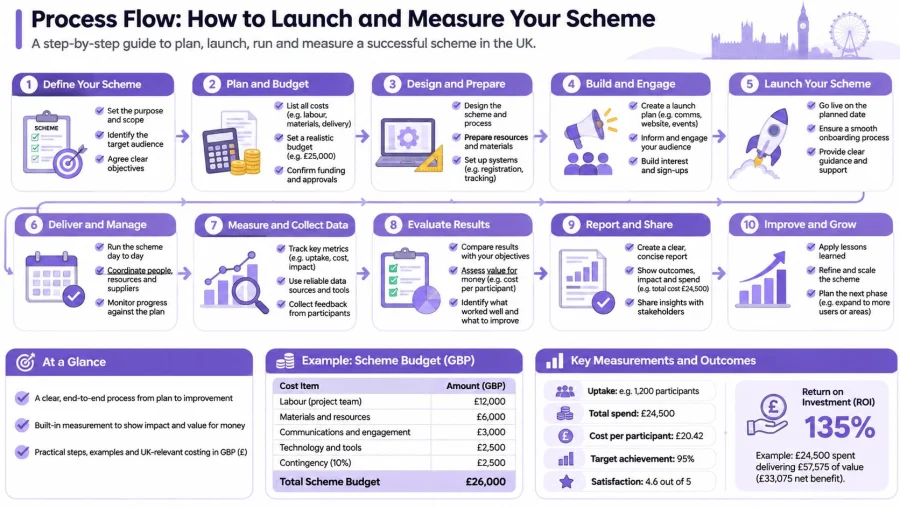
Choose a single goal and record it. State the behaviour, target customer and commercial outcome before configuring anything. Keep acquisition and retention objectives separate. A welcome offer answers a different question from a repeat-visit reward, so mixing them at launch makes the result harder to read.
Select one scheme and its qualifying rules. As an initial test design, place the first reward within two or three visits. Check that customers can understand the offer without staff calculating it. Simplicity matters more than cleverness here. If the rule needs a paragraph of explanation at the counter, the scheme adds friction at the exact point where the business wants a smooth experience.
Put the joining code beside payment. With BonusQR, customers scan the business's QR code, see the loyalty offer and can join the club with one click. Position the code where waiting customers can see it without obstructing payment. The sign should answer three questions in plain language: what customers get, what they need to do, and when the reward becomes available.
Configure the scheme and record member activity. A BonusQR loyalty programme can be set up in just a few minutes. Staff should consistently attach qualifying visits to the correct member profile from launch. Inconsistent scanning damages the experiment because the business cannot tell whether a weak result came from the offer or from missing activity. Check the process on an ordinary phone before the first busy trading period.
Promote the same offer across customer touchpoints. Counter signage, window materials and permission-based messages should explain the same benefit. Different wording creates doubt about the terms. Keep the main reward, qualifying action and redemption point consistent wherever the customer meets the business. For small teams, that consistency is worth more than a broad campaign with vague claims.
Run a controlled pilot. A proposed 30-day test could randomly show an additional incentive to half of otherwise comparable customers, while retaining the same standard service for everyone. Compare equivalent group sizes and trading periods, and avoid assigning only enthusiastic regulars to the incentive group. That makes the test a fairer read on whether the scheme changes behaviour.
Read early signals without declaring victory
BonusQR businesses usually see initial results within the first two weeks, depending on business type and how attractive the loyalty offer is. Treat that as an early signal, not a final result. The full proposed pilot still needs completing, and infrequent services may need longer observation before a retention judgement is credible.
Square's UK Local Economy Report defined repeat customers as people returning to the same business at least four times in a year. That makes a useful tracking marker, not proof that a short pilot has established annual loyalty.
Consistent retention tracking for gyms and salons helps distinguish newly returning customers from an already loyal membership. The same discipline applies to cafés, shops and salons: segment the result before calling it success.
The Little Zoo Garden animal cafe articles are not a measurement source, so the pilot should rely on the scheme's own activity and sales comparisons.
Loyalty scheme metrics and what they tell you
| Metric | How to work it out | What it tells you |
|---|---|---|
| Time to first redemption | Days from sign-up to the first reward used | Whether the first win arrives fast enough |
| Redemption rate | Members who redeemed a reward divided by members who joined | Whether rewards feel worth the effort |
| Incremental visits | Member visits minus comparison-group visits, adjusted for group size and baseline activity | Whether the scheme adds visits rather than rewarding existing ones |
| Average transaction value | Member spend divided by transactions, compared before and after | Whether spend per visit is rising |
| Reward cost ratio | Reward cost divided by the extra revenue it brings | How much additional revenue rewards consume; margin and operating costs determine profitability |
Common Mistakes and How to Fix Them
The most common-looking success can conceal the most important failure: members join, but their purchasing doesn't change. A growing database isn't a commercial result.
Consider a hypothetical café pilot with 200 sign-ups in a month, an average 28 days to first redemption and zero incremental visits against its comparison group. The slow reward is a sensible first suspect, although inconsistent scanning or an unattractive benefit could produce a similar pattern.
Diagnose before increasing the discount
A smaller, earlier reward is a cleaner test than making the distant prize more generous. A larger discount raises the cost without necessarily removing the delay.
High redemption with flat average transaction value also needs careful interpretation. If incremental visits rise, the scheme may still work; if both spending and visits stay flat, the business may be subsidising existing behaviour.
The first operational check should happen at the till. Staff can test the joining journey on an ordinary phone, check whether the code is visible from the queue and confirm that the offer loads clearly.
Loyalty scheme problems, causes and fixes
| Symptom | Likely cause | Fix |
|---|---|---|
| Members sign up but never return | First reward is too far away | Test a small instant reward within the first two visits |
| Few customers join at the till | Join step is slow or the QR code is hard to see | Place the QR code where payment happens and keep joining simple |
| Rewards cost more than the visits they bring | Discounts go to customers who would have come anyway | Limit rewards to lapsed customers or spend thresholds |
| Staff skip scanning or redeeming | Redemption feels slower than a paper stamp | Train staff on a single scan step and check it weekly |
| Customers unsubscribe from messages | Messages are too frequent or generic | Cap contact frequency and send behaviour-based offers |
Separate staff friction from customer rejection
A drop in recorded redemptions during busy periods may indicate missed scans rather than weak interest. A supervisor should watch the transaction flow before redesigning the incentive.
Rising unsubscribes need similar care. Frequency, relevance and unclear expectations at sign-up are all plausible causes, so the business should inspect the message history rather than automatically increase the reward.
- Change one variable: Adjust timing, eligibility or presentation, not all simultaneously.
- Record the hypothesis: State what the change is expected to improve.
- Keep the comparison stable: Avoid mixing a reward change with unrelated promotional activity.
For a proposed 30-day retest, that discipline makes the result interpretable. Without it, a better trading month can easily be credited to the wrong change.
Start Your First Loyalty Scheme This Month
The decision isn't whether loyalty schemes are popular. It's whether a small, controlled offer can improve the business's next purchasing cycle without sacrificing too much margin.
A manageable starting point is a single goal, a matching reward mechanic and a written test budget. The owner should also name the person responsible for staff training, weekly checks and the final commercial decision.
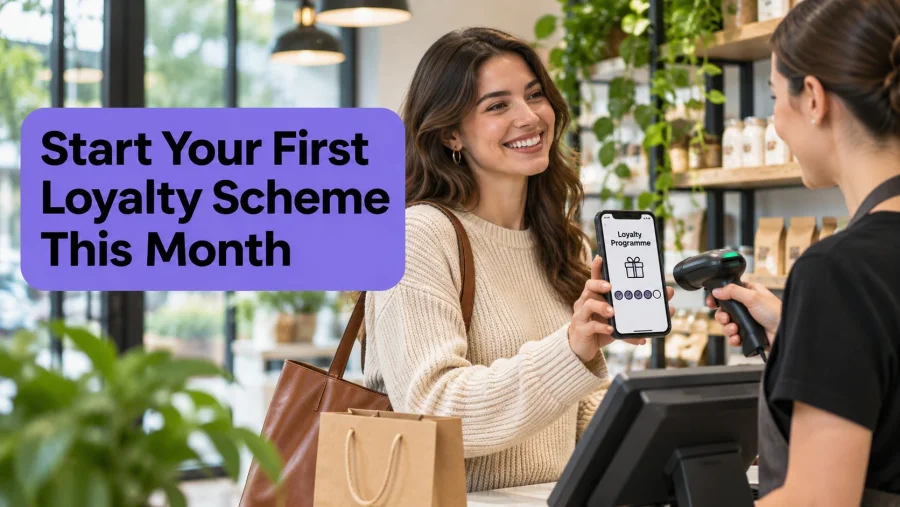
Make the smallest useful commitment
For a proposed month-long pilot, a stamp card or visit reward fits a frequency problem. A spending threshold fits a transaction-value problem, while an earned tier fits a need to recognise top customers.
Set an early reward as the test hypothesis, then agree the stopping rule before launch. At the proposed day-30 review, a frequency-led scheme should show positive incremental visits and enough additional contribution to cover rewards and operating costs.
A spend-led scheme should instead demonstrate additional basket contribution. A reward cost ratio alone can't establish profitability because revenue isn't margin.
- Keep: The intended behaviour improves and additional contribution covers total costs.
- Adjust: Customers engage, but reward timing, eligibility or costs undermine the result.
- Stop: The offer changes no valuable behaviour, or staff can't operate it reliably.
A small first experiment keeps the cost of a wrong guess low. It also avoids committing the business to generous permanent benefits before anyone knows whether customers respond.
Keep setup costs proportionate
The simplest cost-effective setup is the one that avoids unnecessary integration, hardware and administration. Software fees are only part of the budget; reward fulfilment and staff time belong in the calculation too.
BonusQR fits this test-first approach as a QR-based platform requiring no POS integration or extra hardware. Customers can join with one click, while staff scan and redeem inside the app.
Its options include Stamp Card, Points System, Fixed Discount, Special Occasion, Tiered Cashback, Reward for Spend, Reward for Visit and Onboarding Promotion. The Free plan includes seven programme types: Stamp Card, Cashback, Reward for the amount spent, Reward for Visit, Fixed Discount, Custom Offer and Onboarding Promo.
BonusQR also offers a free consultation to help businesses choose a loyalty setup.
Start at BonusQR, launch a first stamp card or visit reward in minutes, and begin tracking repeat activity from the first week. A focused pilot gives the business something more useful than another membership total: evidence of which reward earns the next profitable visit.


