
 Deutsch
 Español
 Français
 Italiano
 Magyar
 Polski
 Slovenčina
 Čeština
Most shop owners don't have a sales problem. They have a decision problem.
A quiet week hits, so they try a discount. Footfall dips again, so they post more on social media. A competitor runs an offer, so they copy it. Nothing feels consistent, and every tactic starts to feel like a gamble.
That cycle is exhausting because it treats growth like a bag of tricks instead of a system. Retail sales usually move when one of four things improves: more people walk in, more visitors buy, each customer spends more, or more of them return. If a tactic doesn't affect one of those levers, it's probably noise.
Stop Guessing and Start Growing Your Sales
Random activity can keep a business busy while leaving sales flat. A new display, a last-minute promotion, a few boosted posts, a leaflet drop. Each one can work. The problem is that most owners run them without a clear link to revenue.
A better way to think about how to increase retail sales is through four levers: traffic, conversion, average spend, and loyalty. That framework forces each decision to earn its place. If a campaign doesn't bring people in, help them buy, increase basket size, or bring them back, it doesn't deserve time or margin.
The timing matters. UK retail sales volumes increased by 1.3% in 2025, marking a significant recovery after declines in 2022 and 2023 according to Deloitte's UK retail sector tracking. That matters for independent retailers, cafés, and salons because a recovering market creates room to capture spend. It doesn't guarantee growth. It rewards businesses that act with intent.
Four levers beat scattered tactics
Most underperforming shops don't need more ideas. They need fewer, better ones.
A practical framework looks like this:
- Traffic: Give nearby people a reason to notice the shop and step inside.
- Conversion: Help browsers decide with less friction and more confidence.
- Average spend: Make the next item, upgrade, or add-on feel useful and easy.
- Loyalty: Turn one purchase into a pattern of repeat visits.
Practical rule: If the team can't explain which of the four levers a tactic is meant to improve, it shouldn't go live.
This is also where many small businesses miss an easy win. They work hard to attract attention, then fail to capture customer details or reward a return visit. That's why loyalty isn't a separate project. It connects every lever. For businesses comparing simple setup options, reviewing QR-based rewards rates helps clarify whether a digital loyalty tool fits the current stage of growth.
Growth gets easier when the basics are organised
There is still room for local marketing, events, merchandising, and offers. They just need to sit inside a system. Owners who want broader ideas on visibility can also review this guide to local business marketing alongside the in-store tactics below.
The main shift is simple. Stop asking, "What should the business try next?" Start asking, "Which lever is weakest right now?"
That question usually leads to better decisions, faster fixes, and fewer wasted promotions.
Get More People into Your Shop
A lot of owners hit this point at the same time. The shop is open, the shelves look good, the team is ready, but the street keeps flowing past the door. Sales feel flat, so the instinct is to change prices or run another discount. Usually the first problem is simpler. Not enough of the right people are coming in.
Traffic is the first growth lever because the other three depend on it. If footfall is weak, conversion work has less room to pay off, average spend gains stay small, and loyalty has too few customers to build from. The goal is not more random visits. It is more local, relevant visits from people who are likely to buy and likely to return.
Turn the frontage into a decision point
Your frontage has one job. It needs to give a passer-by a clear reason to stop now, not someday.
Weak windows usually fail in familiar ways. Too many products. Too many messages. Old posters that signal neglect. Offers with no context. Owners often try to show range, but range rarely sells from the pavement. Clarity does.
A stronger setup is tighter. One hero product or category. One message. One reason to step inside today.
For example, a café can lead with a seasonal drink and a visible morning bundle by the door. A gift shop can build the window around one live occasion, such as teacher gifts, last-minute birthdays, or housewarming ideas. A salon can show a specific result with a clear call to book or ask inside. The principle stays the same. Sell the first decision, which is entering the shop.
Use a quick three-part check:
- Message: Can someone understand what you want them to notice in a few seconds?
- Relevance: Does it connect to what nearby customers need right now?
- Urgency: Is there a timely reason to come in today?
I often tell owners to stand across the street and look at the shop like a stranger would. If the display tries to say five things, it usually says nothing.
Use nearby businesses as traffic partners
One of the cheapest ways to increase footfall is to borrow attention from a business your customer already visits. This works best when the offer is useful, immediate, and easy to explain at the counter.
A salon and café can swap bounce-back cards with a simple perk attached. A boutique and florist can build a shared gifting display during busy seasonal periods. A grocer and fitness studio can promote post-workout meal options with a pickup incentive for members.
These partnerships work because they transfer trust. The customer does not need a long explanation. Someone they already buy from has made a relevant introduction.
For owners who want traffic efforts to feed repeat visits as well, it helps to understand how retail businesses retain customers. The best local partnerships do more than create a one-off spike. They bring in people you can identify, follow up with, and give a reason to revisit.
A local partnership should answer one practical question fast: why would this customer care enough to walk in today?
Run small events that create a real reason to visit
Small, focused events usually beat big, vague ones. They cost less, take less organising, and give customers a clearer reason to show up.
Good examples include tasting tables, product demos, mini consultations, local maker pop-ins, short workshops, and themed shopping hours built around a specific problem or occasion. "How to style one outfit three ways" is stronger than "fashion night." "Summer skin check and product picks" is stronger than "beauty event."
Three rules keep events from turning into expensive noise:
- Keep the topic narrow. Specific problems attract stronger intent.
- Tie attendance to a relevant offer. A useful sample, bundle, booking perk, or bounce-back incentive works better than a generic discount.
- Capture follow-up permission. If people attend, enjoy it, and disappear, you paid for activity, not growth.
Simple loyalty technology proves its worth. A QR sign at the till, event table, or entrance can turn walk-ins into identifiable customers without adding friction for staff. That connects the first lever, traffic, to the fourth lever, loyalty. Instead of hoping visitors remember you later, the shop gets a practical way to bring them back.
Traffic improves when the business is easier to notice, easier to understand, and easier to talk about locally.
Convert More Visitors into Customers
More people in the door doesn't always mean more sales. Conversion improves when the shop reduces uncertainty. Customers buy when they feel understood, not handled.
That starts with the way staff speak. Generic service sounds polite but often does nothing. "Let me know if you need anything" pushes all the work back onto the customer. Strong conversion comes from guidance.
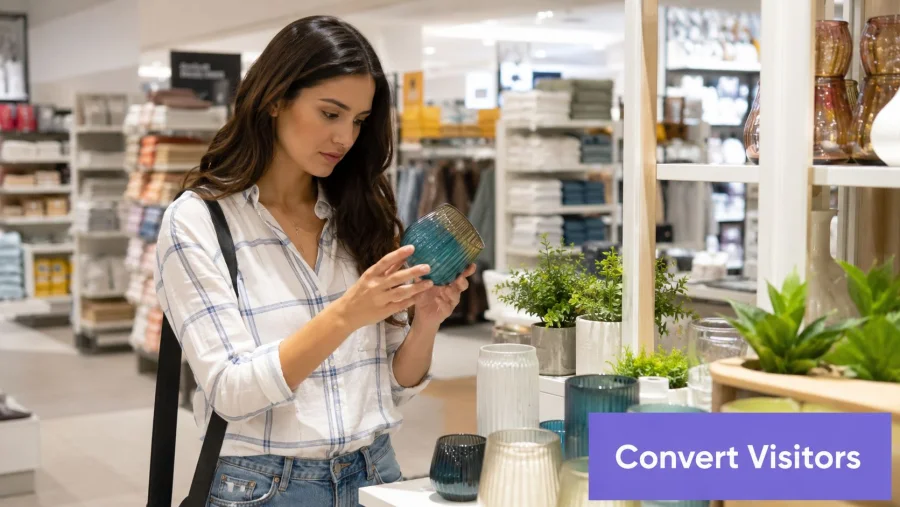
Replace selling with prescribing
The word matters. Selling feels pushy because it centres the product. Prescribing works because it centres the customer's problem.
This approach is especially clear in service-led retail. Saloniq's UK salon advice recommends auditing inventory to replace "dust-gatherers" that haven't moved in 90 days with "hero products" that solve specific client concerns. The same source argues for a prescribing mindset that builds revenue through trust rather than pressure.
That idea applies far beyond salons.
A café team member can say, "If you'd like something less sweet, this works better than the usual flavoured option." A gift shop assistant can say, "If this is for a housewarming, these are the pieces people usually pair together." A beauty retailer can ask about skin concerns before mentioning any product.
Customers rarely want more choice. They want less risk.
Fix merchandising that makes buying harder
A common conversion problem isn't price. It's confusion.
Products should answer buying questions in the order customers naturally ask them. What is this for? Is it right for me? What goes with it? Why should I trust it?
Poor merchandising leaves those answers scattered across shelves. Better merchandising groups products around use, outcome, or occasion.
A practical reset looks like this:
- Lead with bestsellers: Place proven products where traffic naturally flows.
- Group by need: Merchandising by problem solved often beats merchandising by supplier or category.
- Show the pairings: Put complementary products where the decision is made, not elsewhere in the shop.
- Remove slow dead stock: If products weaken visual clarity and don't move, they cost more than shelf space.
Give the team better words
Most staff don't need a hard sell script. They need prompts that feel human.
Try lines like these:
- For a salon or wellness space: "What's the main thing you're trying to improve at home between appointments?"
- For a homeware or gift shop: "Is this for your space, or are you buying for someone else?"
- For a café counter: "Would you like the lighter option or something more filling with that?"
The wording works because it narrows the decision.
A final friction point sits at the till. Long waits, unclear pricing, or a rushed checkout can kill a sale after all the hard work on the floor. Keep the final step clean. Make small add-ons visible, but don't let the counter become cluttered. If the business uses digital incentives, simple customer rewards and coupons can support the close without forcing the team into awkward discounting.
Increase Average Spend per Visit
Once a customer has decided to buy, the business has a short window to increase basket value without increasing pressure. During this interval, average order value moves. It often moves faster than traffic because the customer is already engaged.
The mistake is making upselling sound like upselling. Customers resist when they hear a pitch. They respond when they hear a useful suggestion.
Offer the next logical item
The cleanest add-ons are the ones that complete the purchase.
A few examples make the difference clear:
| Business type | Weak upsell | Better add-on |
|---|---|---|
| Café | "Would you like anything else?" | "Would you like a pastry that pairs with that coffee, or are you after something savoury?" |
| Salon | "Do you want to buy a product?" | "If you're trying to keep that result between visits, this is the one clients usually use at home." |
| Boutique | "Can I interest you in accessories?" | "These are the two pieces people usually wear with that outfit." |
The better version lowers effort for the customer. It gives a relevant choice instead of a vague invitation to spend more.
Build bundles around outcomes
Bundles work when they feel like a smarter purchase, not a stock-clearance trick.
Strong bundles share three traits:
- They solve one job: A "morning coffee and pastry" bundle works because customers already think that way.
- They remove decision fatigue: One bundle can replace several separate small choices.
- They protect margin better than blanket discounting: The business gives value through curation, not only through price.
A salon can group a post-treatment care set around a single result. A gift shop can create ready-made gifting bundles by occasion. A convenience retailer can pair staples that are often bought together. The key is to merchandise and name the bundle around the customer's use case.
Use trade-ups carefully
Not every customer wants the cheapest version. Many want confidence that they're choosing the right one.
That creates room for a calm upgrade path:
- Start with the need.
- Show the good-fit option.
- Offer the better version only if the added value is easy to explain.
A simple script helps. "This option does the job well. If you want something that lasts longer or gives a stronger result, this is the step up." That keeps the conversation grounded in use, not margin.
NetSuite's UK retail guidance also highlights strategic product placement in high-traffic areas for bestsellers and profitable upsells, and recommends placing complementary products together to increase basket size. The principle is straightforward. If the business wants larger transactions, it must make larger transactions easier.
Average spend doesn't increase because staff become more aggressive. It increases because the business becomes better at helping customers build a complete purchase.
Create Customers Who Come Back Again
One-time sales create activity. Repeat sales create stability.
Loyalty is often treated like a nice extra after traffic and conversion are sorted. In reality, it supports both. A returning customer is easier to convert, more familiar with the range, and less expensive to bring back than finding a new one from scratch.
That is why a loyalty scheme shouldn't be reduced to a paper stamp card at the till. Paper gets lost. Staff forget to offer it. The business learns almost nothing from it.
The business case for loyalty is strong
The commercial case is clearer than many owners assume. Martin Newman's UK retail analysis states that loyalty members generate 12–18% more annual incremental revenue growth than non-members. The same source notes that improving customer retention by 5% can increase profits by 25% to 95%.
Those numbers matter because they shift loyalty from "marketing extra" to operating priority.
A good scheme does three jobs at once:
- It rewards repeat behaviour
- It identifies who the best customers are
- It creates a reason to re-engage people who drift away
What works and what often backfires
Not all loyalty structures help.
A weak scheme usually has one of these problems:
- Sign-up friction: Staff need too many steps, so enrolment never becomes routine.
- Rewards that feel distant: Customers don't see progress, so they stop caring.
- Too much discounting: The business trains people to wait for the next deal.
A stronger approach is simple and visible. Immediate enrolment. Clear progress. Rewards customers can understand without explanation. Tiered perks can also help when they recognise better customers without making occasional buyers feel excluded.
The point of loyalty isn't to bribe customers. It's to make returning feel natural, recognised, and worthwhile.
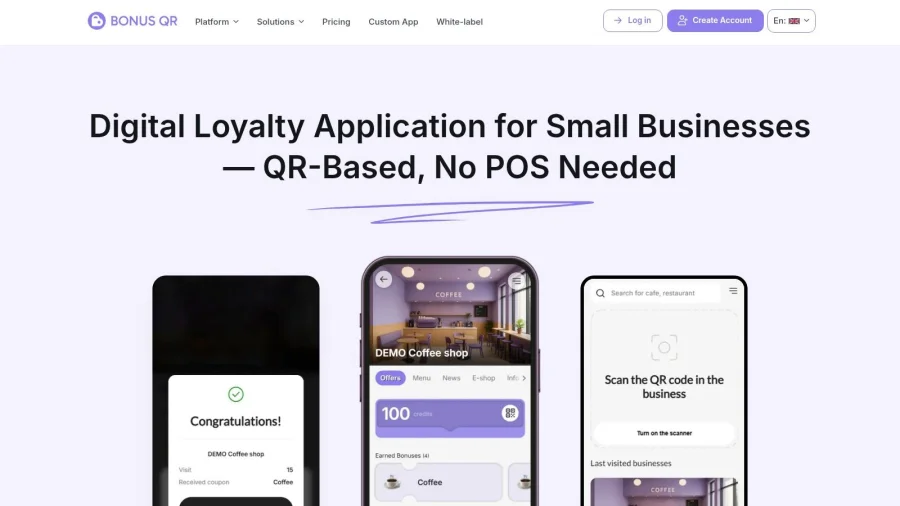
This is also where digital tools make a practical difference. A platform such as BonusQR lets brick-and-mortar businesses run QR-based stamps, points, cashback, visit thresholds, welcome offers, seasonal coupons, and re-engagement campaigns without POS integration or extra hardware. That matters for smaller operators because complexity is often what stops a loyalty idea from getting launched at all.
Loyalty should shape the day-to-day operation
A useful loyalty system doesn't sit in a corner of the business. It changes everyday decisions.
A café can reward visit frequency during quieter periods. A salon can bring back lapsed clients with a well-timed offer. A retailer can recognise high-value regulars without relying on staff memory. Once the business can identify return behaviour, offers become more precise and less wasteful.
The strongest loyalty programmes also improve staff habits. Teams ask for sign-up more consistently when the process is quick. They mention progress more naturally when the customer can see it. They stop leaning so heavily on blanket sales because they have a better way to drive repeat custom.
Owners looking at how to increase retail sales often chase first visits for too long. The faster route is usually to improve the second, third, and fourth visit.
Use Simple Data to Drive Your Decisions
A lot of owners end the week with a feeling about sales. The stronger ones pair that instinct with a short list of numbers they review on purpose. That is usually enough to spot the bottleneck before they waste money fixing the wrong thing.
Watch the numbers that reveal behaviour
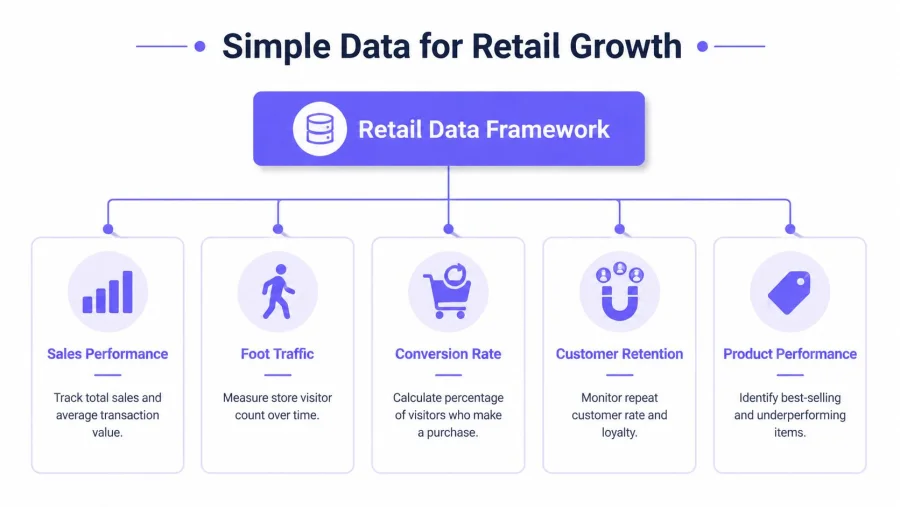
You do not need a large reporting setup. You need a few measures that connect directly to the four sales levers in this article.
Track these consistently:
- Average order value (AOV): Are customers building a basket or buying one item at a time?
- Customer lifetime value (CLV): Are first-time buyers turning into regulars?
- Sell-through rate: Are key lines moving fast enough at the current price and placement?
- Inventory turnover: Is too much cash sitting on shelves or in the stock room?
- Year-over-year growth: Is the business improving once you compare like with like and account for seasonality?
Each metric points to a different decision. Low AOV usually pushes you toward bundles, add-ons, or sharper merchandising. Weak CLV points to follow-up, reactivation, and loyalty. Poor sell-through raises questions about assortment, pricing, display, or whether you bought too deep. Slow inventory turnover often means cash is trapped in products customers are not choosing.
That is the primary job of data in a small retail business. It should tell you where to look next.
Keep testing small and practical
Retail testing does not need software jargon or a consultant's slide deck. Change one variable, watch the result, and keep a simple record.
A few low-cost tests work well in-store:
- Offer test: Compare two bounce-back offers over similar trading days.
- Display test: Move one priority product area and track unit sales for that category.
- Timing test: Run the same promotion at different times and compare response.
- Script test: Give staff two add-on prompts and see which one lifts basket size without slowing the queue.
Keep the test clean. If you change the display, the offer, and the staff script all at once, you will not know what caused the result.
This is also where simple loyalty tech earns its keep. A digital loyalty system can show visit frequency, redemption behaviour, offer response, and lapsed customer patterns without adding admin for the team. BonusQR, for example, gives smaller brick-and-mortar businesses a practical way to track repeat behaviour and test offers without changing their whole setup or adding hardware.
Data only matters when it changes a decision about stock, staffing, pricing, layout, or follow-up.
The retailers that grow steadily usually do the basics well. They review a handful of numbers every week, pick the weakest lever, make one sensible change, and measure again. That discipline beats guesswork.