
 Deutsch
 Español
 Français
 Italiano
 Magyar
 Polski
 Slovenčina
 Čeština
Custom punch cards are the original, no-fuss loyalty program. A customer gets a stamp for each purchase, and a full card earns them a reward. For small businesses like coffee shops, salons, and food trucks, they’re a simple, low-cost way to solve a big problem: turning first-time visitors into loyal regulars.
But how do you create a program that people actually use, instead of one that ends up in the trash? This guide gives you the actionable advice you need to design, print, and launch a punch card program that builds a real connection with your customers.
Why Custom Punch Cards Still Win in a Digital World
In a world of app notifications and complex points systems, you might think the paper punch card is obsolete. Think again. Its greatest strength is its simplicity. A card in a wallet is a physical reminder of your brand-something a fleeting digital alert just can't match.
Every punch is visible proof of progress. This taps into powerful human psychology: the closer we get to a goal, the more motivated we are to finish. It turns a routine purchase into a rewarding mini-game. For a local business struggling to stand out, that small sense of achievement builds a powerful, personal connection that big chains can't replicate.
The Secret Weapon for Small Business Growth
So, why do these simple cards still work so well? They solve the core challenge of customer retention without the complexity or cost of high-tech systems. They are cheap to start, easy for everyone to understand, and pack a surprising punch when it comes to growing a loyal following.
- Insanely Cost-Effective: Worried about your marketing budget? Printing a stack of custom punch cards is one of the cheapest moves you can make. The return from just a few repeat customers often pays for the entire batch.
- A Real Sense of Progress: Unlike a faceless point balance on a screen, a physical stamp feels satisfying. It’s a tangible "thank you" that keeps customers engaged and motivated to return.
- Your Pocket-Sized Billboard: A well-designed card in a customer's wallet keeps your business top-of-mind long after they've left. It's a constant, subtle reminder to stop by again.
- Simple for You and Them: No apps to download, no passwords to forget, no complicated tech. Customers get it instantly, and your team can manage it without slowing down service.
The real magic here is making your customers feel seen and valued. As their card fills up, so does their connection to your brand. It’s what keeps them walking past your competitor and straight to your door.
Punch cards are a fantastic starting point, but they’re just one piece of a bigger puzzle. To see how they fit into a broader strategy, it’s worth exploring all the different types of customer loyalty reward programs out there. Mastering this classic tool is a vital first step toward turning casual shoppers into true brand fans.
Designing a Punch Card People Actually Want to Use
Let's be honest-most punch cards are destined for the trash can. A generic, flimsy card feels like an afterthought. But a well-designed punch card? That’s a totally different story. It’s a mini-billboard in your customer's wallet that turns a simple transaction into a rewarding game.
This is where you move beyond a basic template and create something that feels premium and, more importantly, gets used.
First, the card itself. Stick with a standard business card size: 2" x 3.5". It’s the perfect dimension because it slips right into a wallet.
Next, the material. This is non-negotiable. Go for a thick, durable card stock-at least 14pt, but 16pt is even better. A flimsy card screams "cheap" and tells your customer you don't value their loyalty. It’s a small detail that sends a huge message about your brand's quality.
A great punch card should feel like it belongs with the rest of your materials. If you’ve invested in custom café branding, your punch card needs to match that quality. It’s all part of the same brand story.
Finding the Sweet Spot for Rewards
How many punches should your card have? This directly impacts whether customers will even bother. Too many, and the reward feels impossible. Too few, and you're just giving away your profit.
For most small businesses like coffee shops, bakeries, or frozen yogurt spots, the sweet spot is between five and ten punches.
A five-punch card delivers a fast, satisfying win, perfect for getting that second or third visit locked in quickly. A ten-punch card works better for a more substantial reward, like a free bag of coffee beans or a complimentary appetizer.
This taps into powerful psychology. A physical card creates a tangible sense of progress that digital points can't always match.
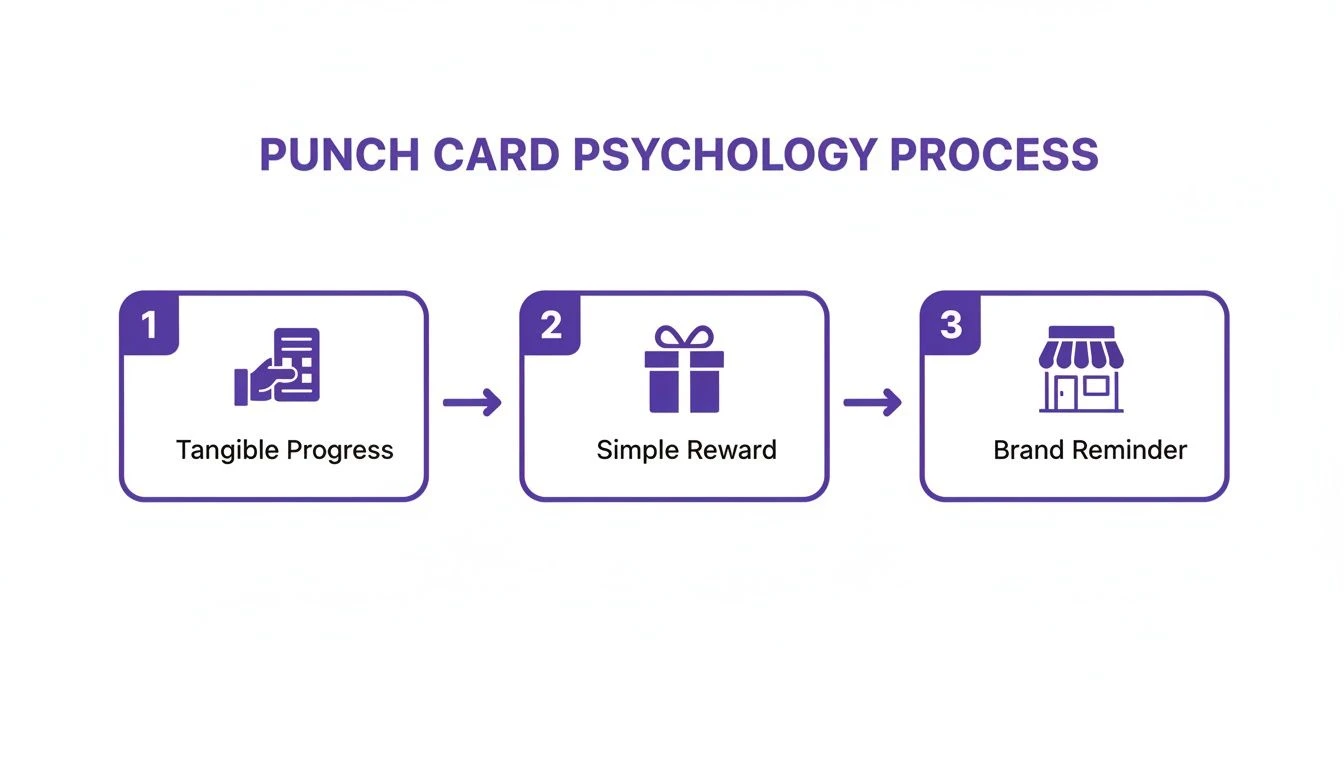
As you can see, that little piece of cardboard starts a simple loyalty loop: it shows tangible progress, leads to a simple reward, and keeps your brand top-of-mind.
Key Design Elements to Include
Once you’ve landed on the number of punches, nail the design. Clean and uncluttered is the goal. You’re creating a quick-glance tool, not a novel.
Here's what absolutely must be on your card:
- Your Logo & Branding: Make your logo prominent but not overwhelming. Use your brand colors and fonts for a look that’s instantly recognizable.
- A Crystal-Clear Offer: Be direct. "Buy 10 Coffees, Get 1 Free" is perfect. "Earn points on qualifying purchases to redeem for select menu items" is a surefire way to get your card ignored.
- The Essentials: Don't forget your business name, address, and website. This turns your loyalty card into a functional mini business card.
- The Punch Spaces: Make the boxes or circles clean and easy to hit. You can get creative with a custom-shaped hole punch, but a simple circle or a high-quality stamp also works great.
It's fascinating to think that punch cards were originally invented to process data for the 1890 census, revolutionizing how businesses tracked information. Today, modern loyalty programs are proven to lift repeat visits by 37%. Digital tools like BonusQR now take this time-tested idea and bring it into the modern era, helping you turn one-time buyers into regulars without the manual hassle.
Choosing the Right Printing and Ordering Options
You've got a fantastic design-now it's time to get those punch cards into your customers' hands. This is where a lot of small business owners get stuck, but it’s simpler than you think.
You’re looking at two main paths: your neighborhood print shop or an online printing service. Each has benefits, depending on whether you prioritize cost, speed, or a personal touch.
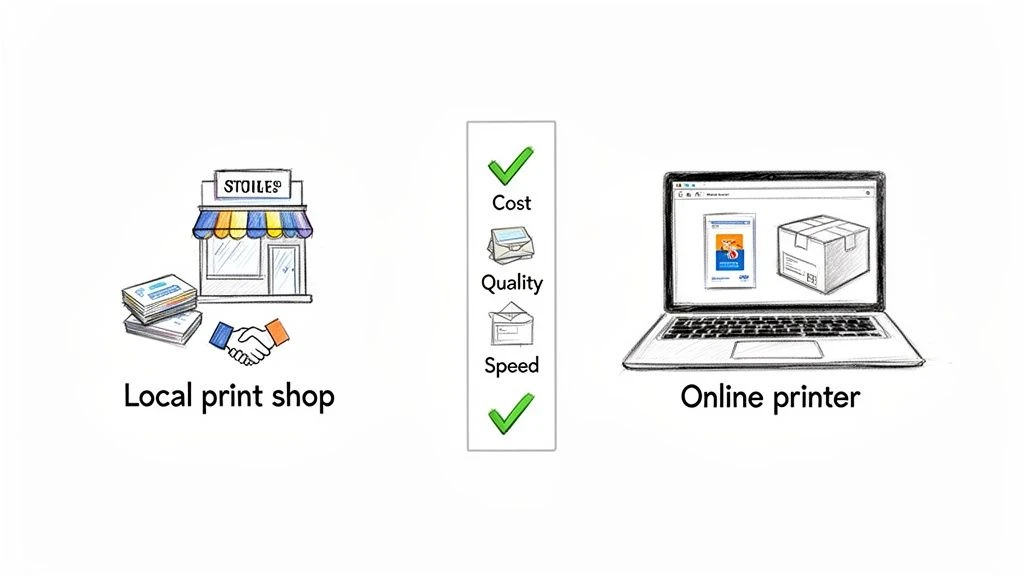
So, which way should you go? A local printer offers a personal touch. You can physically feel paper stocks and see a real-life proof before committing. This is a game-changer if you’re aiming for a specific, high-end feel.
On the other hand, online printers like Vistaprint or Moo are masters of convenience. Their platforms are built for speed, making it easy to upload your file, pick your finishes, and get cards delivered to your doorstep. For bulk orders, they’re often tough to beat on price.
Local vs. Online Printers: The Showdown
Picking a printer isn’t just about the cheapest quote. It’s about what your business needs right now. Do you crave hands-on guidance, or do you value speed and simplicity?
My two cents: If this is your first time printing professionally or your design is specific, a local shop's expertise can save you from a costly reprint. But if you’ve got a print-ready file and just want it done fast and affordably, online services are your best friend.
To help you weigh the pros and cons, let's break down the options.
Punch Card Printing Options Compared
Here’s a side-by-side look to help you figure out the best fit for your timeline, budget, and quality standards.
| Printing Option | Best For | Average Cost (per 500 cards) | Pros | Cons |
|---|---|---|---|---|
| Local Print Shop | Businesses wanting hands-on guidance and premium, custom options. | $70 - $150 | Personalized service, ability to see physical proofs, supports local economy. | Higher cost, longer turnaround times, fewer online tools. |
| Online Printer | Businesses needing speed, convenience, and cost-effective bulk orders. | $40 - $100 | Fast turnaround, lower prices, wide selection of standard options. | Less personal support, quality can vary, no physical proofs. |
Ultimately, there's no wrong answer. It’s about balancing your priorities-cost, quality, speed, and support-to find the service that makes the most sense for you.
Getting Your Files Print-Ready
No matter who you print with, setting up your design file correctly is non-negotiable. A stunning design on your screen can become a blurry, poorly cropped mess if you skip these steps.
First, ensure your design is saved at 300 DPI (dots per inch). This is the gold standard for high-quality printing.
Next, add a "bleed." This is a small extra margin of your background that extends beyond the card's final trim line. When the printer cuts the cards, this bleed prevents any ugly white slivers from appearing on the edges.
And if you’re still fine-tuning your design, check out these loyalty card templates that actually boost customer retention.
Launching Your Punch Card Program for Maximum Impact
You have a stack of beautiful punch cards. Great. But a successful loyalty program isn't about the card-it's about the rollout. A smart launch makes your program feel like an exciting perk, not another chore.
The first thing you need to do is get your rules straight. Ambiguity is the fastest way to frustrate customers and create awkward moments at the register. Before you hand out a single card, you and your staff need to have the answers locked down.
Setting the Ground Rules
Think of this as your program's simple "terms and conditions." Deciding on these policies upfront prevents confusion and ensures every customer gets the same fair treatment.
- Lost Cards: What happens when a customer loses their card? A common and fair policy is to not replace lost punches. This puts the responsibility on the customer and keeps things simple.
- Combining Cards: Will you let someone merge two half-filled cards? I recommend a firm "no." This keeps the process clean and stops people from pooling punches.
- Expiration Dates: Should punches expire? Adding a line like "Expires 12 months after first punch" creates urgency and prevents a backlog of inactive cards.
The goal isn't to be overly strict; it's to be consistent. When your team has clear, simple answers, they can explain the program with confidence. That builds trust.
Tracking customer interactions this way has a long history. Herman Hollerith's original punched cards cut the 1890 U.S. Census processing time from a decade to months. By the 1950s, IBM was cranking out 16 billion cards a year, many for small shops tracking sales. For a deeper dive, check out the history of punched card data processing.
Training Your Team to Be Advocates
Your employees are the face of this program. Their excitement-or lack of it-will directly impact its success. The key is to make offering a punch card a natural, positive part of every transaction.
Give your team a few friendly scripts. Instead of a flat "Want a punch card?" try something more engaging:
- "Have you joined our rewards program yet? You're just a few coffees away from a free one!"
- "Let me get you started with one of our punch cards-you get a free pastry after your tenth visit!"
This approach frames it as a genuine benefit. A well-trained team makes customers feel valued, not just sold to.
Finally, you need a simple way to see if it's working. You don't need fancy software. Just start by counting the number of fully redeemed cards each month. This basic metric tells you exactly how many rewards you're giving out and how many people are completing the loyalty loop. It’s the simplest way to see the real-world impact of your custom punch cards.
When to Upgrade from Paper to Digital Loyalty
Paper punch cards are an incredible, low-cost way to get a loyalty program off the ground. But as your business grows, you'll start to hit their limits.
Customers lose them. You have no idea who your best regulars are. And you can’t nudge a customer who hasn’t stopped by in a while. These aren’t just small headaches; they’re missed opportunities. When you’re ready to build real customer relationships, it’s time to upgrade.
The Pain Points of Paper Punch Cards
If you find yourself nodding along to these common problems, it’s a clear sign your business is ready for a digital solution.
Here’s where paper falls short:
- Lost or Forgotten Cards: A customer loses a card one punch away from a reward. They don't just lose the punches; they lose their motivation. It's a bad feeling that can halt their loyalty journey.
- Zero Customer Data: You know you're giving away free coffees, but that’s it. You can't see who your top customers are, track how often they visit, or understand what they buy. You're flying blind.
- No Way to Re-Engage: Once a customer leaves, their paper card goes with them. If they stop visiting, you have no way to send a "we miss you" offer to bring them back.
A paper punch card can tell you that a customer is loyal, but it can't tell you who they are or why. This is the critical gap digital loyalty systems fill.
A digital system like BonusQR solves these problems by moving the loyalty card from your customer’s wallet to their phone. No more lost cards or fumbling for a punch at the register. It's the simplest, most cost-effective way to solve your unique loyalty challenges.
Unlocking Business Growth with Digital Loyalty
Going digital isn’t just about convenience; it’s about unlocking powerful insights to grow your business. You stop guessing and start making data-backed decisions.
With a digital solution, you can finally:
- Identify Your VIPs: See exactly who your most frequent and highest-spending customers are. Now you can give them the special treatment they deserve.
- Track Visit Frequency: Get real data on how often people return. Are they coming back weekly? Monthly? This helps you tailor offers to real customer behavior.
- Win Back Lapsed Customers: If a regular hasn't visited in 30 days, automatically send them a special offer to bring them back. This works. Studies show increasing customer retention by just 5% can boost profits by 25% to 95%.
Making the switch is the natural next step. If you want to dive deeper, learn more about creating a digital punch card for your business and see how simple it can be. It’s about turning your reward program into a smart, measurable growth engine.
Punch Card Questions Every Business Owner Asks
As you map out your punch card program, you're going to hit a few practical hurdles. Getting these details right from the start is what separates a program that fizzles out from one that customers love.
Let's walk through the most common questions from business owners just like you and get you clear, straightforward answers.
How Many Punches Should My Card Actually Have?
This is the big one. The right answer depends on your business, but here's a solid rule of thumb: aim for a reward a regular customer can earn within one to two months.
For businesses with frequent, smaller purchases-like coffee shops or juice bars-between five and ten punches is the sweet spot. A five-punch card gives customers a quick win that makes them want to come back. A ten-punch card makes that final reward feel truly earned.
What’s the Policy for Lost or Forgotten Cards?
Sooner or later, a customer will lose their card. Your best bet is to create a simple, firm policy and stick to it: you can't replace lost punches or combine half-filled cards.
Train your staff to explain this politely but consistently. It’s not about being difficult; it's about keeping the program fair for everyone. You can soften the interaction by immediately offering them a fresh card.
The key isn't being strict; it’s being consistent. A clear, simple rule that’s applied to everyone ensures fairness and builds trust in your program.
Should I Put an Expiration Date on My Cards?
Yes, absolutely. An expiration date creates a gentle sense of urgency. More importantly, it prevents a major headache-you don't want someone finding a five-year-old card and expecting a freebie.
A simple phrase like "Punches expire 12 months after first use" is perfect. It’s clear, fair, and gives customers plenty of time to earn their reward. This little detail helps keep your program active and manageable.
Your Punch Card Questions Answered
Still have some questions? This quick-reference table covers the most common queries we get about launching a punch card program.
| Question | Quick Answer |
|---|---|
| How many punches is best? | 5-10 punches. Aim for a reward a regular can earn in 1-2 months. |
| What if a customer loses their card? | Have a firm but polite policy: no replacing lost punches. Consistency is key. |
| Do my punch cards need to expire? | Yes. A 12-month expiration date keeps the program manageable and creates urgency. |
| Stamp or hole punch? | Either works! A custom hole punch is harder to fake. A stamp adds brand personality. |
| How do I prevent fraud? | Use a custom stamp or unique hole punch. Train staff to be the only ones to mark cards. |
| What's a fraud-proof alternative? | A digital system like BonusQR eliminates fraud and tracks customer data automatically. |
These fundamentals will help you build a program that's effective and easy for your team and customers to use.
Is a Stamp or a Hole Punch Better?
Honestly, both are great choices. This decision comes down to your brand's vibe and budget.
- Hole Punch: This is the classic method-it's clean, quick, and efficient. To make it your own, you can order a custom-shaped punch (like a star or coffee bean). This adds a nice branding touch and makes your cards harder to forge.
- Custom Stamp: A stamp lets your brand's personality shine. You can use your brand colors and a unique design, turning each punch into a mini piece of branded art. It feels more personal.
At the end of the day, either tool gets the job done. Just make sure your team uses it consistently.
How Can I Stop People from Cheating the System?
Fraud is a valid worry, but it’s less common than owners fear. A couple of simple precautions are all you need.
The easiest fix is using a custom hole punch or a unique, self-inking stamp that would be difficult to replicate.
The other non-negotiable rule? Train your staff that they are the only ones who mark the cards. This stops people from "helping themselves" to an extra punch. Of course, for any business wanting a completely fraud-proof solution with powerful analytics, upgrading to a digital punch card system like BonusQR is the simplest way to go. It removes the risk entirely and gives you invaluable insight into your most loyal customers.