A birthday coupon can feel less personal than a handwritten card if it offers nothing beyond a price cut. That matters in a UK market where the gift card and voucher sector is now worth over £6 billion annually, with growth continuing year-on-year, according to Zonal's UK gift card fact sheet. Customers already understand vouchers. The challenge is making the reward feel like a thoughtful birthday gift rather than an automated sales message.
The strongest birthday coupons for mom connect a warm moment with a practical business outcome. A café can encourage another visit, a salon can fill quieter appointments, a restaurant can acquire a new guest, and a retailer can increase basket value. The reward might be a free add-on, a points multiplier, a plus-one benefit, or a mystery gift.
The following eight ideas explain the trade-offs behind each design, how to write the message, and how to set redemption rules without confusing customers. A QR-based reward keeps the process simple. Customers open the offer on their phone, while staff scan and redeem it without a POS integration or extra hardware. The best campaigns use clear validity dates, simple conditions, and measurement that shows whether the birthday visit leads to the next one. For shoppers comparing a coupon with a more traditional present, inspiration such as these luxury birthday gift baskets can also help businesses frame the offer as a considered gift.
1. Tiered Spend Milestone Birthday Bonus
A flat birthday discount treats every customer alike. A tiered bonus recognises that a regular visitor has already created more value for the business and may respond better to a reward that reflects the relationship.
A coffee shop might give a newer customer a modest saving on a birthday drink, while a long-standing regular receives a larger reward or a complimentary upgrade. A salon could offer a standard discount to occasional clients and add a premium treatment for VIP customers. A fitness studio might reward members with longer tenure through a birthday-month membership benefit.
The important distinction is that the customer shouldn't need to understand a complicated calculation. The business can use lifetime spend or loyalty status behind the scenes, then present a simple message such as, “Your Gold birthday reward is ready.”
Practical rule: Make the tier visible, but keep the qualification logic invisible unless customers can easily understand it.
Build tiers from real customer behaviour
BonusQR's analytics can show how customers are distributed across spend levels. That helps a small business choose thresholds that reflect its actual audience rather than copying another brand's loyalty structure. A bronze, silver, and gold badge can make progression tangible inside the customer profile.
Send the reward notification before the birthday so the customer knows what has been earned. A second message can explain how an additional visit before the birthday may affect their status, provided the terms are clear and the offer remains profitable.
Staff should see the reward name, its value, and its expiry date at redemption. The business can then compare use by tier and adjust the thresholds or reward mix over time. The guide to tiered loyalty programmes offers further context on using milestones to encourage repeat purchasing.
The trade-off is cost control. Higher tiers must feel meaningful, but the business should reserve them for customers whose history supports the extra value. This design works best for retention, not mass acquisition.
2. Double Points or Double Stamps Birthday Multiplier
A birthday multiplier rewards behaviour instead of reducing the price of one transaction. During the birthday period, every qualifying purchase earns additional stamps or points, giving customers a reason to return while preserving the normal value of the loyalty programme.
A café can apply double stamps to drinks during the birthday week. A retailer can award double points on purchases, while a salon limits the multiplier to booked services rather than retail products. A gym can connect the birthday reward to attendance or challenge participation, which supports a more active membership relationship.
The message needs to explain the benefit in plain language. “Earn double stamps on every qualifying drink until your birthday week ends” is clearer than “Enjoy a birthday multiplier.” Customers should know which products qualify, whether the bonus applies automatically, and when the extra balance expires.
Turn the multiplier into a visit plan
A birthday multiplier becomes more useful when the business suggests a reason to return. A café might promote a seasonal drink, a salon might highlight a treatment add-on, and a gym might pair the reward with a class challenge. The offer should guide behaviour without forcing customers into an unwanted purchase.
BonusQR can display the points or stamps in the customer's profile and send an automated birthday message. The business can then see whether customers use the extra balance or leave it untouched. The points reward system guide explains how a points structure can remain understandable and connected to repeat visits.
A clear expiry window matters. If the bonus remains available indefinitely, it loses urgency. If it expires before customers have a realistic chance to use it, the reward feels disappointing. The campaign should also state whether the multiplier can combine with other promotions.
This option suits businesses that already have an active loyalty currency. It's less suitable when customers rarely understand the existing points or stamps, because multiplying an unclear reward only adds friction.
3. Free Add-On or Premium Item Birthday Gift
A complimentary item can feel more personal than a discount, especially when it completes a purchase. A coffee shop might offer a pastry with a drink, a restaurant could add dessert to a qualifying meal, and a salon might include a treatment upgrade with a booked service. A retailer could provide a premium sample or gift set with a qualifying purchase.
Choose an item with clear perceived value and a predictable cost. Staff should present it as a birthday gift, not as an unexplained line on the receipt. For businesses framing the reward as part of a wider celebration, pairing the offer with backyard party rental packages can position the add-on as part of a complete experience.
Choose a reward that increases the basket
The add-on should support a paid purchase and serve a specific retention goal, such as increasing visit frequency or introducing a service customers may book again. A pastry with a drink encourages a café visit while protecting the core product. Dessert with a main course enhances a restaurant occasion. A complimentary hair treatment can make a salon appointment feel more complete and give the client a reason to try a future service.
BonusQR's special occasion loyalty module can send the digital birthday reward in advance, store it in the customer's profile, and let staff redeem it with a QR scan. No POS integration or extra hardware is required. Track the accompanying purchase, redemption rate, and repeat bookings to identify which gifts support the intended objective. Seasonal options can then be rotated without rebuilding the loyalty programme.
Write the conditions before launch. State whether a purchase is required, whether customers can choose an alternative, and whether stock limits apply. UK promotional guidance from the Advertising Standards Authority says significant conditions should appear clearly in the initial promotional material, including online advertisements where space allows.
This format suits businesses seeking emotional impact, a larger basket, or a trial of a higher-value service. It is less suitable when the item has high cost, limited availability, or no connection to normal customer purchases.
4. Extended Birthday Month With Full-Month Validity
A single-day birthday coupon creates urgency, but it also creates practical problems. Customers may be working, travelling, caring for family, or unable to secure an appointment. A birthday-month reward gives flexibility while still placing a clear boundary around redemption.
A salon could offer a birthday-month service benefit, a café could add a pastry to a drink throughout the month, and a gym could provide extra attendance credits. A restaurant might attach the reward to any meal during the birthday month, while a retailer could create an exclusive offer for regular-priced items.
The business should avoid making the offer so generous that customers wait for it every year. A modest, non-stackable reward can work better across a longer period than a large one-day discount. The customer gets choice, and the business gets more opportunities to bring that person back.
Use reminders without becoming intrusive
A simple communication sequence can include a notice before the month begins, a birthday-day message, and a reminder near the end. Each message should show the exact expiry date and the action required. “Redeem your birthday pastry with any drink by 31 May” is more useful than “Your birthday treat is waiting.”
BonusQR can send the offer through a customer profile, push notification, email, or a wallet pass. Customers can keep the coupon on their phone, and staff can scan it at redemption. Analytics can show whether customers redeem early, midway through the month, or close to expiry, which helps the business improve timing in the next campaign.
Birthday offers fit a wider UK voucher culture. In the first half of 2023, UK gift card and voucher sales rose 8.4% year-on-year on a like-for-like basis, with £1.35 billion sold during that period, according to The Retail Bulletin. The practical lesson is simple: customers recognise timed voucher occasions, but the rules must make redemption easy.
5. Birthday Surprise or Mystery Reward Tier
A mystery reward creates anticipation without promising the same cost to every customer. A café could reveal a small discount, a free drink, or an upgrade. A salon might grant a treatment add-on or product reward. A restaurant can use a digital reveal for meal savings or a complimentary extra.
The business controls profitability through the reward pool, but the customer should never feel misled. The available reward types, eligibility rules, and any material limitations should be accessible before the customer plays. A mystery offer that hides important conditions may generate attention but damage trust.
A surprise works when the reveal feels generous, even when the reward isn't the most expensive option.
Keep the game simple
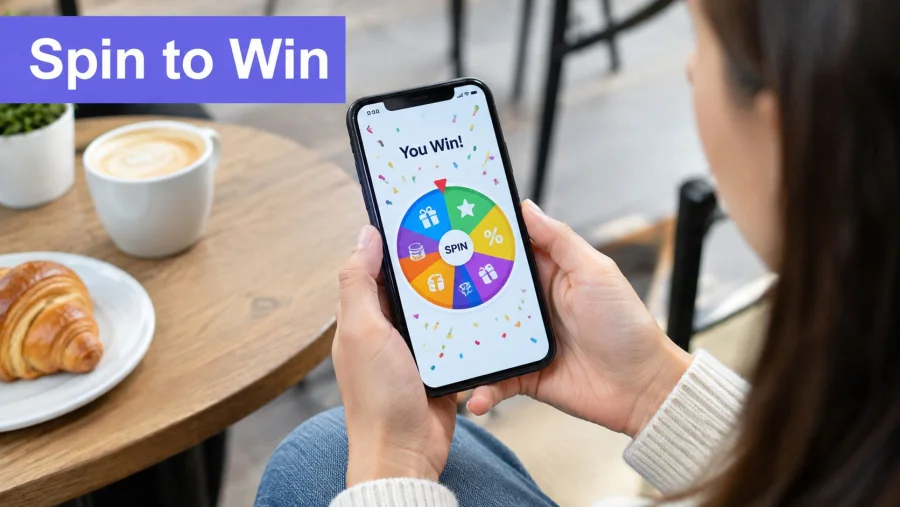
BonusQR can host a digital reveal or connect the reward to a QR-based coupon journey. Confetti, a branded card, or a short animation can make the moment feel celebratory without requiring special hardware. The reward should activate immediately, show the expiry date, and explain what staff need to scan.
A small business can start with a conservative reward pool and review redemption data after the campaign. If customers regularly ignore one reward, the business can replace it. If the most popular reward creates a costly rush, the business can adjust availability or offer a related alternative.
Social sharing can be invited, but it shouldn't be required for the customer to receive the promised reward. If a business uses customer posts in its own marketing, it should explain how the content may be used and obtain the appropriate permission.
This format suits cafés, restaurants, salons, and retailers with products that can be exchanged or upgraded. It's less appropriate for a service business where customers need to know the exact value before booking. Mystery should add delight, not uncertainty about the purchase.
6. Birthday Plus-One or Guest Benefit
A birthday becomes a customer-acquisition opportunity when the reward includes another person. A restaurant can give the birthday customer a meal benefit and offer a saving to a guest. A café can provide a complimentary drink for a friend with a qualifying purchase. A salon can reward the birthday client while giving a first-visit offer to the accompanying guest.
The design works because the customer has a social reason to visit. It can also increase party size and introduce the business to someone who has never bought before. The risk is that the discount becomes too broad or gets used without the intended new guest.
Make the conditions operationally clear
The coupon should state that both people need to be present and that the qualifying purchases must be made in the same transaction. Staff shouldn't have to interpret whether two separate receipts count. A QR redemption record can show when the offer was used and distinguish the existing customer from the guest.
BonusQR can help the business capture permission-based details from a new guest at sign-up, then send a welcome reward or review request after the visit. The business must handle contact preferences carefully. The ICO's direct marketing guidance explains that businesses need permission for certain promotional communications and must respect a customer's absolute right to object to direct marketing.
A follow-up message should arrive while the experience is still fresh, but only where the guest has agreed to receive marketing. The message can invite a return visit, explain the loyalty programme, or request feedback without assuming that every guest wants promotional contact.
This offer is ideal for restaurants, cafés, gyms, and social wellness services. It's less effective for appointments that depend on one-to-one capacity unless the guest can book a separate service without disrupting the birthday client's experience.
7. Early-Bird or Advance Booking Birthday Incentive
An advance-booking reward helps a business trade a little extra value for better planning. A salon can offer its strongest birthday add-on to customers who book early, a smaller reward for later bookings, and a basic benefit for last-minute appointments. A restaurant can use the same logic for birthday tables, while a spa or personal trainer can protect valuable diary space.
The customer receives a clear reason to act before the birthday. The business gains more predictable demand and has more time to prepare stock, staff, and service capacity. The offer must remain fair to customers who can't plan far ahead, or it may feel like a penalty rather than a gift.
Match the reward to operational value
The strongest benefit should correspond to the booking window that helps the business most. A salon might reserve a premium treatment for early bookings, while a restaurant could offer a complimentary appetiser for a planned group reservation. A last-minute customer can still receive a smaller reward, so the campaign doesn't exclude spontaneous visits.
BonusQR can send a reminder before the birthday period, display the deadline for each reward tier, and record whether the customer booked early or late. That gives the business a way to compare booking patterns and no-show behaviour rather than relying on impressions. A clear booking cutoff also prevents staff from manually overriding rules at the counter.
The offer should include the exact booking requirement, eligible services, cancellation policy, and redemption period. Customers need to know whether the reward depends on booking date, appointment date, or both. If the business allows a short extension for scheduling conflicts, that extension should be stated in advance.
This approach is particularly useful for salons, spas, personal trainers, and restaurants with limited capacity. It won't solve an offer that customers find unattractive, so the reward still needs a warm birthday message and a credible benefit.
8. Social Sharing Birthday Multiplier or Unlock Bonus
A social gate connects a birthday reward with advocacy. A café might offer a standard saving and activate an extra benefit when the customer shares a birthday story and tags the business. A salon can pair a birthday treatment with a product bonus after a referred friend books. A gym can turn a birthday class into a shareable community moment.
The action should be easy enough to complete during or immediately after the visit. One story share or one tag is more realistic than a long sequence of social tasks. The business can also create a branded birthday hashtag and feature selected posts, provided customers understand how their content may be reused.
Reward advocacy without creating pressure
The basic birthday benefit should remain worthwhile on its own. The social action should reveal an extra reward, not force customers to publicise personal information to receive the promised gift. A business should also avoid requiring customers to tag people who may not want promotional content.
BonusQR can record the activation of the bonus and connect referral activity with later visits where the process is configured properly. Staff can verify the share or referral before applying the extra reward, or the business can use a simple redemption code. The rules should explain whether the post must be public, how long it needs to remain available, and whether the reward applies once per customer.
Privacy deserves particular care. A customer may want a birthday benefit without having their image, name, or celebration published by the business. The campaign should request clear consent before reposting content and should thank participants without implying that sharing is mandatory.
This design suits visually appealing cafés, salons, gyms, restaurants, and boutiques. It's not the best first campaign for a business with a small or inactive social audience. In that case, a plus-one offer may create more dependable acquisition.
8-Point Birthday Coupon Comparison for Mom
| Birthday Coupon Variant | Implementation Complexity 🔄 | Resource Requirements ⚡ | Expected Outcomes 📊 | Key Advantages ⭐ | Ideal Use Cases 💡 |
|---|---|---|---|---|---|
| Tiered Spend Milestone Birthday Bonus | Medium 🔄🔄, needs spend-tier logic and CRM integration | Medium ⚡, analytics, segmentation, messaging | Higher LTV and redemption among top customers; improved personalization | Recognizes loyalty, drives upsells and repeat visits | Coffee shops, salons, gyms, restaurants |
| Double Points / Double Stamps Multiplier | Low 🔄, apply multiplier to existing loyalty currency | Low ⚡, minor config in points system, simple comms | Increased visit frequency during birthday period; deferred redemption cost | Easy to implement, boosts transactions with minimal margin impact | High-frequency businesses (cafés, casual retail, gyms) |
| Free Add-On or Premium Item Gift | Low–Medium 🔄🔄, ties to inventory and POS workflows | Medium ⚡, inventory planning, staff training, tracking | Larger baskets, memorable guest experience, social shares | High perceived value; showcases premium/high‑margin items | F&B, salons, retail, wellness centers |
| Extended Birthday Month (Full Month Validity) | Low 🔄, simple activation window and expiry rules | Low–Medium ⚡, messaging cadence, redemption tracking | Higher redemption rates, multiple touchpoints across month | Flexible, reduces redemption friction, steadier engagement | Salons, gyms, restaurants, retail with infrequent visits |
| Birthday Surprise / Mystery Reward Tier | High 🔄🔄🔄, randomized rewards, probability tuning | Medium–High ⚡, UX, analytics, legal/odds disclosure, inventory | Strong engagement and social sharing; viral potential if tuned | Gamification creates excitement and shareability | Brands targeting Gen Z/millennials, social-first businesses |
| Birthday Plus-One / Guest Benefit | Medium 🔄🔄, dual‑customer validation and redemption rules | Medium ⚡, staff verification, tracking guest acquisition | Increased transaction value and new-customer trials | Drives referrals and group visits; effective acquisition tool | Restaurants, bars, salons, gyms, social retail locations |
| Early-Bird / Advance Booking Incentive | Medium–High 🔄🔄🔄, requires booking/reservation integration | High ⚡, calendar integration, automated reminders, CRM | Better scheduling predictability, reduced no-shows, advance revenue | Improves planning and cash flow; reduces operational risk | Appointment-based services: salons, spas, trainers, classes |
| Social Sharing Unlock / Multiplier | Medium 🔄🔄, social verification and opt‑in flows | Medium ⚡, social monitoring, privacy compliance, rewards ops | Organic reach, referrals, UGC and measurable social-driven acquisition | Low-cost amplification and referrals; builds social proof | Visual/lifestyle businesses, active social brands, younger audiences |
Turn a Birthday Coupon Into the Next Visit
The right offer depends on the business problem, not on the birthday theme alone. A free add-on or premium item creates the strongest gift-like feeling. A points or stamps multiplier supports frequent visits. A plus-one benefit brings in a potential new customer. An advance-booking reward improves capacity planning. A tiered bonus gives loyal customers a more personalised reason to return.
The UK gifting context supports a thoughtful approach. 41% of people prefer a gift voucher or gift card over a traditional gift, while 51% say a gift card is no better or worse than cash, according to YouGov research published by Voucher Express. That doesn't mean every coupon feels personal. The reward needs to match the customer, the occasion, and the business experience.
A practical launch checklist should cover:
- Reward: Choose one clear benefit that fits the customer's normal purchase.
- Eligibility: Decide whether the offer applies to all members, a loyalty tier, a birthday-month customer, or a plus-one visit.
- Validity window: Use an exact start and expiry date, not vague wording such as “for a limited time”.
- Exclusions: State qualifying products, minimum purchases, booking requirements, stock limits, and whether the offer can be combined with another promotion.
- Message: Write warmly, using the customer's name where appropriate, and explain the reward in the first sentence.
- Staff process: Show staff how to scan the QR code, confirm the conditions, and record a manual exception if one is needed.
- Measurement: Track redemption, accompanying spend, repeat visits, new guest sign-ups, bookings, and unused rewards.
BonusQR lets small businesses launch birthday coupons alongside stamps, points, cashback, visit thresholds, spend thresholds, fixed discounts, welcome bonuses, wallet passes, automated messages, and analytics. Customers can sign up on mobile or web, keep a personal QR code, and view rewards and visit history in one profile. Staff can scan and redeem without POS integration or extra hardware, while Google Wallet and Apple Wallet passes keep the offer accessible.
Businesses can start for free at BonusQR, create a birthday campaign, set when the electronic reward is sent and how long it remains valid, then measure which offer brings customers back. A simple QR coupon can become more than a birthday discount when the reward, message, and follow-up are designed to create the next visit.


