
 Deutsch
 Español
 Français
 Italiano
 Magyar
 Polski
 Slovenčina
 Čeština
The biggest mistake with birthday coupons for dad is assuming the most generous reward will produce the best result. A large discount can attract a single visit, then train customers to wait for the next promotion. The stronger offer feels personal, fits the business's margins, removes redemption friction and gives dad a reason to return.
That creates several practical decisions. Should the business offer a free treat, extra points, an upgrade, account credit, a service, a status benefit, a referral or a choice? How should it collect reliable birthday data, explain expiry rules and prove that the campaign generated another visit?
Birthday rewards already match UK loyalty expectations. Birthday or anniversary rewards are requested by 37% of UK shoppers, behind free shipping or returns at 43% and free products or samples at 42%, according to Dotdigital's UK loyalty research. For brick-and-mortar businesses, BonusQR can create birthday rewards, distribute them through QR-based customer profiles and wallet passes, and track redemptions without POS integration or extra hardware. A business can also use perks for mobile UA teams when planning broader mobile acquisition activity.
1. Free Birthday Treat or Discount Coupon
A free birthday treat works when the business needs an emotional hook and a clear reason to visit now. A café might offer a complimentary slice of cake with any hot drink. A restaurant could provide a free dessert with a main course. A retailer might issue a personal discount on one selected purchase rather than reducing the whole basket.
The trade-off is margin. A free item feels generous, but the business still needs to control what qualifies. A percentage discount is easier to standardise, while a selected treat often feels more personal and gives staff a simple redemption script.
Major loyalty brands use this mechanic because customers understand it immediately. Starbucks Rewards uses a birthday beverage reward, Sephora offers a birthday gift during the birthday month, and Planet Fitness uses free guest access as part of its member experience. These examples show the range of the format, but a small business shouldn't copy the reward blindly. A local café may protect margin better with a pastry or topping than with a premium drink.
Make the reward personal and usable
Birthday offers commonly arrive at the start of the birthday month or on the birthday itself, and they often have a limited claim period, according to The Guardian's guide to UK birthday rewards. A local business should state the exact dates rather than leave customers guessing.
Useful campaign details include:
- Clear offer copy: “Happy birthday, Dad. Enjoy a complimentary dessert with any main course.”
- Defined eligibility: Require a qualifying purchase if the free item would otherwise damage contribution margin.
- Convenient delivery: Place the coupon in the customer profile, email and Google Wallet or Apple Wallet pass.
- Measured testing: Compare issued, opened and redeemed coupons by location, offer type and follow-up visit.
A two-week window before and after the birthday can help capture customers who celebrate on a different day, but each business should test its own demand pattern. BonusQR's special-occasion loyalty feature can support scheduled birthday rewards and automated delivery.
2. Bonus Points Multiplier on Birthday
When the priority is a larger basket rather than a single visit, a birthday points multiplier turns dad's birthday period into a reason to spend more. A coffee shop might award extra points on a birthday-week purchase, while a retailer could accelerate points when dad completes a broader basket.
The trade-off is clear: the business protects product margin, but the reward arrives later. That makes the value harder to grasp than a free item. Use copy that states the multiplier and the next benefit, such as, “Earn 2x points this birthday week, then redeem them for your next coffee.”
Marriott Bonvoy, Ulta Beauty Rewards, Dunkin' Rewards and airline loyalty programmes illustrate how birthday-linked points or miles can fit into a wider programme. A small business does not need a complex tier structure. It needs a visible balance, a redemption catalogue customers understand and rules staff can explain in one sentence.
Use the multiplier to change buying behaviour
Attach the bonus to a behaviour that improves basket size or return frequency. A café could award extra points when dad adds breakfast to a drink order. A salon might apply the bonus to product purchases after an appointment, encouraging a second revenue stream without giving away the service.
Set the campaign around four operating choices:
- Earning period: Birthday day, birthday week or birthday month.
- Eligible spend: All purchases, selected categories or purchases above a stated threshold.
- Reward visibility: Show the current balance and the next available reward at checkout.
- Follow-up timing: Remind dad before expiry and after the birthday visit.
Keep the next reward close enough to motivate action. If dad cannot see whether his points lead to a drink, discount or product, the offer feels like a delayed promise. BonusQR's points system can combine birthday earning with ordinary loyalty activity and display progress in the customer profile.
Measure issued offers, qualifying purchases, points earned and redemptions. A multiplier is a poor fit for an infrequent business if customers rarely return to use the balance. It is better suited to businesses where the next reward is clear, attainable and linked to a normal purchase.
3. Free Add-On or Upgrade Coupon
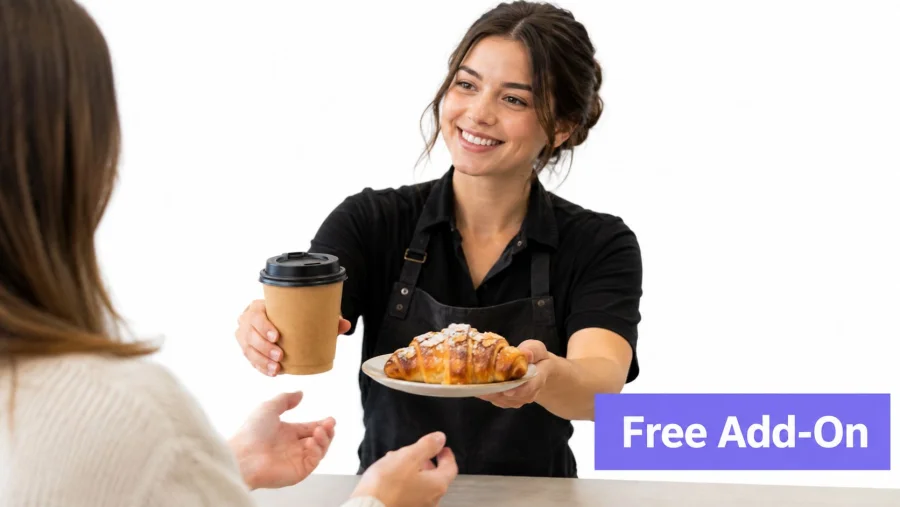
A birthday add-on can deliver a strong perceived gift while costing less than a free primary product. A coffee shop might add an espresso shot, syrup or pastry to a qualifying drink. A restaurant could include dessert with an entrée. A beauty salon might add a treatment enhancement to an existing appointment.
This mechanic solves an upselling problem. The business already receives a visit and uses the birthday occasion to improve the experience or introduce a higher-value option. The customer doesn't feel pushed into a larger purchase because the upgrade is framed as a birthday benefit.
Choose an add-on customers actually use
The add-on must feel like a real gift, not leftover stock. Sales data can show which extras customers already choose voluntarily. If dad frequently orders an extra shot, that option may feel relevant. If an item rarely sells, giving it away won't necessarily create delight.
Use direct language in the coupon:
Practical rule: “Free espresso shot with any regular coffee” is stronger than “Enjoy a complimentary add-on.”
Staff should know the reward before serving the customer. The correct interaction is simple: “Happy birthday. The espresso shot is included today. Would you like it in the drink?” That wording makes the benefit tangible and prevents the customer from having to negotiate at the till.
The business can rotate eligible add-ons when stock or seasonality changes, but the customer-facing menu should remain short. Too many choices slow service and make a simple reward feel complicated. A quarterly rotation can also help the business test which extras produce a return visit without offering the most expensive option every time.
This coupon works poorly when the qualifying purchase is vague. “With any purchase” may invite low-value transactions, while “with any main course” or “with a booked hair service” gives both sides a clear boundary.
4. Experience or Service Hour Voucher
Service businesses should consider a birthday experience rather than a product discount. A gym can offer a personal training consultation. A salon can provide a consultation with a senior stylist. A spa can offer a short consultation before a facial or massage. A photography studio can invite dad to a lifestyle session consultation.
The loyalty challenge here is booking behaviour. A discount may generate a transaction, but a scheduled experience creates time with a staff member who can understand the customer's needs and recommend a suitable next service.
The booking path must be shorter than the explanation. Include a direct calendar link, identify the available service and state whether the voucher covers the full experience or only the consultation. UK experience vouchers are commonly marketed with validity periods ranging from 9 to 12 months, according to Cupidly's UK experience-gift coverage. A local business can choose a shorter window, but it should communicate the reason and avoid making the gift feel restrictive.
Protect capacity while creating an upsell
A free appointment can consume valuable peak-time capacity. The business might therefore make the voucher bookable during quieter periods, with blackout dates stated before redemption. That rule protects operations, but the customer should see it before booking, not after arriving.
A practical setup includes:
- A simple booking route: QR code opens the calendar with the birthday service preselected.
- Expiry reminders: Email or push messages go out well before the voucher expires.
- A defined next step: Staff recommend one relevant paid service, not an unfocused list.
- Feedback capture: Ask whether the experience solved a need and whether the customer wants another appointment.
The business should measure completed bookings, no-shows, paid add-ons and later appointments separately. A voucher that generates bookings but overwhelms the team isn't automatically successful. Capacity, customer satisfaction and future revenue must be reviewed together.
5. Gift Card or Account Credit Coupon
Account credit gives dad choice while keeping the purchase within the business's loyalty system. A restaurant can add credit to a customer profile, a retailer can issue a digital gift balance, and a café can load a birthday amount for the next visit.
This mechanic fits customers who value flexibility, but it shifts the margin question from “How large should the discount be?” to “What will the credit replace?” Set the amount, qualifying spend, eligible products and expiry before launch. Clear rules protect profit without making the reward difficult to use.
Voucher buying is familiar in the UK. A Royal Mail-commissioned survey reported that nearly three quarters of Britons buy gift cards, vouchers or tokens as presents, with an average spend of £20. 1 in 4 people prefer receiving vouchers instead of a specific product, according to ChannelX's report on UK gift-card habits. That makes account credit easy to explain, provided the redemption terms are visible.
Make the balance easy to spend
Show the credit in the customer's digital profile and wallet pass. A QR-based system such as BonusQR can connect the birthday message, member account and redemption record. Staff can scan the code at the till instead of checking an old email or an unverifiable screenshot.
State the balance, activation date, expiry date, qualifying spend and exclusions in the coupon. Sample copy:
“Your birthday credit is ready. Use it on any food and drink purchase before the stated expiry date. Scan your member QR code at the till.”
Promote the offer through the birthday email, receipt, staff prompt and social posts. The gift guide for men in the UK can also inform the presentation, especially when the credit supports a considered gift rather than an immediate discount.
Measure redemption rate, average basket value, second visits and unused credit. Compare baskets with and without the coupon where possible. Credit that only replaces planned spending needs a smaller value or a qualifying-spend threshold. For presentation ideas, businesses can review this curated guide to dad birthday presents and adapt the framing to their own products.
6. Tiered Loyalty Tier Acceleration or Status Boost
A status boost is designed for mature loyalty programmes with visible levels and meaningful benefits. It might move a customer closer to the next tier, grant extra progress during the birthday period or provide temporary VIP treatment.
This mechanic solves a long-term retention challenge. A free treat may create one visit. Status recognition can make a loyal customer feel seen and give them a reason to continue choosing the same business after the birthday has passed.
The offer must be transparent. If the customer can't see how close they are to the next tier, "birthday acceleration" sounds like marketing language without practical value. A gym could display progress toward priority booking. A salon could show the benefits of reaching a preferred-client level. A retailer might grant early access to a product event.
Reward commitment, not just the birthday
Segment customers by current tier before issuing the offer. A new member may need a simple welcome reward, while a frequent customer may respond to a status benefit. The birthday message should show the current position, the progress available and the benefit that follows.
A clear message could say: “Your birthday boost is active. Earn additional progress on eligible visits this month and move closer to priority booking.”
The business should measure behaviour against the customer's normal pattern:
- Visit frequency: Did the customer return during and after the birthday period?
- Spend quality: Did additional visits include profitable categories?
- Tier movement: Did the customer reach the next level?
- Benefit cost: Did the new status generate service pressure or margin loss?
Status boosts can disappoint when the tier benefits are weak or difficult to redeem. They also add complexity for staff. The reward belongs in a programme that already explains tiers well, not in a small business that has only a basic stamp card and no clear reason to advance.
7. Social Sharing Bonus Coupon
A referral birthday coupon turns one customer's celebration into a reason for a friend to visit. Dad receives an offer to share, the friend gets a welcome incentive and the original customer receives points or credit after a successful referral.
This mechanic tackles acquisition cost and social reach. It works particularly well for gyms, cafés and restaurants where customers naturally visit with other people. A local gym might give dad a friend trial. A café could let him send a friend a complimentary upgrade while earning a future reward when that friend joins the loyalty programme.
The referral path needs one action. A QR code or mobile link should open the friend's offer directly, record the source and explain what happens next. If the recipient must copy a code, create an account, find a store and quote a birthday phrase, most of the value disappears.
Reward both sides without encouraging abuse
A referral reward should trigger after a genuine qualifying action, such as the friend's first purchase or completed trial. Issuing the reward immediately after a link click invites duplicate accounts and unprofitable claims.
Use messages such as:
- For dad: “Share your birthday treat with a friend. When they redeem it, a reward will be added to your profile.”
- For the friend: “A friend has sent a birthday-week offer. Scan this code at your first visit.”
- For staff: “Scan the referral coupon first, then confirm the qualifying purchase before applying the reward.”
BonusQR can use trackable QR codes to connect the shared offer with the original customer. The business should review referral scans, first purchases, completed redemptions and later visits, rather than counting social shares alone.
Referral rewards don't suit every brand. A premium salon may prefer a private service voucher, while a casual restaurant may benefit from the group dynamic. The offer should match how customers already bring people into the business.
8. Customisable Birthday Bundle or Choice Coupon
A choice coupon gives dad control without giving the business an unlimited liability. The customer selects one option from a curated menu, such as a coffee and pastry combination, a service add-on or a retail item within a defined value range.
Personalisation is the strength. Customers often struggle to buy for fathers because the recipient may already have enough possessions. UK gifting research found that nearly 40% of UK respondents considered their fathers the most difficult family members to shop for, according to YouGov's Great Britain Father's Day research. A choice-based reward removes the need to guess.
The margin concern is selection design. If every option has a different cost, customers will choose the most expensive item and staff will face disputes. Group options by similar value and show the available choices before redemption.
Keep the menu deliberately small
Four to six options can be enough for meaningful choice without creating decision paralysis. A café might list a hot drink, cold drink, pastry, cake slice or breakfast side. A salon could offer one of several controlled add-ons rather than any service in the business.
The coupon should state the rule plainly: “Choose one item from the birthday menu.” Include images in the mobile offer when possible, but make the text readable at the till.
For better control, the business should:
- Feature reliable stock: Don't include items that frequently sell out.
- Protect premium margins: Group options by value and exclude costly customisations.
- Train the conversation: Staff should show the menu instead of listing every option from memory.
- Review choices: Track which options customers select and adjust the menu seasonally.
BonusQR's coupon management feature can help businesses create and manage defined birthday offers alongside other campaigns. The choice format works best when the business wants personalisation but doesn't want to issue unrestricted credit.
8-Option Comparison of Birthday Coupons for Dad
| Offer | Implementation Complexity 🔄 | Resource Requirements ⚡ | Expected Outcomes 📊 | Ideal Use Cases | Key Advantages ⭐ | Quick Tip 💡 |
|---|---|---|---|---|---|---|
| Free Birthday Treat or Discount Coupon | Low, simple coupon + CRM tagging | Low–Medium, discount cost; monitor inventory | High short‑term traffic; very high redemption (60–75%) | Coffee shops, restaurants, salons, gyms | ⭐⭐⭐⭐, strong emotional loyalty; predictable spikes | Set ±2 weeks window; automate reminders and wallet passes |
| Bonus Points Multiplier on Birthday | Medium, loyalty system config + communication | Low cash cost; needs points infrastructure | Increases basket size & LTV; slower immediate traffic lift | Retail, coffee shops, gyms, restaurants with points | ⭐⭐⭐⭐, encourages higher spend without giveaways | Show exact point values; display redemption catalog |
| Free Add‑On or Upgrade Coupon | Low–Medium, coupon + staff execution training | Low marginal cost; ensure add‑on availability | Higher perceived value; upsells and larger tickets | Cafés, quick‑service, salons, service businesses | ⭐⭐⭐⭐, high perceived value for low cost | Specify exact add‑on; train staff to present as gift |
| Experience or Service Hour Voucher | Medium–High, booking system + trained staff | Medium, staff time, scheduling capacity | High satisfaction & deeper engagement; strong upsell potential | Salons, spas, gyms, specialty services | ⭐⭐⭐⭐⭐, strongest emotional impact; drives premium spend | Include booking link; use reminders; 60–90 day window |
| Gift Card or Account Credit Coupon | Low, straightforward issuance & account crediting | Predictable cost; accounting for unredeemed credit | High redemption; forces return visits; average spend uplift | Universal: retail, restaurants, grocery, salons | ⭐⭐⭐⭐, simple, widely understood, high ROI | Load credit to account; expire 45–60 days; automate nudges |
| Tiered Loyalty Acceleration / Status Boost | High, requires advanced loyalty platform | Low product cost but high system complexity | Long‑term LTV gains; increased frequency for tier seekers | Businesses with defined tiers (coffee chains, gyms) | ⭐⭐⭐⭐⭐, drives retention and emotional investment | Make progression transparent; combine boosts with points |
| Social Sharing Bonus Coupon (Refer‑a‑Friend) | Medium, referral tracking + clear UX | Moderate, referral rewards; tracking infra | High acquisition efficiency; strong referral conversion | Cafés, restaurants, gyms, beauty salons | ⭐⭐⭐⭐, lowers CAC; leverages network effects | Use single QR/link share; reward both referrer & friend |
| Customisable Birthday Bundle or Choice Coupon | Medium, curate menu + redemption flow | Moderate, inventory choice management & training | High perceived personalization; good redemption data | Cafés, retail, salons, restaurants | ⭐⭐⭐⭐, personalization with controlled cost | Limit options (4–6); group by equivalent value; track selections |
Turn One Birthday Visit into the Next One
The right birthday reward depends on the business's loyalty challenge, not on which offer sounds most generous.
A free treat creates emotional impact and suits cafés, restaurants and retailers that need a simple reason to visit. A points multiplier is better when the business wants customers to spend more or move closer to a known reward. A free add-on protects margin while encouraging a qualifying purchase. A service voucher fits salons, gyms, spas and studios that can convert a birthday interaction into a booked appointment.
Account credit gives customers flexibility and creates a return-visit deadline. Status acceleration belongs in a mature programme with visible tiers and meaningful privileges. Referral rewards turn birthday traffic into customer acquisition, especially where customers naturally attend with friends. A choice bundle provides personalisation while keeping the eligible menu under operational control.
The UK context supports practical, low-friction birthday offers. YouGov research found that more than a third of Great Britain respondents planned to spend between £21 and £40 on Father's Day gifts, while another UK survey cited an average total spend of £56 celebrating dads, as reported in YouGov's Father's Day gifting analysis. The same analysis found shoppers took an average of just four minutes to choose a present for dad. A clear digital reward meets that preference for speed, while still giving the business control over value and redemption.
A practical launch sequence
Start by collecting or confirming the customer's date of birth with consent for loyalty communications. Don't rely on staff remembering a birthday or on a paper list that can't trigger a message. The business should explain why the date is collected and how the customer will receive the reward.
Then define the operational rules:
- Eligibility: Decide whether the customer needs an account, a qualifying purchase or an active loyalty status.
- Timing: Set when the offer is issued and how long it remains valid.
- Redemption: Explain whether staff scan a personal QR code, wallet pass or campaign coupon.
- Exclusions: State blackout dates, excluded products, minimum spend and whether the offer can be combined.
- Follow-up: Decide what reward or message encourages the next visit.
Create the offer in BonusQR, add it to QR sign-up materials, and promote it through automated push or email messages. Staff should practise scanning and redemption before launch, including what happens when a coupon has expired or has already been used.
Review the full journey, not just redemptions. Track rewards issued, messages opened, coupons redeemed, qualifying spend, follow-up visits and repeat purchases after the birthday period. If a free treat drives visits but no later activity, test a follow-up stamp or points reward. If account credit produces repeat visits but reduces basket value, refine the qualifying purchase or eligible menu.
BonusQR lets brick-and-mortar businesses start free and replace manual birthday promotion with a trackable loyalty workflow. Businesses can create the first birthday coupon, connect it to a QR-based profile and begin measuring customer response without POS integration or extra hardware. Start with one mechanic, define its rules clearly, launch it to opted-in customers and use the redemption and follow-up data to build a birthday programme that earns the next visit.