
 Deutsch
 Español
 Français
 Italiano
 Magyar
 Polski
 Slovenčina
 Čeština
A customer forgets a paper card, misses the free drink they've almost earned, and never comes back. The owner never sees the visit in the books, never gets the chance to win that habit back, and ends up guessing which offer worked. That's why examples of loyalty schemes matter most when they're simple enough to run at a counter, a chair, or a class desk without slowing service.
The strongest schemes do one thing well. They make the benefit obvious, keep the cost under control, and give staff a way to explain the rules in a sentence. A café, salon, gym, or small shop doesn't need airline-style complexity to build repeat visits, it needs a mechanic that fits how customers already buy. gym loyalty program ideas for 2026
The practical test is plain. If the scheme is hard to redeem, customers forget it. If the reward is too rich, margin disappears. If staff can't scan or check it in seconds, the programme becomes admin instead of loyalty.
1. Digital Stamp Card
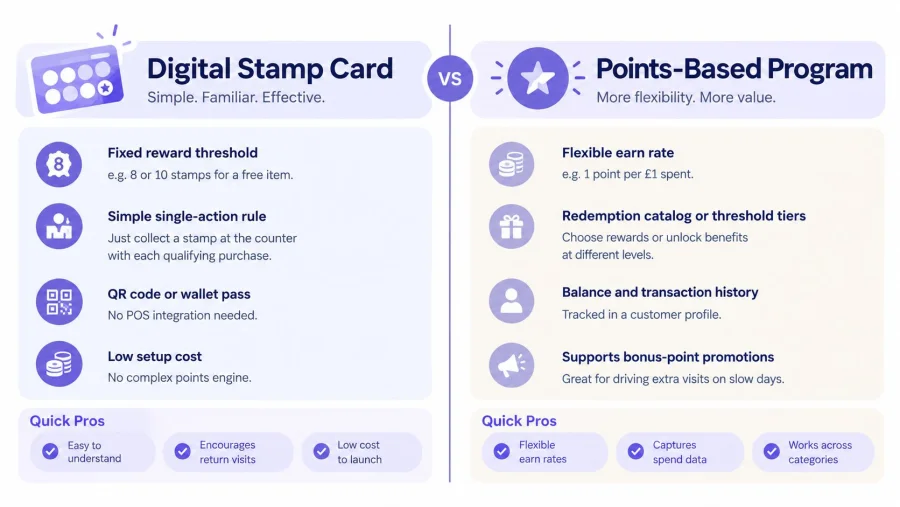
A digital stamp card works because the rule is visible from the first purchase. Buy a coffee, get a stamp. Fill the card, get the reward. That straight line is why it suits cafés, bakeries, sandwich shops, car washes, and laundromats, where repeat visits matter more than big baskets.
The cost control is built into the threshold. If the reward sits too far away, people lose interest. If it lands too soon, the business gives away too much. A sensible target is one that feels achievable within a regular visit rhythm, so customers can see progress without the owner turning every sale into a discount event.
What to copy at the counter this week
Use a QR code at the till and let staff scan it in seconds. Add a first-visit bonus stamp so new customers feel progress immediately. Send a reminder when a customer is one stamp away from a reward, because that last step is often where the return visit gets rescued.
Practical rule: a stamp card should feel like a habit tracker, not a coupon hunt.
For cafés and salons, the best version is usually mobile, not paper. A pass in the phone is harder to forget, and it keeps the customer's reward visible between visits. That's why loyalty passes for coffee shops and salons can outperform a card buried in a wallet.
2. Points-Based Program
A points system works well when the reward needs to flex with the business. Starbucks Rewards, Sephora Beauty Insider, and many local salons use the same core mechanic, customers build a balance and redeem it for something clear. That makes it easier to adjust the offer over time than a fixed stamp card, especially when order values vary.
The strength is control. Points can track spend, visits, products, or services, and the owner can steer behaviour with bonus days or selected categories. Staff can explain it in plain language, which matters on a busy counter. If a customer cannot estimate the value quickly, the scheme feels fuzzy and participation drops.
Keep the math simple
A clean earn rate is easier to sell than a clever one. A small business does not need hidden conversions or layered rules on day one. It needs a clear balance, a low redemption threshold, and one strong reason to return soon.
- Simple earning: use one visible rate so customers know how they progress.
- Early win: offer a small redemption path early, so the first reward does not feel far away.
- Slow-day traffic: run double-point days when footfall is light, not when the shop is already full.
- Visible balance: show points in the app or wallet pass so the customer sees progress after every visit.
Customers stay with points schemes when the reward feels real, not theoretical.
The trade-off is margin versus flexibility. Points can drive repeat behaviour without forcing a discount on every sale, but they still need tight tracking. A QR loyalty program platform helps here, because each scan becomes a structured event instead of a vague sign-up list.
3. Tiered Loyalty Program
A tiered programme works well when regulars want recognition as much as savings. Beauty, fashion, premium dining, and fitness all fit that pattern because the next level gives people a reason to keep coming back. A two-level salon programme that gives top-tier clients priority booking is often easier to run than a long ladder of rewards, and it keeps the value obvious.
The trade-off is complexity. Too many tiers make the programme feel like homework, and staff slow down when they need a script to explain it. Smaller businesses usually do better with two clear levels, because customers can grasp them quickly and the front desk can explain them in seconds.
Status only works when the benefits are visible
A tier should give something the customer can feel straight away, such as priority booking, early access, or a members-only drop. A badge alone does very little. It might look nice in the app, but it will not drive repeat visits on its own.
For a salon, that could mean earlier access to peak appointments. For a gym, it could mean first booking on popular classes. For a retailer, it could mean private access to a new collection before anyone else sees it. Those perks protect margin better than endless discounting because they create value without always lowering price, and see how BonusQR builds fan loyalty shows how visible tier perks can turn that value into repeat visits.
Make the next step easy to see on the customer profile. If someone can see how many visits or how much spend they need to move up, the programme becomes a target instead of a mystery. That also gives staff a simple way to explain why returning matters.
A tiered scheme works best when the owner ties status to one or two benefits that cost less than a discount but feel bigger than a coupon. That is the balance local businesses need, clear value for the customer, controlled cost for the shop.
4. Cashback Rewards Program
Cashback is direct, and that's why customers understand it quickly. They see money coming back as account credit, future discount, or payout, so the reward feels concrete rather than symbolic. That makes cashback useful for local grocers, higher-ticket retailers, and service businesses where a percentage return can feel meaningful without needing a huge headline discount.
The danger is stacking. If cashback applies to already discounted items, margin gets squeezed fast. That's why the cleanest version uses a modest return, a spend threshold, and a clear expiry window. The programme should encourage a return visit, not sit forever as unused liability.
Keep the reward tight
A cashback scheme works when the business knows exactly what it owes and when the customer can use it. Strong systems show the credit balance at the top of the wallet pass so the next visit feels natural. Weak ones bury the value, and customers forget it exists.
Use cashback where the customer already expects value from repeat buying. Grocery baskets, routine services, and premium add-ons all fit better than low-ticket impulse sales. The mechanic is simple enough for staff, but it still needs discipline on exclusions and expiry dates.
The best cashback scheme is the one customers can explain back to staff without asking for the fine print.
For a local operator, the copy-and-paste move is to set a modest return, block heavily discounted products, and make the credit easy to see. That keeps the programme transparent and protects the offer from becoming a permanent markdown.
5. Paid Membership Program
A paid membership changes the relationship because customers pay to belong before they even start collecting benefits. That creates commitment, and it creates upfront revenue. It works best when the member can recover the fee quickly through normal use, which is why it suits gyms, cafés with subscriptions, and retailers with predictable repeat demand.
The trade-off is obvious. If the value feels thin, customers cancel fast. If the value is clear, the fee itself can sharpen loyalty because members want to use what they've paid for. Costco-style membership models show how powerful that can be when the benefits are practical and easy to remember.
Make the fee feel earned fast
A paid plan should bundle benefits customers already want. Free items they'd buy anyway are more useful than vague promises. Annual billing can also help lock in commitment, but only if the savings are visible enough to justify the longer term.
Track usage closely. Low-engagement members are the first cancellation risk, and they're also the group most likely to ignore the programme until the renewal notice arrives. A simple report on visits, redemptions, and benefit use is enough to show whether the membership is carrying its weight.
For a small business, the easiest test is whether a regular customer sees the fee as a smart prepayment. If the answer is no, the plan is too expensive or too narrow. If the answer is yes, the programme can become a stable income layer rather than just a retention tool.
6. Visit-Based Milestone Program
Visit-based milestones reward showing up, not spending more. That makes them a strong fit for salons, barbershops, fitness studios, and class-based businesses where attendance is the goal. The reward can be a free treatment, a guest pass, or an add-on service, as long as the customer can see progress toward it.
This model works because it values consistency. A client who returns often is more likely to keep the habit if the milestone feels close and the perk feels personal. It also avoids the problem of punishing low-ticket customers who still visit regularly.
Reward the habit, not just the basket
The first milestone should arrive quickly enough to build momentum. If the customer has to wait too long, the scheme feels remote. A low-cost perk is usually enough, especially if it feels like recognition rather than a blunt discount.
QR check-in is the simplest way to log visits without slowing the line. It also gives the owner a clean record of who came in and when, which helps when a customer asks about progress. For appointment-led businesses, that data is more useful than a paper tally ever was.
Make the milestone visible on the profile and celebrate it with a message when it lands. A short push notification or staff comment is often enough. The goal is to turn a routine booking into a small moment of recognition.
7. Spend Threshold Reward Program
Spend threshold rewards are built for upsell without sounding pushy. Spend a set amount, get something back. That can be a dessert on the house, a store credit, or a free upgrade, and it works because the customer can understand the target instantly. Restaurants, salons, and retailers all use this logic when they want a larger basket without a complicated points formula.
The risk is setting the bar badly. Too low, and the reward becomes a giveaway. Too high, and customers ignore it. The threshold should sit above the usual ticket, but not so far above it that the reward feels unreachable.
Make the target visible before checkout
Put the threshold where customers can see it on the menu, price list, or app. That way they know one more item gets them over the line. The mechanic works especially well when the final add-on has a high perceived value and a low cost to the business.
A two-step structure helps different spend levels feel included. Smaller spenders can aim for an entry reward, while larger baskets earn a stronger perk. That keeps the scheme from only rewarding the biggest tickets and makes it feel more attainable across the customer base.
For a local business, the first test is simple. Set the target, track basket size for two weeks, and watch whether customers naturally edge upward. If the uplift is weak, the threshold needs adjusting. If the reward hits too often, the business is probably overpaying for a behaviour that would have happened anyway.
8. Referral Rewards Program
Referral schemes turn happy customers into a low-cost acquisition channel. That matters for local businesses, because word of mouth usually carries more trust than an ad. A friend's recommendation already removes a layer of doubt, which is why beauty salons, gyms, and service businesses often see referrals convert more smoothly than cold traffic.
The best version rewards both sides. The existing customer feels appreciated, and the new customer has a reason to say yes now instead of later. That double-sided structure is cleaner than only paying the referrer, because it supports the new customer's decision too.
Keep the trigger tied to a real visit
A referral reward should land after the new customer's first visit, not after a sign-up form. That keeps fake referrals down and makes the system more honest. Shareable links, WhatsApp messages, and QR codes on receipts make the process easy without turning staff into salespeople.
A referral programme can also add status. A personal shout-out or a small bonus after several successful referrals gives regulars something to aim at. That matters because the strongest advocates like being noticed as much as being paid.
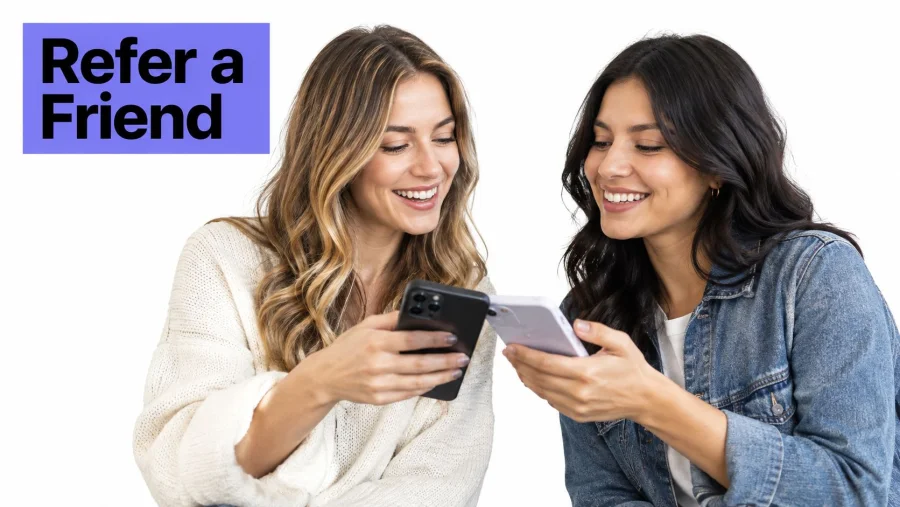
Keep the reward modest and the instruction simple. If the customer has to explain the scheme twice, it's too hard. If they can forward it in one tap, it can become a steady source of new visits.
9. Birthday, Milestone, and Surprise Rewards Program
Personal timing changes the emotional weight of a reward. A birthday gift, an anniversary perk, or a first-year surprise feels different from a routine discount because it says the business remembers the customer. That's why these programmes work well for salons, spas, cafés, and retailers that want to build warmth as well as frequency.
The cost is usually lower than broad discounts, because the reward is targeted. The challenge is collecting the right data and making sure the offer arrives at the right time. If it lands late, the moment is gone.
Make the gesture feel personal, not automated
Ask for birthday details as an optional field and explain the benefit clearly. A short redemption window keeps the visit near-term, and it stops the reward from becoming another forgotten email. A plus-one offer can also help, especially when the business wants to bring in a friend or partner on the same visit.
Milestone rewards are useful for customers who don't want to share personal dates. An account anniversary or first-year celebration gives the business another excuse to reach out without feeling intrusive. The best programmes use these moments sparingly, which keeps them special.
A surprise reward has more impact when it arrives less often and feels earned.
For small businesses, this scheme is often easiest to run once the basic profile is already in place. It doesn't need a complex engine. It needs clean data, a clear expiry, and a message that sounds human.
10. Coalition Loyalty Program
Coalition programmes bring multiple brands into one reward currency. The classic example in the UK is Nectar, where customers earn across different partners and redeem within the network. That structure is powerful because it gives customers more places to earn and spend without needing each brand to build a standalone ecosystem.
The trade-off is coordination. Shared data, shared redemption rules, and partner alignment all have to work. That makes coalitions better suited to larger networks or local business groups than to a single independent operator acting alone.
Start small if the network is local
A small business can still borrow the idea. Two or three complementary neighbours, such as a café, a salon, and a gym, can share one simple system if the rules are tight. The key is to agree on one redemption value, one scan flow, and one set of data-sharing terms before launch.
A shared QR code or wallet pass makes the experience feel joined-up. Customers should not need a separate card for every partner, because that defeats the whole point. If the system stays simple, the coalition can make local shopping feel connected instead of fragmented.
The best use case is a district or cluster where customers already move between businesses in the same day or week. In that setting, shared rewards can reinforce the area as much as any one shop. That's the true advantage of the model, it turns individual loyalty into local habit.
10 Loyalty Schemes Compared
| Program | Implementation Complexity (🔄) | Resource Requirements (⚡) | Expected Outcomes (⭐📊) | Ideal Use Cases (💡) |
|---|---|---|---|---|
| Digital Stamp Card (Buy X, Get One Free) | 🔄 (Low), simple rules and checkout scan | ⚡ (Low), QR/wallet pass, minimal tech | ⭐⭐, increases visit frequency; modest revenue uplift | High-frequency, low‑ticket businesses (coffee, bakeries) |
| Points-Based Program | 🔄🔄🔄 (Medium), rules, redemption catalog | ⚡⚡ (Medium), profile tracking, promotions | ⭐⭐⭐, longer-term engagement; valuable spend data | Retailers, multi-category brands, businesses wanting personalisation |
| Tiered Loyalty Program | 🔄🔄🔄🔄 (High), levels, qualification windows | ⚡⚡⚡ (High), analytics, benefit fulfilment | ⭐⭐⭐⭐, drives higher spend and VIP retention | Beauty, fashion, premium dining, brands seeking status effects |
| Cashback Rewards Program | 🔄🔄🔄 (Medium), balance rules and expiry | ⚡⚡⚡ (Medium‑High), credit tracking, liability controls | ⭐⭐⭐, clear perceived value; boosts high‑ticket spend | Grocery, retail, higher average‑ticket stores |
| Paid Membership Program | 🔄🔄🔄🔄 (High), billing, member perks, churn mgmt | ⚡⚡⚡⚡ (High), recurring payments, support, analytics | ⭐⭐⭐⭐, predictable revenue; higher visit frequency | Subscription services, gyms, retail clubs, cafés with repeat use |
| Visit-Based Milestone Program | 🔄🔄 (Low‑Medium), visit counting and rewards | ⚡⚡ (Low), check‑in tracking, low marginal cost perks | ⭐⭐⭐, improves attendance and retention | Fitness studios, salons, class‑based businesses |
| Spend Threshold Reward Program | 🔄🔄🔄 (Medium), threshold logic per visit/period | ⚡⚡⚡ (Medium), POS rules or scan‑triggered checks | ⭐⭐⭐, lifts average order value (AOV) | Restaurants, retailers, salons aiming to increase basket size |
| Referral Rewards Program | 🔄🔄🔄 (Medium), tracking referrals and triggers | ⚡⚡ (Medium), referral links/QRs and verification | ⭐⭐⭐⭐, low‑cost acquisition; higher conversion for referred | Local services, salons, gyms, apps seeking viral growth |
| Birthday / Milestone / Surprise Rewards | 🔄 (Low), automated date triggers | ⚡⚡ (Low), date capture, messaging automation | ⭐⭐, strong emotional engagement; short‑term visits | Retailers, salons, cafés using personalisation to re‑engage |
| Coalition Loyalty Program | 🔄🔄🔄🔄🔄 (Very High), multi‑partner governance | ⚡⚡⚡⚡⚡ (Very High), shared platform, data agreements | ⭐⭐⭐⭐, broad earning/redeeming reach; cross‑category traffic | Large networks, shopping districts, multi‑brand partnerships |
Pick One Scheme and Test It for 90 Days
Choose the scheme that matches how often customers already return and how much they usually spend, then run it for 90 days before adding anything else. A café with fast repeat visits will usually benefit from a stamp or points mechanic. A salon may get better results from visit milestones, birthday rewards, or spend thresholds. A gym can often use a combination of attendance-based rewards and referral bonuses, as long as the rules stay easy to explain at reception.
The mistake most owners make is piling on too many mechanics at once. That makes the programme harder for staff to remember and harder for customers to trust. Start with one clear promise, one clear reward, and one clear scan or profile action. Then track redemptions, repeat visits, and whether the programme is creating more habit or just more admin.
A 90-day test is long enough to spot patterns and short enough to correct a weak offer. If the reward is too generous, adjust the threshold once. If customers don't engage, simplify the mechanic before changing the benefit. The goal is not to build a complicated system, it's to build something the team can run every day without a script.
BonusQR fits that kind of rollout because it can run stamps, points, cashback, visit rules, and QR-based redemption in one customer profile. That gives a local business one place to manage the offer instead of stitching together separate tools. The platform can start free, which makes it easier to test the first scheme without committing to a heavy setup.
For owners comparing examples of loyalty schemes, the right next step is to pick the simplest mechanic that fits the business and launch it with clear rules. designing guest loyalty programs can help shape the customer journey, but the result comes from consistent use at the counter. Start with one scheme, keep the explanation short, and let the data tell the rest.