Loyalty programs are no longer a nice-to-have for small and medium-sized businesses. They are one of the most direct paths to predictable revenue. Loyalty visits rose 30.8% in 2024 while non-loyalty visits fell 5.3%, which tells you everything about where customer behavior is heading. Understanding why adapt loyalty for SMBs matters is the first step toward building a program that actually drives repeat business, not just sign-ups that go nowhere.
Key Takeaways
| Point | Details |
|---|---|
| Loyalty is strategic | Modern loyalty programs are essential growth tools, not optional extras, especially for SMBs. |
| Personalization matters | Tailoring rewards and experiences significantly increases customer engagement and spending. |
| Retention beats acquisition | Increasing retention by even 5% can boost profits substantially more than acquiring new customers. |
| Digital simplicity wins | Easy, frictionless digital redemption and integration are critical for loyalty success. |
| Daily operational focus | Embedding loyalty into everyday business routines maintains momentum and drives sustainable results. |
Understanding why SMBs must adapt loyalty programs
The old model of a paper punch card or a “buy 10, get 1 free” offer printed on a flyer served its purpose. That time has passed. Customers today expect more from loyalty, and the businesses that deliver will keep those customers. The ones that don’t will watch them quietly leave.
What does “more” actually mean? Loyalty must deliver value and real engagement, not just a points balance customers forget about. Younger shoppers in particular want rewards they can access digitally, redeem without friction, and earn in ways that feel personal to them.
The core shift you need to make is from static to dynamic. A static program sends the same offer to every customer on the same schedule. A dynamic program responds to actual behavior. Here is what the next generation of loyalty looks like for SMBs:
- Easy digital enrollment through a mobile app or web link, with no paper forms
- Personalized offers based on what a customer actually buys, not generic discounts
- Intuitive reward tracking so customers always know where they stand
- Timely nudges triggered by real behavior, like a visit reminder when someone hasn’t been in for 14 days
- Meaningful rewards that customers genuinely want, not just small percentage discounts
If you are still running a program built around a generic promotion sent to your entire list once a month, you are not competing on loyalty. You are hoping customers remember you. That is a losing strategy when the businesses around you are offering digital loyalty for SMB growth through personalized, app-based experiences.
“The shift isn’t about technology for its own sake. It’s about meeting customers where they already are and making it genuinely worth their while to come back.”
Measurable benefits of adapting loyalty for SMBs
Data is the clearest argument for modernizing your loyalty approach. The numbers show that adapting loyalty models for SMBs is not a speculative investment. It has predictable, measurable returns.

Loyalty members spend 12-18% more per transaction and purchase 33% more frequently than non-members. A 5% increase in customer retention can boost profits by up to 95%. These are not marginal gains. They represent a real operational difference in your bottom line.
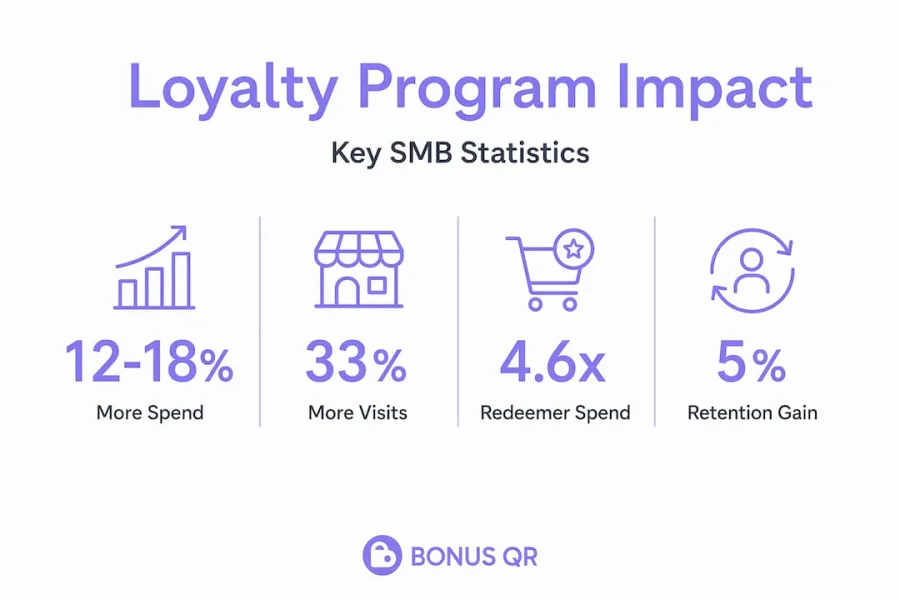
| Metric | Loyalty members | Non-members |
|---|---|---|
| Avg. transaction spend | 12-18% higher | Baseline |
| Purchase frequency | 33% more often | Baseline |
| Spend after reward redemption | 4.6x more | Baseline |
| Profit impact of 5% retention gain | Up to +95% | No change |
The redemption insight deserves extra attention. Members who actually redeem rewards spend 4.6 times more than members who never redeem. This tells you two things. First, a loyalty program that makes rewards feel unreachable is counterproductive. Second, the act of redeeming a reward reinforces the habit of returning. Design your program so customers reach their first reward within 5 to 8 transactions, not 25.
Free gifts as rewards also outperform straight discounts when it comes to repeat visit rates and perceived value. A free coffee or a small complimentary item feels more generous to the customer than 10% off, even if the cost to you is similar. This is a practical insight you can apply immediately when designing your customer retention benefits structure.
Pro Tip: Track your average redemption timeline from enrollment. If most members never reach their first reward, shorten the path. Engagement drops fast when rewards feel out of reach.
Common pitfalls SMBs face when adapting loyalty and how to avoid them
Knowing the importance of loyalty for SMBs is one thing. Executing well is another. Most programs that fail do so for the same predictable reasons. Here are the four most common mistakes and how to sidestep them.
-
Treating loyalty as optional marketing. When loyalty is handled as a side project, it shows. Promotions go out inconsistently, staff forget to mention the program at checkout, and customers lose interest. Programs fail when not managed daily, because loyalty is not a campaign. It is an ongoing customer relationship.
-
Sending generic offers to everyone. If a customer buys the same product every week and you send them a discount on something they have never purchased, that offer signals that you are not paying attention. Generic messaging erodes trust and reduces redemption rates.
-
Making enrollment too complicated. Every extra step in the sign-up process costs you members. If customers have to fill out a long form or download an app they are unfamiliar with before seeing any benefit, many will simply pass. Keep it to name, phone number or email, and done.
-
Letting early engagement momentum die. The first 30 days after enrollment are critical. A customer who visits twice in their first week and then hears nothing from you for three weeks is likely to forget the program exists. Timed follow-up nudges based on actual visit behavior, not a fixed weekly email schedule, keep that engagement alive.
Pro Tip: Build a simple 90-day engagement checklist for new members. Three well-timed messages based on their activity will outperform a dozen generic emails sent on auto-schedule. You can find more detail on this in retention strategies for SMBs.
How digital and AI personalization transform loyalty for SMBs
If your concern is that AI-driven personalization is only for large retailers with big tech budgets, it is time to reconsider. The tools available today make it entirely realistic for a local restaurant, boutique, or service business to offer the kind of tailored experience that used to require a full marketing team.
AI-driven personalization allows SMBs to analyze purchase history and automatically trigger relevant offers. A customer who orders the same lunch three days a week gets a reward tied to that item. Another customer who visits only on weekends gets a Saturday bonus offer. The same system handles both without manual input from you.
Here is what modern digital loyalty tools make possible:
- Behavior-triggered offers sent automatically when a customer hits a spending threshold or visits a certain number of times
- Coalition loyalty networks, where multiple local businesses share a reward ecosystem, increasing the value customers receive and reducing cost per business
- Card-linked offers that apply rewards automatically when a customer pays with a registered card, removing all friction from redemption
- Experiential perks like early access to new products, birthday rewards, or VIP treatment that build emotional attachment without eating into your margin
| Approach | Cost to SMB | Customer perceived value | Emotional bond |
|---|---|---|---|
| Percentage discount | Medium | Low to medium | Weak |
| Free gift reward | Low to medium | High | Moderate |
| Experiential perk | Low | Very high | Strong |
| AI personalized offer | Low (automated) | High | Strong |
Experiential perks are particularly worth your attention. Price discounts can be matched by any competitor. A birthday reward, a handwritten thank-you message triggered by the app, or early access to a new menu item creates a connection that a competitor cannot easily replicate. These are the branded loyalty benefits that build long-term retention rather than transactional loyalty.
Practical steps for SMBs to adapt loyalty effectively
You do not need to rebuild your entire operation to start seeing results. Adapting loyalty strategies for SMBs is a process that can begin simply and grow from there.
-
Start with a digital punch card. A straightforward digital stamp or points card that rewards every purchase is the fastest path to enrollment and first-transaction engagement. Keep the structure simple: earn one stamp per visit, get a reward after eight.
-
Set a reachable first reward. Design the program so a customer who visits regularly reaches their first reward within 5 to 8 visits. Early redemption drives continued participation.
-
Integrate loyalty into your daily staff workflow. Every team member who interacts with customers should know how to mention the program, help with enrollment, and record stamps or points. This is not a manager-only task. It is a front-line habit.
-
Automate your follow-up messages. Use your digital loyalty program tools to set behavior-based triggers. A message that goes out 10 days after a customer’s last visit, paired with a small bonus offer, brings people back far more reliably than a scheduled newsletter.
-
Measure at 30, 60, and 90 days. Track these three signals: enrollment rate in the first 30 days, return visit frequency by day 60, and average transaction size by day 90. Strong programs show clear signals within this window, which gives you real data to act on rather than guessing.
Key items to track throughout:
- Weekly new enrollments as a percentage of total transactions
- Redemption rate among active members
- Average days between visits for loyalty vs. non-loyalty customers
- Revenue per loyalty customer vs. non-loyalty customer
Pairing your loyalty program with email marketing and loyalty integration adds another channel for behavior-based nudges and keeps your brand in front of customers between visits.
Pro Tip: Pick one metric to focus on in your first 30 days: enrollment rate. If fewer than 20% of your regular customers have signed up by day 30, your enrollment process is too complicated. Simplify before optimizing anything else.
Why loyalty adaptation is the unsung operational priority for SMB success
Most SMB owners think about loyalty as a marketing function. Run a promotion, reward some customers, measure redemptions, repeat. That framing is exactly why so many programs plateau after the first few months.
The businesses that build real retention treat loyalty as an operational discipline. It is part of how the business runs every day, not a campaign that gets attention when things slow down. Retention is daily operations, embedded in staff behavior, customer communication, and weekly review habits.
Here is what that looks like in practice. A coffee shop that checks its loyalty dashboard every morning, reviews which customers haven’t visited in 10 or more days, and sends a personalized nudge before the lunch rush is doing loyalty operationally. A shop that checks its loyalty stats quarterly and sends a mass discount email when revenue dips is doing loyalty as a reaction. The first shop wins on retention. The second is always starting over.
The automation available through modern platforms makes this easier than it sounds. You do not have to manually track every customer’s visit history. You set the rules once, the system watches behavior, and the right message goes to the right customer at the right time. That is the difference between loyalty that scales and loyalty that burns you out.
When loyalty is built into your daily rhythm, it also protects you from the competitive pressure that kills smaller operators. A customer who feels recognized and rewarded is far less likely to be pulled away by a new competitor offering a discount for first-time visitors. That stickiness is what the engagement strategies for SMBs conversation is really about.
Explore BonusQR’s loyalty solutions tailored for SMBs
If you are ready to move from understanding the importance of loyalty for SMBs to actually building a program, BonusQR is built for exactly that. The platform gives you the tools to design, launch, and manage a fully customizable digital loyalty program without needing to integrate complex POS systems or hire a developer.
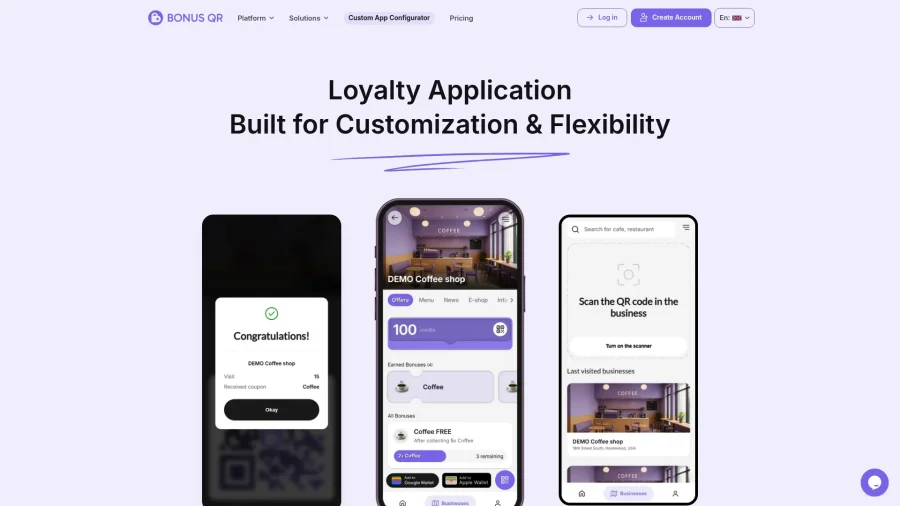
BonusQR’s loyalty system features include points collection, digital stamp cards, cashback, coupon distribution, and behavior-triggered push notifications, all configurable to your business model. Whether you run a retail shop, a restaurant, or a service business, the platform adapts to you. Service-based businesses can explore dedicated loyalty for service businesses tools, while hospitality operators will find purpose-built hotel loyalty applications that drive repeat stays. Setup is fast, pricing tiers start with a free option, and you can begin seeing enrollment data within days of launch.
Frequently asked questions
Why is adapting loyalty programs important for small and medium businesses?
Adapting loyalty programs helps SMBs meet rising customer expectations for personalized, easy-to-use digital rewards. Loyalty must deliver real value beyond points to drive retention and sustainable profit growth.
What are common mistakes SMBs make with loyalty programs?
Treating loyalty as an occasional marketing add-on and sending generic offers regardless of customer behavior are the two biggest pitfalls. Most programs fail because they lack daily operational focus and personalization.
How quickly should SMBs see results after launching a loyalty program?
You should see new sign-ups within 30 days, increased return visits by day 60, and higher average spend by day 90. Clear performance signals within that window confirm the program is working and show you where to adjust.
How does AI personalization benefit SMB loyalty programs?
AI lets you automatically deliver tailored offers based on individual purchase history, so customers receive relevant rewards without you managing each one manually. AI-driven personalized journeys increase revenue from loyal customers and replicate boutique-level service at scale.


