
TL;DR:
- Digital loyalty programs boost profits by 95% with a 5% retention increase.
- They track customer behavior and automate rewards through apps, QR codes, and digital passes.
- Success depends on designing emotionally engaging programs that incentivize incremental customer actions.
Most small business owners spend the majority of their marketing budget chasing new customers, yet a 5% retention increase can boost profits by as much as 95%. That’s not a rounding error. It’s a signal that your existing customers are one of your most underutilized growth assets. Digital loyalty programs give you a structured, measurable way to turn one-time buyers into regulars and regulars into advocates. This guide breaks down exactly what a digital loyalty program is, how it drives real revenue, which options work best for small and medium-sized businesses, and how to launch one that actually moves the needle.
Key Takeaways
| Point | Details |
|---|---|
| Digital loyalty means results | Modern loyalty programs deliver higher profit, better engagement, and measurable ROI compared to paper methods. |
| Multiple SMB-friendly options | Wallet passes, apps, and ready-made platforms offer choices for any technical skill or business size. |
| Psychology drives success | The most impactful programs go beyond points, focusing on surprise, status, and customer relationships. |
| Measure what matters | Track profit lift and retention, not just enrollments, for sustained program growth. |
What is a digital loyalty program?
A digital loyalty program uses technology to track customer behavior, reward repeat purchases or visits, and keep your business top of mind. Instead of a paper punch card that gets lost in a wallet, you’re working with apps, QR codes, digital wallet passes, or web-based platforms that do the heavy lifting automatically.
Here’s what a well-built digital loyalty program typically includes:
- Digital enrollment: Customers sign up via a QR code scan, a link, or an app download. No paper forms, no manual entry.
- Automated point or stamp tracking: Every qualifying purchase or visit is logged instantly, without any manual effort from your staff.
- Easy reward redemption: Customers see their progress in real time and redeem rewards through their phone or a simple code at checkout.
- Real-time analytics: You get data on who’s coming back, how often, and what’s driving their behavior.
The contrast with traditional paper loyalty cards is significant. Digital redemption rates reach 30-40% compared to less than 10% for paper cards. That gap exists because digital programs remove friction. Customers don’t need to carry anything, remember anything, or ask your staff to stamp a card.
“Customers today expect convenience and personalization. A program that works on their phone, remembers their preferences, and surprises them with relevant rewards is not a luxury; it’s a baseline expectation.”
You can implement a digital loyalty program through three main channels. First, a ready-made platform like BonusQR, which handles setup, tracking, and customer communication for you. Second, a custom-built app, which gives you more control but requires more time and investment. Third, digital wallet passes for Apple Wallet or Google Wallet, which require no app download and work right out of the box.
If you want a deeper look at how digital formats compare to traditional cards, the digital loyalty cards guide walks through the mechanics in detail.
The key shift here is not just moving from paper to digital. It’s moving from a passive system to an active one. A digital program can send a push notification when a reward is ready, trigger a special offer on a customer’s birthday, or alert you when a loyal customer hasn’t visited in 30 days. That level of automation is impossible with a stamp card.
How digital loyalty programs drive real business growth
With a basic understanding in place, it’s vital to see how digital loyalty programs tangibly impact profitability for SMBs.
The math is straightforward. Acquiring a new customer costs five to seven times more than retaining an existing one. When you invest in loyalty, you’re generating returns from your most cost-efficient segment: people who already trust you.
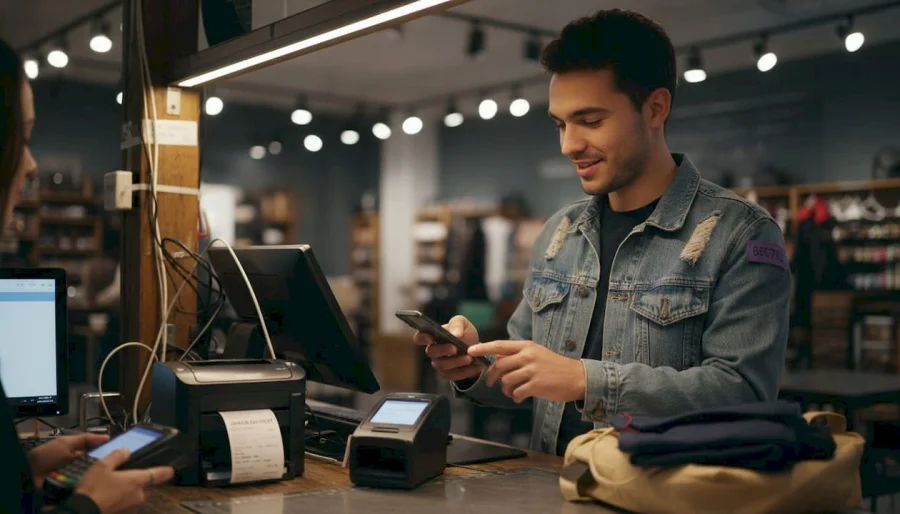
The numbers back this up consistently. Loyalty program members spend 12-25% more per transaction, and the average ROI for digital loyalty programs is 4.8x. That means for every dollar you put in, you’re getting nearly five back. And repeat visits increased by 66% in one SMB-focused case study after implementing a structured digital loyalty system.
| Metric | Without loyalty program | With digital loyalty program |
|---|---|---|
| Average spend per visit | Baseline | 12-25% higher |
| Repeat visit frequency | Baseline | Up to 66% increase |
| Program ROI | N/A | ~4.8x average |
| Redemption rate | Under 10% (paper) | 30-40% (digital) |
So what actually drives these results? A few key factors:
- Instant rewards: Customers who see their points update immediately are more motivated to return. Delayed gratification works against engagement.
- Status and progress: A visible progress bar toward the next reward taps into basic human motivation. People want to complete things.
- Timely reminders: Push notifications or emails sent at the right moment (a customer hasn’t visited in two weeks, a reward is about to expire) bring people back who would otherwise drift away.
- Personalization: Offering a birthday reward or a tier-specific perk makes customers feel recognized, not just processed.
To dig further into the financial case, the ROI of loyalty programs breaks down how SMBs can calculate and track their returns. You can also explore a broader view of loyalty program benefits to see how retention connects to long-term revenue growth.
The bottom line: digital loyalty programs work because they make it easier for customers to stay loyal and easier for you to measure and act on that loyalty.
Popular digital loyalty program options for SMBs
Understanding the ‘why’ of loyalty ROI is essential, but what about practical choices? Here’s a breakdown of SMB-friendly digital loyalty solutions.
Not every business needs the same solution. Your choice depends on your tech comfort level, budget, customer habits, and how quickly you want to launch. Here are the main options:
-
Ready-made platforms (like BonusQR): These give you a full loyalty system out of the box. You configure your reward rules, branding, and communication preferences, and the platform handles everything else. Best for SMBs that want results fast without a developer.
-
Custom mobile apps: A fully branded app built specifically for your business. This is ideal for larger SMBs with a strong existing customer base and a budget for development. The trade-off is time and cost.
-
Digital wallet passes: These work inside Apple Wallet and Google Wallet with no app required. Wallet pass setup takes under 10 minutes with QR scan enrollment, making them an excellent low-friction starting point for small teams.
-
Gamified or tiered loyalty systems: Programs that include levels, badges, or challenges drive higher engagement over time. These work especially well in retail, food service, and fitness.
| Option | Setup time | Cost | Best for |
|---|---|---|---|
| Ready-made platform | Hours | Low to medium | Most SMBs |
| Custom app | Weeks to months | High | Larger SMBs |
| Wallet pass | Under 10 minutes | Very low | Small teams, quick start |
| Gamified tiers | Days to weeks | Medium | High-frequency businesses |
Pro Tip: If you’re just starting out, go with a wallet pass or a ready-made platform. You’ll learn what your customers respond to before committing to a more complex build.
For sector-specific inspiration, the retail loyalty options article covers real examples from leading retailers. And if you want a full breakdown of why digital beats analog, digital loyalty advantages covers the operational and competitive case in depth.
Best practices to maximize digital loyalty impact
Choosing the right program is a start. Here’s how to ensure your loyalty initiative delivers outsized value and avoids common pitfalls.
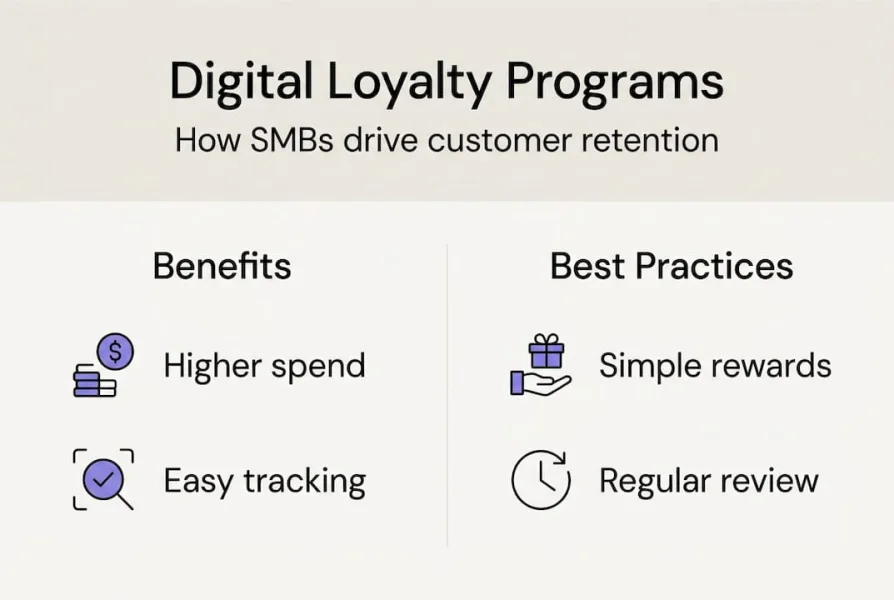
The most common reason loyalty programs underperform is not a technology problem. It’s a design problem. Businesses set up a points system, enroll customers, and then assume the results will follow. They often don’t, because the program wasn’t built around the right behaviors.
Here’s what actually works:
- Reward incremental behavior: Focus your rewards on actions that go beyond what customers would do anyway. Measuring lift over baseline is the real test of whether your program is growing revenue or just subsidizing existing purchases.
- Use surprise rewards: Unexpected perks, like a thank-you discount after a tenth visit, create emotional resonance that scheduled rewards don’t.
- Communicate clearly: Customers who don’t understand how your program works won’t use it. Keep the rules simple and remind them of their progress regularly.
- Build in tiers: Bronze, silver, gold structures give customers something to aspire to and naturally increase spend as they move up.
- Track what matters: Enrollment numbers feel good but don’t tell you much. Focus on customer lifetime value (CLV), churn rate reduction, and actual revenue from loyalty members versus non-members.
The loyalty program illusion is a real risk: a program that looks active but isn’t changing behavior. Avoid it by asking one simple question regularly: are loyalty members spending more and visiting more often than they were before they joined?
Pro Tip: Run a quarterly review of your loyalty data. Compare the average spend and visit frequency of enrolled customers versus non-enrolled customers. If there’s no difference, your program needs a redesign, not more enrollments.
For ideas on what to offer, types of loyalty rewards gives a practical breakdown. And if you’re thinking about the bigger picture, growing with loyalty shows how retention strategy connects to overall business growth.
The truth most businesses miss about loyalty programs
Most guides stop at best practices. Here’s the insight that separates loyalty programs that transform businesses from ones that just add a digital layer to an existing problem.
The majority of SMBs treat digital loyalty as a technical upgrade. They swap the punch card for an app and expect dramatically different results. But technology is not the differentiator. The businesses that see transformational ROI are the ones that use loyalty as a relationship tool, not just a transaction tracker.
Surprise and status drive loyalty far more than points alone. When a customer feels genuinely recognized, remembered, and valued, they don’t just return. They refer others. The customer retention benefits go well beyond repeat purchases when the emotional connection is real.
Ask yourself honestly: are you rewarding customers for extra value they’re creating, or are you paying for behavior that would happen anyway? That’s the question that separates a profitable loyalty program from an expensive one. When you design around emotion, psychology, and genuine engagement, digital tools deliver results that exceed any spreadsheet projection.
Start your digital loyalty journey with BonusQR
If you’re ready to put these loyalty principles into practice, here’s how BonusQR helps SMBs implement powerful, modern digital loyalty solutions.
BonusQR is built specifically for businesses like yours. Whether you run a cafe, a retail shop, a salon, or a service business, the platform gives you flexible tools to launch a digital loyalty program without needing a developer or a POS integration. You can explore the full BonusQR feature overview to see options like points collection, stamp cards, cashback, push notifications, and real-time analytics. If you operate in the service industry, BonusQR for services shows how the platform is tailored to your specific customer journey. Getting started is faster than you might expect, and the results are measurable from day one.
Frequently asked questions
How does a digital loyalty program work?
It tracks customer activity and automates rewards through mobile apps, wallet passes, or platforms, making participation easy and measurable. Digital loyalty programs use apps or digital passes to handle tracking and rewarding without any manual effort from your team.
Are digital loyalty programs worth the investment for small businesses?
Yes. Retention increases deliver outsized profits, and digital programs show an average ROI of 4.8x, with members spending 12-25% more per transaction compared to non-members.
Which digital loyalty option is easiest for SMBs to start?
Wallet passes are the simplest entry point because they require no app download and wallet pass setup takes under 10 minutes with QR scan enrollment, making them ideal for small teams moving fast.
What’s the biggest mistake to avoid with loyalty programs?
The most costly mistake is rewarding purchases that would happen with or without the program. Programs often fail when they subsidize baseline behavior instead of incentivizing genuinely incremental spending and visits.


