TL;DR:
- True loyalty branding fosters emotional connection, trust, and identity, not just transactional rewards.
- Digital mechanics like points, tiers, and personalization support but don’t replace brand-driven loyalty.
- Building emotional loyalty leads to higher retention, word-of-mouth, and resistance to competitors’ discounts.
Many small business owners assume a rewards program is enough to keep customers coming back. But there’s a critical gap between handing out points and actually building loyalty. True loyalty branding creates an emotional preference for your business, one that holds firm even when a competitor down the street offers a deeper discount. This article explains what loyalty branding really means, how digital loyalty mechanics power it, what ROI you can realistically expect, and how to move beyond perks into something far more durable: emotional connection.
Key Takeaways
| Point | Details |
|---|---|
| Emotional connection drives loyalty | Loyalty branding builds lasting preference, not just repeat transactions. |
| Simple, automated digital programs succeed | Easy-to-use platforms boost activation, retention, and ROI for SMBs. |
| Avoid common loyalty program pitfalls | Over-complexity and unbranded rewards erode trust and engagement. |
| Brand values matter in rewards | Integrating your identity and story creates loyalty that survives discounts. |
| Measure incremental impact, not raw numbers | Compare customer behavior and profits against control groups for real results. |
What is loyalty branding and why does it matter?
With that misconception in mind, let’s clarify what loyalty branding actually means and why it’s foundational.
Most people think loyalty programs are about rewards. Punch cards, discount codes, points for purchases. That’s the transactional side, and it has its place. But loyalty branding goes deeper. Loyalty branding refers to the emotional attachment and consistent preference customers develop for a brand, built through trust, visual consistency, emotional connection, and perceived value. That definition changes everything about how you design your program.
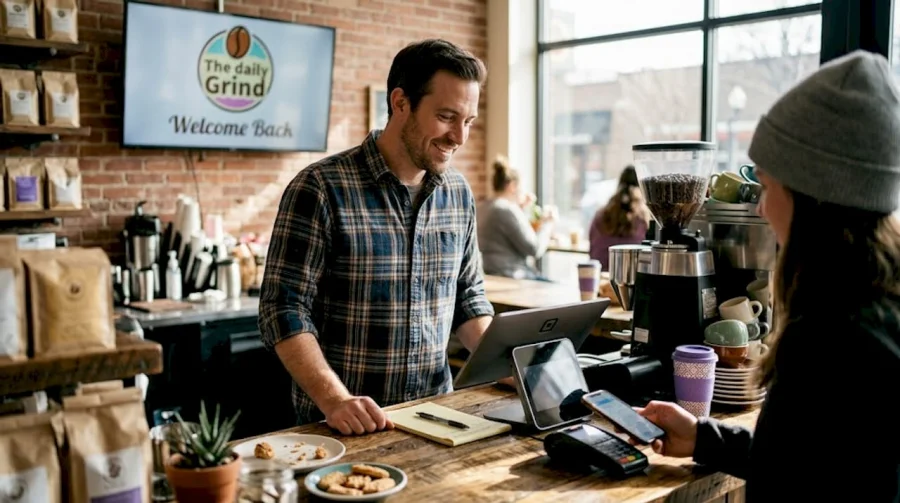
When customers feel emotionally connected to your brand, they don’t just come back for the deal. They come back because your business fits their identity. A coffee shop that feels like a neighborhood anchor, a boutique that reflects a customer’s personal style, a restaurant that remembers how they take their order. These aren’t just nice-to-haves. They’re the mechanics of lasting preference.
Here’s what separates loyalty branding from a basic rewards setup:
- Trust: Customers believe your brand will consistently deliver what it promises.
- Visual consistency: Your logo, colors, app design, and communications all reinforce the same identity.
- Emotional resonance: Your program feels personal, not generic.
- Perceived value: Customers feel the relationship benefits them beyond the dollar amount of rewards.
The benefits of branded loyalty go well beyond repeat visits. They include higher lifetime customer value, stronger word-of-mouth referrals, and resistance to competitor offers. A customer with emotional loyalty doesn’t comparison-shop in the same way a deal-seeker does.
“The brands that win long-term loyalty don’t just reward purchases. They make customers feel like they belong to something.”
For SMBs especially, this distinction matters. You rarely have the budget to out-discount a big competitor. But you can out-connect them. Combining smart customer engagement strategies with a branded identity gives you an advantage that money alone can’t buy.
Mechanics of digital loyalty programs for SMBs
Understanding loyalty branding, let’s look at how it comes to life through digital loyalty programs tailored for SMBs.
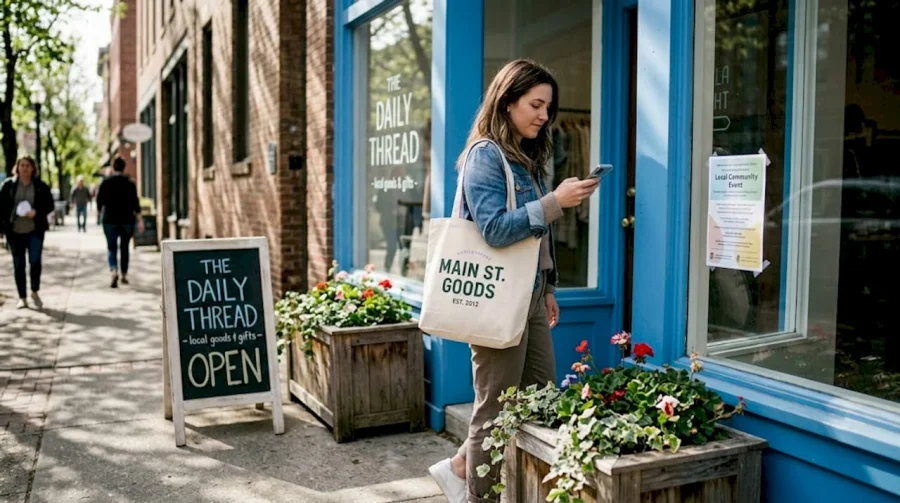
Digital loyalty programs for SMBs include points-based earning for purchases and visits, tiered rewards, personalized offers, referrals, birthday rewards, and automation via apps for customizable engagement. The right combination depends on your business model, your customer base, and how much complexity you can realistically manage.
Here’s a practical breakdown of the core mechanics:
- Points-based rewards: Customers earn points per purchase or visit, redeemable for discounts, free products, or exclusive perks.
- Digital stamp cards: A modern version of the paper punch card, tracked automatically in an app.
- Tiered programs: Customers unlock higher reward levels the more they spend, encouraging larger and more frequent purchases.
- Cashback offers: A percentage of spend is returned as store credit, which drives repeat visits to redeem it.
- Referral incentives: Existing customers earn rewards for bringing in new ones, growing your base organically.
- Occasion-based rewards: Birthday offers, anniversary bonuses, and seasonal promotions that feel personal rather than automated.
| Mechanic | Best for | Activation effort |
|---|---|---|
| Points | Retail, cafes | Low |
| Stamp cards | Food and beverage | Very low |
| Tiered rewards | Hospitality, boutiques | Medium |
| Cashback | Services, salons | Low |
| Referral programs | Any SMB | Medium |
The digital loyalty advantages become clear when you compare them to paper alternatives. Digital systems track behavior automatically, reduce human error, and allow you to send targeted push notifications based on real purchase data.
Pro Tip: Start with one or two mechanics and add layers over time. A single well-executed stamp card program outperforms a complex tiered system that confuses customers and overwhelms your staff.
Simplicity is a competitive advantage. Low-cost loyalty tactics that are easy to understand and join consistently outperform elaborate programs with low activation rates. Keeping things clean and branded also reinforces the identity signals that build emotional loyalty over time. The platform you choose should support boosting SMB growth without requiring complex POS integrations or dedicated tech staff.
Measurable impact: ROI and pitfalls of loyalty programs
But are all loyalty programs equally effective? Let’s explore the measurable impact and risks of loyalty branding done right or wrong.
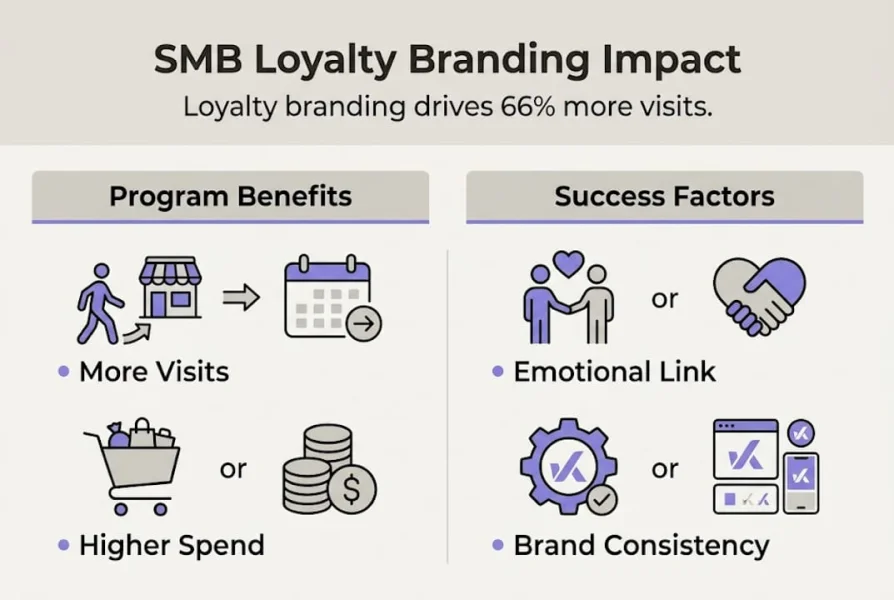
The numbers are encouraging when programs are well-designed. Loyalty programs boost SMB performance with results like a 66% visit increase and 38% spend growth for one retail business, 25% visit and 15% revenue gains in hospitality, and first-year ROI of 340 to 500% for automated programs. A 5% improvement in customer retention correlates directly to a 25% profit increase.
Those figures represent real businesses, not projections. But they come with conditions. The program has to be well-branded, easy to use, and genuinely rewarding. Programs that miss these marks fall into predictable traps.
Common pitfalls to avoid:
- Subsidizing inevitable purchases: Rewarding customers for purchases they were going to make anyway adds cost without generating incremental value.
- Over-complexity: Programs with too many rules, tiers, or redemption conditions see low activation rates below 30%, which signals most customers never engage deeply enough to feel loyal.
- Point devaluations: Changing reward values after customers have accumulated points destroys trust fast.
- Data extraction without value: Using loyalty programs primarily to collect data rather than reward customers creates what researchers call coerced loyalty. Customers feel locked in, not genuinely attached.
- Operational costs exceeding benefits: Manual programs with paper records or fragmented systems cost more in staff time than they return.
The loyalty program illusion is real. Points do not automatically equal preference. The metric to watch is incremental behavior change, not raw enrollment numbers. Your customer retention guide should focus on measuring visit frequency and average spend before and after program enrollment, with a proper comparison group.
If activation drops below 30% or engagement declines steadily after the first redemption, that’s a warning sign. The fix is usually simpler program design, stronger branding, or more personalized communication. Automating loyalty campaigns also reduces the manual workload that causes many small programs to fall apart over time.
Also consider mobile loyalty retention data, which shows mobile-accessible programs consistently outperform paper or email-only alternatives because customers can check their status and redeem rewards in the moment.
Building emotional loyalty: Beyond points and perks
Finally, let’s move from mechanics and metrics to what differentiates truly loyal customers: emotional connection and brand values.
Here’s an uncomfortable truth about points programs: points commoditize competition without building preference. When your loyalty program looks just like every other program, customers learn to shop for the best deal across all of them. You’ve trained them to compare, not commit.
Emotional loyalty works differently. It’s built through consistent experiences, genuine recognition, and a sense that your business understands what matters to the customer.
Ways to build emotional loyalty into your program:
- Personalized communication: Use first names, purchase history, and behavioral data to send messages that feel relevant, not mass-produced.
- Brand narrative: Share your story. Why you started, what you believe in, and who your customers are as a community.
- Belonging mechanics: Create members-only events, early access offers, or exclusive content that makes enrolled customers feel like insiders.
- Purpose-driven rewards: Offer options to donate reward points to a cause, tie rewards to community events, or celebrate local milestones.
- Visual branding: Make your app, card design, and communications look and feel like your brand, not a generic loyalty platform.
The guide to loyalty retention consistently shows that customers who feel a personal connection to a brand spend more, refer more friends, and tolerate the occasional service mistake. Looking at retail loyalty examples, the most successful programs combine practical mechanics with a strong brand identity.
Pro Tip: Test your real loyalty by pausing reward promotions for two or three weeks. If visit frequency holds up, you’ve built genuine preference. If it drops sharply, you’re mostly paying for behavior that disappears without incentives.
“Emotional loyalty insights remind us that real loyalty resists competitors through identity and belonging, not just rewards. The test is simple: remove the perks and see who stays.”
Purpose-driven program designs that integrate brand values consistently outperform programs built purely around discounts. This is especially true in hospitality and services, where the customer relationship is personal by nature.
Our take: Loyalty branding is your competitive moat
Drawing together the evidence, here’s the fresh perspective you won’t hear from loyalty software vendors.
Most loyalty platforms sell you on mechanics. Points, tiers, automations. Those are the tools. But the strategy is loyalty branding, and without it, even a technically perfect program produces deal-seekers instead of devoted customers.
We’ve seen it repeatedly. Businesses that invest in branded experiences, consistent visual identity, and personalized communication build something competitors can’t easily copy. A rival can match your discount. They can’t replicate the emotional connection your customers have built with your brand over time.
True loyalty resists competitors through identity and belonging. Poor programs erode intrinsic motivation, turning customers into deal-seekers. The real test: remove rewards and see if behavior persists. If it does, you’ve built something real.
The SMBs winning at retention in 2026 are not the ones with the biggest reward budgets. They’re the ones that treat their loyalty program as a brand-building tool, not just a discount engine. Explore loyalty campaign ideas that reflect your brand identity from day one, and build from there.
Get started with a loyalty branding platform designed for SMBs
Ready to build your brand advantage? Explore digital solutions designed for real customer loyalty.
BonusQR gives SMBs in retail, hospitality, and services everything they need to launch a loyalty program that reflects their brand identity, not a generic template. With flexible tools like electronic reward programs, stamp card loyalty features, and full mobile loyalty features, you can design a program that earns genuine customer preference. Track ROI in real time, automate campaigns, and customize every touchpoint to match your brand. No POS integration required. You can be live and building emotional loyalty within days.
Frequently asked questions
How is loyalty branding different from regular loyalty programs?
Loyalty branding creates an emotional connection and preference through trust, visual consistency, and perceived value, while regular programs focus on transactional incentives that may not build true loyalty.
What digital mechanics should SMBs prioritize in their loyalty programs?
Points, tiered rewards, personalized offers, and app-based automation are proven to boost both retention and ROI for small and medium businesses.
How can SMBs measure the effectiveness of loyalty branding?
The best measures are incremental visit and spend lift, activation rates, and retention improvement against a comparison group. Automated programs consistently deliver 340 to 500% first-year ROI when tracked this way.
What are common mistakes SMBs make with loyalty programs?
Complex program structures, rewarding purchases customers were already making, and missing brand identity in the design lead to low activation, lost revenue, and customers who leave when rewards stop.
How can SMBs test for real loyalty beyond perks?
Remove rewards temporarily and track whether customers keep returning. If behavior persists, their preference is grounded in emotional branding rather than incentives.


