Running a small business means you constantly weigh promotions against margins. Discounts feel like giving money away, and coupons can attract one-time bargain hunters rather than loyal repeat customers. Knowing how to promote cashback incentives gives you a better option. Cashback rewards customers after they buy, so your full price holds at checkout while shoppers still feel rewarded. This guide walks you through every stage: planning your offer, writing clear messaging, protecting against fraud, automating claims, and keeping your program running profitably over the long term.
Key Takeaways
| Point | Details |
|---|---|
| Plan your mechanics | Define clear cashback triggers, limits, and success metrics before launching your campaign. |
| Simple messaging works | Use direct customer benefits and promote the offer widely to maximize engagement. |
| Smooth redemption | Make the claim process easy and fraud-resistant to encourage completion and repeat business. |
| Automate operations | Leverage OCR and AI for fast, accurate claim validation and reward payouts at scale. |
| Control budget risks | Implement redemption caps and use systems to enforce rules preventing over-redemption. |
Plan your cashback promotion carefully
Before you announce anything to customers, get the mechanics locked down. Planning cashback rewards for SMBs starts with four core decisions: what triggers the cashback (a minimum purchase amount, a specific product, or a date range), how you pay the reward (store credit, bank transfer, or digital wallet), what limits apply, and how you will measure success.
As one cashback promotion guide puts it, “marketing is just as important as mechanics,” and defining clear terms up front reduces both disputes and fraud exposure. That single insight saves many small business owners from costly headaches after launch.
Here are the key planning elements to define before going live:
- Trigger condition: Minimum spend threshold, qualifying product category, or both
- Reward amount: Fixed dollar amount or percentage of purchase
- Payout method: Store credit, prepaid card, bank transfer, or platform wallet
- Budget cap: Total program budget and per-customer redemption limit
- Redemption window: How many days a customer has to claim after purchase
- Success metrics: Redemption rate, average order value lift, customer return rate
Use the table below to map out your program before launch:
| Planning element | Example for a $100 min spend offer |
|---|---|
| Trigger condition | Spend $100 or more in a single transaction |
| Cashback amount | $15 back |
| Payout method | Store credit applied to next purchase |
| Budget cap | Total program budget of $2,000 |
| Redemption window | 30 days from purchase date |
| Primary success metric | 20% redemption rate within 60 days |
Pro Tip: Set your redemption window shorter rather than longer. A 30-day window creates urgency. A 90-day window gets forgotten, which lowers redemption rates and makes ROI measurement much harder.
Craft clear and compelling messaging
After detailed planning, the next step is writing messaging that grabs attention and drives customer action. The number one mistake in cashback program marketing is being vague. “Earn rewards on every purchase” tells customers almost nothing. “Get $15 back when you spend $100” tells them exactly what to do and exactly what they get.
Simple, upfront messaging that states the exact customer benefit consistently outperforms creative or abstract language when it comes to cashback offers. Customers need to understand the offer in under three seconds. If they have to read it twice, you have already lost some of them.
Equally important is where you place that message. Promoting cashback offers across multiple touchpoints multiplies your reach without multiplying your effort. Every channel you skip is a customer segment you miss.
Channels to cover when advertising cashback:
- Website homepage banner: Catch visitors at the top of their session
- Checkout page pop-up: Catch buyers right before payment, when spend decisions are easiest
- Email campaign: Reach existing customers who already trust you
- SMS reminder: Short, direct, and read within minutes of receipt
- Social media posts: Build awareness and invite sharing
- Paid ads: Reach new audiences with the specific dollar benefit stated in the headline
Adding a deadline sharpens all of this. “This week only” or “available until supplies last” gives customers a reason to act now rather than bookmark and forget. You can also look at messaging cashback benefits alongside other offer types to understand why cashback messaging outperforms coupon-style promotions for repeat purchases.
Pro Tip: Test two headline formats in email: one leading with the dollar amount (“Get $15 back today”) and one leading with the spend trigger (“Spend $100, get $15 back”). The first typically gets higher open rates; the second typically gets higher click-through. Use the first for cold audiences and the second for active buyers.
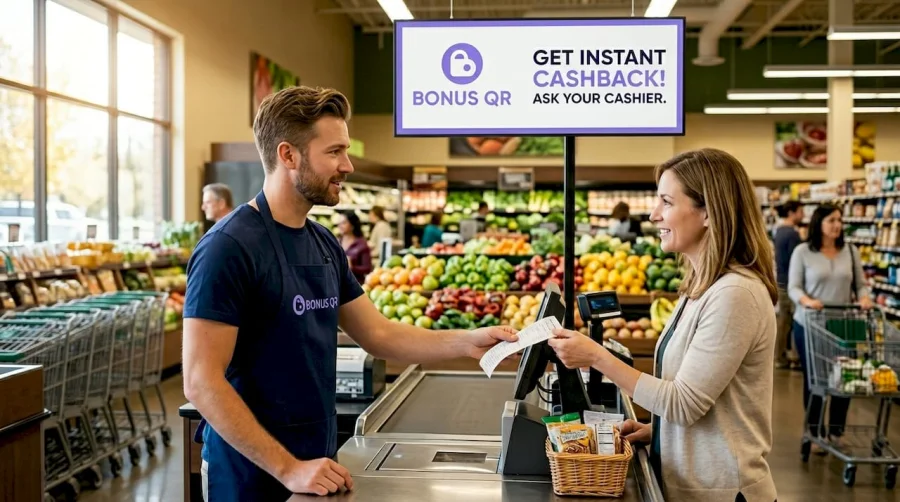
For promoting cashback offers at the point of sale, train your staff to mention the program at checkout. A verbal reminder from a trusted employee often converts better than any banner.
Ensure seamless and fraud-resistant customer redemption
With messaging set, focus shifts to creating a smooth and secure redemption experience that builds customer confidence. This is where many otherwise well-planned campaigns fall apart. Customers who start the claim process and find it confusing simply abandon it. That abandoned redemption does not save you money. It costs you a customer’s trust.
Cashback promotions work best when the claim process is both simple for customers and verified against eligibility rules to stop fraud and reduce support volume. Those two goals are not in conflict. You can build a short, clean claim journey that still checks every rule automatically.
Here is a practical five-step redemption flow to model:
- Purchase: Customer completes a qualifying transaction and receives a receipt
- Notification: Automated message (email or SMS) triggers within minutes confirming the offer
- Submission: Customer submits proof of purchase through a simple form or app upload (receipt photo or order number)
- Validation: System checks the submission against campaign rules: correct product, correct spend amount, valid date, and unique customer
- Payout: Reward issues automatically, with a confirmation message sent to the customer
“Keep the number of document types you require to a minimum. Every extra step or document you add reduces completion rates. One receipt and one account login is the gold standard for small business cashback claims.”
Designing seamless redemption also means writing your terms clearly. Spell out exactly what qualifies, what does not, and what happens if a claim is rejected. Ambiguity in your terms generates support tickets. Clarity eliminates most of them before they start.
Pro Tip: Add a progress indicator to your claim form. Showing customers “Step 2 of 3” reduces drop-off significantly. People abandon forms when they cannot see the end.
Leverage automation to scale cashback operations
To further improve efficiency and customer satisfaction, many businesses turn to automation for cashback processing. When you run a cashback campaign manually, verifying every receipt by hand works fine for ten claims. It breaks down at a hundred. Automation solves this without adding headcount.
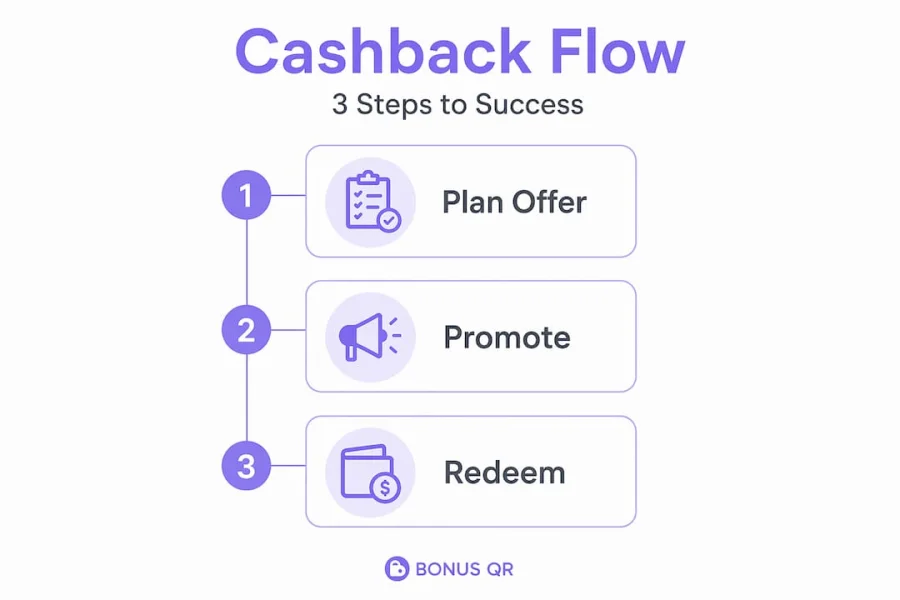
A well-designed cashback automation framework typically works in three steps: the customer submits proof of purchase, OCR (optical character recognition) and AI extract and verify the purchase data against your campaign rules, and then the system calculates the reward and issues the payout. This process can run in minutes rather than days.
Here is how manual processing compares to automated processing:
| Factor | Manual processing | Automated processing |
|---|---|---|
| Time per claim | 5 to 15 minutes | Under 60 seconds |
| Fraud detection | Inconsistent, human error-prone | Rule-based, consistent |
| Scalability | Breaks above a few hundred claims | Handles thousands simultaneously |
| Payout speed | Days to weeks | Minutes to hours |
| Staff cost | High, ongoing | Low, one-time setup |
| Customer satisfaction | Variable | Consistently high |
Key components to include in your automation setup:
- OCR technology: Reads and extracts data from uploaded receipts automatically
- Rule engine: Checks extracted data against your campaign eligibility rules without human review
- Fraud detection layer: Flags duplicate submissions, edited receipts, or suspicious patterns
- Payment API integration: Connects to your payout method (store credit, digital wallet, or bank transfer) and issues rewards instantly
- Notification triggers: Sends automated confirmation and follow-up messages at each stage
Automation benefits in cashback extend beyond efficiency. When customers receive their reward within an hour rather than two weeks, their satisfaction with your brand increases. That positive experience is what converts a one-time buyer into a repeat customer.
Promote and manage your cashback campaign continuously
Finally, keep your cashback program effective by actively managing promotions and monitoring results. Launching a campaign is not a one-time event. The best cashback marketing strategies treat the program as a living system that you monitor, adjust, and promote on an ongoing basis.
Budget protection is the first ongoing priority. To prevent over-redemption and budget strain, add controls like one-redemption-per-customer limits, velocity caps (a maximum number of claims processed per day or per week), and clear redemption windows in your terms and conditions. These are not just fine-print details. They are the guardrails that keep your campaign profitable.
“A campaign without velocity caps can drain a $2,000 promotional budget in 48 hours if it goes viral or gets shared on deal forums. Build the ceiling in before you publish.”
After purchase, use post-purchase reminders to increase cashback usage. Many customers who qualify for a reward simply forget to claim it. A reminder email at day 7 and day 21 of the redemption window recovers a meaningful portion of those lapsed claims without any extra acquisition cost.
Track these metrics weekly to evaluate and optimize your campaign:
- Redemption rate: Claims submitted divided by qualifying purchases
- Average order value during campaign: Compare to baseline to measure lift
- Repeat purchase rate: How many cashback customers return within 90 days
- Claim approval rate: High rejection rates signal unclear eligibility rules
- Cost per acquisition: Total cashback paid divided by net new customers gained
Ongoing cashback program management also means refreshing your creative and your offer periodically. A campaign that runs unchanged for six months becomes invisible. Seasonal variations, bonus cashback events, and referral tie-ins keep the program feeling new.
Why most cashback promotions fail without these insider strategies
Most guides on effective cashback promotions focus on the launch: write a clear offer, pick your channels, go live. What they skip is the part where campaigns quietly collapse after launch because the redemption experience is too complicated or the budget runs out unexpectedly.
The hard truth is that most SMB campaigns fail at what you could call the last mile. Customers only complete a cashback claim when the journey is predictable and short. A common fix used in expert cashback campaigns is to reduce both the number of steps and the number of document types required, then automate eligibility checks entirely. Manual reviews that take days kill repeat intent. Customers who wait two weeks for a $15 reward rarely come back.
There is also a mindset trap worth naming. Many small business owners treat fraud prevention as something they will deal with “if it becomes a problem.” That is too late. Fraud and abuse risk is a promotion design element, not an afterthought. Validation rules must be embedded from day one. Once fraudulent claims flood a campaign, fixing the rules mid-flight is disruptive and creates disputes with legitimate customers caught in the tightened filter.
Budget control is the third point typical guides underserve. Writing “one redemption per customer” in your terms and conditions is not enough. You need a system that enforces it automatically. Terms are only as strong as the technology backing them up. Without tooling that enforces caps in real time, your program is a policy document, not a guardrail.
Start your cashback journey with BonusQR’s loyalty solutions
To put these best practices into action, BonusQR offers tailored tools that simplify cashback incentives and help your business grow.
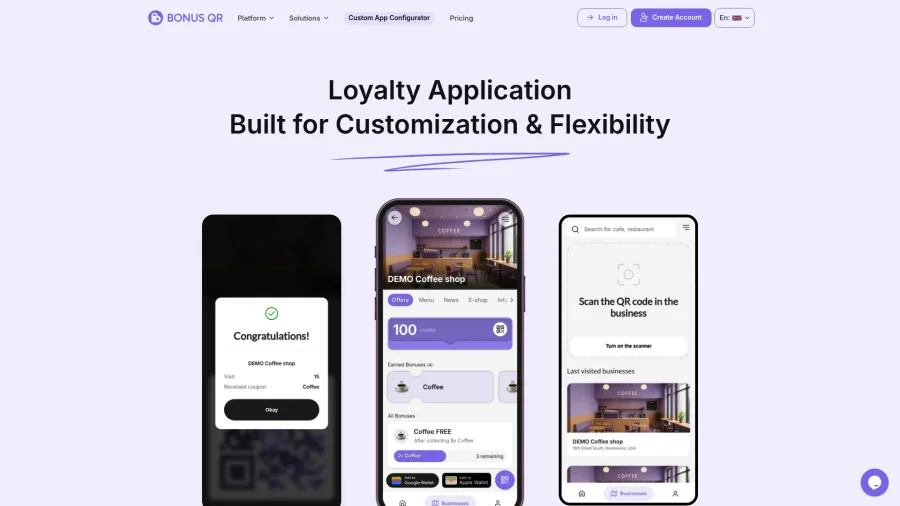
BonusQR’s electronic reward platform gives you flexible cashback and reward features that plug directly into your loyalty program without requiring POS integration. You can combine cashback with a stamp card loyalty program to create layered incentives that keep customers coming back for more than just one offer. The mobile and web app features make it easy for your customers to check rewards, submit claims, and receive notifications all from their phones. Real-time analytics, push notification campaigns, and automated reward triggers are all included, so you spend less time managing the program and more time running your business.
Frequently asked questions
What is the main difference between cashback and discounts?
Cashback rewards customers after purchase, preserving the product’s full price upfront, while discounts reduce the price at the point of sale immediately. This means cashback protects your margin at checkout while still giving customers a compelling reason to buy.
How can I prevent fraud in a cashback promotion?
Embed validation rules from the start, keep eligibility criteria specific and clear, and use automation tools to verify claims and flag suspicious activity. Fraud prevention must be part of your promotion design from day one, not something you add after problems appear.
What are effective ways to promote cashback offers?
Use simple, direct messaging that states the exact dollar benefit and promote across every high-traffic channel including website banners, checkout pop-ups, email, SMS, and paid ads to reach customers at every decision point.
Why is automation important for cashback programs?
Automation speeds up claim verification, reduces manual errors, and handles verification and payouts using OCR and AI so your program can scale without requiring additional staff for each campaign.
How can small businesses protect budget when running cashback campaigns?
Set one-redemption-per-customer limits, add velocity caps, and use a promotion management system that enforces these controls automatically rather than relying only on terms and conditions to restrict usage.


