
 Deutsch
 Español
 Français
 Italiano
 Magyar
 Polski
 Slovenčina
 Čeština

Small business owners often chase new customers while overlooking a powerful profit driver: retention. Increasing customer retention rates by 5% can increase profits by 25% to 95%, yet many SMBs struggle to implement scalable loyalty programs that lock in repeat sales. This guide clarifies how retention strategies and digital loyalty solutions can transform your business growth without overwhelming your budget or operations.
Key takeaways
| Point | Details |
|---|---|
| Retention delivers outsized profits | Small retention improvements generate 25% to 95% profit increases for SMBs. |
| Loyalty programs boost repeat purchases | Structured programs increase repeat purchase rates by 30% and visit frequency by 20-40%. |
| Cost misconceptions block adoption | Digital loyalty solutions often cost under $50 monthly with ROI within six months. |
| Customization drives engagement | Tailored rewards improve retention rates by over 25% compared to generic programs. |
| Metrics enable continuous improvement | Tracking repeat purchase rate, churn, and customer lifetime value optimizes program performance. |
Understanding customer retention and its importance for SMBs
Customer retention measures how many customers continue buying from your business over time. Unlike acquisition that focuses on attracting new buyers, retention builds loyalty among existing customers who already trust your brand.
The financial impact is staggering. Increasing customer retention rates by 5% can increase profits by 25% to 95%, making retention one of the highest-leverage activities for SMB growth. Retained customers spend more per transaction, require less marketing investment, and refer new buyers organically.

Retention also costs far less than acquisition. Industry data shows keeping existing customers costs 5 to 25 times less than finding new ones. Your marketing budget stretches further when you invest in customers who already know your value proposition.
For SMBs operating on tight margins, this cost differential matters enormously. Every dollar saved on acquisition can fund better service, product improvements, or strategic expansion. Retention becomes the foundation of sustainable growth rather than a secondary concern.
Key retention benefits for SMBs include:
- Lower customer acquisition costs freeing budget for operations
- Higher average transaction values from loyal repeat buyers
- Organic referrals reducing marketing spend requirements
- Predictable revenue streams enabling better business planning
- Competitive advantages built on customer relationships
How loyalty programs enhance customer retention mechanisms
Digital loyalty programs provide structured incentives that encourage customers to return. Popular features include points accumulation, cashback rewards, stamp cards for repeat visits, and customizable discount tiers that recognize customer milestones.
The impact is measurable and significant. Structured loyalty programs lead to a 30% higher repeat purchase rate for small businesses, while visit frequency jumps 20 to 40 percent when customers actively participate in reward programs.
Customization amplifies these results. Programs tailored to specific customer behaviors boost engagement by 25% compared to generic one-size-fits-all approaches. A coffee shop might reward frequent morning visitors differently than occasional afternoon customers, creating personalized value that resonates.
Digital platforms enable this precision through automated tracking and real-time analytics. You see which rewards drive the most visits, which customer segments engage most actively, and where to adjust incentives for maximum impact. This data-driven approach replaces guesswork with actionable insights.
Pro Tip: Segment your customer base by purchase frequency and tailor rewards to each group’s behavior patterns. Frequent buyers might value exclusive early access while occasional customers respond better to discount incentives.
Modern loyalty solutions integrate seamlessly with your existing operations without requiring expensive POS system overhauls. Customers access rewards through mobile apps or web platforms, redeem benefits instantly, and receive personalized offers based on their purchase history. This convenience removes friction that traditionally limited loyalty program effectiveness.
SMBs using practical guide to customer retention strategies report stronger customer relationships and more predictable revenue patterns. The top benefits of loyalty programs for small businesses extend beyond immediate sales increases to include valuable customer data and competitive differentiation in crowded markets. Businesses that automate loyalty campaigns boost repeat purchases by removing manual program management burdens.
Common misconceptions about customer retention and loyalty programs
Many SMB owners hesitate to invest in retention programs due to persistent myths about cost and complexity. Understanding the reality behind these misconceptions removes barriers to implementation.
Myth: Loyalty programs are too expensive for small businesses. Reality: Many digital platforms cost less than $50 monthly with flexible pricing tiers. SMBs frequently achieve ROI within six months as repeat purchase rates climb. The initial investment pales compared to ongoing acquisition costs for replacing lost customers.
Myth: Customer acquisition should always take priority over retention. Reality: Acquisition costs 5 to 25 times more than retention efforts. While you need new customers to grow, neglecting retention creates a leaky bucket where customers leave as fast as you acquire them. Balanced strategies yield better long-term results.
Myth: Generic rewards work just as well as customized programs. Reality: Tailored incentives improve retention by over 25% compared to standard discount approaches. Customers respond more enthusiastically when rewards align with their actual purchasing patterns and preferences.
Myth: Loyalty programs require extensive technical infrastructure. Reality: Modern platforms require no POS integration and launch within days rather than months. Cloud-based solutions handle the technical complexity while you focus on customer relationships.
Myth: Small customer bases don’t justify loyalty programs. Reality: Even modest customer lists benefit from structured retention. A business with 200 regular customers sees meaningful revenue increases when repeat purchase rates rise 20 to 30 percent through targeted loyalty incentives.
These misconceptions prevent SMBs from capturing retention’s profit potential. Scalable digital options have demolished traditional cost and complexity barriers, making sophisticated loyalty programs accessible to businesses of all sizes.
Framework for selecting and scaling loyalty programs for SMBs
Choosing the right loyalty program features requires matching your business model to customer preferences while considering operational constraints. A structured framework simplifies this decision.
Key selection criteria include:
- Monthly cost aligned with current revenue and profit margins
- Scalability supporting business growth without platform changes
- Customization options enabling tailored reward structures
- Automation capabilities reducing manual program management
- Implementation speed minimizing disruption to operations
- Analytics depth providing actionable performance insights
| Program Type | Best For | Key Advantage | Consideration |
|---|---|---|---|
| Points-Based | Retailers, frequent purchases | Flexible redemption, clear progress tracking | Requires threshold planning |
| Cashback | Service businesses, high-ticket items | Immediate value perception, simple math | Lower perceived exclusivity |
| Stamp Card | Restaurants, cafes, salons | Visual progress, gamification appeal | Limited to visit-based rewards |
| Tiered Membership | Businesses with varied customer segments | Status recognition, escalating benefits | Complexity in tier design |
ROI timelines vary by industry but typically span four to eight months for SMBs. Businesses with higher purchase frequency see faster returns as customers accumulate rewards quickly. Service businesses with longer sales cycles may need patience but benefit from stronger customer lifetime value increases.
Pro Tip: Match your loyalty program structure to natural customer behavior patterns. If customers visit weekly, use stamp cards. If purchase amounts vary widely, choose points-based systems that reward spending levels.
Retail SMBs benefit most from points-based programs that encourage larger basket sizes. Service businesses find tiered membership effective for recognizing long-term clients. New businesses should start with simple stamp card approaches that build participation before adding complexity.
Scalability matters more than features. Choose platforms that grow with your business, adding modules like cashback or coupons as your customer base expands. Starting too complex often reduces early adoption rates.
The ultimate guide to retention programs provides deeper analysis of feature combinations, while free vs premium loyalty programs compares investment levels and expected returns.
Implementing effective customer retention strategies with digital loyalty solutions
Successful implementation follows a clear sequence that minimizes disruption while maximizing early wins. Rushing deployment often reduces adoption, while excessive planning delays benefits.
-
Assess your baseline retention metrics including current repeat purchase rate and average customer lifetime value. You need these numbers to measure program impact accurately.
-
Select scalable features matching your customer purchase patterns. Start simple with one or two core reward types rather than overwhelming customers with options.
-
Automate enrollment and communication workflows. Automating loyalty program marketing campaigns using push notifications can increase customer engagement by over 15%, making automation essential for consistent customer touchpoints.
-
Launch with existing customers first. They already trust you and will provide valuable feedback before expanding to new customer enrollment.
-
Track participation and redemption rates weekly during the first month. Early data reveals friction points requiring quick adjustments.
-
Iterate reward structures based on actual customer response rather than assumptions. What you think customers value often differs from what drives their behavior.
Pro Tip: Review your retention metrics monthly and adjust reward thresholds or incentive types quarterly based on participation patterns. Programs that remain static lose effectiveness as customer preferences evolve.
Easy setup solutions eliminate technical barriers that traditionally slowed loyalty program adoption. No POS integration means you avoid expensive system upgrades or lengthy IT projects. Customers access programs through simple QR codes, web links, or mobile apps without special hardware.
Communication consistency separates successful programs from underperforming ones. Automated push notifications remind customers of reward progress, announce special offers, and celebrate milestones without requiring manual intervention. This regular contact keeps your business top of mind.
The actionable customer retention strategies article provides additional tactical steps, while top customer retention strategies covers broader strategic frameworks. For deeper automation insights, marketing automation boosts retention explores how systematic communication improves long-term customer relationships.
Measuring customer retention success and driving continuous improvement
Metrics transform loyalty programs from hopeful initiatives into profit engines. Without measurement, you cannot identify what works or optimize underperforming elements.
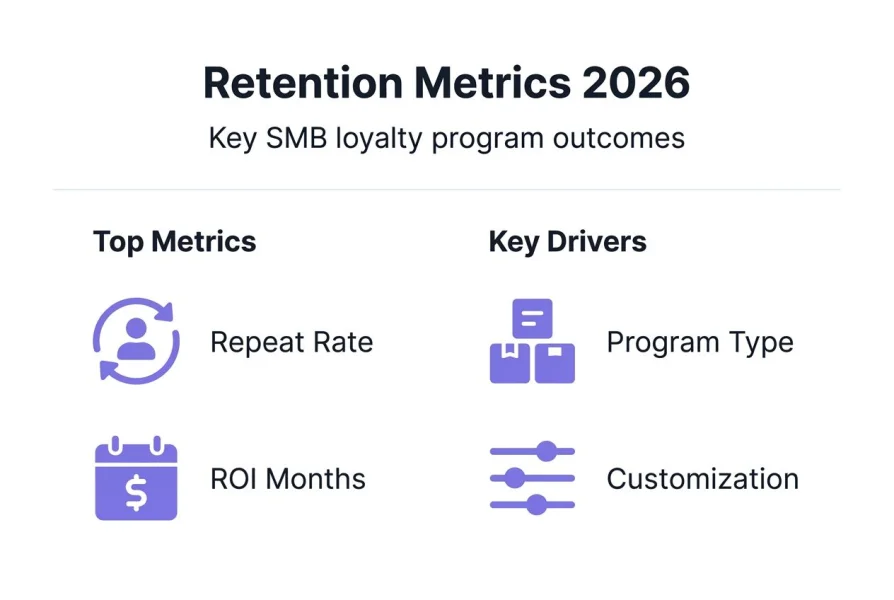
Three core metrics matter most:
- Repeat purchase rate measures the percentage of customers making multiple purchases within a defined period. Calculate by dividing repeat customers by total customers.
- Churn rate tracks customers who stop buying entirely. Lower churn directly correlates with higher lifetime profitability.
- Customer lifetime value (CLV) projects total revenue from a customer relationship. Rising CLV indicates successful retention efforts.
| Metric | What It Measures | Why It Matters | Tracking Frequency |
|---|---|---|---|
| Repeat Purchase Rate | Percentage of returning customers | Shows loyalty program effectiveness | Monthly |
| Churn Rate | Customer loss percentage | Identifies retention weaknesses | Monthly |
| Customer Lifetime Value | Total customer revenue projection | Guides acquisition investment limits | Quarterly |
| Redemption Rate | Percentage using rewards | Reveals reward appeal and clarity | Weekly |
Poor tracking reduces ROI by up to 30% as businesses miss optimization opportunities. You might continue offering unpopular rewards while neglecting incentives that customers actually want. Regular metric review prevents this waste.
Program analytics dashboards provide real-time visibility into these metrics without manual calculation. You see which customer segments engage most actively, which rewards drive the highest redemption rates, and where communication gaps reduce participation.
Use this data to refine reward structures continuously. If certain rewards sit unused, replace them with options customers prefer. If specific customer segments show low engagement, test targeted offers that address their unique needs.
Continuous improvement best practices include:
- A/B test different reward types with customer subsets before full rollout
- Survey active members about desired rewards and program improvements
- Benchmark your metrics against industry averages to identify gaps
- Adjust reward thresholds based on actual purchase behavior patterns
- Celebrate program milestones publicly to build social proof
The loyalty program benefits boost retention growth article explores how sustained metric focus compounds returns over time, turning good programs into exceptional competitive advantages.
Explore scalable loyalty solutions with BonusQR
BonusQR provides SMBs with customizable digital loyalty platforms designed for rapid deployment and sustainable growth. The electronic reward platform supports flexible point accumulation, cashback, and tiered membership programs that adapt to your business model.
The stamp card loyalty program module offers intuitive visit-based rewards perfect for restaurants, cafes, and service businesses. Customers track progress visually while you automate reward fulfillment and marketing campaigns without manual intervention.
BonusQR’s solutions align with every best practice covered in this guide: easy implementation without POS integration, built-in automation for consistent customer communication, real-time analytics for metric tracking, and scalable pricing that grows with your business. Explore how BonusQR can streamline your retention strategy and boost repeat sales efficiently.
Frequently asked questions
What is customer retention and why is it important for SMBs?
Customer retention measures how many customers continue purchasing from your business over time rather than buying once and disappearing. It matters enormously because retaining customers costs 5 to 25 times less than acquiring new ones, while retained customers typically spend more per transaction. Small retention improvements generate disproportionate profit increases, with a 5% retention rate increase boosting profits by 25% to 95%.
How do loyalty programs actually increase repeat sales for small businesses?
Loyalty programs create structured incentives that reward repeat purchases, making customers more likely to choose your business over competitors. Digital programs enable personalized offers based on purchase history, delivering relevant value that generic marketing cannot match. Automated reminders and milestone celebrations keep your business top of mind, increasing visit frequency by 20 to 40 percent among active program members.
What are common pitfalls when implementing customer retention strategies?
Many SMBs fail by not measuring baseline metrics before launching programs, making impact assessment impossible. Using generic rewards without personalization reduces engagement by over 25% compared to tailored approaches. Ignoring automation leads to inconsistent communication that erodes customer interest. Monitor your data consistently and adjust programs quarterly based on actual customer response rather than assumptions.
How can small businesses measure the success of their loyalty programs?
Track three core metrics: repeat purchase rate showing returning customer percentage, churn rate identifying customer loss, and customer lifetime value projecting total relationship revenue. Most digital loyalty platforms provide analytics dashboards that calculate these metrics automatically. Review data monthly to spot trends early and adjust reward structures or marketing tactics before small issues become major problems.