
 Deutsch
 Español
 Français
 Italiano
 Magyar
 Polski
 Slovenčina
 Čeština
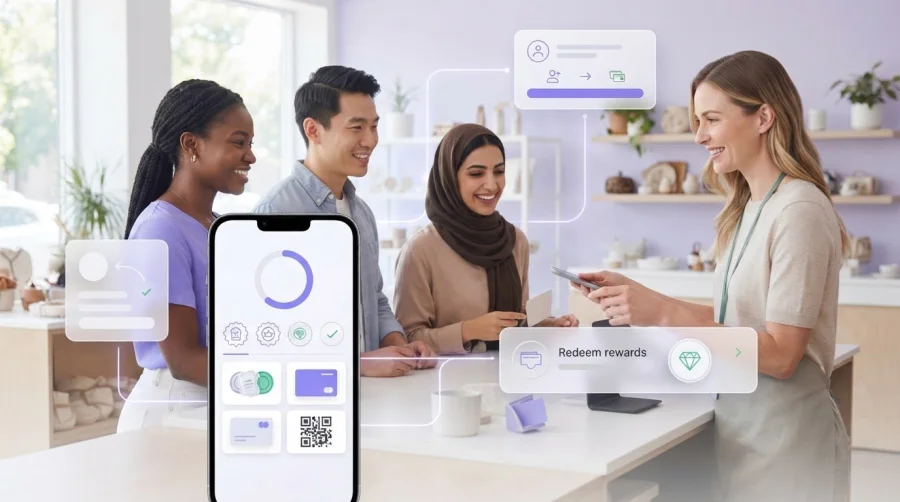
What if the best loyalty portal isn’t another place customers have to learn to use? A customer self-service loyalty portal should make rewards easy to understand and use, not add a complicated login to the customer journey. It helps to distinguish a loyalty experience from a support portal: one helps customers participate in rewards, while the other helps them find answers or resolve service issues.
Choosing between stamps, points, a mobile wallet, or a branded app starts with what customers need to do. The right setup makes the reward clear and participation straightforward. If customers can’t quickly explain how to earn progress and use a reward, simplify the offer before adding more features.
This guide explains the core parts of loyalty self-service, how it differs from customer support, and how portal, app, and wallet approaches compare. You’ll also see how digital stamp cards, points systems, and wallet integration can support a branded loyalty experience with BonusQR. By the end, you’ll have a practical way to choose a setup your business can manage and customers can use with confidence.
Key Takeaways
- A customer self-service loyalty portal helps customers participate in rewards; a support portal helps resolve service questions.
- Map the reward journey from discovering the program to redeeming, and make the rules clear at every step.
- Compare a portal, app, and mobile wallet by the customer task, interaction style, branding needs, and sign-up friction.
- Choose a manageable setup by defining your goal, selecting a reward mechanic, and outlining how customers will take part.
- BonusQR offers digital stamp cards, points systems, Apple and Google Wallet integration, and custom white-label app development.
What Is a Customer Self-Service Loyalty Portal, and What Does It Solve?
A support portal helps customers find answers to service questions. A loyalty experience helps them take part in rewards. The distinction matters: a customer trying to understand a bill or resolve a service issue has a different goal from someone checking how a stamp card or points program works.
A customer self-service loyalty portal is a digital way for customers to engage with a business’s loyalty program. It helps them understand the offer and participate through the format the business uses, such as a branded loyalty app or mobile-wallet experience. “Portal” describes the access point, not a fixed set of account tools or features.
Loyalty self-service is a digital way for customers to understand and participate in a business’s rewards program. This definition keeps the focus on the customer’s goal without assuming every program includes the same account-management functions. A loyalty program can use different reward structures, so its self-service experience should explain the specific offer and how to take part.
For example, a digital stamp card gives customers a simple repeat-visit mechanic, while a points system uses points as the basis for rewards. Customers can access a program through a loyalty application or Apple Wallet and Google Wallet integration. These are different access formats, so choose one based on the customer journey you want to create. The broader customer loyalty experience includes how customers discover, understand, and engage with the program.
How a loyalty portal differs from a customer support portal
A support portal is built around resolving a service need. A customer might search for an answer, review instructions, or look for help with an issue. A loyalty experience is built around rewards participation: a customer might learn how the offer works, follow its rules, or use a reward when eligible. Both are digital self-service, but they serve different customer needs. Calling each one a portal doesn’t make them interchangeable.
What customers expect from a self-service loyalty experience
Customers need to understand what they can earn, what they must do, and how they can use a reward. Clear rules reduce guesswork. Progress should be easy to follow, and access should feel convenient rather than like an unnecessary extra step. When evaluating a setup, check that customers can find the earning rules and redemption terms without having to interpret unclear language.
Keep the experience focused: explain the reward in plain language, make participation steps clear, and choose an access format that suits the program. A branded app can give the experience a distinct business identity; a wallet-based option offers another way to access it digitally. The right approach is the one customers can understand and use without confusion.
How Customer Self-Service Works Across Stamps, Points, and Wallets
A smooth loyalty journey answers four basic questions: Where can I find the program? What can I earn? How do I participate? When can I use a reward? A customer self-service loyalty portal can support that journey through a digital stamp card, a points system, or a wallet-connected experience. The format may differ, but the offer and its rules should remain clear at every step.
- Discover: The customer encounters the program and learns how to access it.
- Understand: The customer sees which action qualifies and what reward the program offers.
- Participate: The customer follows the earning rules, such as collecting stamps or points.
- Redeem: The customer uses an eligible reward according to the program’s terms.
Each step depends on the business setting understandable rules. Before choosing a digital format, define the qualifying action, how progress is counted, and the conditions for using rewards. Harvard Business School’s overview, Customer Loyalty Schemes in the Retail Sector, offers a broader perspective on how businesses structure loyalty schemes. The customer-facing journey still needs to make the specific offer easy to grasp.
Digital stamp cards for simple repeat-visit rewards
A stamp mechanic makes progress toward a defined reward visible. The business decides what action earns a stamp, what counts as a qualifying visit or purchase, and what reward becomes available under the program’s rules. Customers can then see what they’re working toward without having to interpret a complex points formula.
Make the terms specific: state the qualifying action, how stamps are awarded, and any conditions attached to the reward. Digital stamp card software supports this straightforward repeat-visit structure without relying on physical plastic cards.
Points and mobile wallets in the customer journey
Points give a business another way to structure earning and rewards. Define how customers earn points and what reward choices the program offers. Avoid leaving customers to guess how points relate to rewards. Put the relevant terms in plain language so customers can understand the value before they join and as they participate. A digital points system lets a business build a program around its chosen rules.
Mobile wallets offer a digital access option alongside a loyalty app. BonusQR’s platform integrates with Apple Wallet and Google Wallet and supports digital stamp cards and points systems. Choose a format that fits how customers will access the offer, then keep the earning and redemption terms consistent throughout the journey.
Use a simple test: Can a customer explain what earns progress, what that progress leads to, and when the reward can be used? If not, refine the rules before adding more mechanics. A clear stamp offer or points structure is easier to follow than a program with unclear value.
How to Compare a Loyalty Portal, App, and Wallet-Based Experience
The best format helps customers complete their next task with minimal effort. A customer looking for service information needs support tools. Someone joining a rewards program needs a clear way to access and participate in it. These formats can work together: a business might keep support in a help portal and offer loyalty access through an app, a mobile wallet, or both.
Use this comparison to weigh the customer’s main task, how they interact, the branding opportunity, and where friction might arise.
| Experience | Primary customer job | Interaction type | Branding | Likely participation friction |
|---|---|---|---|---|
| Support portal | Find answers or help with a service issue | Search, browse, or follow help information | Often presented as a business support destination | Customers must locate the right information; it isn’t designed around reward participation |
| Loyalty app | Engage with a business’s rewards program | Use a dedicated app experience | Can offer a distinct business-branded identity | Downloading and opening another app may add steps |
| Mobile-wallet loyalty experience | Access a loyalty offer through a mobile wallet | Use a wallet-based digital pass or experience | Can connect the offer with the business identity within the wallet experience | Customers may need to add or find the loyalty experience in their wallet |
Choose the experience around the customer task
Start with what customers are trying to do. If they need help with a service question, direct them to support information. If they want to take part in rewards, make the loyalty offer easy to find and understand. Then map the journey: where will customers discover the program, and what is the simplest useful next step? A branded app, wallet access, or a combination may fit, depending on the experience you want to provide.
“Self-service” doesn’t automatically mean building a complicated standalone app. A digital loyalty program also doesn’t require specialized POS hardware. BonusQR’s digital approach supports rewards through its loyalty platform, with Apple Wallet and Google Wallet integration, without the need for specialized POS hardware.
Compare convenience, brand identity, and operating needs
Test each option with a simple question: can customers quickly understand the reward and see how to take part? A wallet-integrated approach may suit a business prioritizing digital wallet access. A custom white-label app can support a distinct branded experience for businesses that want a dedicated app presence. Consider how you’ll keep the offer’s rules and presentation clear across each touchpoint.
There’s no need to add channels just to appear more digital. Pick the smallest setup that serves the customer task, then expand if the journey calls for it. To explore a digital loyalty setup, get started with BonusQR.
How to Plan a Customer Self-Service Loyalty Program Customers Can Use
A useful loyalty program starts with a clear purpose, not a long feature list. Plan the customer journey before choosing a format. A customer self-service loyalty portal should make the offer understandable and participation straightforward, while giving your business a practical way to review how the program is being used.
Build the plan in order:
- Define the goal. Decide what the program should support, such as encouraging repeat visits or supporting customer retention. A focused goal helps guide decisions about rewards and participation.
- Choose a reward mechanic. Consider whether stamps or points make the offer easiest to explain. Pick a structure that fits the customer action you want to recognize.
- Clarify the rules. State what qualifies, how progress is earned, what reward is offered, and any conditions for using it. Make the language clear before customers join or start earning.
- Map participation. Outline how customers will discover the program, access it, take part, and use an eligible reward. Make each next step easy to identify.
Set the goal and reward rules before choosing features
Keep the first version focused enough to explain quickly. For example, a business encouraging repeat visits might define the qualifying action, the stamp or points rule, and the reward in a few plain sentences. Avoid adding extra conditions unless they serve the goal. Customers should understand the offer before joining, not discover key terms only after they begin participating.
Write the rules as customers would ask about them: “What do I do to earn progress?” and “What can I use it for?” If the answers need a long explanation, simplify the mechanic or clarify the terms. A clear offer gives customers a better basis for deciding whether to take part.
Make launch and measurement manageable
Plan the launch around the customer’s real path. Identify where customers will first learn about the program, how they’ll access it, and what they need to do next. Keep the instructions consistent wherever the offer appears. This avoids a gap between what customers see and what they’re expected to do.
Choose a small set of measures that connect directly to your goal. Enrollment can show whether customers are joining; participation can indicate whether they’re taking qualifying actions; redemption can show whether eligible rewards are being used. Treat these as signals to review, not guaranteed proof of success. Customer questions and participation patterns can help reveal where instructions or rules need clarification.
Review what customers ask and where they pause before changing the program. A sudden rule change can make an offer harder to follow, so look for a specific source of confusion and adjust only what needs attention. Start with a simple structure, observe how customers use it, then refine the experience based on what you learn.
Start setting up your loyalty program with a clear goal, a simple reward mechanic, and rules customers can understand.
How BonusQR Supports a Digital Customer Self-Service Loyalty Experience
Once you’ve defined the goal, reward rules, and customer journey, choose a digital format that fits. BonusQR provides a digital loyalty platform with stamp and points options, plus Apple Wallet and Google Wallet integration. These tools support customer access to a business’s loyalty program without physical plastic loyalty cards or specialized POS hardware.
A customer self-service loyalty portal doesn’t have to mean one specific kind of software. The key question is whether customers can understand the reward and engage with it through a format that fits your business. BonusQR supports digital reward participation through loyalty applications and wallet integration, with custom white-label app development for businesses seeking a distinct branded experience.
Use digital stamps or points to shape participation
Digital stamps suit a simple repeat-action reward structure. The business defines which customer action qualifies, how stamps are awarded, and the reward terms. Customers then have a straightforward mechanic to follow. This can work well when the program’s goal and reward are easy to explain through a stamp-based offer.
A points system offers a different structure. The business sets the earning and reward rules, and customers participate according to those terms. Choose stamps or points based on the behavior you want to recognize and how clearly you can explain the offer. Reviewing loyalty program options can help you decide which structure fits your planned experience.
Keep the customer-facing explanation aligned with the rules you set. State what earns progress and how the reward works. The platform provides the digital framework; the program design determines how clearly the offer is explained.
Choose a customer-facing format that fits your brand
Apple Wallet and Google Wallet integration gives businesses a wallet-based access option for their digital loyalty offering. A custom white-label app supports a business-branded loyalty experience for companies that want a distinct app identity. These formats can be used separately or as parts of a broader customer journey, depending on how you want customers to access the program.
Choose based on the experience you want to provide. A wallet-integrated option may suit a business prioritizing wallet access, while a white-label app puts the business brand at the center of the app experience. In either case, keep participation instructions and reward terms easy to follow. Select a format that supports the program and is practical for customers to use, rather than adding a channel just because it sounds more advanced.
BonusQR brings these digital loyalty options together through stamp cards, points systems, wallet integration, and custom white-label app development. Businesses can shape a digital reward experience around their chosen mechanic and brand, without assuming every program needs the same features.
Create your BonusQR account to start building a digital loyalty experience around your reward structure and customer access needs.
Make Your Next Loyalty Step Simple
Your first version doesn’t need to do everything. Choose the customer action you want to encourage, then make the reward journey easy to understand from the first interaction. A customer self-service loyalty portal works best when it feels like a natural part of engaging with your business, not another hurdle to clear.
Keep your customers’ perspective at the center as you put the plan into practice. Can they quickly see how to participate and what the program offers? Build on that foundation at a pace that suits your business. BonusQR gives you options to shape the experience with digital stamps or points, wallet integration, and custom white-label app development.
A clear starting point can make loyalty easier to manage and easier for customers to join. Choose a simple structure, make the terms clear, and refine the experience as you learn.
Create your BonusQR account and start building a loyalty experience that fits your business.
Frequently Asked Questions
What is a customer self-service loyalty portal?
A customer self-service loyalty portal is a digital way for customers to take part in a business’s rewards program with less reliance on staff for routine reward interactions. It may use an app, mobile wallet, or another digital format. Customers can use the digital experience to understand the offer and its basic rules. A loyalty experience is separate from a support portal, which is intended for service help.
How is a loyalty portal different from a customer support portal?
A support portal helps customers find guidance or resolve service questions; a loyalty experience helps them engage with a rewards program. Someone looking for service instructions has a different need from someone asking how rewards participation works. The name “portal” doesn’t tell you what customers can do there. Choose the experience based on the task you want to make easier, and keep support help and reward information clearly signposted.
Can customers use a loyalty program through Apple Wallet or Google Wallet?
Yes, a digital loyalty program can include access through a mobile wallet when its platform supports that integration. BonusQR integrates with Apple Wallet and Google Wallet, giving businesses a wallet-based option alongside an app. Make the program’s eligibility, earning, and redemption terms easy to find before customers join. Wallet access can provide a convenient way to reach the offer, while clear instructions explain how the program works.
Does a customer self-service loyalty portal need specialized POS hardware?
No. A digital loyalty approach doesn’t require specialized POS hardware. BonusQR’s digital platform replaces the need for specialized POS hardware and physical plastic loyalty cards. The business still needs to explain how customers can discover and participate in its program. For example, staff can introduce the offer during a relevant customer interaction, while written terms explain what customers need to do. Keep those explanations consistent so customers know what to expect.
Should a business choose a digital stamp card or a points system?
Choose the mechanic that best fits the customer action and reward you want to recognize. A digital stamp card can suit a program based on a clear sequence of qualifying actions. A points system can suit a business that wants to structure earning and rewards through points. Consider whether customers would understand progress more quickly as stamps or points. Neither option is right for every business, so make the rules easy to explain.
How can a business make a loyalty program easy for customers to use?
Make the next step obvious and explain the reward terms in language customers can understand. After launch, review a few signals together: if enrollment is steady but participation is low, customers may need clearer instructions on how to take part. If participation is active but redemption is limited, check whether reward terms are easy to find and understand. Use customer questions to spot confusion, then refine the experience without assuming results are guaranteed.
Can a small business offer a branded digital loyalty experience?
Yes. A small business can choose a digital format that reflects its brand and suits how its customers engage. BonusQR offers digital stamp cards, points systems, Apple Wallet and Google Wallet integration, and custom white-label app development. Before selecting a format, decide how prominently your brand should appear and what customers need to understand first. A consistent program name, reward description, and participation instructions can help the experience feel connected wherever customers encounter it.