
 Deutsch
 Español
 Français
 Italiano
 Magyar
 Polski
 Slovenčina
 Čeština
A café owner can stare at a shoebox full of paper stamp cards and still know the problem isn't effort. The problem is friction. Customers lose the card, staff forget to stamp it, and the reward feels too far away.
The strongest loyalty programme example is usually the one a customer can explain to a friend in one sentence. That is why simple mechanics keep winning in cafés, salons, restaurants, gyms, and local retail. A QR code at the counter can now do the work of a plastic card, a punch machine, and most of the manual tracking.
This list keeps things practical. Each model below is reduced to the single mechanic a small UK business can copy with a phone and a QR code, plus the reason it works and the trade-offs that come with it. The order runs from the easiest to launch to the most advanced. For a wider view of how loyalty shows up in adjacent industries, see subscription marketing for law firms.
1. Classic Stamp Card Buy 10, Get 1 Free
The classic stamp card still works because it asks almost nothing of the customer. Buy, collect, return. A coffee shop can promise a free drink after a set number of visits, while a salon can use the same mechanic for a free treatment add-on after repeated appointments.
The weakness is obvious. Paper gets lost, progress disappears, and the business learns nothing useful about who is coming back. A QR-based version keeps the same familiar logic, but it also captures contact details, tracks progress, and makes reminders possible.
Why it still converts
Younger digital tools do not automatically beat a simple reward. In the UK, reward membership is already normal behaviour, especially in food service and beauty, where people are used to signing up for benefits YouGov via the Collinson loyalty landscape. That means a straightforward stamp model feels familiar, not pushy.
A good stamp mechanic should feel like a habit, not a campaign.
A small business can make the card easier to finish by starting with a shorter path, then moving to a digital card once the basics are working. A welcome stamp on sign-up helps people see progress immediately. An expiry date on the reward also keeps visits moving instead of letting the card sit in a drawer.
QR stamp rewards for retailers
2. Domino's Piece of the Pie Rewards Style Points
Points work when the customer already orders often and wants a reason to come back sooner. Domino's Piece of the Pie Rewards is a clean example because it ties points to repeat ordering and digital behaviour, not just one-off sign-ups.
For a small restaurant or takeaway, the copyable mechanic is simple. Reward the channel you want to grow. If online ordering matters, give bonus points for app or QR orders. If table bookings matter, reward reservations made through the loyalty flow.
The risk is overcomplication. Points only work when the threshold is obvious, the reward feels reachable, and the staff can explain it quickly. If the customer needs a calculator, the programme is already too heavy.
Keep the points rule short
- Reward the right action first: Give extra value for the channel you want to grow, such as online ordering or booking through a QR code.
- Set a short runway: Make the free item feel within reach after a few visits, not after months of collecting.
- Use order history carefully: Trigger “your usual” offers when a customer has already shown a clear pattern.
- Watch redemption behaviour: If the reward is too generous, the margin gets squeezed fast.
The main lesson is that points are most useful when they change behaviour, not when they sit in a database. That is why a QR flow matters. It lets a small venue capture the order, the visit, and the redemption without adding extra steps at the till.
3. Starbucks Rewards Style Visit Thresholds
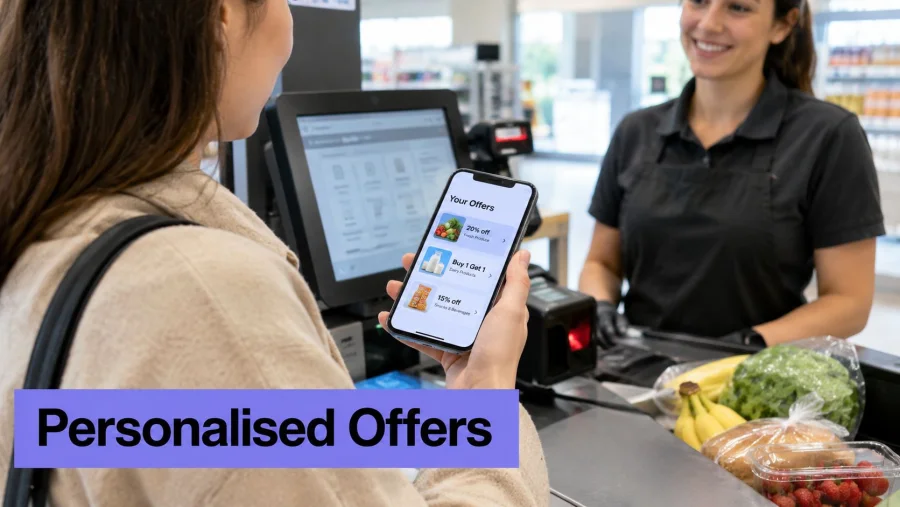
Starbucks Rewards shows how a coffee habit becomes stronger when the programme nudges frequency. The current UK and global expectation is not just to collect something, but to see progress, earn faster on selected days, and get rewarded without thinking too hard.
For an independent café, the best copy is not the whole app ecosystem. It is the visit threshold. A rule like “visit three times this week, get a free pastry” can move quiet weekday traffic without teaching customers to wait for a discount every time.
The other useful piece is tiering. A simple two-level structure, such as regular and VIP, is often enough for a small shop. That keeps the reward visible without turning the counter into a membership admin desk.
Borrow the habit loop, not the app complexity
Double-stamp days work best when they sit on the slowest trading day, not the busiest one.
A QR-based loyalty setup can run this without extra hardware. The staff scan once, the system records the visit, and the customer sees the next reward on their phone. That keeps the mechanic easy to explain, which matters because UK shoppers say they value a loyalty experience that works across channels and on mobile Decision Marketing's coverage of the 2025 shopper study.
how the Starbucks Rewards Program works
A local café can also use this structure to protect margin. A free pastry, a customisation, or a drink upgrade is usually easier to absorb than a deep discount on every basket. The point is to lift frequency, not to train people to wait for a sale.
PureHQ Inc. reusable pod advice
4. Sephora Beauty Insider Style Engagement Rewards
Beauty loyalty gets stronger when it rewards more than spending. Sephora's Beauty Insider works because it ties points to purchases, reviews, birthday visits, and product trials. That mix suits salons and beauty retailers because the relationship is not purely transactional.
A small salon can copy the mechanic by giving a small points credit for a Google review or a referral. Another easy move is a birthday reward that is only available when the customer visits in person. That creates a reason to return, not just a reason to open an email.
The best part of this model is visibility. When customers can see how close they are to the next reward, they push themselves over the line. That last little stretch matters more than most owners think.
Use recognition, not just discounts
A local business does not need luxury-brand complexity to make this work. The reward can be a free add-on, a sample, or priority booking. The important thing is that it feels seen. UK consumers have said they want more than discounts and are often frustrated by loyalty schemes that look too similar KPMG's UK loyalty research.
A birthday reward can also be structured to drive footfall on quieter days. A salon can offer a small treatment upgrade with in-person redemption. A beauty retailer can offer a sample pack or early access to a new line. The mechanic is simple, but the feeling is personal.
5. Tim Hortons Roll Up the Rim and Tims Rewards Style Games
Gamification works when the mechanic creates a reason to try again today. Tim Hortons combines a seasonal game with a digital loyalty app, which is a useful model for small businesses that want to create a burst of attention without committing to a permanent discount.
A small café or bakery can copy the game element with a scratch-style QR reveal, a seasonal prize draw, or a limited-time “win a free drink” mechanic. The prize pool does not need to be large. What matters is that the promotion feels fresh and time-limited.
This approach is strongest when a business wants a launch moment. It gets people scanning, joining, and remembering the brand. After the campaign ends, the retention offer can take over and keep the people who joined during the rush.
Seasonal games work when they are followed by a proper retention offer.
The mistake is to run a game with no next step. That only creates short-lived excitement. A QR programme helps because the same customer list can carry the business from the seasonal mechanic into the normal loyalty flow.
6. Panera Sip Club Style Subscription Rewards
Subscription loyalty only works where customers visit often enough to make the fee feel fair. Panera Sip Club shows the mechanic clearly, a recurring payment tied to a habit purchase.
A small café can copy the same idea with a paid drinks membership and simple fair-use rules. One drink per visit is easier to control than unlimited redemptions. It protects margin and still gives regulars a reason to come back.
Paid loyalty only sells when the benefit is obvious at a glance.
The trade-off is trust. In practice, many UK customers will not pay for membership unless the return is easy to see and easy to use. That means the offer needs plain language, a simple limit, and a benefit that matches everyday behaviour.
Subscription only works with simple maths
Price the membership so it feels worthwhile after a few visits, not after heavy use. A free trial week can reduce friction at sign-up. Cancellation reasons should be reviewed often, because they show whether the offer is too weak, too expensive, or too restrictive.
This model suits high-frequency drinks businesses best. It fits restaurants with mixed baskets less well, and it is a poor fit for low-frequency retail. The point is not to copy the fee. The point is to copy the predictability.
7. Costco Executive Membership Style Paid Commitment
A paid loyalty tier works only when the customer sees the payoff quickly. Costco's Executive Membership does this by asking for commitment first, then making the annual reward feel tied to real buying habits.
A small business can copy the mechanic with a phone and a QR code. A gym, café, or specialist retailer can charge for membership, then show the member exactly what they get, what it costs, and how the benefit builds over time. The same discipline applies outside loyalty, see how to beat tight apparel deadlines (https://tshirtenvy.co/tse-members-club/) for a comparable commitment-based model.
Paid commitment works when the benefit is easy to explain and easy to check.
The trade-off is simple. If the everyday advantage is weak, the fee feels like friction instead of value. If the offer is clear, the fee can filter in the customers who already buy often and are happy to return.
A paid tier works best on top of a free entry level. That keeps the door open while giving heavier users a reason to move up. Renewal reminders should show what the member has already gained, so the payment feels justified rather than hidden.
8. REI Co-op Membership Dividend Style Shared Value
REI's co-op model works because it gives members a sense of ownership, not just a reward. The dividend is part of the story, but the deeper value is that the membership feels tied to shared values.
That makes this model useful for independent businesses with a strong point of view. A café that cares about local sourcing, a salon that uses low-waste products, or a fitness studio built around community can all use loyalty to reinforce that identity.
The mechanic itself can stay very simple. Give members a clear annual return, then add member-only events or classes to make the relationship feel alive. The business does not need to over-explain the philosophy. It just needs to show the customer that the membership means something.
Membership feels stronger when the customer can see where the money and value go.
Simple rules matter here. Exclusions should be stated up front. The customer should not have to ask at the till what counts and what does not. The more obvious the structure, the easier it is to trust.
9. Tesco Clubcard Style Data-Driven Vouchers
Tesco Clubcard is the landmark UK example of loyalty data shaping business decisions. The long-term value was never just the voucher. It was the information on what customers bought, when they bought it, and what they tended to respond to.
That same principle works for a small business with a QR-based programme. Track favourite items, visit days, and redemption patterns. Then stop sending generic offers. A lapsed-customer nudge after a defined period is often more useful than a blanket blast to everyone.
The practical trade-off is privacy. UK rules say consent for marketing must be freely given, specific, informed, and unambiguous, with clear opt-out options and no pre-ticked boxes, according to the ICO's direct marketing guidance ICO guidance on direct marketing and consent. That means registration and marketing permission should be separated.
Make the data useful, not creepy
A loyalty programme should improve relevance. It should not make customers feel watched. The best use of data is modest and practical, like a birthday note, a treatment reminder, or a coupon after a spend threshold. That is enough to feel personal without crossing a line.
For local businesses, the monthly review is where the value shows up. Look at which rewards are being used, which products drive repeat visits, and whether the programme is changing behaviour. If the reward is popular but never brings the customer back, it is not loyalty. It is just a giveaway.
grocery loyalty programs for retention
10. Sainsbury's Nectar Style Partner Networks
Coalition loyalty is the most advanced model on this list because it works across multiple businesses. Nectar proves the point in the UK by letting customers earn and redeem in a shared points currency across partners.
A small business can copy the idea without building a giant network. A café and a bakery, a salon and a juice bar, or a gym and a wellness studio can all share rewards if the rules are clear. One partner can even start first, then expand once redemption runs smoothly.
The value of coalition loyalty is reach. Customers see more places where the programme matters, which makes the points feel more useful. The business also spreads the cost of rewards instead of carrying it alone.
The danger is confusion. Partner rules must be simple from day one. If staff need to explain too many exceptions, the programme will slow the counter down.
A good local partnership usually works best with one shared prize, one shared tracking method, and one shared sign-up flow. QR makes that easier because the same customer can earn at both venues without another plastic card or another app login.
Top 10 Loyalty Programs Compared
| Program | 🔄 Implementation complexity | ⚡ Resource requirements | 📊 Expected outcomes | Ideal use cases | ⭐ Key advantages / 💡 Tips |
|---|---|---|---|---|---|
| Classic Stamp Card (Buy 10, Get 1 Free) | Low, paper or simple digital card | Minimal, low cost, little tech or staff time | Modest repeat visits; limited customer data | Small cafés, salons, local retail | Easy to launch; quick-to-redeem goal. 💡 Start with closer thresholds and offer a welcome stamp |
| Domino's Piece of the Pie Rewards | Moderate, points tied to ordering platform | Medium, digital ordering + CRM for targeting | Increased digital orders and measurable data | Quick-service restaurants aiming to shift channel | Encourages channel shift and clear path to reward. 💡 Set thresholds to reward within 3–5 orders |
| Starbucks Rewards | High, app, tier logic and integrations | High, app dev, POS integration, data team | High frequency, richer first‑party data, higher spend | Large café chains seeking habit formation | Drives habitual visits and targeted offers. 💡 Use bonus challenges to lift off‑peak traffic |
| Sephora Beauty Insider | High, points, tiers, experiential components | High, CRM, events, personalised content | Strong engagement, higher spend among top customers | Beauty & premium retail with experiential focus | Builds community and content. 💡 Reward non‑purchase actions (reviews, referrals) |
| Tim Hortons Roll Up the Rim + Tims Rewards | Moderate, seasonal campaign + app linkage | Medium, campaign logistics + app maintenance | Strong seasonal traffic spikes; sustained engagement if followed up | Brands wanting high‑impact seasonal promos | Creates excitement and urgency. 💡 Limit prize pool and follow with retention offers |
| Panera Sip Club Subscription | Moderate, subscription billing + app | Medium–High, billing, usage tracking, app support | Predictable recurring revenue; increased daily visits | Cafés with frequent drink buyers | Simple value proposition and steady revenue. 💡 Set fair‑use limits to protect margins |
| Costco Executive Membership | Moderate, paid tier + reward calculation | Medium, membership management and payouts | Predictable income; increased spend and retention | Retailers with strong brand & loyal customers | Membership funds benefits; clear perceived value. 💡 Show annual savings example at renewal |
| REI Co‑op Membership Dividend | Moderate, one‑time fee + annual dividend | Medium, member communication, events | Strong community loyalty and advocacy | Purpose‑driven or specialty retailers | Builds ownership and long‑term commitment. 💡 Publish clear, simple dividend statements |
| Tesco Clubcard | High, large‑scale data analytics & personalisation | High, analytics team, partner tech, compliance | Precise targeting, range optimisation, measurable ROI | Supermarkets and large retailers operating at scale | Data‑driven personalisation and merchandising insight. 💡 Make consent and opt‑outs simple (GDPR) |
| Sainsbury's Nectar (coalition) | High, partner governance and shared currency | High, partner integrations, joint marketing | Broader earning opportunities; cross‑brand reach | Multi‑brand coalitions and national retailers | Shared cost increases perceived value. 💡 Start with one partner before expanding the network |
Pick One Mechanic and Launch It This Month
A stamp card, a visit threshold, and a birthday reward can all run from one QR code at the counter. That is the point most owners miss. The technology does not need to be the hard part, and the programme does not need to be complicated to work.
A small business should choose one mechanic this week, not five. Pick the one the team can explain in a single sentence. Set a reward customers can reach within three to five visits, then track redemptions for four weeks. That short test tells the owner more than a long planning cycle ever will.
Free loyalty is usually the best place to start because it removes friction for the customer. A QR setup also avoids the usual headaches of extra hardware and heavy integration work. BonusQR fits that starting point well, because it can launch stamps, points, cashback, visit and spend thresholds, fixed discounts, welcome bonuses, birthday and seasonal coupons from a single mobile flow. When the business is ready to grow, a white-label app can sit on top of the same structure.
The smartest move is not to build the perfect programme. It is to launch a simple one, watch what customers use, and improve the mechanic from real behaviour. Start with one QR code, one reward, and one clear promise. Then let the data show what deserves to stay.