
 Deutsch
 Español
 Français
 Italiano
 Magyar
 Polski
 Slovenčina
 Čeština
Most loyalty program members never redeem their rewards. They sign up, collect a point or two, and then forget the program exists entirely. For small and medium-sized business owners, this pattern is more than frustrating. It represents real revenue walking out the door. But the problem is rarely the loyalty concept itself. It is the delivery. Paper punch cards get lost, email newsletters get ignored, and generic discounts fail to build any real connection. Digital loyalty programs fix these problems directly, and when done right, they turn occasional shoppers into consistent, high-value customers who actively choose your business over the competition.
Key Takeaways
| Point | Details |
|---|---|
| Retention over acquisition | Digital loyalty helps boost profits by monetizing your existing customers rather than spending more on finding new ones. |
| Engagement drives loyalty | Successful programs use a mix of emotional and transactional rewards to keep customers coming back. |
| Avoid one-size-fits-all rewards | Balance is key—personalization and unique benefits make loyalty programs memorable and effective. |
| Tech enables, strategy decides | Digital platforms automate and streamline loyalty, but your program’s success depends on thoughtful design and ongoing engagement. |
The evolving purpose of loyalty: From perks to profit engine
Loyalty programs started as simple extras. Buy ten coffees, get one free. Collect stamps, earn a reward. These tactics worked well enough in a world with fewer choices and less noise. Today, the landscape is completely different. Customers have more options, shorter attention spans, and higher expectations. A loyalty program that does not deliver genuine, timely value gets ignored.
The shift that matters most is this: loyalty is no longer a marketing add-on. It is a core business function. Loyalty program benefits now extend well beyond simple discounts, touching customer lifetime value, purchase frequency, and even how customers budget their spending. When a customer knows they are earning points or cashback at your store, they factor that into their decisions. Rewards become part of how they think about where to spend money.
“Loyalty programs are now a core budgeting tool, not just a perk.” According to research on why loyalty programs function this way, digital loyalty is economically justified for SMBs by improving retention and monetizing existing customers rather than constantly chasing new ones.
For SMBs specifically, this is significant. You cannot outspend large retailers on advertising. But you can outperform them on customer relationships. A well-structured digital loyalty program lets you do exactly that. Here is what it changes for your business:
- Retention replaces constant acquisition. Loyal customers cost less to keep than new customers cost to find.
- Customer lifetime value increases. Repeat buyers spend more per visit and return more often.
- Data becomes actionable. Digital programs tell you what customers buy, how often, and what motivates them.
- Engagement becomes automatic. Push notifications, reward milestones, and personalized offers run without manual effort.
The benefits of branded loyalty programs for SMBs go even deeper when you consider brand recognition. A digital program with your logo, colors, and voice reinforces your identity every time a customer checks their points balance or redeems a reward. That repeated exposure builds familiarity, and familiarity builds trust.
Why digital loyalty programs work for SMBs
Let’s be specific about the numbers. Acquiring a new customer typically costs five to seven times more than retaining an existing one. That gap is enormous for a small business operating on tight margins. Every dollar you invest in keeping a current customer happy delivers a far better return than the same dollar spent on ads targeting strangers.
A key insight from Forrester research: balanced loyalty benefits that combine transactional rewards (discounts, free items) with emotional benefits (recognition, exclusive access) consistently outperform programs that rely on discounts alone. Customers want to feel valued, not just incentivized.
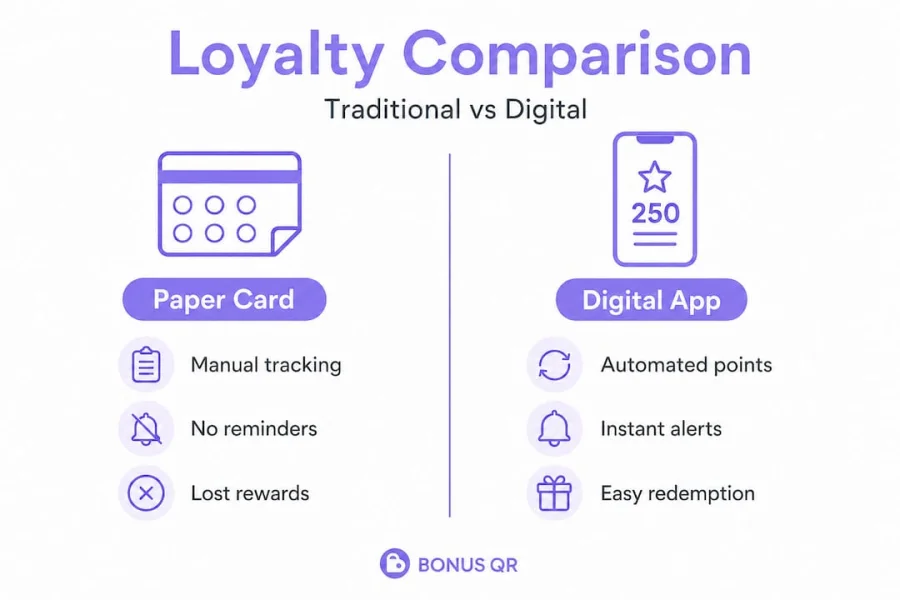
Digital programs make it practical for SMBs to deliver both types of benefits. Here is how digital compares to traditional loyalty setups:
| Feature | Traditional (paper/card) | Digital loyalty program |
|---|---|---|
| Customer reminders | None | Automated push notifications |
| Reward tracking | Manual, error-prone | Real-time, automatic |
| Personalization | Not possible | Based on purchase history |
| Data and analytics | Zero | Detailed customer insights |
| Setup and management | Fully manual | Streamlined and automated |
| Customer convenience | Easy to lose or forget | Always on mobile device |
The difference is clear. Digital systems do the heavy lifting so you can focus on running your business. Customer retention in 2026 depends increasingly on these automated touchpoints. Customers expect businesses to remember their preferences, celebrate their milestones, and reach them at the right time.
Pro Tip: Start with a single, simple reward mechanic such as a points system or digital stamp card. Get customers enrolled and earning before you add complexity. A program with five engaged participants beats one with fifty confused ones every time.
Effective customer retention strategies also depend on consistency. Digital loyalty programs deliver consistent experiences across every customer touchpoint. Whether a customer shops in-store, orders online, or engages through your app, their rewards follow them. That consistency builds the kind of trust that keeps people coming back.
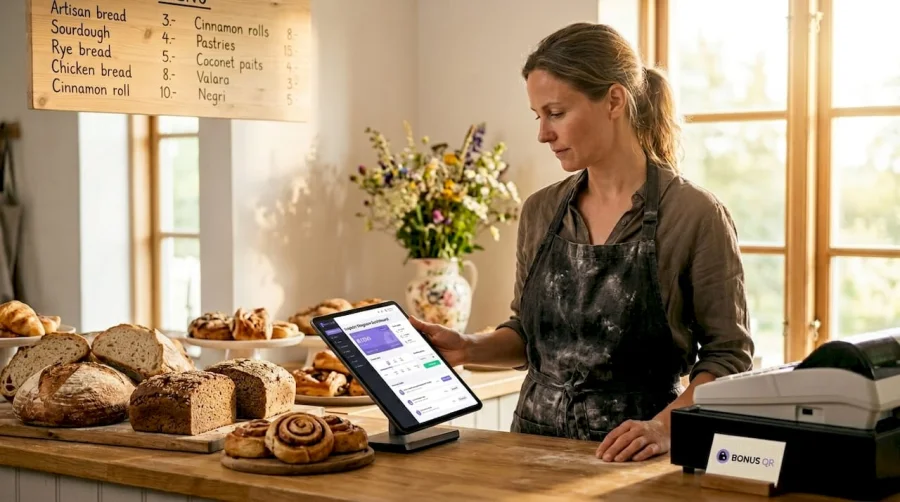
Consider a real-world example. A neighborhood bakery switches from a paper punch card to a digital loyalty app. Within the first month, they notice three things: redemption rates go up because customers get reminders, average transaction value increases because customers add items to hit the next reward tier, and the owner can finally see which products drive the most repeat visits. No guessing. No wasted promotions. Just clear data driving smarter decisions.
Engagement, not just discounts: How to build loyalty that lasts
Here is a number that should concern every SMB owner: 34% of US online adults forget to use loyalty programs they are already enrolled in. More than one in three members never actually engages. That is not a small problem. That is a structural failure in how most programs are designed and communicated.
The fix is not more discounts. It is better engagement. Discounts are easy to copy. Any competitor can match your 10% off offer tomorrow. What is much harder to replicate is a program that customers genuinely enjoy participating in, one that feels personal, rewarding, and a little fun.
Loyalty gamification is one of the most effective tools for achieving this. Research shows that gamification in mobile commerce can increase customer engagement and reduce the likelihood of customers switching to competitors. When participation feels like progress, customers stay engaged.
Here is what gamification looks like in practice for an SMB:
- Progress bars. Show customers how close they are to their next reward. Visible progress motivates action.
- Bonus point events. Offer double points on slow days or for specific products you want to promote.
- Tiered membership levels. Bronze, silver, and gold tiers give customers a sense of status and a reason to keep spending.
- Challenges and streaks. Reward customers for visiting three times in a month or trying a new product category.
- Birthday and anniversary perks. Personal milestones trigger emotional connection, not just transactional ones.
| Engagement tactic | Primary benefit | Best for |
|---|---|---|
| Progress bars | Motivates next purchase | All business types |
| Tiered membership | Builds long-term loyalty | Retail, hospitality |
| Birthday rewards | Emotional connection | Restaurants, salons, cafes |
| Bonus point events | Drives traffic on slow days | Food service, retail |
| Referral bonuses | Grows customer base | Service-based businesses |
Engagement strategies for SMB loyalty consistently show that businesses combining emotional and transactional rewards see higher program participation and longer customer relationships. The goal is to make your loyalty program feel like a genuine benefit, not a coupon book.
Pro Tip: Personalized reward offers based on purchase history dramatically outperform generic ones. If a customer always orders the same item, a reward tied to that exact item feels relevant and thoughtful. Generic “earn 10% back on anything” offers rarely generate the same response.
There is also a branding dimension worth considering. Research on loyalty branding for visits shows that clearly branded programs with consistent visual identity increase visit frequency. When customers recognize your loyalty brand instantly, the program becomes a natural part of how they relate to your business, not an afterthought.
Common pitfalls and success strategies for digital loyalty
Even the best loyalty concept can fail with poor execution. SMBs often make a handful of avoidable mistakes that limit the return on their investment. Knowing these pitfalls in advance saves you time, money, and frustration.
Common mistakes to avoid:
- Relying entirely on discounts. Price-based rewards attract bargain hunters who leave when a better deal appears elsewhere. They do not build loyalty. They buy temporary behavior.
- Failing to communicate the program. A loyalty program no one knows about cannot succeed. Staff must explain it at every transaction, and every marketing channel should reinforce it.
- Overcomplicating the reward structure. If customers cannot quickly understand how to earn or redeem rewards, they disengage. Simplicity wins.
- Ignoring inactive members. Customers who stop engaging are a warning sign. A well-timed re-engagement offer can win them back before they disappear entirely.
- Setting and forgetting. Launching a program and never updating it leads to stagnation. Fresh offers, new reward options, and seasonal promotions keep things relevant.
Forrester research reinforces this clearly: businesses should choose loyalty benefits that are harder to copy and more emotionally meaningful. Price discounts are the easiest thing a competitor can replicate. Exclusive experiences, personalized recognition, and community-driven rewards are far more defensible.
What success looks like in practice:
- Automate birthday rewards, welcome offers, and re-engagement messages so no customer feels forgotten.
- Use push notifications to deliver timely, relevant offers instead of blanket promotional blasts.
- Review your analytics monthly. Which rewards drive the most redemptions? Which offers generate repeat visits? Let data guide your decisions.
- Train your team to mention the loyalty program proactively. Staff enthusiasm is one of the most underrated growth levers.
Understanding loyalty program mistakes before you make them is far more valuable than learning through costly trial and error. The businesses that get the most from digital loyalty treat it as a living system, one that evolves alongside their customers’ needs. For a deeper foundation, the digital loyalty cards guide covers everything from initial setup to advanced optimization strategies.
The uncomfortable truth: Most digital loyalty fails, here’s how to get it right
We have helped enough businesses launch loyalty programs to say this directly: technology alone does not save a bad program. We see it repeatedly. An SMB invests in a solid digital platform, sets up a points system, and then wonders why engagement stays flat six months later. The technology worked fine. The program did not.
The real failure is almost always one of three things: no emotional resonance, poor communication, or a complete lack of evolution after launch.
Customers do not stay loyal because they collected points. They stay loyal because your business made them feel recognized, valued, and understood. A digital program is the vehicle for that feeling, not the feeling itself. If your staff never mentions the program, if your rewards feel random, and if you never update the offers, no platform will fix that.
The businesses that see lasting results from digital loyalty do something different. They embed the program into every part of the customer experience. Every staff member understands why the program matters and talks about it naturally. Every marketing channel, social media, email, in-store signage, reinforces the same message. And the program itself changes regularly, with new challenges, seasonal offers, and personalized rewards that reflect real customer behavior.
Loyalty and SMB retention are inseparable when you approach them this way. The SMBs that win are not the ones with the most features. They are the ones that treat loyalty as a relationship strategy, not a marketing tactic. That mindset shift changes everything about how you design, communicate, and evolve your program over time.
Continuous testing is also non-negotiable. Run a bonus point event and measure redemption rates. Try a referral incentive and track new sign-ups. Experiment with different reward thresholds and see what drives repeat visits. Every data point teaches you something about your customers that you can use to make the program smarter and more effective.
Discover the tools to power your digital loyalty success
Understanding how digital loyalty works is the first step. Building a program that actually delivers results is the next one, and you do not have to figure it out alone.
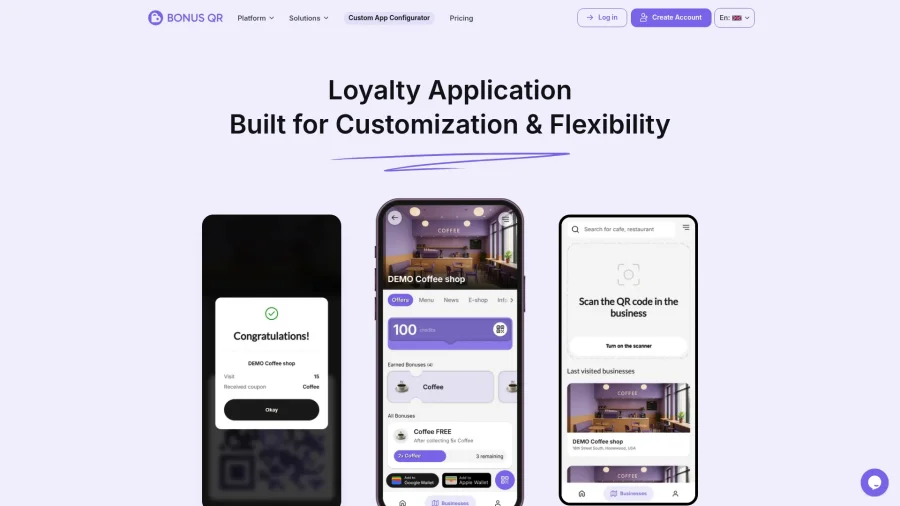
BonusQR is built specifically to help SMBs launch and manage digital loyalty programs without technical complexity or expensive setup costs. From mobile and web loyalty apps that keep your program accessible on every device, to electronic rewards that automate the incentive delivery process, the platform gives you the tools to create programs that customers actually use. You can also add Apple Wallet integration so your loyalty card lives right on your customers’ phones, removing every barrier to engagement. Whether you are starting fresh or optimizing an existing program, BonusQR provides the flexibility and support to make digital loyalty work for your business.
Frequently asked questions
What are the main benefits of digital loyalty programs for small businesses?
Digital loyalty increases repeat business, reduces customer acquisition costs, and gives business owners actionable insights into their customer base. Research confirms that digital loyalty programs are economically justified for SMBs by improving retention and monetizing existing customers more effectively than advertising alone.
How does gamification help with digital loyalty program success?
Gamification makes program participation more engaging and rewarding, which encourages customers to return more often. Studies show that mobile gamification can increase customer engagement and significantly reduce the likelihood of switching to a competitor.
Why do customers forget about loyalty programs, and how can SMBs prevent it?
Many customers forget because programs lack emotional connection or fail to use timely reminders. Since 34% of US adults forget about loyalty programs they belong to, digital tools like push notifications and personalized offers are essential to keeping your program visible and relevant.
Are digital loyalty programs expensive to set up for SMBs?
Modern digital loyalty platforms are designed to be affordable and scalable, with many offering free starting tiers and paid options that grow with your business. Most SMBs can launch a functional program with minimal upfront investment and expand features as their customer base and budget grow.