Are you tired of marketing tips that don’t move the needle for your restaurant, cafe, or salon? In a sea of endless options, small and medium-sized businesses (SMBs) often struggle with daily challenges like:
- "How do I get more customers in my restaurant?"
- "How can my small cafe compete with larger chains?"
- "What is the most affordable marketing for my business?"
This guide cuts through the noise. We're giving you the 10 best restaurant marketing strategies, prioritized for maximum impact on a realistic budget. Forget vague advice. Each strategy is an actionable playbook designed for immediate use.
You will learn exactly how to:
- Master local SEO to show up first in "near me" searches.
- Turn social media posts into actual foot traffic.
- Build a simple, effective loyalty program that turns first-time visitors into regulars.
This isn't just another list. It's a scannable blueprint designed to be 10x more valuable than other resources. We show you what to do and how to do it, with step-by-step instructions and real-world examples. It's time to turn marketing confusion into your biggest growth opportunity.
1. Launch a Simple Digital Loyalty Program
The most effective marketing strategy is to reward the customers who already love you. A digital loyalty program automates this, turning one-time visitors into profitable regulars. Unlike old-fashioned punch cards that get lost, digital programs live on your customer’s phone, creating a direct line of communication while gathering valuable data.
The Problem It Solves: High customer acquisition costs and low repeat business. Getting a new customer can cost 5x more than keeping an existing one. A loyalty program directly tackles this by incentivizing repeat visits.
Why It Works: It makes returning to your restaurant an easy and rewarding decision. While large chains like Starbucks use complex apps, simpler solutions are often better for SMBs. Tools like BonusQR provide ultra-simple, QR code-based systems perfect for cafes and independent eateries that need an affordable solution without the hassle of a custom app.
Actionable Steps for Success:
- Offer an Instant Reward: Give a small perk for signing up, like a free coffee or 10% off. This overcomes initial hesitation.
- Keep Rewards Simple: Use a clear structure, like "Earn 10 points per dollar, get a free entree at 1000 points."
- Promote at Point-of-Sale: Place a QR code and simple instructions right at the register. Train staff to ask every customer, "Are you part of our rewards program yet?"
- Send Targeted Offers: Use purchase data to send personalized promotions. If a customer loves lattes, send a "buy one, get one free" offer. For a deeper dive, check out this digital loyalty strategy guide for restaurant retention success.
2. Master Social Media & User-Generated Content (UGC)
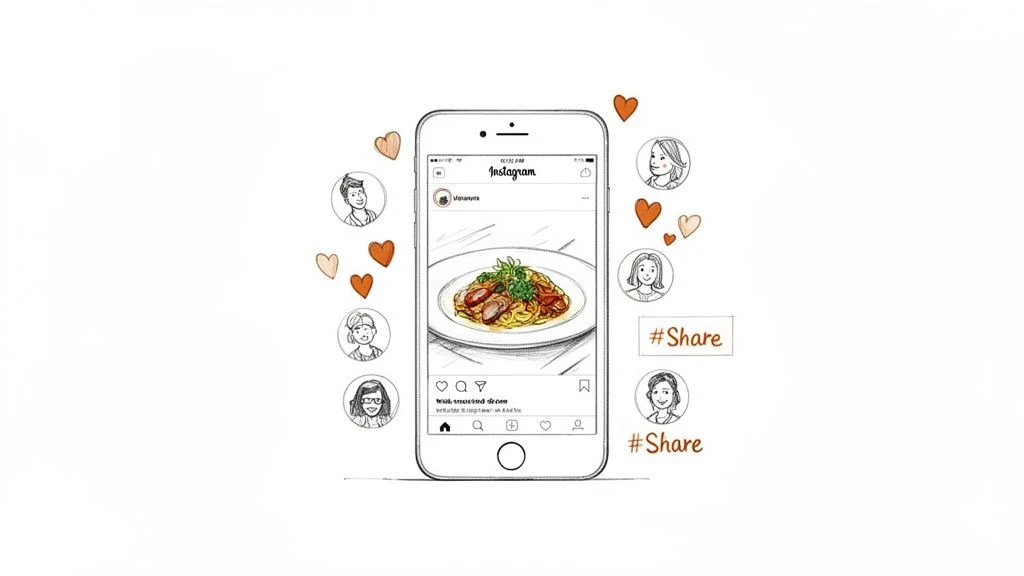
Your presence on Instagram, TikTok, and Facebook is your digital storefront. This strategy goes beyond posting food photos; it’s about creating an online community and turning happy customers into an authentic marketing force. Encouraging diners to share their experiences is one of the best restaurant marketing strategies because it taps into word-of-mouth, the most trusted form of advertising.
The Problem It Solves: Lack of brand awareness and trust. New customers are hesitant to try an unknown spot. UGC provides instant social proof from real people.
Why It Works: A constant stream of genuine content showcases your food and atmosphere from a customer’s perspective. A local ice cream shop can go viral from one great TikTok. You can achieve this by making your space "Instagrammable" and actively engaging with your audience to build an online personality as appealing as your menu.
Actionable Steps for Success:
- Create "Shareable" Moments: Design a photogenic corner, a signature dish with a unique presentation, or clever neon signage. Give customers a reason to pull out their phones.
- Run a UGC Contest: Actively ask customers to tag you. Run a weekly contest featuring the best customer photo and offer a small prize, like a free dessert.
- Engage with Your Community: Respond to every comment and DM. When you repost UGC, always ask for permission and give clear credit to build goodwill.
- Use Local Hashtags: Beyond your brand hashtag, use location-specific tags (e.g.,
#dallasfoodie,#austineats) to appear in local discovery feeds. To ensure your social media campaigns reach the right audience, delve into mastering targeted advertising in social media.
3. Launch Personalized Email Marketing Campaigns
Email marketing lets you speak directly to your customers. Instead of blasting one generic message, personalized campaigns use customer data (like purchase history) to send highly relevant content. This makes your messages feel less like ads and more like personal invitations, boosting open rates and driving real revenue.
The Problem It Solves: Inconsistent foot traffic and "out of sight, out of mind." Email keeps your restaurant top-of-mind between visits.
Why It Works: It acknowledges the individual customer. A coffee shop can notify regulars about a seasonal latte they bought last year. A fine dining restaurant can invite past patrons to an exclusive event. This turns your email list into a reliable source of repeat business and one of the best restaurant marketing strategies for building lasting relationships.
Actionable Steps for Success:
- Build Your List Organically: Collect emails at the point of sale. A digital loyalty program is the easiest way to do this. Never buy email lists.
- Use Personalization: Address subscribers by name. Reference their last order or mention a favorite item to show you're paying attention.
- Send Valuable, Time-Sensitive Offers: A "Happy Birthday!" email with a coupon is a classic because it works. Use urgency with offers like "This Weekend Only" to drive immediate traffic.
- Optimize for Mobile: Most emails are opened on a phone. Use a single-column layout, large fonts, and clear, tappable call-to-action buttons.
4. Form Strategic Local Partnerships
Why market alone? Teaming up with complementary, non-competing local businesses is one of the best restaurant marketing strategies for sharing audiences and costs. These collaborations introduce you to a new group of customers who already trust your partner-a powerful endorsement that advertising can't buy.
The Problem It Solves: A limited marketing budget and reach. Partnerships expand your audience without a significant financial investment.
Why It Works: It creates a win-win that builds community. Imagine a local brewery featuring your appetizers, or a nearby gym offering members a discount on your healthy menu. A coffee shop could partner with a coworking space, while a fine dining spot might collaborate with a winery. The goal is to find businesses that share your target audience.
Actionable Steps for Success:
- Identify Aligned Partners: Look for businesses serving a similar demographic: yoga studios, boutique hotels, corporate offices, or local artisans.
- Propose a Clear Offer: Approach potential partners with a specific, mutually beneficial idea. For example, "Let's offer your customers 15% off at my restaurant, and I'll display flyers for your business."
- Create Co-Branded Materials: Design flyers and social media graphics with both logos to show a united front.
- Track with Unique Codes: Assign a unique promo code or QR code to each partnership to accurately measure how much revenue each collaboration generates.
5. Host Events & Experiential Dining
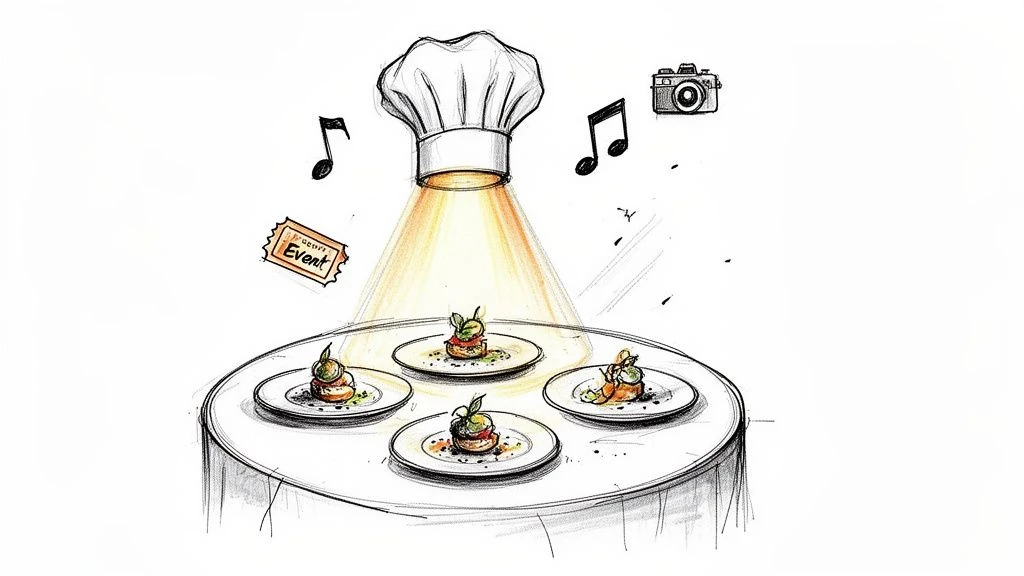
Modern restaurants sell experiences, not just food. Event marketing is one of the best restaurant marketing strategies for creating memories that generate buzz long after the meal ends. Hosting wine tastings, chef's table dinners, or live music nights transforms your restaurant into a destination, justifying premium prices and giving people a reason to talk about you online.
The Problem It Solves: Being seen as just another place to eat. Events differentiate you from competitors and combat slow nights.
Why It Works: Events create an emotional connection. A brewery food pairing night or a café latte art competition builds a community hub. The goal is to give people a unique, shareable experience they can't get elsewhere. To truly stand out, consider drawing inspiration from various successful experiential marketing examples to craft memorable dining experiences.
Actionable Steps for Success:
- Start Small: Don't try to launch a 100-person ticketed dinner first. Begin with a simple "Taco Tuesday" special or a weekly live music night to build momentum.
- Plan and Promote in Advance: Build anticipation through social media, email newsletters, and in-store signage at least 2-4 weeks ahead.
- Price for Profit: Calculate all costs (ingredients, extra staff, marketing) and add a healthy margin. Offer early-bird discounts to secure initial sales.
- Gather Attendee Information: Use the event to grow your customer list. Collect emails during ticket sales to invite attendees to future events.
6. Dominate Local Search Engine Optimization (SEO)
Local SEO is a fundamental restaurant marketing strategy that ensures you appear when hungry customers search "Italian food near me." It’s the practice of optimizing your online presence to capture these high-intent, local searches. Since most restaurant searches lead to a visit within a day, this is critical for driving foot traffic.
The Problem It Solves: Being invisible to potential customers actively looking for a place to eat nearby.
Why It Works: This isn't about paying for ads; it's about being the best answer to a customer's question. A well-optimized Google Business Profile with a 4.8-star rating can drive more foot traffic than a billboard. The goal is to appear in Google's "Local Pack"-the top three map results that get the most clicks.
Actionable Steps for Success:
- Optimize Your Google Business Profile (GBP): This is your most important local SEO tool. Fill out every section: services, attributes (like "outdoor seating"), hours, and upload dozens of high-quality photos.
- Encourage and Manage Reviews: Actively ask happy customers to leave a review. More importantly, respond professionally to all reviews-positive and negative.
- Ensure NAP Consistency: Your Name, Address, and Phone number (NAP) must be identical across all online directories (Yelp, Apple Maps, TripAdvisor).
- Use Location-Specific Keywords: Weave your city and neighborhood into your website content and GBP description (e.g., "tacos in the Arts District"). For a deeper look, this guide from Search Engine Journal is a strong starting point.
7. Implement a Referral & Word-of-Mouth Program
Turn your happy customers into your best salespeople. A formal referral program encourages regulars to bring in friends by rewarding them for it. This structured word-of-mouth system is incredibly effective because a recommendation from a friend is far more trusted than any ad you could run.
The Problem It Solves: High customer acquisition costs. Referrals are one of the most cost-effective ways to get new, high-value customers.
Why It Works: It converts authentic praise into a measurable source of new business. A coffee shop could offer a free drink for every three friends referred. A bistro could give both the referrer and the new guest 15% off. The key is to make sharing easy and rewarding, transforming loyalty into acquisition.
Actionable Steps for Success:
- Reward Both Sides: Give a bonus to both the existing customer and the new person they refer. This "double-sided" incentive makes the referrer look generous.
- Keep It Simple: Use a system with unique referral codes or links that are easy to share. A digital loyalty tool like BonusQR can automate this tracking.
- Promote the Program In-Store: Use flyers and table tents. Train staff to mention it to happy customers: "Did you know you can get a free appetizer just for telling a friend about us?"
- Automate Reward Fulfillment: Integrate your referral system with your POS or a digital tool to automatically track referrals and apply rewards. For more ideas, explore these 10 referral marketing examples that work for small businesses.
8. Create a Content Marketing & Blog Strategy
Instead of just promoting dishes, offer genuine value. A content strategy involves creating useful articles, videos, or guides that answer customer questions and showcase your expertise. This could be sharing a simplified recipe, writing about your cuisine's history, or interviewing your chef. This approach builds trust and establishes your restaurant as a local authority.
The Problem It Solves: Being seen as a commodity. Content marketing builds a brand story and an emotional connection that goes beyond the plate.
Why It Works: It shifts the focus from "buy now" to "learn more." A pizzeria could write a blog post on "The Secret to the Perfect Neapolitan Crust." This attracts people passionate about food, making them more likely to visit the place that taught them something new.
Actionable Steps for Success:
- Answer Customer Questions: Use tools like Google Trends or ask your staff what customers frequently ask. Create content that directly answers these queries, such as "best gluten-free Italian food in [Your City]."
- Focus on Storytelling: Tell the story behind a signature dish or introduce the local farmer who supplies your vegetables.
- Repurpose Your Content: Turn one blog post into multiple pieces of content: a short TikTok video, an Instagram carousel, and tips for your email newsletter.
- Optimize for Local SEO: Include your city and neighborhood names naturally in your content to help you appear in local search results.
9. Use Seasonal & Limited-Time Offer (LTO) Marketing
Creating urgency is a powerful motivator. LTOs introduce special menu items available only for a short period, tapping into the "fear of missing out" (FOMO). It keeps your menu exciting, encourages immediate visits, and gives you fresh content to promote.
The Problem It Solves: Menu fatigue and inconsistent traffic. LTOs give regulars a new reason to visit and can drive traffic during slower periods.
Why It Works: This tactic is famously used by giants like Starbucks (Pumpkin Spice Latte) and McDonald’s (McRib). On a local level, a cafe can introduce a "Winter Berry Mocha," or a pizzeria can offer a "Summer Harvest" pizza. It transforms your menu from static to dynamic, making every season an event.
Actionable Steps for Success:
- Plan Your Calendar: Map out LTOs at least three months in advance, aligning them with holidays and seasons.
- Create Urgency: Use direct, countdown-style language in promotions: "Only available for two more weeks!" or "Get it before it's gone!"
- Empower Your Staff: Make sure your team has tasted the LTOs and can describe them enthusiastically.
- Promote Across All Channels: Feature the LTO prominently on your website, in-store signage, and social media.
10. Focus on Customer Review & Reputation Marketing
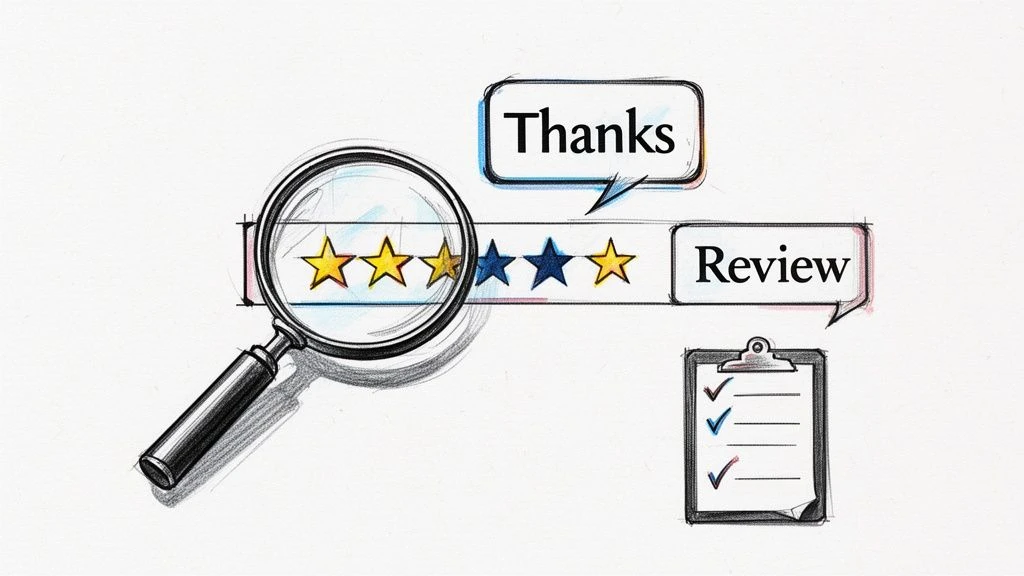
Your restaurant’s online reputation is its most valuable asset. Proactive review management is a core marketing component. It involves systematically encouraging happy customers to share positive experiences on Google, Yelp, and TripAdvisor while professionally addressing negative feedback. Your online ratings directly influence foot traffic and revenue.
The Problem It Solves: Negative reviews deterring new customers. A lack of recent, positive reviews makes your business look less credible.
Why It Works: It’s about building a fortress of credibility. High ratings on Google directly impact your bottom line. A thoughtful response to a negative review can turn a dissatisfied customer into a loyal advocate. By actively managing your reputation, you control the narrative and build trust, making it one of the best restaurant marketing strategies for long-term success.
Actionable Steps for Success:
- Ask at the Right Time: Train staff to identify happy customers and encourage them to leave a review. Place QR codes on receipts or table tents that link directly to your Google page.
- Respond to Every Review: Reply to all reviews within 24-48 hours. Thank positive reviewers and address negative feedback professionally.
- Never Get Defensive: When facing criticism, acknowledge the experience, apologize sincerely, and offer to make things right offline. A public argument damages your reputation.
- Showcase Your Best Feedback: Feature glowing testimonials on your website and social media. This social proof reinforces that you're a great choice.
Top 10 Restaurant Marketing Strategies Comparison
| Strategy | Implementation complexity | Resource requirements | Expected outcomes | Ideal use cases | Key advantages |
|---|---|---|---|---|---|
| Digital Loyalty Programs | Low to moderate; POS & app/QR setup, staff training | POS integration, app/QR service, maintenance time | Higher repeat visits, customer behavior data | Cafés, chains, businesses focused on retention | Trackable engagement, mobile-first, cost-effective |
| Social Media Marketing & UGC | Low to moderate; ongoing content cadence | Content creation (photo/video), community management time | Increased visibility, organic reach, foot traffic | Visually appealing menus, new openings, experiential concepts | Low-cost high-impact, authentic social proof |
| Personalized Email Marketing Campaigns | Low; automation and segmentation setup | Email platform, list building, copy/design time | High ROI, measurable repeat engagement | Loyalty members, regular customers, promo-driven offers | Direct access to engaged users, highly measurable |
| Strategic Partnerships & Cross-Promotions | Moderate; coordination and agreements needed | Time to negotiate, co-marketing materials, alignment effort | Access to new audiences, shared marketing costs | Local collaborations, events, expansion initiatives | Leverages partner audiences, reduces cost, builds credibility |
| Event Marketing & Experiential Dining | High; significant planning and execution | Staff, venue/production, promotion budget | Buzz, premium pricing, deeper customer loyalty | Upscale dining, seasonal campaigns, brand-building events | Memorable experiences, strong social content, higher margins |
| SEO & Local Search | Moderate; ongoing technical and content work | Website optimization, review management, SEO time or agency | Long-term organic traffic, higher local discoverability | Restaurants relying on search and walk-ins | Cost-effective over time, captures high-intent searches |
| Referral & Word-of-Mouth Programs | Low to moderate; tracking and reward setup | Rewards budget, referral tracking tools, integration | Lower acquisition cost, higher lifetime value referrals | Growing customer bases, subscription or loyalty models | High trust acquisition channel, scalable viral potential |
| Content Marketing & Blog Strategy | Moderate; consistent production and SEO discipline | Writing/video production, SEO, distribution time | Brand authority, steady organic traffic, long-term value | Chef-driven brands, niche cuisines, educational content | Builds authority, supports SEO, repurposable content |
| Seasonal & Limited-Time Offers | Low to moderate; planning and inventory coordination | Menu R&D, marketing creative, staff briefings | Immediate traffic spikes, repeat visits, FOMO-driven sales | QSRs, cafes, chains leveraging trends and holidays | Creates urgency, easy to promote, tests new items |
| Review Management & Reputation Marketing | Low to moderate; monitoring and response process | Monitoring tools, staff time to respond, review prompts | Improved trust, better local rankings, increased bookings | Local restaurants dependent on online reviews | Directly influences decisions, boosts SEO and credibility |
Putting It All Together: Your Simple, Cost-Effective Path to More Customers
You've just reviewed ten of the best restaurant marketing strategies. From dominating local search to sparking conversations on social media, you have a detailed blueprint. But seeing a long list can feel overwhelming. You might be asking: "Where do I even start? How can I do this with a small team and an even smaller budget?"
The secret isn’t to tackle all ten at once. The key is to find the common thread that weaves these tactics together, making each one more effective. That thread is your direct relationship with your customers.
The Foundation of Your Marketing: The Customer Connection
Many strategies focus on attracting new people. But your most reliable, long-term profit comes from turning those first-time visitors into regulars. This is the most crucial part of building a resilient business.
A single visit is a transaction; a second visit is the beginning of a relationship. Focusing your energy here creates a solid foundation. Once you have a direct line to your happiest customers, every other marketing effort becomes simpler:
- Email & SMS Marketing: You can't send promotions if you don't have contact information.
- Review Management: It's easier to ask a loyal regular for a review than a stranger.
- Referral Programs: Who better to refer new customers than your biggest fans?
- Event Marketing: Announcing an event to a dedicated list is the fastest way to sell tickets.
This is why a simple, effective loyalty program isn't just one of ten strategies-it’s the engine that powers the others. It’s the tool that systematically captures customer information and automates the process of encouraging that critical second, third, and tenth visit.
Your Simple and Actionable Next Step
For small restaurants, cafes, and salons facing unique loyalty challenges, the solution must be simple and affordable. Complex systems with high monthly fees are impractical. This is precisely why a tool like BonusQR was created-to be the most straightforward, cost-effective way to solve this exact problem.
Instead of juggling complicated software, you get a QR-based loyalty system you can launch in minutes. It gives you the power to:
- Build Your Customer List Effortlessly: Every scan is an opportunity to collect a phone number or email.
- Drive Repeat Business Automatically: Send a "welcome back" offer or a "we miss you" coupon without lifting a finger.
- Gather Feedback Seamlessly: Find out what your customers really think, so you can make improvements that matter.
Mastering the best restaurant marketing strategies doesn't require a huge marketing department. It requires a smart approach that starts with your most valuable asset: your existing customers. By focusing on loyalty first, you create a ripple effect that makes every other piece of your marketing more successful. You stop spending money on one-time visitors and start building a community of fans who return again and again-and bring their friends. This is your path to a busier, more profitable business.


