
Choosing the right rewards can make or break your retail loyalty program. With customer expectations evolving rapidly, retailers face mounting pressure to implement reward systems that genuinely drive repeat purchases and strengthen brand relationships. The difference between a thriving loyalty program and one that drains resources often comes down to selecting reward types that align with your customers’ behaviors and your business objectives. This guide walks you through the most effective reward types available in 2026, helping you build a loyalty strategy that boosts retention and increases sales across your retail operation.
Key takeaways
| Point | Details |
|---|---|
| Multiple reward types exist | Visit-based, spend-based, electronic, and coupon rewards each serve distinct business goals and customer preferences. |
| Alignment drives success | Matching reward types to customer behavior and business capabilities maximizes program effectiveness and ROI. |
| Digital integration matters | Mobile wallets and electronic platforms streamline redemption and enhance customer engagement in 2026. |
| Cost and scalability vary | Simple visit rewards require less investment than complex spend-tracking systems, affecting implementation choices. |
Criteria for choosing effective retailer rewards
Before diving into specific reward types, you need a framework for evaluating which options will actually move the needle for your business. The wrong choice wastes marketing budget and frustrates customers who never redeem rewards.
Start by defining clear business goals. Are you trying to increase visit frequency, boost average transaction size, or reactivate dormant customers? Each objective points toward different reward structures. Retailers implement reward systems to boost retention and growth by aligning rewards with customer preferences, making this alignment your first priority.
Next, examine your customers’ shopping patterns and motivations. Frequent low-value purchases suggest visit-based rewards work best, while occasional high-ticket transactions favor spend-based systems. Survey your top customers or analyze purchase data to understand what truly motivates repeat business in your specific market.
Your technological capabilities matter more than ever in 2026. Digital reward platforms require mobile app integration, reliable internet connectivity, and staff training. Assess whether your current systems can support electronic rewards or if you need simpler solutions first.
Cost effectiveness determines long-term viability. Calculate the total investment including setup, technology, reward fulfillment, and ongoing management. A reward program that erodes profit margins defeats its purpose, so model different scenarios before committing.
Pro Tip: Start with one reward type and test it for three months before expanding. This approach lets you refine the program based on real customer response without overcommitting resources.
Consider these essential criteria:
- Business goals alignment with retention, frequency, or spend targets
- Customer preference data from surveys or purchase history analysis
- Technology infrastructure for digital versus physical reward delivery
- Budget constraints for setup, fulfillment, and ongoing operations
- Scalability potential as your customer base grows
- Staff capability to manage and explain the program effectively
Top types of rewards for retailers in 2026
Retailers have more reward options than ever, each designed to trigger specific customer behaviors. Understanding these types helps you select the right fit for your business model and customer base.
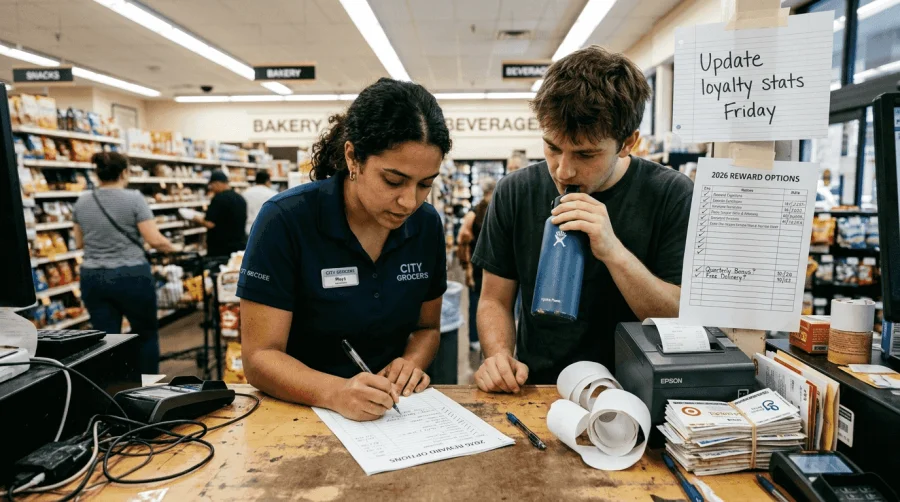
Reward for visit programs give customers points or stamps for each store visit, regardless of purchase amount. This structure drives foot traffic and works exceptionally well for businesses where visit frequency matters more than transaction size. Coffee shops, quick service restaurants, and convenience stores see strong results with reward for visit programs because they motivate customers to choose their location over competitors.
Reward for spend systems tie points or credits directly to purchase amounts, typically earning one point per dollar spent. This approach increases average transaction values as customers add items to reach reward thresholds. Retailers with variable purchase sizes benefit most from reward for spend programs because they incentivize larger baskets while maintaining profitability.
Electronic rewards represent the digital evolution of traditional punch cards. Customers earn and track rewards through mobile apps, eliminating physical cards that get lost or forgotten. The electronic rewards platform approach enables instant reward updates, push notifications for promotions, and seamless redemption at checkout.
Coupon-based rewards deliver time-limited discounts or special offers to drive immediate action. These work particularly well for seasonal promotions, new product launches, or inventory clearance. The coupon management feature lets retailers control distribution, set expiration dates, and track redemption rates to measure campaign effectiveness.
Key reward types include:
- Visit-based incentives for consistent foot traffic
- Spend-based points linking rewards to revenue
- Digital points and credits via mobile platforms
- Electronic vouchers for specific products or services
- Time-sensitive coupons creating urgency
- Cashback rewards returning percentage of purchases
- Tiered rewards unlocking benefits at spending milestones
Comparing reward types: pros and cons
Each reward type delivers distinct advantages while presenting specific challenges. This comparison helps you weigh tradeoffs against your operational realities.
Visit-based rewards excel at building habit and increasing customer frequency. Implementation remains straightforward with minimal tracking complexity. However, they may not directly boost per-visit spending, and high-frequency visitors can accumulate rewards faster than anticipated, impacting costs.
Spend-based systems directly tie rewards to revenue, ensuring customers contribute meaningfully before earning benefits. This structure protects margins better than visit rewards. The downside involves more complex tracking requirements and potential customer confusion about point values and redemption thresholds.
Electronic rewards offer remarkable flexibility and scalability without physical card printing or distribution costs. Customers appreciate the convenience of mobile tracking and instant updates. These systems require upfront technology investment and assume customers have smartphones and app comfort, potentially excluding some demographics.
Coupons drive immediate sales spikes and clear inventory effectively. They’re easy to understand and create urgency through expiration dates. Overuse trains customers to wait for discounts rather than paying full price, and aggressive discounting erodes profit margins over time.
Pro Tip: Combine reward types strategically. Offer visit rewards for building frequency, then layer spend bonuses during slow periods to boost transaction sizes when you need them most.
| Reward Type | Key Advantages | Main Limitations | Best For |
|---|---|---|---|
| Visit-based | Simple implementation, drives frequency, builds habits | May not increase spend per visit, cost control challenges | High-frequency, low-ticket retailers |
| Spend-based | Revenue-linked, protects margins, incentivizes larger purchases | Complex tracking, customer confusion risk | Variable transaction size businesses |
| Electronic | Scalable, no physical cards, instant updates, rich data | Technology investment, smartphone dependency | Tech-savvy customer base |
| Coupons | Immediate action, inventory clearance, easy to understand | Margin erosion, trains discount-seeking behavior | Promotional campaigns, seasonal pushes |
Each reward type has unique strengths and limitations affecting customer engagement and operational complexity, making careful selection crucial for program success.
Choosing the right rewards for your retail business
Selecting optimal rewards requires matching program mechanics to your specific retail context. Follow this systematic approach to make confident decisions.
First, build detailed customer personas identifying what motivates your core segments. A boutique clothing store attracts different customers than a hardware shop, requiring different reward strategies. Interview loyal customers about what would make them shop more frequently or spend more per visit.
Start simple before adding complexity. Launch with one straightforward reward type, perfect the execution, then expand. Many retailers fail by implementing elaborate multi-tier programs that confuse customers and overwhelm staff. Simplicity wins, especially during the critical first 90 days.
Use data relentlessly to guide decisions and refinements. Track redemption rates, customer participation, average transaction changes, and visit frequency shifts. These metrics reveal whether your chosen reward type actually changes behavior or just gives away margin to customers who would have purchased anyway.
Leverage mobile and electronic tools to reduce friction. Physical punch cards get forgotten at home, while mobile apps live in customers’ pockets. Digital platforms also provide rich behavioral data impossible to capture with traditional methods. Tailoring loyalty rewards to your specific retail environment improves customer retention outcomes significantly.
Balance reward generosity against business profitability. Calculate the lifetime value increase from loyal customers versus the cost of rewards delivered. Your program should generate more incremental profit than it costs to operate, accounting for both direct reward expenses and administrative overhead.
Follow these steps for reward selection:
- Analyze your customer purchase patterns for frequency and transaction size trends
- Define specific behavioral goals like increasing visits by 25% or basket size by 15%
- Match reward types to goals, using visit rewards for frequency and spend rewards for transaction size
- Pilot your chosen reward with a customer subset for 60-90 days
- Measure participation rates, redemption patterns, and incremental sales impact
- Refine reward thresholds and benefits based on pilot data
- Roll out broadly with clear communication and staff training
- Monitor ongoing performance and adjust quarterly based on results
Explore BonusQR loyalty solutions for your retail business
Implementing the right reward types requires the right technology platform. BonusQR provides customizable loyalty rewards applications designed specifically for retailers seeking effective, scalable programs without complex POS integration requirements.
The platform supports all major reward types discussed in this guide, from visit-based stamps to spend-based points and electronic vouchers. Retailers access comprehensive loyalty system features including mobile app integration, push notifications for promotions, real-time analytics, and automated campaign management. Whether you’re launching your first loyalty program or upgrading from physical punch cards, BonusQR offers solutions matching your business size and technical capabilities.
The electronic rewards platform eliminates physical card costs while providing customers seamless mobile experiences. Setup takes minutes rather than months, with flexible pricing tiers including free options for smaller retailers. Explore how BonusQR can help you implement the reward strategies outlined in this guide and start building stronger customer relationships today.
FAQ
What are the most effective types of rewards for increasing retail customer retention?
Rewards tied to customer visits and spending prove most effective for retention because they directly incentivize repeat behavior. Visit-based programs build shopping habits by rewarding frequency, while spend-based systems encourage larger purchases over time. Digital rewards with mobile integration increase engagement by making tracking and redemption effortless, removing friction that causes traditional card-based programs to fail.
How can small retailers implement loyalty rewards cost-effectively?
Small retailers should begin with simple visit-based incentives requiring minimal technology investment and staff training. Digital platforms eliminate physical card printing costs while providing better tracking capabilities. Starting with one straightforward reward type lets you test effectiveness before expanding, and many loyalty programs for small businesses offer free or low-cost entry tiers that scale as your customer base grows.
What role do mobile wallets play in retailer reward programs in 2026?
Mobile wallet integration delivers convenience and instant reward tracking that customers now expect from modern loyalty programs. Apple Wallet integration lets customers access their rewards without downloading separate apps, reducing adoption barriers significantly. This technology enhances engagement by simplifying redemption to a single tap at checkout, while providing retailers rich data about customer behavior and preferences that physical cards never could.
Should retailers use visit-based or spend-based rewards?
The choice depends on your business model and customer behavior patterns. Visit-based rewards work best for high-frequency, lower-ticket retailers like coffee shops where building daily habits matters most. Spend-based rewards suit businesses with variable transaction sizes like clothing stores, where incentivizing larger purchases protects margins better. Many successful programs combine both approaches, using visit rewards for frequency and spend bonuses during specific promotional periods.
How do electronic rewards compare to traditional punch cards?
Electronic rewards eliminate the lost card problem while providing instant updates, push notifications, and rich customer data that physical cards cannot deliver. Customers appreciate never forgetting their rewards at home, and retailers gain detailed insights into redemption patterns and campaign effectiveness. The main tradeoff involves requiring customers to have smartphones and comfort with apps, though smartphone penetration in 2026 makes this less of a barrier than in previous years.


