Customer Loyalty Programs
In today's fiercely competitive marketplace, winning a customer's attention is only the first step. Keeping them coming back — again and again — is what truly drives long-term business growth. That's where customer loyalty programs come in. Whether you run a local café, a boutique retail store, or a growing e-commerce business, a well-designed loyalty program can be one of the most powerful tools in your marketing arsenal.
This comprehensive guide covers everything you need to know about customer loyalty programs: what they are, how they work, what types exist, who benefits most, and how platforms like BonusQR make it easier than ever to launch and manage one — even for small businesses with limited budgets.
What is a customer loyalty program?
A customer loyalty program is a structured marketing strategy that rewards customers for repeatedly engaging with or purchasing from a business. Instead of treating every transaction as a one-time event, loyalty programs create an ongoing relationship between a brand and its customers — incentivizing them to return, spend more, and recommend the business to others.
At its core, a loyalty program offers customers tangible benefits — such as points, discounts, free products, or exclusive perks — in exchange for their continued business. These rewards make customers feel valued and appreciated, turning casual shoppers into devoted brand advocates.
Loyalty programs can take many forms: a simple paper stamp card at a neighborhood bakery, a sophisticated mobile app with tiered rewards at a national retailer, or a digital QR code-based system like BonusQR that works seamlessly for physical stores without the need for expensive hardware or complex integrations.
Key facts about customer loyalty programs
Before diving deeper, let's look at some compelling statistics that highlight just how impactful loyalty programs can be:
- 📊 Acquiring a new customer costs 5 to 7 times more than retaining an existing one. Loyalty programs directly reduce this cost.
- 💰 Loyal customers spend 67% more per transaction than new customers, according to research by Bain & Company.
- 📱 79% of consumers say loyalty programs make them more likely to continue doing business with a brand.
- 🏆 73% of loyalty program members are more likely to recommend brands with good loyalty programs to friends and family.
- 📈 Businesses with loyalty programs experience up to 25% higher profit margins on average.
- 🔁 A 5% increase in customer retention can lead to a profit increase of 25% to 95%.
- 📲 Mobile-based loyalty programs see engagement rates 4x higher than traditional card-based programs.
These numbers make one thing clear: customer loyalty programs aren't a luxury — they're a business necessity for sustainable growth.
What are the 4 pillars of loyalty program?
A successful customer loyalty program isn't built on rewards alone. It rests on four foundational pillars that together create a compelling and sustainable customer experience:
- 1. Value: The rewards must feel genuinely worthwhile to the customer. If the points take too long to accumulate or the discounts feel insignificant, customers won't bother participating. The perceived value of the reward must outweigh the effort of earning it.
- 2. Simplicity: Complicated redemption processes, confusing point structures, or hard-to-navigate apps are loyalty killers. The best programs are easy to join, easy to understand, and easy to use — both for the business and the customer.
- 3. Relevance: Rewards need to be relevant to the customer's preferences and buying habits. A coffee lover wants a free drink, not a discount on something they'd never buy. Personalization is increasingly important in modern loyalty strategies.
- 4. Engagement: A loyalty program must keep customers actively engaged — through notifications, milestone rewards, gamification, or personalized offers. Without ongoing engagement, even the best program will see participation fade over time.
Platforms like BonusQR are designed with all four pillars in mind, offering businesses a streamlined, customer-friendly digital loyalty experience that keeps customers engaged and coming back.
How do loyalty programs work?
At a high level, loyalty programs follow a simple loop: customers take an action → earn a reward → redeem it → repeat. But the mechanics behind this loop can vary significantly depending on the type of program.
Here's a typical flow for a digital loyalty program like BonusQR:
- Step 1 – Enrollment: The customer signs up for the loyalty program, usually by scanning a QR code, downloading an app, or registering online. BonusQR makes this frictionless with a simple QR code scan — no app download required for the customer.
- Step 2 – Earning Rewards: Every time the customer makes a purchase or visits the business, they earn points, stamps, or credits. The business controls how points are awarded — per visit, per dollar spent, or for specific actions like referring a friend.
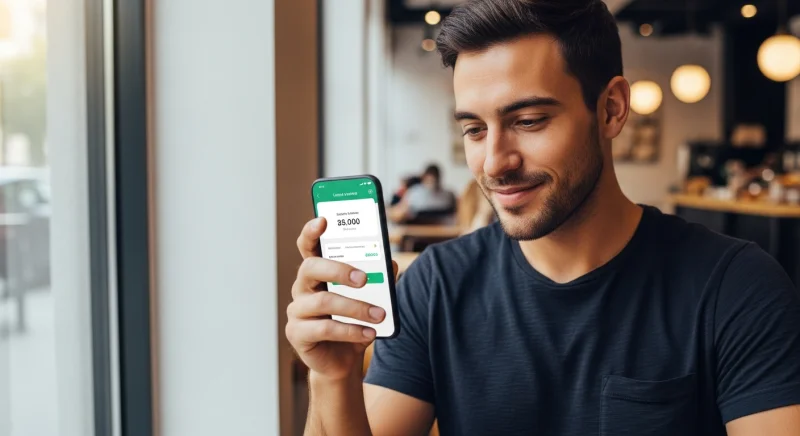
- Step 3 – Tracking Progress: Customers can check their points balance and reward status via a digital dashboard or loyalty app, motivating them to reach the next milestone.
- Step 4 – Redeeming Rewards: Once enough points or stamps are collected, customers redeem them for a reward — a free item, a discount, an exclusive offer, or an upgrade.
- Step 5 – Re-engagement: After redemption, the cycle resets and customers are motivated to start earning again. Businesses can further boost re-engagement through targeted notifications and bonus point events.
Customer Loyalty Programs: In-Store vs. Online
One of the most important decisions when building a loyalty program is whether it will serve in-store customers, online shoppers, or both. Each environment has distinct advantages and challenges — and the right approach depends on your business model.
Loyalty Programs in Online Stores
E-commerce loyalty programs are typically built directly into a brand's website or app. Customers earn points for purchases, reviews, social shares, and referrals. Redemption happens at checkout with discount codes or account credits.
Popular platforms like Shopify, WooCommerce, and BigCommerce offer integrations with loyalty tools that make it easy to reward online shoppers. Online programs benefit from rich data collection — purchase history, browsing behavior, and preferences — enabling highly personalized rewards.
However, online programs can struggle with customer engagement if rewards feel too distant or the checkout process adds friction.
Loyalty programs for physical stores
Brick-and-mortar stores face a different challenge: capturing loyalty data without the built-in tracking that e-commerce provides. Traditionally, physical stores used paper stamp cards or POS-integrated systems — but these come with significant limitations: cards get lost, data isn't tracked digitally, and there's no way to re-engage customers between visits.
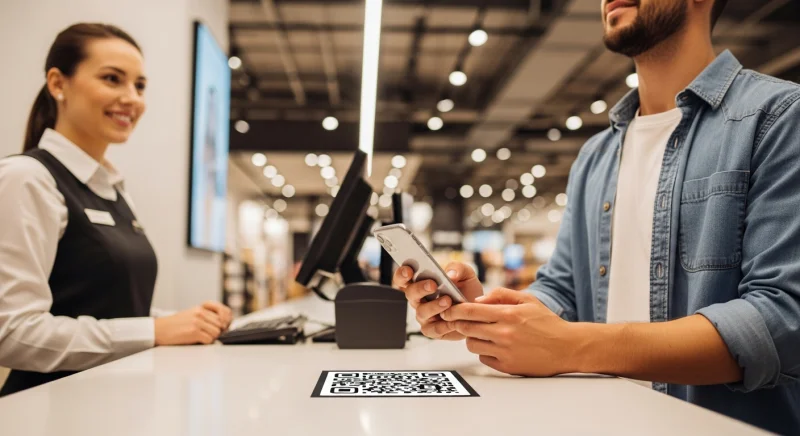
Modern solutions like BonusQR solve this problem by bringing the power of digital loyalty to physical retail. Customers simply scan a QR code at the point of sale, earn their reward digitally, and receive notifications that bring them back — all without needing a separate app or loyalty card.
Why Loyalty Apps Are Ideal for Physical Retail
Mobile-based loyalty solutions offer the best of both worlds for physical store owners. Here's why they outperform traditional methods:
- ✅ No lost cards: Digital rewards are stored on the customer's smartphone — always accessible.
- ✅ Real-time data: Business owners can see who's visiting, how often, and what they're spending.
- ✅ Push notifications: Re-engage customers between visits with personalized offers and reminders.
- ✅ Easy enrollment: A quick QR code scan is all it takes — no forms, no friction.
- ✅ Scalability: Works for a single location or multiple branches with centralized management.
BonusQR is purpose-built for physical retail businesses, making it the ideal loyalty solution for restaurants, cafés, salons, gyms, and local shops that want the power of digital loyalty without the complexity of enterprise software.
Benefits of customer loyalty programs
Customer loyalty programs deliver measurable benefits to businesses of all sizes. Here are the most impactful advantages you can expect when you launch a well-designed loyalty program:
- Increased Customer Retention: Loyal customers are far less likely to switch to a competitor. A loyalty program gives them a compelling reason to keep choosing you.
- Higher Average Spend: Customers who are working toward a reward tend to spend more per visit to accelerate their progress. This naturally increases your average transaction value.
- Improved Customer Lifetime Value (CLV): By extending the relationship with each customer, loyalty programs dramatically increase the total revenue generated over a customer's lifetime.
- Valuable Customer Data: Every interaction within a loyalty program generates data — purchase frequency, preferences, peak visit times — that you can use to make smarter business decisions.
- Word-of-Mouth Referrals: Satisfied, rewarded customers become brand ambassadors who recommend your business to friends and family, reducing your customer acquisition costs.
- Competitive Differentiation: In a crowded market, a loyalty program can be the deciding factor that tips a customer's choice in your favor.
- Reduced Marketing Costs: Retaining existing customers through loyalty rewards is significantly cheaper than running campaigns to attract new ones.
- Better Inventory Planning: Purchase pattern data from loyalty programs helps you predict demand and optimize stock levels.
Why Customer Loyalty Programs Matter
Beyond the numbers, loyalty programs matter because they transform the nature of the customer relationship. Instead of transactional interactions — where a customer buys something and leaves — loyalty programs create an emotional connection between the customer and the brand.
When customers feel recognized, rewarded, and valued, they develop a sense of belonging to something larger than a simple business transaction. This emotional loyalty is far more durable than price-based loyalty — it survives competitor discounts, minor service hiccups, and even price increases.
For small and medium-sized businesses, this emotional bond can be a game-changer. A neighborhood café or local boutique that knows its regulars by name — and rewards their loyalty with meaningful perks — can compete effectively against large chains on the strength of community and relationship alone.
Key Types of Loyalty Programs
Not all loyalty programs are created equal. The right format depends on your business type, customer behavior, and the kind of relationship you want to build. Here are the most common and effective types of customer loyalty programs:
Points-based loyalty programs
Points-based programs are the most widely used loyalty format. Customers earn points for every purchase — typically based on the amount spent — and accumulate them over time to redeem for rewards like free products, discounts, or exclusive experiences.
This model works exceptionally well for businesses with frequent, repeat purchases — like coffee shops, grocery stores, or restaurants. The simplicity of "earn points, get rewards" is universally understood and easy to communicate.
Example: A customer earns 10 points for every $1 spent. At 500 points, they receive a $5 reward — effectively a 10% cashback incentive that keeps them coming back.
With BonusQR, businesses can set up a points-based program in minutes, customizing point values, earning rules, and redemption thresholds to match their specific goals.
Tiered loyalty programs
Tiered programs divide loyalty members into levels — such as Bronze, Silver, and Gold — based on their cumulative spending or engagement. Higher tiers unlock greater rewards and more exclusive benefits, creating a powerful sense of status and aspiration.
The key psychological driver behind tiered programs is the fear of losing status. Once a customer reaches Gold tier, they're highly motivated to maintain their spending level to keep their elite benefits — even when competitors try to lure them away.
Best for: Premium brands, hospitality businesses, airlines, and any business where big spenders warrant special treatment.
Paid loyalty programs
Paid loyalty programs (also called premium loyalty or subscription loyalty) charge customers an upfront fee in exchange for ongoing exclusive benefits. Amazon Prime is the most famous example — members pay an annual fee and receive free shipping, streaming, and more.
This model generates immediate revenue and attracts only the most committed customers. However, it requires a strong value proposition — the benefits must clearly and immediately outweigh the cost of membership.
Best for: Businesses with high purchase frequency and a strong product/service value that customers use regularly.
Cashback loyalty programs
Cashback programs return a percentage of every purchase directly to the customer as credit or real money. This transparent, straightforward format is highly popular because customers immediately understand the value they're receiving.
Unlike points systems — which can feel abstract — cashback programs give customers a clear picture of their earnings: "You've earned $4.50 in cashback on today's purchase." This transparency builds trust and satisfaction.
Best for: Retail stores, fuel stations, banks, and any business where customers are sensitive to price and appreciate direct financial rewards.
Coalition loyalty programs
Coalition programs allow multiple businesses to share a single loyalty platform, enabling customers to earn and redeem rewards across a network of participating brands. This dramatically increases the perceived value of the program and gives each partner business access to a wider audience.
Think of frequent flyer programs where you earn miles not just on flights but also at hotels, car rental companies, and retail partners. Every partner benefits from increased exposure while sharing the cost and infrastructure of the program.
Best for: Business districts, shopping centers, franchise groups, or complementary businesses looking to collaborate on customer retention.
Gamified loyalty programs
Gamified loyalty programs incorporate elements of game design — challenges, badges, leaderboards, spin-to-win wheels, and milestone rewards — to make earning and redeeming rewards fun and addictive. Gamification taps into intrinsic human motivations: the desire for achievement, competition, and surprise.
Starbucks Rewards is a prime example — members complete "Star Challenges" and bonus activities to earn extra points, making the experience feel like a game rather than a transactional system.
Best for: Younger demographics, lifestyle brands, food and beverage businesses, and any brand looking to boost daily engagement.
Examples of Successful Loyalty Programs
Looking at real-world success stories can provide powerful inspiration for designing your own loyalty program. Here are some of the most iconic examples:
- Starbucks Rewards: Perhaps the gold standard of retail loyalty programs, Starbucks rewards members earn "Stars" for every purchase, which can be redeemed for free drinks and food. The mobile app makes ordering, paying, and tracking rewards seamlessly integrated — with 31+ million active members in the U.S. alone.
- Amazon Prime: A paid loyalty program that has fundamentally changed e-commerce. Members pay an annual fee for benefits like free fast shipping, Prime Video, and exclusive deals — and as a result, they spend significantly more on Amazon than non-members.
- Sephora Beauty Insider: A tiered beauty loyalty program with three levels (Insider, VIB, and Rouge) that rewards customers with birthday gifts, exclusive access to new products, and beauty classes. The personalization and exclusivity of higher tiers make it aspirational for beauty enthusiasts.
- The North Face XPLR Pass: An experience-focused loyalty program that rewards customers not just for purchases but also for outdoor activities, bringing products to life in national parks, and attending events — aligning perfectly with the brand's adventure-oriented identity.
- McDonald's MyMcDonald's Rewards: A simple points-for-purchases system integrated directly into the McDonald's app, allowing customers to redeem points for menu items. The program dramatically increased app downloads and daily orders.
What do these programs have in common? They're easy to use, genuinely rewarding, and deeply aligned with their brand identity. The same principles apply to small businesses — you don't need Amazon's budget to create a loyalty program that drives real results.
Strategies for Success
Launching a loyalty program is just the beginning. To maximize its impact, you need a clear strategy that keeps customers engaged and delivers measurable ROI. Here are the most effective strategies for loyalty program success:
- Make it frictionless: Every extra step in the enrollment or redemption process costs you members. Use QR codes, mobile wallets, or simple app experiences to make participation effortless. BonusQR's QR-based system eliminates barriers completely.
- Promote it actively: Your loyalty program won't grow itself. Promote it at the point of sale, on social media, in your email newsletters, and through in-store signage. Train your staff to mention it to every customer.
- Communicate value clearly: Customers need to immediately understand what they'll get and how to get it. Avoid complex structures. Clearly state: "Earn 1 point per $1 spent. 100 points = $5 off your next visit."
- Personalize rewards: Use purchase data to offer rewards that are relevant to individual customers. A customer who always orders a latte is more motivated by a free latte than a generic discount.
- Create urgency: Use expiring points, limited-time bonus point events, or double-point weekends to drive urgency and increase visit frequency during slow periods.
- Celebrate milestones: Recognize customer anniversaries, birthdays, and loyalty milestones with surprise rewards. These unexpected moments of delight create lasting positive impressions.
- Measure and optimize: Regularly review your program's performance — enrollment rates, redemption rates, repeat visit frequency, and revenue impact. Use this data to continuously improve your offering.

How do loyalty programs work?
Let's revisit the mechanics of loyalty programs with a deeper look at how modern digital platforms like BonusQR make the process smooth for both businesses and customers.
From the business side, the process looks like this:
- The business owner sets up their loyalty program through the BonusQR dashboard — defining point values, reward thresholds, and any special promotions.
- A unique QR code is generated for the business. This code is printed, displayed at the counter, or embedded in receipts and marketing materials.
- When a customer makes a purchase, the business staff either scans the customer's loyalty code or the customer scans the business QR code to log the transaction.
- Points are automatically added to the customer's digital account, which they can view in real time.
- The business owner can access a dashboard showing visit frequency, redemption rates, top customers, and campaign performance.
From the customer side:
- The customer scans a QR code at the business to join the loyalty program — no app download required.
- They receive a digital loyalty card accessible from their phone's browser or wallet app.
- After each qualifying visit or purchase, their points balance updates automatically.
- When they reach a reward threshold, they're notified and can redeem their reward on their next visit.
- Push notifications keep them informed about bonus events, special offers, and new rewards.
How to create a successful loyalty program
Building a loyalty program from scratch might seem daunting, but with the right approach and tools, it's entirely achievable for any business. Here's a step-by-step guide:
- Step 1 – Define your goals: What do you want to achieve? Increase visit frequency? Raise average spend? Reduce churn? Your goals will shape every other decision.
- Step 2 – Know your customers: Who are your best customers? What motivates them? What rewards would they find genuinely valuable? Survey your existing customers or analyze past purchase data.
- Step 3 – Choose the right type of program: Based on your business model and customer behavior, select the loyalty format that fits best — points-based, tiered, cashback, or gamified.
- Step 4 – Set clear reward structures: Decide how customers earn rewards (per visit, per dollar, per action) and what they can redeem (free item, discount, experience). Ensure the economics make sense for your business.
- Step 5 – Select the right platform: Choose a loyalty platform that matches your technical capabilities and budget. BonusQR is an excellent choice for physical retail businesses looking for a simple, affordable, and effective digital solution.
- Step 6 – Launch and promote: Roll out your program with an exciting launch campaign. Offer a sign-up bonus to incentivize early enrollment. Train your staff to explain and promote the program enthusiastically.
- Step 7 – Monitor, measure, and improve: Track key metrics from day one. Identify what's working and what isn't, and iterate continuously to improve the program's effectiveness.

Customer Loyalty Programs: Cost for Small Retail Stores
One of the biggest misconceptions about customer loyalty programs is that they're expensive — something only large chains with big marketing budgets can afford. The reality is very different. Today's digital loyalty solutions have made powerful programs accessible to businesses of every size. Here's a breakdown of the cost options:
Traditional loyalty cards
Paper punch cards or plastic loyalty cards have been a staple of small business loyalty for decades. The costs are minimal — printing paper cards can cost as little as $20–$50 per 500 cards, and plastic cards range from $0.10 to $0.50 per card depending on quality and quantity.
However, the hidden costs are significant: there's no data collected, cards get lost or forgotten, there's no way to track redemption accurately, and re-engagement between visits is impossible. For most businesses, the low upfront cost is outweighed by the opportunity cost of a poorly performing program.
POS-based loyalty systems
Many point-of-sale (POS) systems — like Square, Clover, or Lightspeed — offer integrated loyalty features. These typically cost between $25 and $100 per month as add-ons to the POS subscription. They offer digital tracking and some automation, but they often require customers to provide their phone number or email at checkout — which creates friction and reduces enrollment rates.
Mobile loyalty apps for stores
Dedicated mobile loyalty platforms offer the most powerful features and the best customer experience. Pricing varies widely:
- Entry-level plans: $0–$30/month — suitable for very small businesses with limited customer volume.
- Growth plans: $30–$100/month — includes analytics, push notifications, and more customization.
- Professional plans: $100–$300/month — advanced features like API integrations, multi-location management, and white-labeling.
BonusQR offers competitive pricing tailored specifically for small and medium-sized retail businesses, providing professional-grade digital loyalty features at a fraction of the cost of enterprise solutions.
Why Loyalty Programs Are Affordable for Small Stores
When you calculate the return on investment, loyalty programs are remarkably cost-effective for small businesses. Consider this: if your loyalty program brings one additional customer visit per week — at an average spend of $20 — that's an additional $1,040 in annual revenue per customer. Multiply that across 50 loyal customers, and you're looking at over $52,000 in incremental annual revenue from a program that might cost $50–$100 per month to run.
The ROI math makes loyalty programs one of the most efficient investments a small retail business can make in its marketing budget.
Which local Businesses Benefit Most from Customer Loyalty Programs
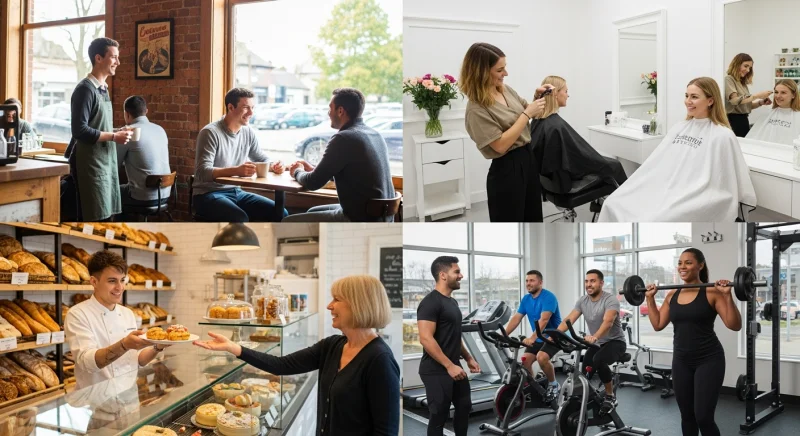
Customer loyalty programs are not one-size-fits-all — but they are incredibly versatile. Almost any business with repeat customers can benefit. Here's a look at the specific industries and business types that see the greatest impact from loyalty programs:
restaurant loyalty programs
Restaurants are among the biggest beneficiaries of loyalty programs. With customers who eat out multiple times per week, even a small nudge toward loyalty can dramatically increase visit frequency. A points-based restaurant loyalty program can reward customers for every meal, encouraging them to choose your establishment over a competitor — especially when they're undecided.
Effective restaurant loyalty tactics include: reward every Nth visit with a free appetizer or dessert, offer birthday meals, or give double points on slow weekday evenings to boost foot traffic during off-peak hours.
Café and Coffee Shop Loyalty Programs
Coffee shops are perhaps the single best category for loyalty programs. Customers visit daily — sometimes multiple times per day — making the reward cycle rapid and highly satisfying. A simple "buy 9 coffees, get 1 free" digital stamp card is enough to build significant loyalty.
With BonusQR, café owners can set up a digital stamp card that customers access via their phone, earn stamps for every coffee purchase, and receive a notification when their free drink is ready to claim. No paper, no lost cards, just happy regulars.
Retail Store Loyalty Programs
From clothing boutiques to hardware stores, retail loyalty programs reward customers for their purchases and incentivize larger basket sizes. Points-per-dollar programs work especially well in retail because they scale naturally with spending — bigger purchases earn bigger rewards, naturally encouraging customers to consolidate their shopping with you rather than splitting it across multiple stores.
Beauty Salon Loyalty Programs
Beauty salons have a natural loyalty dynamic — clients who find a stylist they trust rarely want to switch. A loyalty program reinforces this relationship by rewarding regular visits, referrals, and product purchases. Tier-based programs work especially well in salons, as clients aspire to VIP status that unlocks priority booking, exclusive treatments, or complimentary upgrades.
Fitness and Gym Loyalty Programs
Gyms and fitness studios face the constant challenge of keeping members motivated and preventing churn — especially after the initial enthusiasm of a new membership fades. Loyalty programs can reward not just visit frequency but also fitness milestones (e.g., completing 50 classes), class referrals, and merchandise purchases. Gamification elements like challenges and leaderboards are particularly effective in the fitness context.
Small Local Business Loyalty Programs
From the neighborhood bookshop to the local pet groomer, small local businesses arguably benefit most from loyalty programs. They rely heavily on repeat business and community word-of-mouth, and a loyalty program actively nurtures both. A simple, digital program signals to customers that the business is modern, professional, and values their patronage — a powerful competitive advantage against bigger, impersonal chains.
Nail Salon Loyalty Programs
Nail salons thrive on regular appointments — clients typically return every 2–4 weeks for manicures and pedicures. A loyalty program that rewards every visit or offers a free service after a set number of appointments creates a strong incentive to book consistently with the same salon rather than shopping around based on availability or price.
Spa and Massage Loyalty Programs
Spas and massage therapy businesses benefit enormously from loyalty programs because the services are premium-priced and repeat visits directly impact revenue. Loyalty programs can encourage clients to book more frequently by offering reward points for each treatment, with accumulated points redeemable for complimentary services or discounted add-ons like aromatherapy upgrades or hot stone enhancements.
Bakery Loyalty Programs
Artisan bakeries enjoy a devoted customer base that often visits daily for bread, pastries, and specialty items. A digital stamp card — "earn a stamp with every purchase, get a free item after 10 stamps" — is an ideal format for bakeries. The frequent visit cadence means customers reach rewards quickly, reinforcing their loyalty and encouraging them to bring friends along.
Car Wash Loyalty Programs
Car wash businesses often compete heavily on price, making loyalty programs a valuable differentiator. Subscription-based or visit-based loyalty programs (e.g., every 5th wash is free) give customers a compelling reason to stay with one car wash rather than choosing whoever is cheapest on a given day. Digital tracking also eliminates the common problem of lost punch cards.
Ice Cream Shop Loyalty Programs
Ice cream shops have a seasonal loyalty challenge — customers visit frequently in summer but less so in winter. A well-designed loyalty program with bonus point events during shoulder seasons can smooth out this revenue fluctuation. Fun, gamified loyalty experiences — spin-to-win rewards, mystery flavors that earn double points, or "bring a friend" challenges — work particularly well for the playful, family-friendly ice cream shop demographic.
Common Mistakes in Loyalty Programs
Even the best-intentioned loyalty programs can fail if they fall into common traps. Here are the mistakes to avoid:
- Making rewards too hard to earn: If customers have to wait months or spend thousands of dollars before seeing a reward, they'll lose interest and disengage. Keep the first reward milestone achievable within a few visits.
- Overcomplicating the program: Complex tier structures, confusing point conversions, and hard-to-understand redemption rules frustrate customers. Simplicity wins every time.
- Ignoring the digital shift: Paper punch cards are no longer sufficient in a world where customers expect digital experiences. Failing to go digital means missing out on data, push notifications, and re-engagement opportunities.
- Failing to train staff: If your team doesn't understand the program or doesn't actively promote it, enrollment will be low and customer awareness poor. Staff training is as important as the program design itself.
- Offering irrelevant rewards: Generic discounts that don't align with what your customers actually want will generate low enthusiasm. Take the time to understand what your customers value most.
- Not promoting the program: A loyalty program that customers don't know about is worthless. Promotion through social media, email, in-store signage, and staff recommendations is essential.
- Neglecting existing loyal customers: Focus on rewarding your best existing customers first, not just on acquiring new loyalty members. Your regulars are your most valuable asset.
- Not measuring results: Running a loyalty program without tracking key metrics is flying blind. Set clear KPIs from day one and monitor them regularly to understand what's working.
FAQs About Customer Loyalty Programs
Q: What is the most effective type of loyalty program?
A: The most effective program depends on your business and customers. For high-frequency businesses like cafés and restaurants, points-based and stamp card programs work best. For premium brands, tiered programs create aspiration and status. The key is choosing a format that aligns with your customers' behavior and values.
Q: How long does it take to see results from a loyalty program?
A: Most businesses begin to see measurable results — increased visit frequency, higher average spend — within the first 60 to 90 days of a well-promoted loyalty program. Full program ROI typically becomes clear within 6 months.
Q: Do small businesses really need a loyalty program?
A: Absolutely. Small businesses arguably need loyalty programs more than large ones — they depend heavily on repeat customers and community word-of-mouth. Today's digital loyalty platforms like BonusQR make it affordable and easy for any small business to run a professional loyalty program.
Q: Can I run a loyalty program without an app?
A: Yes. Modern solutions like BonusQR allow customers to access their loyalty card through a mobile browser after scanning a QR code — no app download required. This dramatically reduces the barrier to enrollment.
Q: How do I get customers to sign up for my loyalty program?
A: The best strategies include: offering a sign-up bonus (e.g., 50 free points upon joining), training staff to mention it at every transaction, displaying QR codes prominently at the point of sale, and promoting it on social media and email.
Q: How do I measure the success of my loyalty program?
A: Key metrics to track include: enrollment rate, active member percentage, redemption rate, average spend per loyalty member vs. non-member, visit frequency, and customer lifetime value. BonusQR's analytics dashboard tracks these automatically.
Q: Is BonusQR suitable for multi-location businesses?
A: Yes. BonusQR supports multi-location management through a centralized dashboard, making it ideal for growing businesses with multiple branches or franchise networks.
Customer Loyalty Programs
As we've explored throughout this guide, customer loyalty programs are one of the most powerful and cost-effective strategies available to modern businesses. They transform one-time shoppers into lifelong advocates, increase revenue without proportionally increasing marketing spend, and generate invaluable customer data that helps you make smarter business decisions.
Whether you're a single-location coffee shop looking to reward your morning regulars, a multi-branch salon wanting to standardize your loyalty offering, or a growing retail brand ready to scale your customer retention strategy — there is a loyalty program format and a digital platform designed to meet your needs.
BonusQR makes launching and managing a professional digital loyalty program simpler than ever. With QR code-based enrollment, a real-time points dashboard, push notification campaigns, and detailed analytics — all available at an accessible price point — BonusQR gives businesses of every size the tools they need to build genuine, lasting customer loyalty.

Conclusion
The question is no longer whether customer loyalty programs work — the data overwhelmingly confirms that they do. The question is: can your business afford not to have one?
In a world where customers have more choices than ever and switching costs are lower than ever, loyalty programs represent a strategic investment in the relationships that sustain your business. They signal to your customers that their continued patronage is noticed, valued, and rewarded — and that signal makes all the difference.
Start simple. Start digital. And start today. With platforms like BonusQR, launching a loyalty program for your business has never been faster, more affordable, or more impactful. Your most loyal customers are waiting — give them a reason to stay.
Get started with BonusQR today and transform the way your business builds customer loyalty.


