
 Deutsch
 Español
 Français
 Italiano
 Magyar
 Polski
 Slovenčina
 Čeština
Customer Loyalty Programs
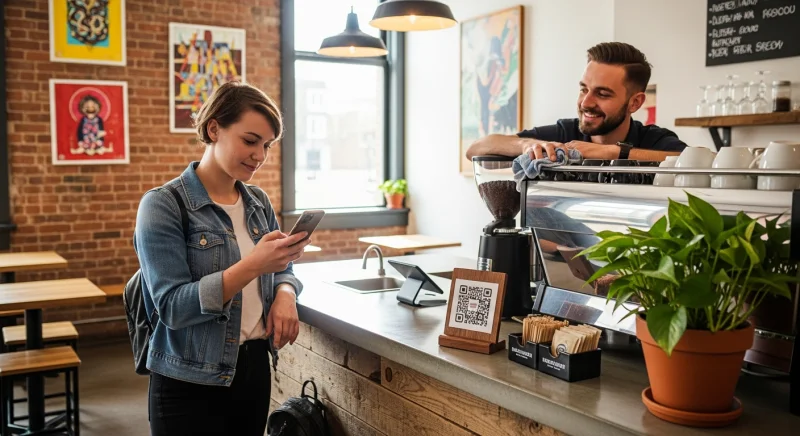
Most businesses spend the majority of their marketing budget trying to attract new customers. Yet research consistently shows that existing customers spend more, buy more frequently, and cost significantly less to retain than new customers cost to acquire. Customer loyalty programs are one of the most practical tools businesses have to shift that balance, rewarding repeat purchases, building genuine relationships, and increasing the long-term value of every customer relationship.
This guide covers everything business owners, marketers, and retail managers need to know about loyalty programs, from the core principles to the different program types, realistic costs, industry-specific applications, and the practical differences between paper-based and digital loyalty solutions. Whether you run a single café or manage a growing retail chain, this resource is designed to help you make informed decisions about loyalty strategy.
What is a customer loyalty program?
A customer loyalty program is a structured marketing system that rewards customers for returning to a business and making repeat purchases. Instead of treating every transaction as an isolated event, a loyalty program creates continuity between visits, giving customers a concrete reason to choose the same business again rather than switching to a competitor.
At its simplest, a loyalty program might offer a free coffee after ten purchases. At its most sophisticated, it might involve tiered membership levels, personalized rewards, birthday offers, referral bonuses, and integration with a mobile app that tracks spending across multiple locations.
The core idea is straightforward: customers who feel recognized and rewarded are more likely to return. A well-designed program makes that recognition systematic rather than accidental.
Loyalty programs exist across nearly every industry. Airline frequent flyer programs, hotel membership tiers, supermarket points cards, and coffee shop stamp cards are all variations of the same fundamental concept. What has changed significantly in recent years is the technology behind them. Digital loyalty platforms now allow even small independent businesses to run programs that were previously only accessible to large corporations with dedicated IT teams.
Key facts about customer loyalty programs
Before deciding whether a loyalty program is right for your business, it helps to understand what the data generally shows about their impact. The following observations reflect widely reported industry patterns rather than results from any single study.
- Repeat customers typically spend more per transaction than first-time customers, often significantly so across retail and hospitality sectors.
- Customer acquisition costs are consistently reported to be several times higher than customer retention costs, making retention programs financially attractive even when they involve discount or reward overhead.
- A large proportion of consumers report that loyalty programs influence where they choose to shop, particularly in competitive categories like coffee, casual dining, and grocery retail.
- Digital loyalty programs tend to have higher engagement rates than paper punch cards, largely because they remove friction and allow businesses to communicate with enrolled customers between visits.
- Personalized rewards, even simple ones like birthday offers, consistently outperform generic discounts in terms of redemption rates and customer sentiment.
- Small businesses that implement structured loyalty programs often report measurable improvements in visit frequency within the first few months, though results vary by industry and execution quality.
These patterns are not guarantees. A loyalty program that is poorly designed, hard to use, or disconnected from what customers actually value will underperform regardless of the technology behind it. The fundamentals of the program matter more than the format.
What are the 4 pillars of a loyalty program?
Successful loyalty programs, regardless of their format or industry, tend to share four foundational qualities. Understanding these pillars helps businesses design programs that work in practice rather than just on paper.
- Value: The rewards must be genuinely worth earning. If customers have to spend hundreds of dollars to earn a reward worth a few cents, they will stop engaging quickly. Value does not always mean large discounts. It means the reward feels proportionate and desirable relative to the effort required to earn it.
- Simplicity: Customers should be able to understand how the program works in under thirty seconds. Complex rules, confusing point calculations, and obscure redemption conditions create friction that reduces participation. The easier it is to join and use, the higher the enrollment and engagement rates.
- Relevance: Rewards should align with what customers actually want from the business. A bakery customer wants free pastries, not discount coupons for products they never buy. Relevance also applies to communication. Customers respond better to offers that match their purchase history than to generic promotions sent to the entire database.
- Consistency: A loyalty program needs to be maintained over time. Programs that launch with enthusiasm and then become neglected, with broken links, expired offers, or staff who cannot explain how it works, damage customer trust rather than building it. Consistency in communication, reward delivery, and program management is what converts occasional participants into genuinely loyal customers.
How do loyalty programs work?
The mechanics of a loyalty program depend on its type, but the general flow is consistent across most formats. A customer signs up for the program, either in person, through an app, or via a website. Each time they make a qualifying purchase, they earn a reward, which might be points, stamps, cashback credit, or progress toward a tier upgrade. When they accumulate enough rewards, they redeem them for a defined benefit, such as a free product, a discount, or exclusive access.
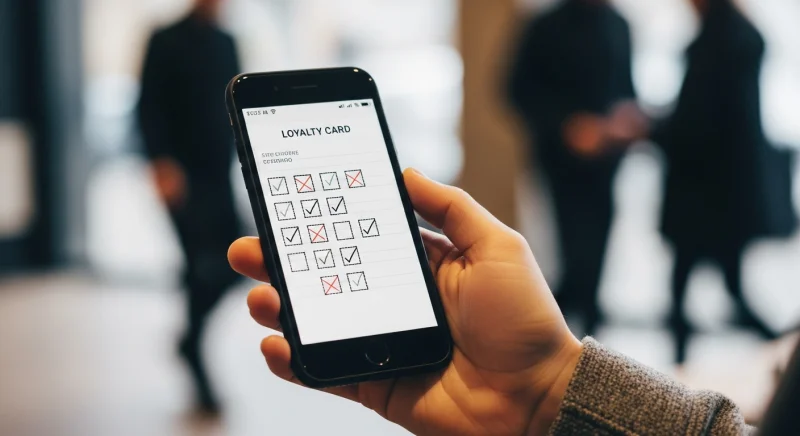
In a traditional paper stamp card, this process is entirely manual. The customer presents their card, the staff stamps it, and the customer keeps track of their progress themselves. There is no data collected, no way to communicate with the customer between visits, and no protection if the card is lost.
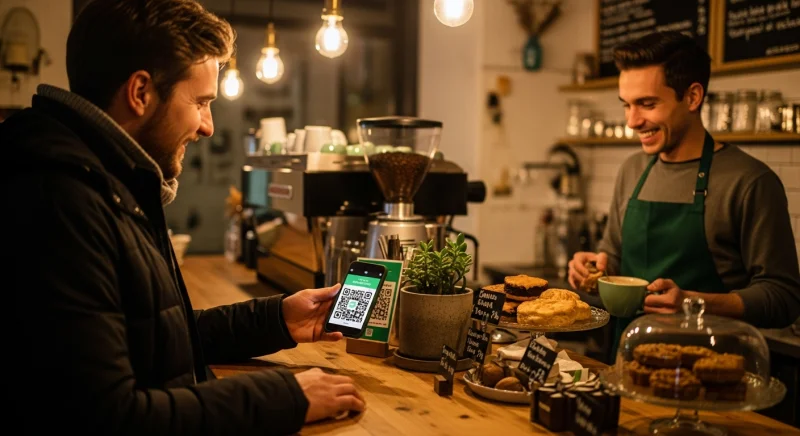
In a digital loyalty program, the same flow is managed through software. The customer enrolls once, typically by scanning a QR code or downloading an app. Each visit is recorded digitally, the customer can see their progress at any time, and the business can track participation, identify high-value customers, and send targeted communications based on actual behavior.
Platforms like BonusQR use QR code scanning as the primary interaction point, which removes the need for physical cards entirely. A customer scans a code at the point of sale, their visit is logged, and their rewards balance updates automatically. This approach works well for businesses where speed at the counter matters, such as cafés or food trucks, because the interaction adds minimal time to the transaction.
Customer Loyalty Programs: In-Store vs. Online
The channel through which customers interact with a business shapes what kind of loyalty program makes practical sense. A purely online store has different needs than a neighborhood café, and many businesses now operate in both environments simultaneously. Understanding the differences helps businesses choose the right format or combination of formats.
Loyalty Programs in Online Stores
E-commerce loyalty programs typically live within the customer's account on the website or app. Points are earned automatically at checkout, and redemption happens at the same point through discount codes or account credit. Because the customer is already logged in when they shop, enrollment is frictionless and tracking is automatic.
Online loyalty programs benefit from direct integration with purchase history, which makes personalization relatively straightforward. An e-commerce business can easily identify customers who buy specific product categories and send them relevant bonus point offers or early access to related new products.
The challenge for online stores is differentiation. Many e-commerce customers belong to loyalty programs across dozens of brands, and switching between online retailers is easier than switching the café you walk past every morning. Online loyalty programs therefore need to offer compelling enough rewards to compete with the convenience of comparison shopping.
Loyalty Programs for Physical Stores
In-store loyalty programs have a different dynamic. Customers tend to form habits around physical locations, particularly for daily or weekly purchases like coffee, groceries, or lunch. A loyalty program reinforces those habits by giving customers a small additional reason to stick with the same place rather than trying somewhere new.
The historical challenge for physical stores has been administration. Paper punch cards are easy to issue but impossible to track, easy to lose or counterfeit, and provide no data about customer behavior. POS-integrated loyalty systems solve the data problem but often require expensive hardware upgrades and ongoing licensing fees that are out of reach for smaller businesses.
Digital loyalty apps and QR-based platforms have changed this significantly. A small café or independent retail store can now run a fully digital loyalty program without replacing its existing till system, without printing cards, and without hiring additional staff to manage it.
Why Loyalty Apps Are Ideal for Physical Retail
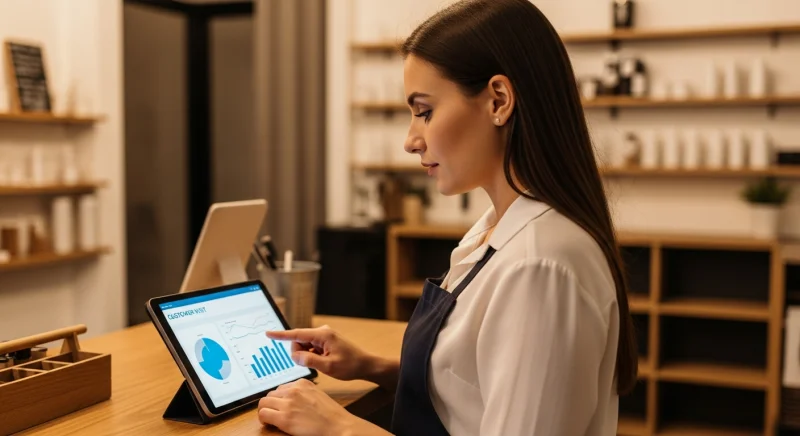
Loyalty apps are particularly well-suited to physical retail for several reasons. First, they meet customers where they already are. Most people have their phones with them when they shop, making app-based or QR-based interactions natural rather than disruptive. Second, apps allow businesses to communicate between visits through push notifications or SMS, which paper cards cannot do. Third, they provide the business owner with actual data: who visits most frequently, when they last came in, which rewards they redeem, and how visit frequency changes over time.
For businesses that serve a local, repeat-customer base, such as cafés, salons, gyms, or specialty retail stores, a loyalty app transforms what was previously an invisible customer relationship into something measurable and actionable.
A platform like BonusQR is specifically designed for this use case. It creates a QR code-based loyalty experience that works within any existing business environment, without requiring app downloads from every customer or integration with existing POS systems. Customers scan, earn, and redeem through a simple digital interface, while the business owner sees all activity from a single dashboard.
Benefits of customer loyalty programs
The case for running a loyalty program extends beyond the obvious goal of encouraging repeat visits. When implemented well, loyalty programs create a range of advantages that compound over time.
Why Customer Loyalty Programs Matter
Increased visit frequency: When customers are working toward a reward, they have a small but real incentive to return sooner rather than later. This effect is most pronounced in categories with high natural purchase frequency, such as coffee, food, and personal care services.
Higher average transaction value: Customers who are close to earning a reward sometimes increase their spending to qualify faster. Businesses can design programs to take advantage of this by offering bonus points on higher-margin products or setting reward thresholds at levels that encourage slightly larger purchases.
Better customer data: Every enrolled customer who interacts with a digital loyalty program generates useful data. Which days they visit, what they buy, how long between visits, whether a promotion changed their behavior. This data allows businesses to make smarter decisions about staffing, inventory, promotions, and product development.
Reduced price sensitivity: Customers who feel a sense of membership or belonging at a business are less likely to leave purely because a competitor offers a slightly lower price. The relationship creates switching cost that does not involve any actual contract or lock-in.
Word-of-mouth and referrals: Many loyalty programs include referral components, but even those that do not tend to generate word-of-mouth naturally. Customers who feel rewarded and recognized talk about their experiences. A well-run loyalty program becomes part of what makes a business feel worth recommending.
Clearer marketing ROI: Unlike broad advertising spend, loyalty program performance can be measured directly. Visit frequency before and after enrollment, reward redemption rates, and the spending behavior of loyalty members versus non-members are all trackable metrics that show whether the program is working.
Key Types of Loyalty Programs
Not all loyalty programs are structured the same way. Different models suit different industries, customer behaviors, and business goals. Understanding the main types helps business owners choose the format that fits their specific situation rather than copying a generic template.
Points-based loyalty programs
Points-based programs are the most common format globally. Customers earn points for every purchase, typically calculated as a fixed amount per dollar spent or per transaction. Points accumulate in the customer's account and can be redeemed once they reach a threshold, for discounts, free products, or other benefits.
The main advantage of points programs is flexibility. Businesses can adjust the earn rate, offer bonus points for specific products, and set redemption values to control the cost of the program. The main risk is complexity. If customers cannot quickly understand how many points they have or what they can do with them, engagement drops.
Points programs work well for retail businesses, e-commerce stores, and any business where customers make purchases of varying amounts. They are less natural for businesses where every transaction is the same fixed amount, like a coffee shop where most customers always buy the same drink.
Tiered loyalty programs
Tiered programs divide customers into levels based on their total spending or visit frequency over a period. Common tier names include Silver, Gold, and Platinum, though businesses can create any naming convention that fits their brand. Higher tiers come with better rewards, exclusive perks, or priority service.
The psychological driver behind tiered programs is status. Customers who reach a higher tier feel recognized and valued, and they are motivated to maintain that status when the program period resets. Tiered programs are particularly effective for businesses with a wide range of customer engagement levels, where it makes sense to treat the top ten percent differently from occasional visitors.
Airlines, hotels, and premium retail brands use tiered programs most extensively. For smaller businesses, simplified two-tier structures, such as a standard member and a VIP member, can create similar motivation without requiring complex management.
Paid loyalty programs
Paid programs require customers to pay a membership fee in exchange for ongoing benefits. Amazon Prime is the most widely recognized example, but the model works at smaller scales too. A restaurant might offer a monthly membership that includes a free dish on each visit. A gym might offer premium members access to exclusive classes or personal training sessions at no additional cost.
The advantage of paid programs is that they generate predictable revenue and tend to attract highly committed customers. Someone who has paid for membership has already demonstrated strong intent to use the business regularly. The challenge is that the value proposition must be immediately clear and compelling, because customers are being asked to pay before receiving any benefit.
Cashback loyalty programs
Cashback programs return a percentage of spending to the customer as credit, which can be applied to future purchases. They are straightforward to understand and appeal to value-conscious customers who prefer tangible financial savings over experiential rewards.
Credit card cashback programs have made this format familiar to most consumers. For standalone businesses, cashback programs require careful margin management to ensure the return percentage is sustainable without eroding profitability. A two to five percent cashback rate is common in retail, but the right level depends on the business's margin structure.
Coalition loyalty programs
Coalition programs involve multiple businesses sharing a single loyalty currency. Customers earn and redeem points across all participating businesses, which increases the appeal of the program because rewards can be accumulated faster. Airline alliances and large retail coalition programs like some national supermarket schemes operate on this model.
For small and medium-sized businesses, coalition programs are less common because they require coordination with other businesses and a shared technology platform. However, local business alliances in specific neighborhoods or shopping districts sometimes create informal coalition structures that benefit all participants.
Gamified loyalty programs
Gamified programs apply game design elements to the loyalty experience. Customers earn badges, complete challenges, unlock achievements, or compete on leaderboards. Starbucks Rewards is a well-known example that uses limited-time bonus star challenges to drive specific behaviors, such as visiting during slow hours or trying new products.
Gamification tends to increase engagement significantly when done well, because it adds variety and entertainment to what would otherwise be a passive point accumulation process. It works best for businesses with a younger customer base or a strong brand identity that lends itself to playful interaction. For businesses where the customer relationship is more transactional or professional, heavy gamification can feel out of place.
Examples of Successful Loyalty Programs
Looking at how established businesses structure their loyalty programs provides useful reference points, even if the scale is different from a small local business.
Starbucks Rewards is frequently cited as one of the most effective loyalty programs in the food and beverage sector. It uses a mobile app as the primary interface, rewards customers with stars for every purchase, includes gamified bonus challenges, and allows mobile ordering with payment through the same app. The program has been credited with significantly increasing both visit frequency and average spend among members. The key insight is that the app itself became a habit, not just the rewards.
Sephora's Beauty Insider program uses a tiered structure with three levels. It rewards purchases with points redeemable for product samples and experiences rather than just discounts, which reinforces the aspirational nature of the brand. The program also provides members with early access to new products and exclusive events, creating benefits that money alone cannot buy.
A local independent café example: A single-location coffee shop enrolls customers in a digital stamp card program. After ten coffees, the eleventh is free. Because the program is digital, the owner can see that Wednesday mornings have the lowest foot traffic and send enrolled customers a push notification on Tuesday evening offering double stamps on Wednesday. Over three months, Wednesday morning visits increase noticeably. No additional advertising spend was required. This kind of targeted, data-driven action is simply not possible with paper punch cards.
A neighborhood gym example: A fitness studio creates a tiered program where members who visit more than twelve times in a month reach a premium tier that includes one free guest pass and priority booking for popular classes. The program reduces cancellations among members who are close to the visit threshold at the end of each month, because they have a concrete reason to come in one more time rather than skipping.
Strategies for Success
A loyalty program is only as effective as the strategy behind it. Launching a program without clear goals, realistic reward structures, and a plan for ongoing management is one of the most common reasons programs fail to deliver results.
Define what success looks like before launch. Are you trying to increase visit frequency among existing customers? Reduce the gap between first and second purchases? Identify and reward your top twenty percent of customers? The answer shapes every design decision, from the reward structure to the communication strategy.
Set rewards at a level that is both motivating and sustainable. If the reward is too small, customers will not bother engaging. If it is too generous, the program will cost more than it generates. A general benchmark for food and beverage businesses is that the cost of rewards should represent between five and ten percent of the incremental revenue generated by loyal customers, though this varies by margin and category.
Train your staff. A loyalty program is only as visible as the people who interact with customers daily. If staff do not mention the program, do not know how to help customers enroll, or cannot answer basic questions about how it works, participation will be low regardless of how good the technology is.
Communicate between visits. Digital loyalty programs create a direct communication channel with enrolled customers. Use it thoughtfully. A birthday offer, a low-stock alert on a favorite product, or a simple reminder that they are close to earning a reward are all relevant and welcome. Mass promotional messages sent without personalization quickly become noise.
Review performance regularly. Look at enrollment rates, active participation rates, reward redemption rates, and whether loyalty members visit more frequently after joining than they did before. If the data shows low engagement, investigate whether the issue is awareness, reward value, program complexity, or inconsistent execution before making changes.
How to create a successful loyalty program
Building a loyalty program from scratch involves a series of practical decisions. The following steps apply regardless of whether you are starting with a simple digital stamp card or a more complex points system.
- Understand your customers first. Before choosing a reward structure, spend time understanding what your best customers actually value. Talk to them. Review what they buy most frequently. Identify when they visit and whether there are patterns you could reinforce or off-peak periods you could address. The best loyalty programs feel like they were designed specifically for the customers of that business.
- Choose the right program type. Match the program structure to your business model. A high-frequency, low-ticket business like a coffee shop is well-suited to a simple stamp card or visit-based rewards. A higher-ticket retail business might benefit more from a points-per-dollar system. A business with a wide range of customer engagement levels might consider a basic tiered approach.
- Set clear, simple rules. Write the program rules in plain language. How does a customer earn a reward? What is the reward? How do they redeem it? Are there any expiry conditions? Test the explanation on someone unfamiliar with the program. If they cannot understand it in two minutes, simplify it.
- Choose your technology. Decide whether you will use paper cards, a POS-integrated system, a standalone loyalty app, or a QR code-based platform. Each has different cost implications, enrollment friction levels, and data capabilities. For most small and medium businesses, a digital platform that does not require POS integration offers the best balance of capability and affordability.
- Create an enrollment process that minimizes friction. Every step added to enrollment reduces the proportion of customers who complete it. The ideal enrollment process is one or two steps: scan a code or enter a phone number, and the customer is in. Avoid requiring customers to fill out long forms or download apps before they can start earning.
- Launch with staff training and visible in-store promotion. Place QR codes or enrollment instructions at the point of sale, on tables, and at the entrance. Brief every staff member on what the program offers and how to explain it. The first few weeks after launch are critical for building initial enrollment momentum.
- Review and adjust after ninety days. Collect data from the first three months and assess performance honestly. What is working? What is not? Are customers enrolling? Are they returning after enrolling? Are they redeeming rewards? Use this data to make specific improvements rather than overhauling the program entirely.
Customer Loyalty Programs: Cost for Small Retail Stores
Cost is one of the most common concerns small business owners raise when considering a loyalty program. The reality is that costs vary significantly depending on the format chosen, and there are genuinely affordable options for businesses at almost any scale.
Traditional loyalty cards
Printed paper punch cards are the lowest-cost entry point. A stack of five hundred cards typically costs between twenty and sixty dollars to print, making the upfront investment minimal. However, the true costs are often underestimated. Paper cards provide no data, cannot be tracked, are easy to lose or duplicate fraudulently, and require staff time to manage manually. The absence of analytics means you cannot tell whether the program is actually changing customer behavior, which makes it difficult to justify or improve over time.
POS-based loyalty systems
Many point-of-sale systems, including Square, Lightspeed, and others, offer built-in or add-on loyalty modules. These typically cost between twenty-five and one hundred dollars per month and integrate directly with the checkout process. The advantage is that reward earning is automatic and tied to actual transaction data. The disadvantages are the ongoing subscription cost and the fact that switching POS systems later can mean losing your loyalty program history.
Mobile loyalty apps for stores
Standalone loyalty app platforms range from simple stamp card apps with basic plans starting around fifteen to thirty dollars per month to more sophisticated platforms with segmentation, automated messaging, and analytics at higher price points. Some platforms, including BonusQR, offer tiered pricing that makes entry-level plans accessible for small businesses while providing the option to grow into more advanced features as the business scales.
The key advantage of a QR-based platform like BonusQR is that it does not require app downloads from customers or integration with existing hardware. Customers scan a QR code placed at the counter, which brings them to a mobile-friendly loyalty interface without installation. This removes one of the main friction points that reduces enrollment in app-based loyalty programs.
Why Loyalty Programs Are Affordable for Small Stores
When evaluated against the revenue generated by repeat customers, the cost of a digital loyalty platform is modest for most small businesses. A café with fifty active loyalty members who each visit one additional time per month as a result of the program, spending an average of five dollars per visit, generates two hundred and fifty dollars in incremental monthly revenue. At a platform cost of twenty to thirty dollars per month, the return is clear.
The more useful financial question is not whether a loyalty program costs money, but whether the incremental revenue from increased visit frequency and customer retention exceeds the combined cost of the platform and the rewards. For most businesses with healthy margins and a repeat-customer base, the answer is yes, provided the program is well-designed and actively managed.
Which Local Businesses Benefit Most from Customer Loyalty Programs
Loyalty programs are not universally effective for every business type. They work best in situations where customers have a genuine reason to return regularly and where the purchase decision is at least partially habitual. The following business types consistently see strong results from well-designed programs.
Restaurant Loyalty Programs
Restaurants benefit from loyalty programs because dining out, particularly for lunch or casual dinner, is a habit-driven behavior for many people. A loyalty program gives diners a reason to return to the same restaurant rather than rotating through options in the same area. Loyalty programs for restaurants work best when rewards are food-based, such as a free starter or a discount on a future visit, rather than generic gift cards or points with unclear value. SMS reminders sent to enrolled customers during slow periods, such as early weekday evenings, can also help manage occupancy more effectively.
Café and Coffee Shop Loyalty Programs
Coffee is perhaps the single most natural category for loyalty programs. Many people buy coffee at least once daily, making the visit frequency ideal for stamp-card or points-based programs. The classic buy-nine-get-one-free model works because the reward is immediate, relevant, and easy to understand. Digital versions of this model, delivered via QR code or app, add the ability to identify your most loyal customers, communicate with them directly, and offer time-specific promotions during quiet hours.
Retail Store Loyalty Programs
Independent retail stores, particularly those selling consumable goods like health and beauty products, specialty food, or pet supplies, benefit significantly from loyalty programs that reward regular restocking purchases. Retail loyalty programs are most effective when they are easy to use at the checkout without slowing the queue and when the rewards feel proportionate to the spending involved. A customer who spends two hundred dollars a month at a specialty retailer expects more meaningful rewards than someone who spends twenty dollars occasionally.
Beauty Salon Loyalty Programs
Salons depend on client retention. Losing a regular client to a competitor is costly because services like haircuts, coloring, and styling generate consistent, predictable revenue when retained. A loyalty program that rewards every visit with points and offers a meaningful reward after a set number of appointments, such as a complimentary treatment or a discount on a service upgrade, gives clients an additional reason to rebook rather than shop around.
Fitness and Gym Loyalty Programs
Gyms and fitness studios face a specific challenge: members pay monthly regardless of how often they attend, but those who stop attending regularly are most likely to cancel their memberships. Loyalty programs can address this by rewarding attendance directly, encouraging members to actually use the facility they are paying for. Check-in rewards, milestone recognitions like a badge or small gift for one hundred visits, and attendance-based tier upgrades all reinforce the habit of regular attendance and reduce cancellation rates.
Small Local Business Loyalty Programs
Many small local businesses, including dry cleaners, florists, independent pharmacies, and specialty service providers, serve a tight geographic catchment area where customer loyalty is genuinely the primary growth lever. Advertising to attract new customers from outside the area is often expensive and inefficient. Focusing on retaining and growing the value of the existing customer base through a structured loyalty program is frequently a more cost-effective approach for businesses in this position.
Nail Salon Loyalty Programs
Nail salons have a high natural visit frequency, with many clients returning every two to four weeks. A simple visit-based reward, such as a discount or complimentary add-on service after a set number of appointments, fits naturally into the client relationship. Digital programs that send a reminder message a few days before the client is likely due for their next appointment, based on their typical visit pattern, can meaningfully increase rebooking rates without requiring the salon to invest in expensive scheduling software.
Spa and Massage Loyalty Programs
Spas and massage therapists benefit from loyalty programs that encourage clients to maintain regular appointments rather than treating visits as occasional treats. A program that rewards regular monthly visits more generously than infrequent ones, through a tiered or visit-streak structure, can shift client behavior toward more consistent bookings. Referral components also work well in this category because spa clients who have a positive experience are naturally inclined to recommend their therapist to friends and family.
Bakery Loyalty Programs
Artisan bakeries and pastry shops with a local customer base can use loyalty programs to reinforce the daily or weekly purchase habit. A simple digital stamp card that rewards regular customers with a free item or a discount on a larger order works well in this context. Bakeries can also use their loyalty program communication channel to announce seasonal specials or limited-availability products to enrolled customers before posting them publicly, which creates a sense of insider access that reinforces loyalty without requiring significant investment.
Car Wash Loyalty Programs
Car washes are an interesting loyalty program use case because the natural visit frequency is lower than daily-habit businesses, typically weekly to monthly, but the competition in most areas is significant. A loyalty program that accumulates credits toward a free wash or an upgrade to a premium service tier gives customers a concrete reason to return to the same location rather than using whichever car wash is most convenient on any given day.
Ice Cream Shop Loyalty Programs
Ice cream shops, particularly independents competing with established chains, benefit from loyalty programs that make the brand feel more personal and worth returning to specifically. A digital stamp card, perhaps offering a free cone after a set number of visits, is straightforward to implement and communicate. Seasonal messaging through the loyalty program, such as announcing new summer flavors to enrolled customers before they appear on the menu board, adds value to membership beyond just the transactional reward.

Common Mistakes in Loyalty Programs
Understanding what tends to go wrong with loyalty programs is as valuable as understanding what makes them succeed. These are the most frequent mistakes businesses make, and the practical ways to avoid them.
- Making the program too complicated: Multi-tier systems with complex earn rates, rotating reward categories, and unclear redemption rules create confusion that discourages participation. If a customer has to ask how the program works more than once, it is too complex. Simplify until the rules can be explained in two sentences.
- Setting rewards that are too hard to earn: If customers cannot see realistic progress toward a reward within a reasonable timeframe, the motivational effect disappears. A reward that requires fifty visits to earn from a business that sees each customer once a month will take over four years to reach. Test your reward thresholds against your typical customer's actual visit pattern.
- Launching without training staff: Staff are the primary enrollment channel for any in-person loyalty program. If they do not mention it, do not know how to sign customers up, or seem uncertain about how it works, enrollment will be a fraction of what it could be. Brief and train every customer-facing team member before launch.
- Ignoring the program after launch: A loyalty program is not a set-and-forget marketing tool. It requires ongoing attention: reviewing metrics, refreshing offers, communicating with enrolled customers, and fixing issues that arise. Programs that are ignored quickly become invisible to customers.
- Rewarding purchases that would happen anyway: If a reward is earned for behavior the customer would engage in regardless of the program, it is a cost without a behavioral benefit. Design rewards to incentivize incremental behavior, such as visiting during quieter periods, trying new products, or reaching a higher spending threshold than the customer's average.
- Using a tool that does not fit the business: A large enterprise loyalty platform designed for retail chains will be overwhelming and expensive for a single-location café. A simple paper stamp card will be inadequate for a business trying to understand customer behavior and communicate between visits. Match the tool to the actual needs and scale of the business.
- Failing to protect customer data: Digital loyalty programs collect personal information. Businesses have a legal and ethical responsibility to handle that data appropriately, communicate clearly how it will be used, and comply with applicable data protection regulations. Customers who distrust how their data is managed will not engage with the program regardless of the rewards on offer.
FAQs About Customer Loyalty Programs
How long does it take to see results from a loyalty program?
Most businesses begin to see measurable changes in visit frequency among enrolled customers within sixty to ninety days of launch, provided the program is actively promoted and rewards are genuinely motivating. Broader financial impact, such as a measurable increase in overall repeat purchase revenue, typically becomes visible after three to six months of consistent operation.
Do loyalty programs work for small businesses?
Yes, often more effectively than for large businesses. Small businesses typically have tighter customer relationships and a more defined local customer base, both of which amplify the impact of recognition and rewards. A neighborhood café or independent retail store where the owner knows regular customers by name is already operating with many of the principles of a loyalty program. Formalizing that into a structured digital system makes the relationship scalable and measurable.
What is the difference between a loyalty program and a discount program?
A discount program reduces the price for all customers at a specific time. A loyalty program rewards specific customers for consistent behavior over time. Loyalty programs are generally more financially sustainable because the rewards are earned incrementally and tied to actual revenue, whereas blanket discounts reduce margin for all transactions including those from customers who would have purchased anyway at full price.
Should I use a paper punch card or a digital loyalty program?
For most businesses, a digital loyalty program offers significant advantages over paper punch cards, including customer data, direct communication capability, fraud prevention, and the ability to measure program performance. The main reason to use paper cards is simplicity and zero technology cost. For businesses that serve customers who are not comfortable with smartphones, or for very small operations where the administrative overhead of a digital platform is not justified, paper cards remain a valid option. For most businesses, the transition to digital pays off relatively quickly.
What makes customers actually use a loyalty program?
The three factors that most consistently drive active participation are: reward value that feels proportionate to effort, program simplicity that makes participation effortless, and regular reminders that keep the program visible between visits. Programs that score well on all three tend to maintain high engagement rates over time.
Can a loyalty program reduce customer churn?
A well-designed loyalty program can reduce churn among customers who are at risk of drifting away through simple inattention rather than active dissatisfaction. A reminder message sent to a customer who has not visited in three weeks, offering a small incentive to return, can recover customers who would otherwise have gradually shifted to a competitor. However, loyalty programs are not effective at retaining customers who have had a genuinely poor experience. The program supplements good service rather than replacing it.
Choosing the Right Loyalty Program Solution
With a clear understanding of what a loyalty program should achieve and how the main program types work, the practical question becomes which platform or tool to use. The right answer depends on the size and type of your business, your existing technology setup, your budget, and what level of complexity you can realistically manage.
For businesses that want to start quickly without significant investment in new technology, a QR code-based platform is often the most practical starting point. It does not require POS integration, it works on any device, customers can enroll without downloading an app, and the business owner gets real data about customer behavior from day one.
BonusQR is designed specifically for this type of business. It allows cafés, restaurants, retail stores, salons, gyms, and other local businesses to create a fully digital loyalty program using QR codes that can be placed at the point of sale, on tables, on packaging, or anywhere else customers naturally interact with the brand. The platform manages enrollment, reward tracking, and customer communication in one place, with no technical setup required beyond placing a printed or displayed QR code at the business location.
Businesses looking for more information about platform options, pricing structures, or industry-specific program design can explore the BonusQR blog for detailed guides and case studies relevant to their business type.
Conclusion
Customer loyalty programs, when designed thoughtfully and managed consistently, are among the highest-return investments a business can make in its existing customer relationships. They work not because they bribe customers into returning, but because they make the relationship between a business and its customers feel intentional, recognized, and worth maintaining.
The key decisions are straightforward: choose a program type that fits your customers' natural behavior, set rewards that are motivating but financially sustainable, use a platform that makes participation easy and provides you with useful data, and invest time in training staff and communicating with enrolled customers between visits.
Paper punch cards can be a starting point, but they limit what you can learn and what you can do. Digital platforms, including QR-based solutions like BonusQR, bring loyalty programs within reach for businesses of almost any size, with real analytics, direct communication capability, and zero requirement for complex hardware or software integration.
If you are ready to move beyond ad hoc discounts and one-off promotions and build a structured, sustainable approach to customer retention, a digital loyalty program is a practical and proven place to start. Explore the BonusQR pricing options to find a plan that fits your business, or browse industry-specific guides for restaurants and retail stores to see how other businesses in your category have approached loyalty program design.