Running a small to medium business means every customer counts, but keeping your most loyal ones engaged requires more than occasional discounts. Loyal customers drive 65% of your revenue, yet many businesses struggle to maintain meaningful connections that encourage repeat visits and higher spending. This guide walks you through preparing, executing, and optimizing loyalty engagement strategies that transform occasional buyers into brand advocates. You’ll discover practical tactics to personalize rewards, avoid common pitfalls, and measure what actually works for sustainable growth.
Key takeaways
| Point | Details |
|---|---|
| Define clear goals | Establish specific objectives like increasing visit frequency or average transaction value before launching engagement tactics. |
| Personalize rewards | Segment customers by behavior and preferences to deliver relevant incentives that drive action. |
| Track key metrics | Monitor retention rates, redemption frequency, and customer lifetime value to optimize program performance. |
| Avoid overcomplication | Keep reward structures simple and transparent so customers instantly understand how to earn and redeem benefits. |
| Iterate continuously | Test different reward types and communication channels, then refine based on real customer response data. |
Preparing to engage your loyal customers
Successful loyalty engagement starts long before you launch your first campaign. You need a solid foundation that aligns your business goals with customer expectations and the right tools to execute effectively.
Start by defining what success looks like for your specific business. Do you want customers visiting twice monthly instead of once? Are you aiming to boost average order value by 20%? Clear, measurable goals guide every decision you make about reward structures and communication strategies. Without this clarity, you’ll waste resources on tactics that don’t move the needle.
Next, segment your customer base to understand who your loyal customers actually are. Not all repeat buyers behave the same way. Some visit frequently but spend modestly, while others make larger purchases less often. Identifying your target loyal customer segments is vital for tailored engagement because generic rewards fail to motivate diverse customer groups. Analyze purchase history, visit frequency, and spending patterns to create 3 to 5 distinct segments.
Choosing the right loyalty program types for your business model is critical. A coffee shop benefits from visit-based stamp cards, while a boutique might prioritize spend-based points systems. Consider these factors when selecting your approach:
- Your average transaction value and purchase frequency
- Customer preferences for immediate versus accumulated rewards
- Operational capacity to manage program complexity
- Digital infrastructure available for tracking and communication
Gather the essential tools before launch. At minimum, you need a reliable system to track customer activity, a communication channel customers actually use, and analytics capabilities to measure results. Digital platforms eliminate manual tracking errors and enable automated rewards that customers can redeem instantly through mobile apps or web portals.
Understanding customer preferences separates effective programs from ignored ones. Survey your existing loyal customers about reward types they value most. Do they prefer discounts, free products, exclusive access, or experiential benefits? This insight prevents the costly mistake of building a program around rewards nobody wants.
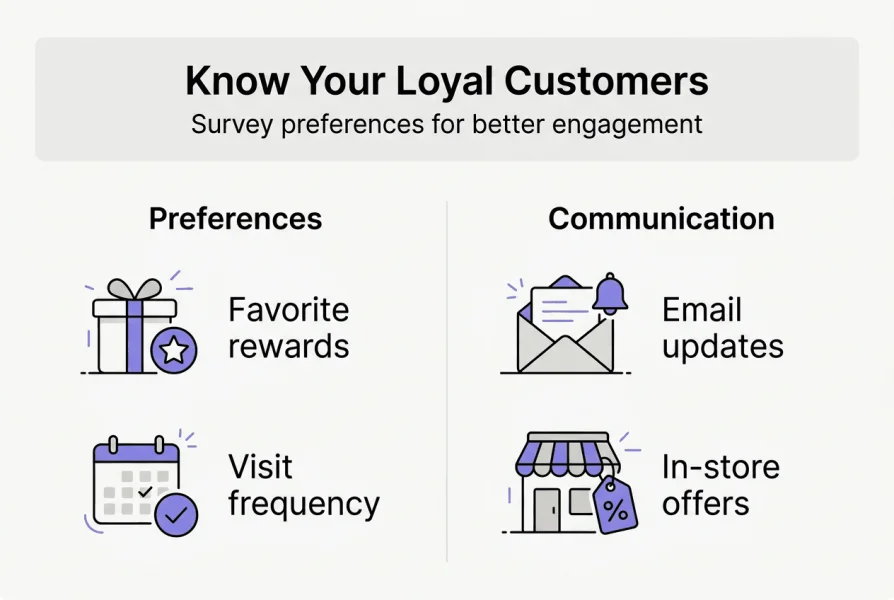
Pro Tip: Create a simple spreadsheet mapping each customer segment to specific behaviors, preferred rewards, and communication channels before investing in any loyalty technology. This planning document becomes your implementation roadmap.
| Preparation Element | Purpose | Example Action |
|---|---|---|
| Goal Definition | Focus resources on measurable outcomes | Increase monthly visits by 30% within 6 months |
| Customer Segmentation | Enable personalized engagement | Group by visit frequency: weekly, biweekly, monthly |
| Program Type Selection | Match rewards to business model | Choose visit-based rewards for high-frequency businesses |
| Tool Assessment | Ensure operational readiness | Evaluate digital platforms for tracking and automation |
| Preference Research | Align rewards with customer desires | Survey top 20% of customers about reward preferences |
Executing proven strategies to engage loyal customers
With your foundation in place, it’s time to implement specific tactics that drive customer action and deepen loyalty. These strategies work across industries when tailored to your customer segments.
-
Launch personalized reward programs that match customer behavior patterns. Rewarding visits and spending are effective methods to motivate customer return because they directly incentivize the actions you want to encourage. For frequent visitors, implement stamp card systems that offer a free item after a set number of visits. For higher-value customers, create tiered spending programs where accumulated purchases unlock progressively better benefits.
-
Implement spend-based incentives that increase transaction values. Incentivizing spending boosts average order value by encouraging customers to add items to reach reward thresholds. Set achievable spending tiers that feel within reach, like earning 50 points for every $10 spent, with rewards starting at 500 points. This structure motivates incremental purchases without requiring massive spending.
-
Deploy digital rewards and electronic coupons for frictionless redemption. Physical punch cards get lost and create redemption hassles. Digital systems let customers check their status anytime through mobile apps and redeem rewards with a simple scan or code. This convenience removes barriers that prevent customers from actually using their earned benefits.
-
Establish consistent communication rhythms through channels customers prefer. Send personalized messages when customers are close to earning rewards, celebrate milestones like membership anniversaries, and share exclusive offers that make loyalty membership feel valuable. Email works for detailed updates, while push notifications excel at time-sensitive offers.
-
Create referral incentives that turn loyal customers into brand ambassadors. Offer meaningful rewards when existing customers bring friends, like bonus points for both the referrer and new member. This strategy simultaneously engages your loyal base and expands it with pre-qualified prospects who trust recommendations from people they know.
-
Design surprise-and-delight moments that exceed expectations. Occasionally reward loyal customers with unexpected bonuses like double points days, birthday gifts, or early access to new products. These surprises create emotional connections that transcend transactional relationships and generate word-of-mouth marketing.
Pro Tip: Schedule your loyalty communications around natural buying cycles rather than arbitrary calendar dates. A restaurant should send lunch specials on weekday mornings, while a salon should remind customers about appointments 6 weeks after their last visit.
Your execution should draw inspiration from successful loyalty campaigns that have proven results across different business types. Test multiple tactics simultaneously with different customer segments to identify what resonates most with your specific audience. Track redemption rates, visit frequency changes, and spending pattern shifts for each tactic you implement.
- Personalize reward notifications based on individual purchase history
- Create urgency with limited-time bonus point opportunities
- Gamify the experience with progress bars and achievement badges
- Offer choice in rewards so customers select what they actually want
- Make redemption incredibly easy with one-tap mobile options
Remember that engagement is ongoing, not a one-time campaign. Rotate your tactics quarterly to maintain novelty while keeping core program elements consistent. Customers should always understand how to earn and redeem, but the specific offers and bonuses can evolve based on seasonal trends and business priorities.

Avoiding common mistakes and troubleshooting your loyalty efforts
Even well-planned loyalty programs encounter obstacles that reduce effectiveness. Recognizing these pitfalls early and knowing how to address them saves time and preserves customer relationships.
Vague program goals confuse both your team and customers. When you can’t clearly explain what behaviors you’re rewarding and why, customers won’t understand how to participate effectively. Many loyalty programs fail due to lack of clear goals and poor customer communication. Define specific, measurable objectives and communicate them transparently in all program materials.
Overcomplicated reward structures kill participation before it starts. If customers need a calculator and instruction manual to understand their point balance or redemption options, you’ve lost them. Simplicity wins every time. One coffee shop successfully uses a straightforward approach: buy 9 drinks, get the 10th free. Customers instantly grasp the value proposition.
Inconsistent communication creates distrust and disengagement. If you bombard customers with messages one month then go silent for three, they’ll tune out or forget about your program entirely. Establish a regular cadence that provides value without overwhelming inboxes. Weekly updates work for high-frequency businesses, while monthly touchpoints suit others better.
Ignoring low engagement signals leads to program failure. When redemption rates drop below 15% or active membership declines month over month, something needs fixing immediately. These metrics indicate rewards aren’t compelling, the process is too difficult, or communication isn’t reaching customers. Don’t wait for complete program collapse to make adjustments.
Failing to track metrics regularly means you’re flying blind. You can’t optimize what you don’t measure. Set up automated dashboards that show key performance indicators weekly so you spot trends before they become problems. Understanding the benefits of loyalty programs requires ongoing measurement and refinement.
“The biggest mistake businesses make is launching a loyalty program and assuming it will run itself. Successful programs require constant attention, testing, and refinement based on real customer behavior data.”
Common troubleshooting scenarios and solutions:
- Low enrollment rates: Simplify signup to require only email or phone number, eliminate lengthy forms
- Poor redemption activity: Survey customers about reward preferences, reduce points needed for first reward
- Declining engagement: Introduce limited-time bonus opportunities, send personalized re-engagement offers
- Customer confusion: Create simple visual guides showing how to earn and redeem, train staff to explain benefits
- Technical issues: Ensure mobile app works flawlessly, provide alternative redemption methods during system problems
Pro Tip: Conduct quarterly program audits where you personally go through the entire customer experience from signup to redemption. This hands-on approach reveals friction points your data might miss.
Measuring success and optimizing your loyalty program
Effective measurement transforms your loyalty program from a cost center into a strategic growth driver. The right metrics reveal what’s working and where to focus optimization efforts.
Identify key performance indicators that directly connect to your business goals. Retention rate shows the percentage of customers who return within a specific timeframe. Redemption rate indicates how many earned rewards customers actually use. Average customer lifetime value reveals the total revenue each loyal customer generates. Purchase frequency tracks how often customers buy. These metrics together paint a complete picture of program health.
Tracking customer engagement and redemption rates enables effective program optimization through data-driven decisions rather than guesswork. Modern analytics platforms automatically calculate these metrics and highlight trends that require attention. Set up weekly reports that compare current performance against your baseline and goals.
Collect qualitative feedback alongside quantitative data. Numbers tell you what’s happening, but customer feedback explains why. Send brief surveys after redemptions asking about satisfaction and suggestions. Monitor social media mentions and online reviews for unsolicited opinions about your program. This combination of hard data and customer voice guides meaningful improvements.
Implement A/B testing to optimize specific program elements. Test different reward values, communication frequencies, and offer types with small customer segments before rolling changes to your entire base. For example, send one group an offer for 2x points on Tuesdays and another group 20% off on Tuesdays, then compare which drives more visits and revenue.
Compare results against your original goals monthly. If you aimed to increase visit frequency by 25% but only achieved 10% after three months, investigate why. Are rewards insufficient? Is communication not reaching customers? Does the redemption process create friction? Systematic analysis identifies root causes.
| Metric | What It Measures | Target Range | Action If Below Target |
|---|---|---|---|
| Retention Rate | Customers returning within 90 days | 60-80% | Increase reward value or communication frequency |
| Redemption Rate | Earned rewards actually used | 40-60% | Simplify redemption process or reduce point thresholds |
| Active Member Rate | Members engaging monthly | 30-50% | Launch re-engagement campaign with bonus offers |
| Average Transaction Value | Spending per visit | 15-25% increase | Implement spend-tier incentives |
| Customer Lifetime Value | Total revenue per customer | 30-50% increase | Enhance reward variety and personalization |
Monitor customer engagement metrics specific to your industry and business model. Retail businesses should track basket size changes, while service businesses focus on appointment frequency and service upgrades. Restaurants measure party size and visit time distribution.
Iterate your program based on what the data reveals. If customers in the 500 to 1000 point range rarely redeem, that tier might be too high. If weekend promotions generate 3x the response of weekday offers, shift more resources to weekend campaigns. Optimization is continuous, not a one-time fix.
Pro Tip: Create a monthly optimization scorecard that tracks your top 5 KPIs with simple red, yellow, green status indicators. Share this with your team so everyone understands program performance and can contribute improvement ideas.
Explore BonusQR loyalty solutions to boost engagement
Implementing these strategies becomes significantly easier with the right technology platform. BonusQR provides comprehensive loyalty system features designed specifically for small to medium businesses across diverse industries. The platform handles everything from points tracking and reward automation to personalized communications and detailed analytics.
Whether you operate a service business, hotel, restaurant, or retail shop, BonusQR offers tailored solutions that match your specific needs. The loyalty application for services streamlines appointment-based rewards, while the loyalty application for hotels manages guest recognition and return visit incentives. You can launch a fully functional program in days, not months, without requiring POS system integration or complex technical setup. The platform scales with your business, offering free starter options and premium features as your program grows.
How to engage loyal customers: frequently asked questions
What are simple ways to start engaging loyal customers?
Begin with a straightforward visit-based reward system where customers earn a free item after a specific number of purchases. Combine this with monthly email updates highlighting their progress and exclusive member-only offers. This approach requires minimal technology and immediately demonstrates value to participants.
How do digital loyalty programs improve customer retention?
Digital programs eliminate physical card loss, provide instant reward balance updates, and enable personalized communication based on individual behavior. Customers can check their status anytime through mobile apps, receive timely notifications about rewards they’ve earned, and redeem benefits with simple scans. This convenience increases participation and reduces the friction that causes program abandonment.
What common mistakes should I avoid in loyalty programs?
Avoid complicated point systems that confuse customers, infrequent communication that lets members forget about the program, and rewards that require unrealistic spending to achieve. Also skip generic offers that don’t reflect individual customer preferences. Keep everything simple, transparent, and personalized to maintain engagement.
How can I measure if my loyalty program is successful?
Track retention rate to see if more customers return after joining, monitor redemption rate to confirm rewards are valuable enough to use, and measure changes in visit frequency and average transaction value. Compare these metrics against your pre-program baseline and specific goals. Successful programs show steady improvement in all areas over 6 to 12 months.
What types of rewards most effectively motivate loyal customers?
The most effective rewards match what your customers already buy and value. Free products or services work well for frequent purchasers, while percentage discounts appeal to price-conscious shoppers. Exclusive experiences and early access to new offerings motivate status-seeking customers. Survey your base to discover their preferences, then test different reward types to identify what generates the strongest response for your specific audience.


