
 Deutsch
 Español
 Français
 Italiano
 Magyar
 Polski
 Slovenčina
 Čeština

Acquiring a new customer costs 5 to 25 times more than keeping an existing one, yet many small businesses still chase new leads instead of nurturing loyal relationships. This misplaced focus leaves money on the table. Loyalty programs, when designed well, transform casual buyers into repeat customers who spend more and refer others. This guide breaks down why loyalty genuinely drives retention, explores the mechanics that make programs work, and shows you how to avoid common pitfalls that sink 77% of transactional initiatives within two years. You’ll learn practical strategies to build emotional connections, measure what matters, and apply data-driven personalization that turns your customer base into a sustainable revenue engine.
Key Takeaways
| Point | Details |
|---|---|
| Emotional loyalty boosts retention | Emotional connections make customers return and spend more. |
| Simple integrated programs | Small businesses benefit from loyalty that works across channels and fits daily operations. |
| Personalization drives engagement | Tailoring rewards and messaging to individuals boosts loyalty and spending. |
| Avoid transactional traps | Programs built around transactions fail without personalization and ongoing value. |
| Omnichannel integration matters | A seamless experience across stores and apps reduces friction and strengthens retention. |
How loyalty programs build customer retention
Customer retention measures how many buyers return over time, while loyalty programs incentivize repeat purchases through rewards and recognition. The difference between a one-time shopper and a devoted advocate lies in emotional connection. When customers feel valued beyond transactions, they choose your business repeatedly even when competitors offer lower prices.
Emotional connections drive loyalty by making customers feel recognized and appreciated. A coffee shop that remembers your usual order creates a bond that a generic discount cannot replicate. This emotional layer transforms routine purchases into habitual behavior, which is the foundation of retention.
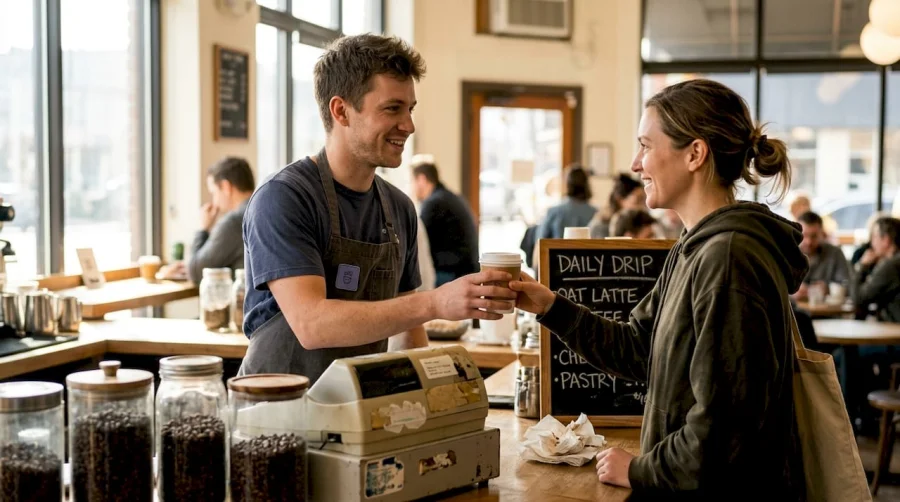
Repeat customers spend significantly more than first-timers. Data shows they invest 67% more per transaction because trust eliminates purchase hesitation. They skip the research phase and buy confidently, knowing your quality and service meet their standards. This increased spend directly boosts your bottom line without additional marketing costs.
Acquisition costs dwarf retention expenses. Bringing in a new customer requires advertising, promotions, and sales efforts that cost 5 to 25 times more than keeping someone who already knows you. Shifting resources toward loyalty initiatives delivers better ROI because you’re investing in proven buyers rather than uncertain prospects.
Pro Tip: Track customer lifetime value alongside retention rate. A customer who returns monthly for three years generates far more revenue than ten one-time buyers, even if initial purchase amounts seem similar.
Customer lifetime value climbs as loyalty deepens. A retained customer doesn’t just make one extra purchase; they return repeatedly, refer friends, and become less price-sensitive over time. This compounding effect means each loyalty investment pays dividends across multiple transactions. Understanding these customer retention benefits helps you prioritize strategies that maximize long-term profitability.
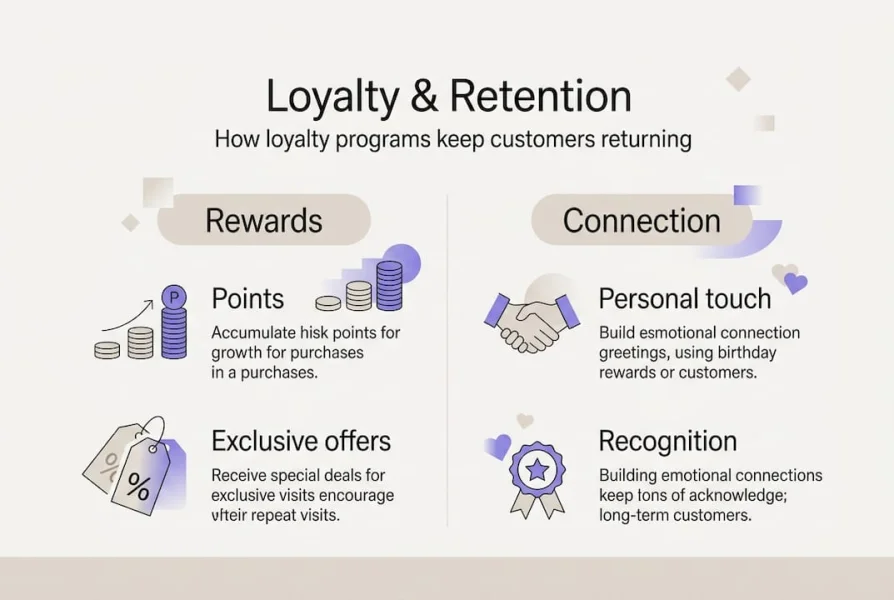
Loyalty programs formalize this relationship by rewarding behaviors that drive retention. Points for purchases, exclusive access for frequent buyers, and personalized offers all reinforce the message that you value their continued business. When executed well, these mechanics turn satisfied customers into vocal advocates who fuel organic growth through referrals.
Key loyalty program mechanics that boost retention
Successful loyalty programs use specific structures to encourage repeat visits and higher spend. Points-based systems let customers accumulate value with each purchase, creating a reason to return. Tiered programs reward top spenders with exclusive perks, motivating customers to increase their spend to reach the next level. Stamp cards offer simplicity, perfect for businesses like cafes where frequent small purchases add up. Referral rewards turn customers into marketers, giving them incentives to bring friends who become new loyal buyers.
Omnichannel integration ensures your program works seamlessly across touchpoints. When a customer earns points in-store and redeems them via your app, the experience feels cohesive. This syncing eliminates friction that causes program abandonment. Mobile apps with wallet integration let customers access rewards without carrying physical cards, increasing participation rates.
Behavior-based rewards target actions beyond purchases. Rewarding social media shares, reviews, or birthday visits deepens engagement and gathers valuable data. RFM segmentation (recency, frequency, monetary value) identifies your best customers so you can tailor offers that resonate. A customer who visits weekly but spends little might respond to a spend threshold bonus, while a high spender who hasn’t returned in months needs a win-back offer.
Pro Tip: Measure active engagement and net promoter score instead of just enrollment numbers. A program with 1,000 sign-ups but only 100 active users is less valuable than one with 300 engaged participants who refer others.
Program design best practices for SMBs include:
- Keep rules simple so customers understand how to earn and redeem without confusion
- Align rewards with what your audience actually values, not what’s easiest for you to offer
- Use push notifications sparingly to remind customers of rewards without annoying them
- Test different retail loyalty reward types to discover what drives the most repeat visits
- Automate reward delivery to reduce manual work and ensure timely recognition
Personalization transforms generic programs into meaningful experiences. Use purchase history to suggest relevant products or offer birthday discounts that feel special. Customers who receive tailored rewards engage 3x more than those getting mass promotions. This data-driven approach makes every interaction feel personal, building the emotional loyalty that drives retention.
Applying these loyalty rewards tips helps you avoid common mistakes. Start with one or two mechanics, perfect them, then expand. A flawless stamp card program beats a complex points system that confuses customers and requires constant explanation. Simplicity wins when your goal is consistent repeat behavior.
Common pitfalls and nuances in loyalty programs
Habit-driven repeat purchases differ fundamentally from emotional attachment. A customer might return weekly because your location is convenient, not because they feel loyal. If a competitor opens closer, they’ll switch instantly. True loyalty means they choose you despite alternatives because they value the relationship and experience you provide.
Points programs inflate metrics but don’t build genuine preference. Customers join to get discounts, not because they love your brand. When rewards dry up or a competitor offers better terms, they leave. Research shows 77% of transactional programs fail within two years because they mistake enrollment for loyalty.
Expectation gaps sink programs faster than poor design. If customers expect instant rewards but your program requires months of accumulation, frustration builds. A coffee shop offering a free drink after 20 purchases loses customers who want recognition after five visits. Misaligned expectations create resentment instead of loyalty.
| Transactional loyalty | Emotional loyalty |
|---|---|
| Driven by discounts and points | Built on personal connection and values alignment |
| Customers switch for better deals | Customers stay despite competitive offers |
| Short-term revenue spikes | Sustainable long-term growth |
| High churn when rewards end | Low churn through relationship strength |
| Requires constant promotional spend | Generates organic referrals and advocacy |
Complexity kills participation. Programs with confusing tier structures, blackout dates, or hidden redemption rules frustrate customers. They sign up, struggle to understand how it works, then ignore it. Simplicity drives engagement because customers know exactly what to do and what they’ll receive.
Data loss risks undermine program effectiveness. If you can’t track customer behavior across visits, you can’t personalize offers or measure success. A system that loses points or fails to sync across channels destroys trust instantly. Customers who lose earned rewards never return.
Pro Tip: Test free product rewards versus percentage discounts. Many businesses find that offering a free item after X purchases drives higher repurchase rates than 10% off coupons because the tangible reward feels more valuable.
Reward type testing reveals what your audience values most. Some customers prefer experiential perks like early access to new products, while others want pure savings. Survey your base and run A/B tests to optimize your mix. What works for a boutique clothing store might flop for a quick-service restaurant.
Avoiding these pitfalls requires intentional design. Build programs around what customers want, not what’s operationally easiest. Invest in reliable technology that tracks data accurately. Set realistic expectations from day one. These innovative loyalty schemes show how businesses succeed by prioritizing customer experience over complex mechanics.
How to design and apply loyalty programs for lasting retention
Designing an integrated loyalty program starts with understanding your customer journey and identifying moments where rewards create maximum impact. Follow these steps to build a system that drives retention:
- Map your customer touchpoints from first visit through repeat purchases to identify where incentives matter most
- Choose one or two core mechanics (points, stamps, tiers) that align with your business model and customer preferences
- Set achievable reward thresholds that encourage frequent returns without requiring months of accumulation
- Integrate your program across all channels so customers can earn and redeem seamlessly in-store and online
- Build data collection into every interaction to enable personalization and measure what drives repeat behavior
- Test reward types with small customer segments before rolling out broadly to ensure they resonate
- Automate communications using behavior triggers so customers receive timely, relevant offers without manual work
- Monitor active engagement metrics weekly and adjust mechanics that aren’t driving desired behaviors
ROI benchmarks help you set realistic expectations and measure success:
| Metric | Industry average | Top performers |
|---|---|---|
| Repeat purchase frequency lift | 15-25% | 40-60% |
| Average order value increase | 10-15% | 25-35% |
| Customer lifetime value growth | 20-30% | 50-80% |
| Program participation rate | 20-30% | 50-70% |
| Referral rate from loyal customers | 5-10% | 20-30% |
Prioritize simple, integrated programs aligned with your operations. A bakery might use a stamp card for daily coffee buyers while offering bonus points for catering orders. This dual approach captures different customer segments without overwhelming staff or customers with complexity.
Data-driven personalization separates effective programs from generic ones. Use purchase history to send targeted offers: a customer who buys running shoes every six months gets a reminder at month five with a loyalty discount. Someone who only shops sales receives early access to clearance events. This relevance makes customers feel understood, strengthening emotional bonds.
Pro Tip: Align your loyalty program with service quality improvements and corporate social responsibility efforts. Customers who see you donate a portion of their purchases to local causes or invest in sustainable practices feel good about choosing you, creating loyalty beyond transactional benefits.
Combining loyalty mechanics with exceptional service multiplies impact. A hotel with a great rewards program but rude staff won’t retain customers. Conversely, amazing service without recognition for repeat visits misses an opportunity to formalize the relationship. The sweet spot pairs both: deliver memorable experiences and reward customers for choosing you repeatedly.
Measure success through active engagement and net promoter score rather than vanity metrics. A program with 10,000 enrolled members but only 500 active users needs fixing. Focus on how many customers redeem rewards monthly, how often they return, and whether they’d recommend you to friends. These indicators predict long-term retention better than enrollment counts.
Applying these strategies positions your program for sustainable growth. Start small, perfect the fundamentals, then expand. A flawless basic program beats a feature-rich system that confuses customers. These insights on loyalty programs and sales growth show how focused execution drives results, while these customer engagement strategies help you maximize impact without massive budgets.
Boost your loyalty program with BonusQR
Implementing the strategies above becomes effortless when you have the right platform. BonusQR offers integrated loyalty solutions designed specifically for SMBs in retail, hospitality, and services. The platform combines mobile and web application access with seamless wallet syncing, so your customers can track rewards anywhere without carrying physical cards.
Digital rewards through BonusQR’s electronic reward feature eliminate manual tracking and reduce redemption friction. Customers see their points update in real time, creating immediate gratification that reinforces repeat behavior. Push notifications remind them of available rewards at optimal moments, driving timely visits when you need traffic most.
Apple Wallet integration puts your loyalty program directly on customers’ phones alongside their credit cards and boarding passes. This visibility keeps your brand top of mind and makes participation effortless. The platform handles all technical complexity, letting you focus on designing rewards that resonate with your audience. BonusQR simplifies loyalty program management while giving you the data and automation tools needed to boost customer retention systematically.
FAQ
What are the most effective types of loyalty program rewards?
Emotional and experiential rewards outperform simple transactional points by creating memorable connections customers value beyond monetary savings. Free product rewards after a set number of purchases encourage higher repurchase rates than percentage discounts because the tangible item feels more valuable and creates anticipation. Combining multiple reward types tailored to different customer segments yields the best retention, as some customers prefer exclusive access while others want straightforward savings.
How can small businesses measure if their loyalty program is successful?
Measure active customer engagement and net promoter score rather than just sign-up numbers, since enrolled members who never participate add no value. Track repeat purchase frequency, revenue lift from program members versus non-members, and customer lifetime value growth over time. These metrics reveal whether your program genuinely changes behavior or simply attracts deal-seekers who’d buy anyway. Aim for at least 40% of enrolled customers actively earning or redeeming rewards monthly.
Why do some loyalty programs fail despite good intentions?
Complexity, unclear reward structures, and failure to build emotional attachment cause most failures by frustrating customers who can’t understand how to benefit. Poor data management and customer expectation mismatches create resentment when promised rewards don’t materialize or take too long to earn. Research shows 77% of transactional loyalty programs fail within two years because they prioritize enrollment over engagement and treat all customers identically instead of personalizing experiences. Programs succeed when they keep mechanics simple, deliver rewards quickly, and make customers feel genuinely valued beyond their wallet.