
 Deutsch
 Español
 Français
 Italiano
 Magyar
 Polski
 Slovenčina
 Čeština
Keeping up with customer loyalty points by hand is a real drain on your business. Paper punch cards get lost, spreadsheets grow messy, and staff spend valuable time on manual data entry instead of serving customers. As your customer base grows, these problems only get worse. Rewards go unclaimed, errors frustrate loyal shoppers, and you lose the repeat visits you worked hard to earn. Switching to a digital loyalty tracking system fixes all of this. This guide walks you through why accurate point tracking matters, what to look for in a platform, how to set one up step by step, and how to measure results.
Key Takeaways
| Point | Details |
|---|---|
| Go digital for efficiency | Digital wallet-integrated loyalty platforms make point tracking simple, fast, and less error-prone for small businesses. |
| Keep rules clear | Simple, easy-to-understand rewards structures lead to higher engagement and fewer tracking mistakes. |
| Measure and adapt | Regularly review your loyalty tracking reports and adjust your program to maximize customer return. |
| Staff training matters | Well-trained staff ensures your new loyalty system runs smoothly and customers receive the right rewards. |
Why tracking loyalty points matters for your business
Your most profitable customers are the ones who keep coming back. Research consistently shows that retaining an existing customer costs far less than acquiring a new one, and loyal customers tend to spend more per visit over time. A well-run loyalty program is one of the most direct tools you have to encourage repeat business. But that program only works if customers and staff can trust that points are recorded and redeemed accurately.
When tracking breaks down, trust breaks down too. A customer who earned 200 points toward a free coffee but sees a zero balance on their card will not just be confused. They will feel cheated. That single experience can undo months of goodwill. Manual methods like paper stamp cards or basic spreadsheets create exactly this kind of risk. Cards get stamped incorrectly, spreadsheets have formula errors, and staff turnover means institutional knowledge disappears.
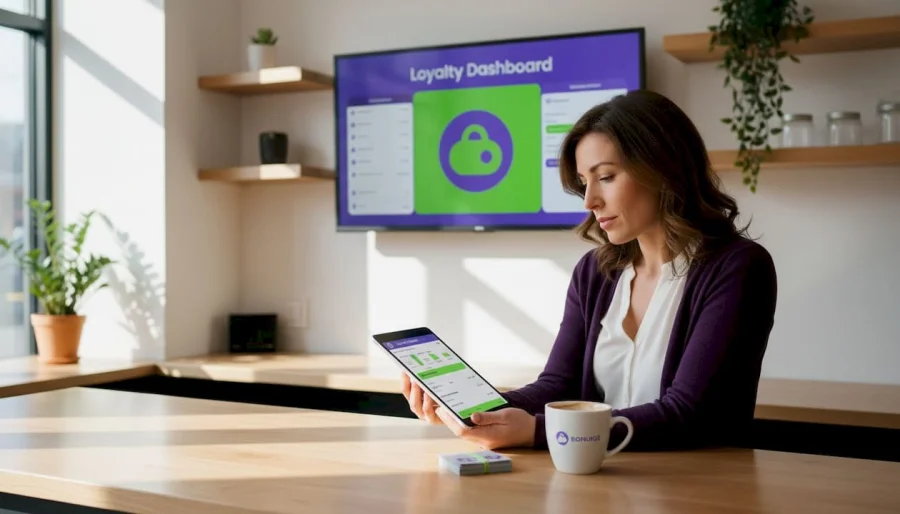
Digital tracking removes most of these failure points. Every transaction is recorded automatically, point balances update in real time, and customers can check their own progress through an app or digital wallet. The benefits include:
- Accuracy: Every purchase and reward is logged without human error.
- Transparency: Customers can see their balance at any time, building confidence in your program.
- Efficiency: Staff spend seconds confirming a point credit instead of minutes searching through a spreadsheet.
- Insight: You get data on which rewards drive repeat visits and which ones customers ignore.
- Scalability: A digital system handles 50 customers or 5,000 without extra effort.
Digital wallet-integrated loyalty platforms deliver high ROI and reduce operational effort for small and mid-sized businesses. If you want to see what strong programs look like in practice, reviewing top retail loyalty programs gives you a clear picture of the features and structures that work. For a deeper look at measuring ROI of loyalty systems, external benchmarks help you set realistic expectations before you invest.
Having set the stage for why loyalty points matter, let’s detail what you’ll need to make tracking simple and effective.
What you need to start tracking loyalty points
Before you sign up for any platform, take stock of what you currently offer and how customers interact with it. This preparation step saves time and prevents you from migrating broken processes into a new system.
Start by auditing your current loyalty setup. List every reward type you offer: discounts, free items, cashback, stamps, or visit bonuses. Note how customers currently earn and redeem them. Ask your staff where confusion happens most often. Their day-to-day experience will tell you exactly where the gaps are.
Next, define what you need from a digital platform. Not every business has the same requirements. A coffee shop needs fast in-store redemption and simple stamp-style earning. A boutique clothing retailer might need tiered rewards based on total spend. A service business like a salon may want to reward visit frequency and referrals. Your platform should match your model.
Here is a comparison of core features you should evaluate:
| Feature | Why it matters | What to look for |
|---|---|---|
| Easy-to-use interface | Staff adoption depends on simplicity | Clean dashboard, minimal training needed |
| Customer-facing app or wallet | Customers track their own points | Apple Wallet, Google Pay support |
| Reporting and analytics | You need data to improve the program | Exportable reports, real-time dashboards |
| Security and fraud prevention | Protects your program from abuse | Audit trails, secure login, activity logs |
| Integrations | Connects with your existing tools | POS compatibility, email, SMS |
| Pricing | Must fit your budget | Free tier available, scalable paid plans |
Platforms like Smile.io, Stamp Me, and LoyaltyPass are affordable and quick for small businesses to implement, often requiring no complex technical setup. You can also explore key loyalty system features to understand what a full-featured platform covers, or look at purpose-built retail loyalty app tools designed specifically for store-based businesses.
For businesses watching their budget, there are affordable loyalty tracking options that balance cost and functionality well.
Prepare your customer data. Before you launch, gather any existing customer information: email addresses, phone numbers, purchase history. Even partial data helps you import customers and give them a starting point rather than asking them to start from zero.
Pro Tip: Keep your earning rules as simple as possible from day one. One point per dollar spent, or one stamp per visit, is easy for customers to understand and easy for staff to apply consistently. Complexity can come later once the system is running smoothly.
With your goals clear and requirements outlined, let’s walk step by step through setting up digital loyalty point tracking.
Setting up digital loyalty point tracking: Step-by-step
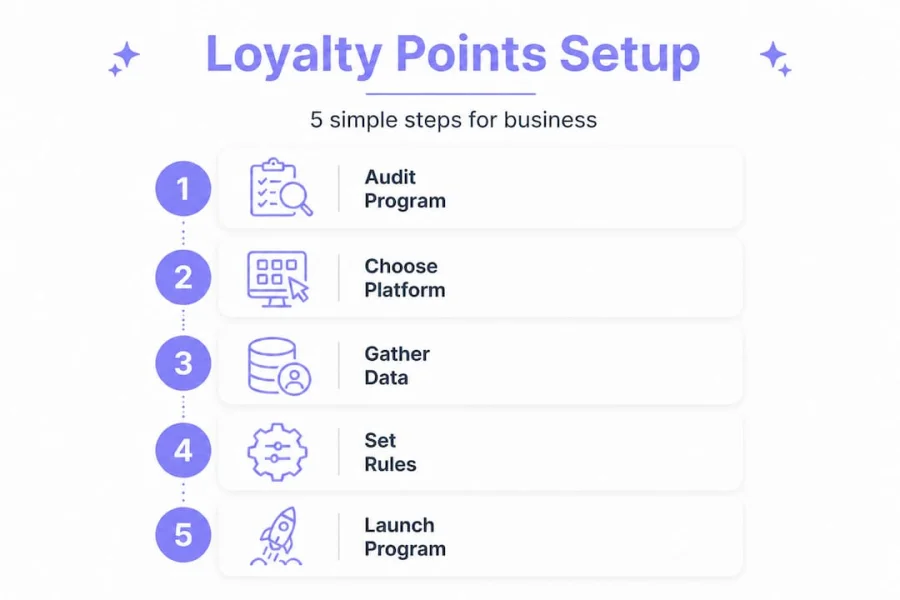
The actual setup process is more straightforward than most business owners expect. Digital wallet-integrated platforms typically take as little as 2 to 4 hours to set up for small businesses, which means you could have a working program running before your next business day.
Here is the process broken down:
-
Register for a platform account. Choose a platform that fits your business type and budget. Sign up, verify your account, and explore the dashboard before changing any settings. Familiarity first saves mistakes later.
-
Customize your rewards and earning rules. Set up how customers earn points (per dollar spent, per visit, per referral) and what they can redeem points for (discounts, free products, exclusive access). Use clear language in every customer-facing description.
-
Input your customer data. Upload existing customer information using the platform’s import tools. Most platforms accept a simple CSV file with names, email addresses, and any existing point balances you want to honor.
-
Train your staff on the new system. Walk your team through the process of crediting points, handling redemptions, and answering customer questions. A 30-minute walkthrough is usually enough for straightforward platforms.
-
Integrate with your POS system if available. Many digital platforms connect directly to popular point-of-sale systems, automating point crediting at checkout. If your platform supports digital wallet integration, enable it so customers can carry their loyalty card in their Apple Wallet or Google Pay.
-
Run a test campaign before full launch. Select a small group of 10 to 20 customers, ideally regulars who are willing to give feedback. Run the program with this group for one to two weeks, then gather their input on clarity, ease of use, and any issues they noticed.
For comparing platforms before you choose, the best SMB loyalty solutions guide breaks down options by business size and budget. If you run a food-service business, a restaurant loyalty software comparison can help you narrow down the right fit. You can also explore options built around a small business loyalty app to find something designed for your scale.
Pro Tip: Run your pilot with customers who are already engaged with your business. They are more forgiving of early glitches and more likely to give you honest, useful feedback before you scale up.
Here is a quick reference table to help you compare setup approaches:
| Setup method | Best for | Typical time to launch | Technical skill needed |
|---|---|---|---|
| SaaS platform (cloud-based) | Most SMBs | 2 to 4 hours | Low |
| POS-integrated solution | Retail with existing POS | 1 to 2 days | Medium |
| Custom-built platform | Larger or complex businesses | Weeks to months | High |
| Paper or manual system | Very small, low-volume businesses | Immediate | None |
With setup complete, ensure your system delivers reliable results and know how to spot and fix common mistakes.
Verifying accuracy, fixing errors, and measuring results
Launching your program is not the finish line. Ongoing monitoring is what keeps the program healthy and ensures customers stay engaged over time.
Check point balances weekly. Log into your platform dashboard and scan for anything unusual: customers with unexpectedly high balances, zero activity from previously active members, or redemption rates that suddenly drop. These patterns often signal a technical issue or a rule that is confusing customers.
Here are the key metrics to monitor regularly:
- Redemption rate: The percentage of earned points that customers actually use. A low rate suggests the rewards are not attractive enough or customers do not know how to redeem.
- Repeat visit frequency: How often members return compared to non-members. This is your clearest signal that the program is working.
- Enrollment rate: How many customers join the program versus how many walk through your door. If enrollment is low, your sign-up process may be too complicated.
- Churn rate: How many enrolled members go inactive over a given period. Early churn often signals that the program did not deliver on initial expectations.
Gather staff and customer feedback regularly. Your cashier who processes 50 loyalty transactions a day will notice patterns you never see from the dashboard. Set up a simple monthly check-in to ask what is causing friction. Customers will often tell you directly if something feels unfair or confusing.
“Avoid over-complexity in member-facing rules to prevent confusion and errors in loyalty point accrual.” Source: Small Biz Trends
Segment your customers for deeper analysis. Most platforms let you group members by spending level, visit frequency, or enrollment date. Use these segments to run targeted promotions and see which groups respond best. For example, you might find that high-spend customers respond well to bonus point events, while occasional shoppers respond better to a free reward after a set number of visits.
Audit your system security on a quarterly basis. Check for accounts with unusual activity, duplicate profiles, or signs of reward abuse. Good platforms offer Apple Wallet integration benefits that reduce fraud by tying rewards to authenticated devices. A strong customer retention workflow also helps you maintain consistent program standards over time.
With reliable digital tracking in place, let’s reflect on what most businesses miss and how you can create standout loyalty experiences.
The overlooked secret to loyalty program success
Here is something most loyalty program guides will not tell you: complexity is the enemy of loyalty. Business owners often assume that a tiered rewards structure with multipliers, bonus categories, expiration rules, and referral bonuses will impress customers and drive more engagement. In most cases, it does the opposite.
When a customer has to read fine print to understand whether they earned points on a purchase, you have already lost them. Loyalty is built on a simple, consistent promise: you shop here, you get rewarded. Every rule you add is a chance for confusion, a reason for frustration, and a moment where trust erodes.
The evidence supports this. Avoiding over-complexity in member-facing rules is consistently cited as one of the most important factors in preventing accrual errors and customer drop-off. Simplicity is not a limitation. It is a competitive advantage.
Digital wallet integration is where this principle pays off most directly. When a customer opens their Apple Wallet and sees their loyalty card alongside their credit cards, the program feels as real and trustworthy as their bank. That familiarity builds long-term engagement without any extra marketing effort from you.
Automation matters just as much. When your platform automatically credits points, sends reward notifications, and triggers re-engagement campaigns, your team can focus entirely on customer experience instead of administrative tasks. That is where small businesses genuinely win. You can offer a level of personal service that large chains cannot, and automation gives you the time to deliver it.
For a practical roadmap that puts all of this together, the retail customer management guide covers how to align your loyalty strategy with your broader customer relationship approach.
Start simple. Measure early. Scale what works. And keep asking your customers what they actually value.
Take the next step: Powerful loyalty tracking made simple
If this guide has shown you anything, it is that the gap between a manual loyalty system and a reliable digital one is smaller than you think to cross, and far more rewarding on the other side.
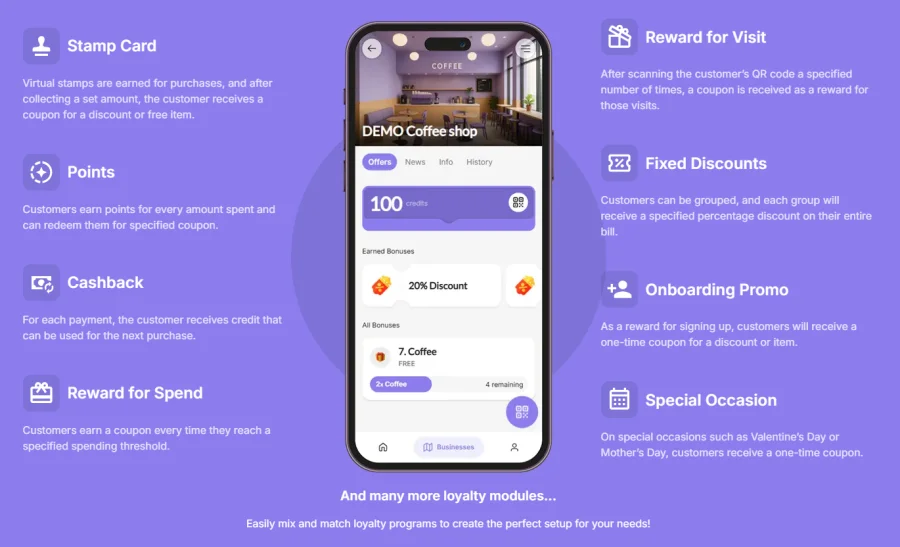
BonusQR is built specifically for retail and service businesses that want an effective, easy-to-manage loyalty solution without the technical headache. From points and stamps to cashback and visit rewards, you can configure your program in hours and start tracking results right away. Explore the full list of features to see how digital wallet integration, push notifications, real-time analytics, and branded apps can work together for your business. Whether you are just starting out or ready to scale, BonusQR has a plan that fits.
Frequently asked questions
What is the best way for a small business to track loyalty points?
The best way is to use a digital, wallet-integrated platform designed for small businesses because it is cost-effective, fast to set up, and eliminates the errors that come with manual tracking.
How long does it take to implement a digital loyalty program?
Most small businesses can set up a digital loyalty platform in as little as 2 to 4 hours, depending on the complexity of their rewards structure and the amount of customer data they are importing.
Can customers track their own loyalty points digitally?
Yes, most modern platforms offer customer-facing apps or digital wallet integration so customers can see their real-time point balance and available rewards without asking staff.
How can I prevent fraud or misuse in my loyalty program?
Choose a reputable digital platform that provides audit trails, secure login, and real-time reporting, as automated digital platforms significantly reduce fraud by removing the manual steps where abuse most often occurs.