Keeping customers coming back is one of the hardest parts of running a small business. You can spend good money attracting new customers, but without a plan to retain them, growth stalls fast. That’s where loyalty card ideas for small business owners come in. The right program turns occasional buyers into regulars, and regulars into advocates. This article covers practical, creative loyalty card ideas organized by type, with honest notes on what works, what costs what, and how to match the right approach to your business model.
Key takeaways
| Point | Details |
|---|---|
| Match rewards to your margins | Focus loyalty rewards on high-margin products or actions to protect profitability. |
| Start simple | A punch card or basic points system is easier to manage and easier for customers to understand. |
| Digital beats paper for tracking | Digital punch cards and points apps reduce overhead and improve customer communication. |
| Experiential rewards build deeper loyalty | Birthday rewards and exclusive events keep customers emotionally engaged, not just transactionally. |
| Keep loyalty and referral programs separate | Mixing the two creates confusion and weakens both programs’ effectiveness. |
How to choose the right loyalty card idea for your small business
Not every loyalty card idea fits every business. A coffee shop with daily visits has very different needs than a boutique clothing store with monthly shoppers. Before picking a program, you need to evaluate a few practical factors.
Start with your customer behavior. How often do customers buy from you? How much do they spend per visit? Loyalty programs are most effective when they match natural purchase frequency. If your average customer visits twice a month, a ten-stamp punch card is attainable. If they visit twice a year, a points-based system works better.
Here are the core criteria to weigh:
- Customer purchase frequency: High-frequency businesses benefit from punch cards or stamp cards; lower-frequency businesses do better with points or cashback.
- Average spend per visit: Higher-ticket businesses can offer dollar-value rewards; lower-ticket ones benefit from free product rewards.
- Budget and operational capacity: Physical punch cards cost almost nothing. Digital apps require a platform but automate the work.
- Simplicity for your staff: If your team has to calculate points manually, the program will fail. Choose something they can manage easily.
- Margin protection: Research confirms you should avoid rewarding low-margin items and focus on high-margin products or profitable customer actions instead.
Pro Tip: Before launching any program, calculate what a repeat customer is worth to you annually. That number tells you exactly how much you can afford to give away as a reward.
1. Physical punch cards
Physical punch cards are the simplest loyalty card idea you can deploy today, with no technology required. A customer gets a stamp or hole punch with each purchase, and after a set number, they earn a free item or discount. The card itself acts as a physical reminder sitting in their wallet.
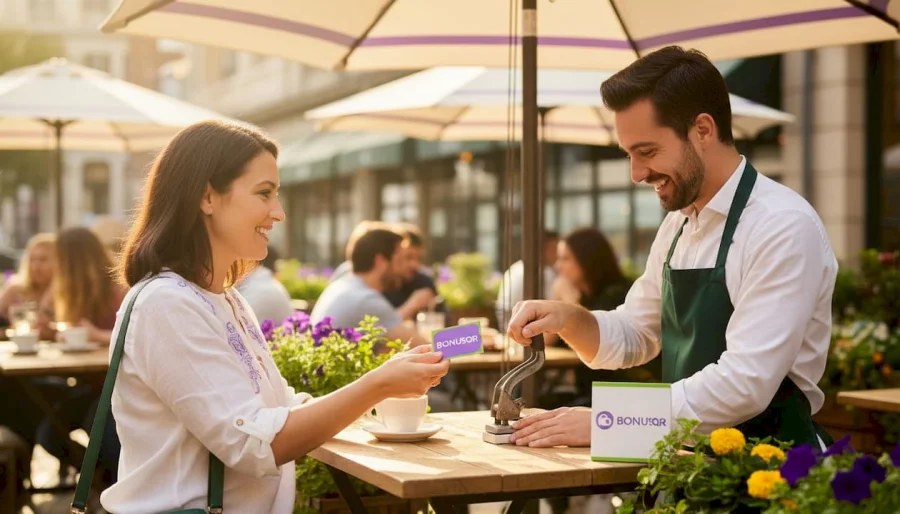
The main advantage is cost. You can print a batch of cards for very little money. The main disadvantage is that cards get lost, forgotten, or stamped fraudulently. Physical punch cards work best for high-frequency businesses like cafés, bakeries, or barber shops where customers visit at least weekly.
Keep the reward attainable. A buy-nine-get-one-free model at a coffee shop means a customer earns a free coffee in roughly two weeks of regular visits. That feels real and motivating.
2. Digital stamp cards
Digital stamp cards work exactly like physical punch cards, but they live on a customer’s phone. They eliminate the problem of lost cards and make it easy to track redemptions. Digital punch cards also integrate with mobile wallets, so customers can pull them up at checkout without digging through their bags.
For you as a business owner, digital stamp cards reduce overhead because the tracking is automated. You can also send push notifications when a customer is close to earning a reward, which drives return visits.
Pro Tip: Choose a digital stamp card platform that doesn’t require customers to download a separate app. Web-based stamp cards have significantly higher adoption rates because there’s no friction at sign-up.
| Feature | Physical punch card | Digital stamp card |
|---|---|---|
| Setup cost | Very low | Low to moderate |
| Fraud risk | Moderate | Low |
| Lost card problem | Common | None |
| Customer communication | None | Push notifications possible |
| Tracking and analytics | Manual | Automated |
| Best for | Very small budgets | Growing businesses |
3. Points-based loyalty programs
Points programs reward customers with points for every dollar spent, which they can later redeem for discounts, free products, or store credit. This model works well for businesses with varied price points because customers naturally accumulate points faster when they spend more.
The key is keeping the math simple. A common model: earn one point per dollar spent, redeem 100 points for $5 off. Customers should be able to calculate their progress in their head. Complexity kills participation.
Points programs also give you flexibility to reward actions beyond purchases:
- Writing a review or leaving feedback
- Referring a new customer
- Visiting during slow periods
- Celebrating a milestone like an anniversary
This flexibility makes points one of the most adaptable customer rewards program ideas for small businesses across many industries.
4. Tiered loyalty programs
Tiered programs add a status layer on top of points. Customers move through levels, like Silver, Gold, and Platinum, and unlock better rewards as they climb. Research confirms that tiered programs encourage higher spending by giving customers a clear goal to work toward.
Well-known examples include Starbucks Rewards, where customers unlock free drinks and birthday rewards at higher tiers. You don’t need a national brand budget to replicate this structure. A local spa could offer:
- Bronze: 5% discount on services
- Gold: 10% discount plus priority booking
- Platinum: 15% discount, free add-on service quarterly, and exclusive event invitations
The risk with tiers is overcomplication. Keep it to two or three levels maximum. Tiered rewards evoke status and motivate customers to increase spending, but only when they understand how the system works. If your customers need a manual to figure out their tier, you have gone too far.
5. Cashback loyalty cards
Cashback programs return a percentage of what a customer spends as credit toward future purchases. A customer spends $200 at your store and earns $10 in credit to use on their next visit. It feels tangible and fair, which increases trust.
This model works particularly well for service businesses with predictable transaction sizes, like auto repair shops, salons, or specialty retailers. Customers know exactly what they are getting. There is no points math to learn and no stamp counting to do.
The tradeoff is margin pressure. You need to calculate carefully what percentage you can return without hurting profitability. Two percent cashback on high-margin services is sustainable. Two percent on low-margin products may not be.
6. Birthday and special occasion rewards
Birthday rewards are one of the highest-impact loyalty scheme ideas for small businesses. Research shows that one extra monthly visit from an uncommitted customer can increase monthly revenue by 84% to 208%. Birthday rewards are one of the most reliable tools to trigger that visit.
A typical birthday reward offers a discount of 10 to 25 percent, a free product, or free shipping, redeemable within the month of the customer’s birthday. Even a small gesture, like a free dessert at a restaurant or a free add-on at a spa, creates genuine goodwill that money cannot easily buy.
Pro Tip: When collecting birthdates, always explain clearly how you will use that information and store it securely. Secure data handling is not optional. Customers who trust you with personal information are more loyal, but a data misuse incident can destroy that trust permanently.
7. Referral-integrated loyalty rewards
Some small business loyalty programs offer bonus points or rewards when a loyalty member refers a new customer who makes a purchase. This can accelerate growth while rewarding your best existing customers.
However, research is clear: points programs serve retention while referral programs serve acquisition. Mixing them too deeply reduces the effectiveness of both. The best approach is to keep them structurally separate. Offer a one-time referral bonus within the loyalty program, but do not build the entire program around referrals.
A local gym might give existing members 500 bonus points when a friend joins using their referral code. The points fit within the loyalty system, but the referral mechanic is distinct and simple.
8. Exclusive access and experiential rewards
Not all rewards need to be discounts. Customers value experiential rewards like early access to new products, invitation-only events, or behind-the-scenes experiences. These work especially well for businesses with a strong community identity, like independent bookstores, specialty food shops, or local fitness studios.
A wine shop might invite top-tier loyalty members to a private tasting before a new shipment goes on sale. A clothing boutique might offer loyal customers first access to new arrivals 48 hours before the general public. These perks cost relatively little but generate significant goodwill and word-of-mouth.
9. Charity and donation-based rewards
Some customers would rather see their loyalty points go to a good cause than to a personal discount. Donation-based loyalty programs let customers redeem points by directing a charitable contribution to a cause the business partners with.
This model attracts value-driven consumers who care about more than a good deal. It also differentiates your business from competitors offering standard discounts. A natural foods store, for instance, could let customers donate their points to a local food bank or environmental organization.
The operational requirement is simple: partner with one or two local charities, set a clear redemption value (for example, 100 points equals a $1 donation), and promote the option clearly at checkout.
10. Combination and hybrid loyalty cards
You do not have to pick just one loyalty card format. Many small businesses run hybrid programs that combine elements: a stamp card for frequent visits, points for total spend, and a birthday bonus for special occasions. This layered approach rewards different customer behaviors simultaneously.
The rule is to keep each element simple on its own. If you can explain your program to a new customer in under 60 seconds, it is probably well-designed. If it requires a FAQ printout at the register, scale it back.
Comparison: which loyalty card idea fits your business type
| Loyalty card type | Best business fit | Setup complexity | Cost level | Customer appeal |
|---|---|---|---|---|
| Physical punch card | Café, bakery, barber | Very low | Very low | High (simple) |
| Digital stamp card | Retail, food service | Low | Low to moderate | High (convenient) |
| Points-based | Retail, multi-product | Moderate | Moderate | High (flexible) |
| Tiered rewards | Service, hospitality | Moderate to high | Moderate | High (aspirational) |
| Cashback | Services, specialty retail | Low | Moderate | High (transparent) |
| Birthday rewards | Any business | Low (with digital tool) | Low | Very high |
| Experiential | Boutique, community biz | Moderate | Low to moderate | High (memorable) |
| Donation-based | Ethical, specialty brands | Low | Very low | Moderate to high |
My honest take on what small businesses get wrong
I’ve worked with a lot of small business owners on loyalty programs, and the most common mistake I see is overbuilding at the start. Someone launches a tiered points program with referral bonuses and birthday perks all at once, and then six months later it has collapsed because the staff couldn’t manage it and customers were confused.
What I’ve learned: the best loyalty programs are not the most feature-rich ones. They are the ones that actually get used. A single well-executed stamp card that your team understands and promotes at every transaction will outperform a sophisticated multi-tier system that nobody explains to customers.
I’ve also found that businesses consistently undervalue communication. Launching a program and then never mentioning it again is the fastest way to waste your investment. Customer retention compounds when customers are regularly reminded of their progress and upcoming rewards.
The other thing I’d push back on is the instinct to reward every behavior. Keeping programs focused on profitable behaviors maximizes return on investment. Reward what you want more of, not everything a customer might do.
Start with one idea. Execute it well. Measure the results. Then add layers if it makes sense.
— Michal
How Bonusqr helps you put these ideas into practice
Running a loyalty program manually takes time that most small business owners simply do not have. Bonusqr is built to handle the operational side so you can focus on serving customers.
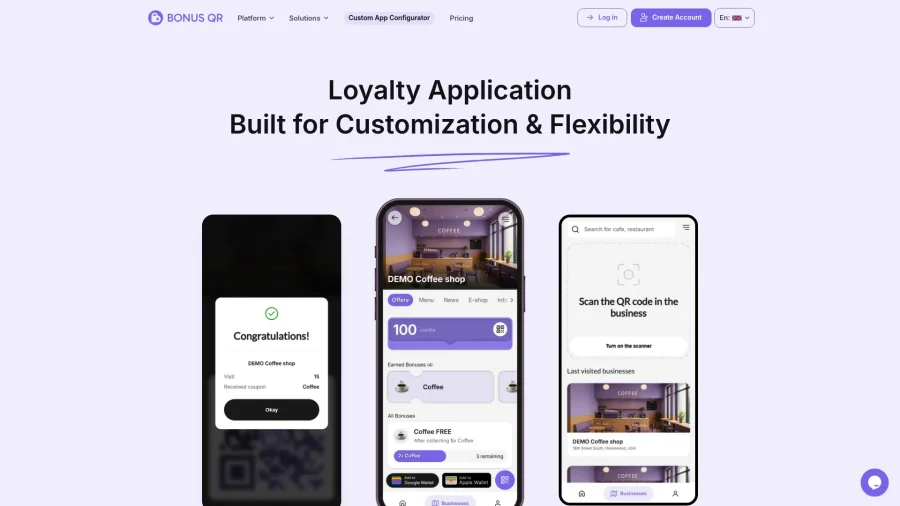
Bonusqr’s platform supports stamp cards, points systems, cashback, tiered rewards, and birthday perks all in one place. You can launch a digital stamp card in minutes with no POS integration required. As your program grows, the platform’s loyalty system features let you automate push notifications, track customer progress in real time, and run special occasion campaigns without adding staff hours. Whether you run a café, boutique, salon, or service business, there is a program structure that fits. Bonusqr offers free and paid tiers, so you can start without a large upfront commitment and scale as your customer base grows.
FAQ
What is the simplest loyalty card idea for a small business?
A physical or digital stamp card is the simplest option. Customers earn a stamp per purchase and receive a free item or discount after a set number of visits.
How many stamps or points should a reward require?
The reward should be attainable within two to four weeks of regular visits. A ten-stamp card at a coffee shop with daily customers is motivating; the same card at a monthly-visit business is not.
Should I combine my loyalty program with a referral program?
Research shows that mixing the two reduces effectiveness. Keep loyalty focused on retention and referral programs separate for customer acquisition.
Are digital loyalty programs better than physical cards?
Digital programs reduce overhead, eliminate lost cards, and allow customer communication through push notifications. Digital loyalty systems automate tracking and scale more easily than physical cards.
How much should I budget for a loyalty program?
Loyalty programs are among the lowest-cost marketing strategies available. Physical punch cards can cost under $50 to print, while digital platforms like Bonusqr offer free tiers to start without significant upfront spending.


