Most independent hotel managers assume that discount and loyalty programs are reserved for large chains with dedicated marketing teams and deep budgets. That assumption is costing them real money. Loyalty programs now drive over half of occupied rooms for hotels of all sizes, and small to mid-size properties are proving that a well-designed program does not require a massive investment to deliver results. This article gives you a practical, data-backed roadmap for building a discount program that increases direct bookings, reduces OTA dependence, and builds genuine guest loyalty at your property.
Key Takeaways
| Point | Details |
|---|---|
| Simple programs win | Tiered hotel discount structures are easier to run and yield stronger results than complex points systems. |
| Fund with OTA savings | Effective programs use OTA commission savings to finance direct booking incentives. |
| Keep discounts sustainable | Never offer discounts over 20% unless fully offset by other savings to avoid hurting profits. |
| Track and tweak monthly | Monitor your program’s metrics and adjust tiers, perks, and enrollment for best results. |
Why discount programs matter for small hotels
The most compelling reason to launch a discount program is financial. Every booking that comes through an OTA (Online Travel Agency, meaning platforms like Booking.com or Expedia that charge commissions) costs you between 15% and 25% of the room rate. A direct booking costs a fraction of that. When you redirect even a portion of your repeat guests away from OTAs and toward your own booking channel, the savings fund your program almost automatically.
The numbers back this up. According to recent industry data, loyalty members contribute 52.8% of occupied rooms while costing only 1.6% of revenue. That is an extraordinary return on investment that no paid advertising channel can match. When you understand hotel loyalty explained at a foundational level, it becomes clear why these programs are worth prioritizing even for smaller properties.
A real-world example makes this even more concrete. One 35-room hotel shifted 60% of repeat guests to direct bookings after launching a simple loyalty program. The property did not build a complex points platform. They used straightforward discount tiers and direct enrollment. The result was a measurable drop in OTA commission costs within the first operating quarter.
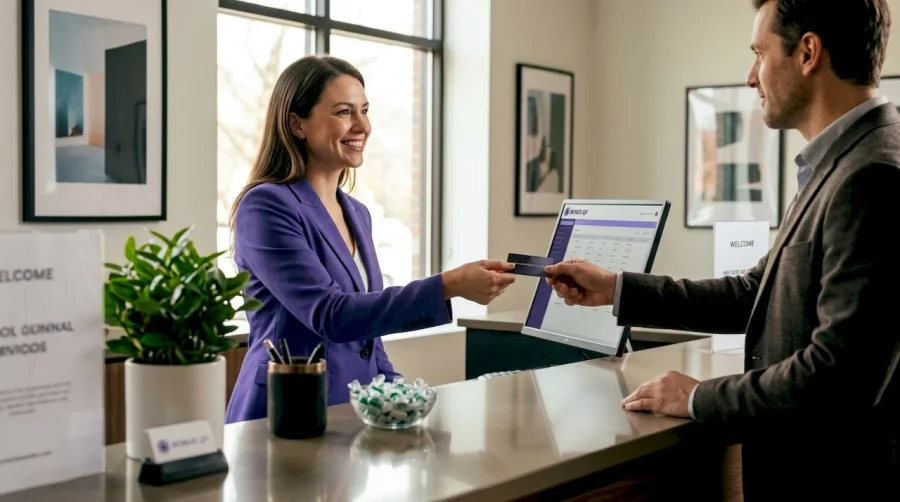
Here is a quick comparison of how loyalty program guests perform versus standard OTA guests:
| Metric | OTA Guests | Loyalty Program Guests |
|---|---|---|
| Average booking cost to hotel | 15–25% commission | 1–3% program cost |
| Repeat booking rate | Low (platform loyalty) | High (property loyalty) |
| Upsell acceptance | Low | Moderate to high |
| Data ownership | OTA retains data | Hotel owns guest data |
| Long-term retention | Minimal | Strong with proper nurturing |
The benefits go beyond just cost savings. Loyalty guests share feedback directly with you, accept upsell offers at higher rates, and are more likely to recommend your property through word of mouth. Building retention strategies around direct booking incentives is one of the most cost-efficient investments you can make in your property.
Key advantages of loyalty programs for small hotels include:
- Lower cost per booking compared to any third-party channel
- Direct access to guest preferences and stay history
- Higher average spend per visit from enrolled members
- Ability to increase customer retention without relying on discounting alone
- Reduced marketing spend over time as repeat bookings grow
Now that we have highlighted the importance, let’s clarify the core types of discount programs small hotels are actually using.
Core types of discount programs for hotel guests
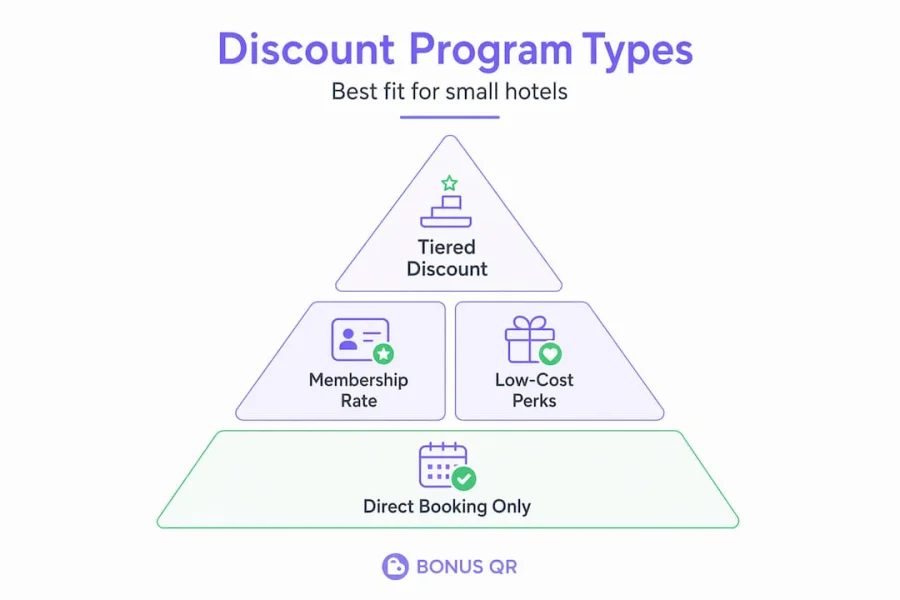
Not every discount model fits every property. Choosing the right structure for your hotel depends on your occupancy patterns, average daily rate, and the preferences of your repeat guests. The good news is that simple tiered discount structures consistently outperform complicated point systems at small properties.
Here is a breakdown of the most common program types and how they compare:
| Program Type | Setup Complexity | Cost to Run | Guest Understanding | Best Fit |
|---|---|---|---|---|
| Tiered discounts | Low | Very low | High | Most small hotels |
| Membership rates | Low to medium | Low | High | Boutique and resort |
| Instant perks at booking | Low | Low to medium | High | Urban and business hotels |
| Last-minute offers | Medium | Low | Medium | Seasonal properties |
| Points-based systems | High | Medium to high | Low to medium | Larger independents |
The tiered discount model is straightforward: a guest receives 10% off their second stay, 15% off their third stay, and so on. Guests understand it immediately, there is no app required to participate, and your front desk team can explain it in under 30 seconds during check-in. This simplicity drives actual enrollment, which is the most important metric in the early stages of any program.
Here is a recommended sequence for setting up a tiered program:
- Define your tiers, for example, Stay 2 gets 10% off, Stay 3 gets 15% off, Stay 4+ gets 20% off plus a free upgrade.
- Create a simple enrollment form that captures name, email, and stay history.
- Set up a direct booking landing page or email confirmation that highlights the benefit for returning directly.
- Train your front desk team to offer enrollment at check-out every single time.
- Send a follow-up email within 48 hours of check-out that reminds guests of their member status and next reward.
Membership rate programs work well for boutique hotels with a strong brand identity. Guests pay a small annual fee (often $25 to $50) or simply register online to access a discounted nightly rate only available on your direct booking channel. This model creates a sense of exclusivity without requiring any point tracking or complex backend management.
Maximizing ROI from any of these models depends heavily on one rule: never extend your loyalty discounts to OTAs. If guests can get your loyalty rate through Booking.com, you lose all the commission savings that fund your program in the first place.
Pro Tip: Bundle low-cost perks like late checkout (noon to 1 PM), a welcome drink, or a complimentary room upgrade when available into your loyalty offer. These perks cost you very little but are perceived by guests as high-value additions. They strengthen the program without reducing your average daily rate further.
Best practice is direct-only, frictionless enrollment, and relying on low-cost perks to boost perceived value rather than piling on deeper room discounts. Stick to this principle, and your program stays profitable from day one.
With these models outlined, success relies on careful program design and execution.
Designing a sustainable program: Avoiding margin traps
A discount program that is not carefully structured can reduce your revenue without meaningfully improving occupancy. The most important guardrail you can set is a firm ceiling on discounting. Keep your total effective discount under 20% to protect profitability. This threshold accounts for the typical range of OTA commission savings that offset your program costs.
Discounts above 20% erode margins unless they are fully offset by reduced OTA commission costs. Before you launch, calculate how much you currently spend on OTA commissions per month and use that figure as your program budget baseline. If your OTA costs are $4,000 per month and you can convert half of those bookings to direct, you free up $2,000 to fund your program.
The results are possible at scale, too. A 28-room boutique reduced OTA dependency from 65% to 42% after launching a direct discount program, adding €105,000 in net room revenue after accounting for all program costs. That is a meaningful outcome for a very small property, achieved without a points system or a mobile app.
To keep your program sustainable, focus on these operational practices:
- Track program costs and OTA commission savings side by side every month
- Set a clear review schedule (quarterly at minimum) to assess whether discount tiers are performing
- Make all loyalty discounts exclusive to your direct booking channel, no exceptions
- Use relationship marketing strategies to reinforce enrollment as a benefit, not just a transaction
- Limit deep discounts to high-loyalty guests (four or more stays) while keeping entry-level perks low-cost
Your team is the most important part of this equation. Front desk staff who understand the program and actively enroll guests will generate far better results than any digital campaign. Train them to explain the benefit simply, sign guests up at check-out, and note enrollment in the guest record for future visits.
A key principle: Your discount program should pay for itself within the first six months by converting repeat OTA bookers to direct. If it is not doing that, review your enrollment rate before adjusting your discount levels.
Pro Tip: Use your PMS (Property Management System) or a simple spreadsheet to flag returning guests who have not yet enrolled. Your front desk team can then prioritize offering membership to these guests at check-in, increasing your conversion rate without any additional marketing spend.
Explore dedicated loyalty tools for hotels to see how the right platform can automate tracking and guest communication without requiring a complex POS integration.
Once your structure is in place, practical steps will drive real results.
Action plan: Steps to launch and optimize your program
You have the framework. Now here is how you put it into motion. A structured launch process makes the difference between a program that runs on momentum and one that fades after the first few months.
Follow these steps to launch and continually improve your program:
-
Set clear goals. Define what success looks like before you launch. Target metrics might include a 15% increase in direct bookings within six months, a 20% reduction in OTA commission costs, or a 10% improvement in repeat guest rate.
-
Choose your perks and tiers. Decide on your discount levels and add-on perks. Keep it simple: two to three tiers maximum at launch. You can always add complexity later once you understand your guest response.
-
Create an enrollment process. Design a short sign-up form for email and stay capture. Make it available at check-out, on your website, and in your booking confirmation emails. Frictionless enrollment is critical.
-
Train your team. Run a 30-minute training session with all front desk staff before launch. Role-play the enrollment conversation. Make sure every team member can explain the program clearly and confidently in under one minute.
-
Launch and communicate. Send a launch email to all guests from the past 24 months announcing the program. Highlight the direct-only benefit clearly. Use your booking confirmation emails to reinforce enrollment going forward.
-
Measure monthly. Track enrollment numbers, repeat booking rates, direct versus OTA booking ratios, and overall occupancy. Review these four metrics every month without exception.
-
Iterate based on data. After 60 to 90 days, test one change at a time. Try a different perk at Tier 1, adjust the discount at Tier 2, or test a welcome email sequence. Make decisions based on data, not intuition.
Empirical data shows loyalty drives occupancy at low cost when you focus on repeat conversion rather than new guest acquisition. This is the core insight that separates high-performing small hotel programs from those that struggle.
Pro Tip: A basic program typically costs $3,000 to $8,000 in the first year when you factor in a simple platform, staff training, and communications. Properties that commit to direct booking conversion consistently see this investment returned within 12 months through commission savings alone.
Consider exploring hybrid loyalty models as your program matures to combine discount tiers with points collection or stamp-based rewards, adding more engagement options without overcomplicating your core offer.
You now have a full playbook. What is the big-picture takeaway?
Why most small hotels overcomplicate guest discount programs
Here is an observation worth considering seriously. The most common mistake we see small hotels make is not failing to launch a discount program. It is building the wrong kind of program because they are modeling it after large chains.
Big hotel chains use complex point systems for a specific reason: they serve millions of guests across hundreds of properties, and they need a currency that works globally. Your 30 or 60 or 80-room property does not have that problem. You have a smaller guest pool, more personal service, and the ability to recognize a returning guest by name. That is your competitive advantage, and it does not require gamification or points dashboards to leverage.
The best ROI at a small hotel comes from a plain, clearly communicated direct booking incentive that guests actually understand and act on. When you offer a returning guest a tangible 15% discount and a late checkout on their third stay, they feel rewarded. When you explain that they earn 250 points redeemable for a $15 credit after a minimum of 2,500 points, they lose interest and book through the OTA again.
Frictionless enrollment matters more than feature richness. If a guest can join your program in 60 seconds at check-out and immediately understand what their next reward will be, your enrollment rate will be strong. If they need to download an app or navigate a points portal, most will not bother. This is where many properties waste their program budget: building infrastructure that guests never use.
Customizing hotel loyalty to match your property size and guest profile, rather than copying large chain models, is the single most impactful decision you can make when designing your program. Keep it simple, keep it direct-only, and keep the focus on conversion. If guests understand and use it, you will see results. If they do not, you are paying for a program that delivers nothing.
Ready to implement your own hotel guest discount program?
Building a loyalty program that drives real results does not have to mean months of planning or a large IT budget. BonusQR makes it straightforward for independent hotels to design, launch, and manage a customizable discount and loyalty program that fits their exact property needs.
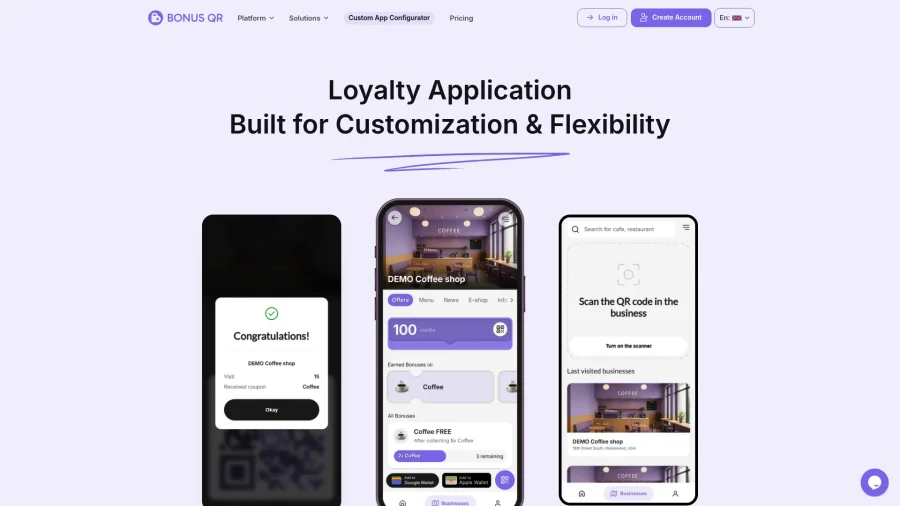
Whether you want a simple tiered discount setup, a hotel points system for guests who prefer to accumulate rewards, or a fully branded digital experience, BonusQR gives you the tools to move fast without requiring POS integration. You can track enrollments, monitor direct booking conversion, and send automated follow-up campaigns from a single dashboard. Visit bonusqr.com to explore the platform and see how quickly your property could start saving on OTA commissions while building guest loyalty that lasts.
Frequently asked questions
What is the typical cost for running a discount program at a small hotel?
Expect to invest $3,000 to $8,000 in the first year, with those costs largely offset by increased direct bookings and reduced OTA commission payments within 12 months.
How big of a discount is sustainable for small hotels?
Stay under a 20% total discount to preserve your margins, and use the commission savings from redirected OTA bookings to help fund the program.
What perks should be offered beyond room discounts?
The most effective and cost-efficient perks include late checkout, early check-in when available, and complimentary room upgrades, as best practices confirm these add perceived value without meaningfully reducing revenue.
Can discount programs really decrease OTA dependency?
Yes. A 28-room boutique hotel reduced its OTA dependency from 65% to 42% and added over €105,000 in net room revenue after launching a direct booking discount program, proving the model works even at very small scale.


