Tired of one-time customers who never return? You're not alone. The constant struggle to attract new people is exhausting and expensive. But what if you could turn casual visitors into loyal regulars with a tool that's simple, affordable, and incredibly effective? A well-designed loyalty card for your business is that tool.
This isn't just about giving away free stuff. It's a strategic engine for building a profitable community around your brand, ensuring customers choose you every single time.
Why a Loyalty Card for Your Business is No Longer Optional
As a small business owner, you’re constantly battling for every sale. The biggest secret to winning isn't chasing new customers-it's keeping the ones you already have. Retention is cheaper, more profitable, and builds a stable foundation for growth.
Think about it: for a local coffee shop, salon, or boutique, repeat customers are your lifeblood. A loyalty program transforms a simple purchase into a meaningful relationship, giving people a compelling reason to come back.
The Hard Numbers Don't Lie
Still on the fence? Let's talk numbers. The financial case for a loyalty program is undeniable.
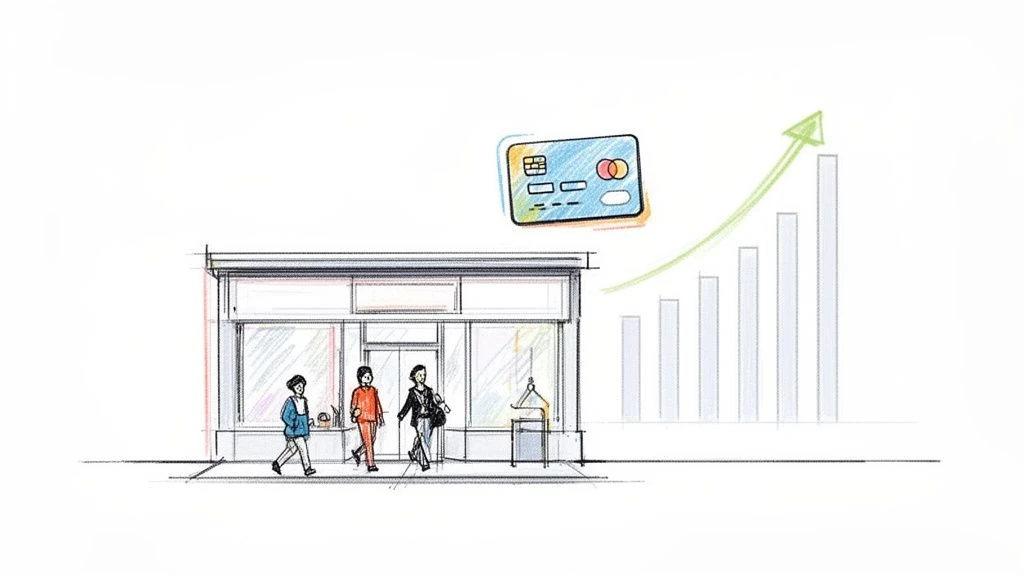
U.S. businesses lose a shocking $136.8 billion annually from avoidable customer churn. But here’s the powerful part: a mere 5% increase in customer retention can boost profits by 25% to 95%. Imagine what that could do for your bottom line. We explore this further in our detailed guide.
This isn't a fleeting trend; it’s a fundamental shift. The global loyalty management market is projected to exceed $18.2 billion by 2026. Big brands invest heavily in retention because it works. Now, small businesses can too.
A loyalty program is more than a marketing tactic-it's a customer service superpower. It communicates appreciation, creates a powerful cycle of repeat business, and generates authentic word-of-mouth marketing.
Forget Complex Tech. Loyalty is Now Simple & Affordable.
Not long ago, launching a rewards program meant expensive hardware, custom software, and a major headache. For most small business owners, it was simply out of reach.
Those days are over. Modern digital tools like BonusQR have leveled the playing field. You can set up a professional, QR-code-based loyalty card for your business in minutes-no tech skills or big budget needed.
Ultimately, it's about creating an experience that keeps people coming back. To understand the core business case, it's worth reading why retailers should utilize reward programs to enhance customer loyalty.
Designing a Program Customers Genuinely Love
Here’s a hard truth: if your loyalty program is confusing, it will fail. Success hinges on one core principle: simplicity.
Your program should feel like an effortless perk, not a complex game. The goal is to give customers a clear, immediate reason to return without making them jump through hoops.
Remember the classic paper punch card? It worked because its value was instantly clear: "Buy ten, get one free." Our goal is to capture that same elegant simplicity in a modern format that eliminates lost cards and gives you powerful business insights.
Finding the Right Reward Structure
The best structure for your loyalty card for business depends on what you sell and how often customers buy. Complicated point conversions are a massive turn-off. In fact, complexity is a key reason why 73% of shoppers want to redeem rewards but often abandon the effort.
Let's keep it simple. Here are a few proven models you can adapt:
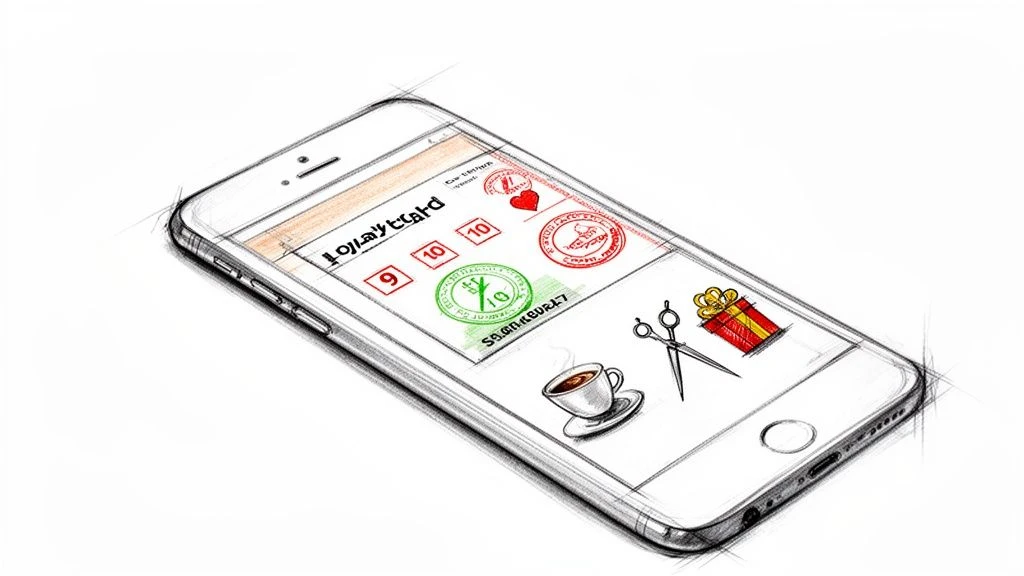
- Stamp-Based (Buy X, Get Y Free): The gold standard for simplicity. Perfect for businesses with frequent, low-cost purchases like coffee shops or bakeries. Example: Buy 9 coffees, get the 10th free.
- Points-Based (Earn & Burn): Customers earn points for every dollar spent. This encourages larger purchases. Example: A boutique offers 1 point per dollar, with 100 points unlocking a $10 reward.
- Tiered Programs: Reward your most loyal customers with escalating perks. This creates a sense of status and exclusivity. Example: A salon's "Gold" tier members get priority booking and a free birthday treatment.
For most small businesses, a direct "buy X, get one free" or a simple points-based system is the ideal starting point. Platforms like BonusQR are built around this principle, making it incredibly easy to launch a program that customers understand and love instantly.
Making Your Program Feel Special
Beyond the mechanics, small touches make a loyalty program memorable. Aligning your program with your brand values-like using eco-friendly packaging options-can create a deeper connection with customers who share those values.
A great loyalty program shouldn’t just offer discounts; it should make customers feel like valued insiders. The goal is to build an emotional connection that transcends the transaction, turning casual buyers into genuine advocates for your brand.
Inject some personality:
- Surprise & Delight: A coffee shop could randomly give every 50th loyalty member their order for free. This creates buzz that a standard discount can't match.
- Experiential Rewards: A bookstore could offer members early access to author signings. These low-cost perks build a powerful sense of community.
Choosing Rewards That Maximize Engagement
You've chosen a structure. Now for the fun part: what rewards will you offer? The success of your entire loyalty program boils down to this. The goal is to find the sweet spot between what your customers find irresistible and what your business can sustainably afford.
The best rewards aren’t just transactional; they’re emotional. They make your customers feel seen, appreciated, and special.
Tangible vs. Experiential Rewards
A great loyalty program offers a mix of reward types. Think beyond simple discounts and consider perks that add value in other ways.
- Tangible Rewards: These are the straightforward, get-it-in-your-hands perks: free products, discounts, or store credit. They work because their value is clear and immediate. A classic "buy 5 coffees, get 1 free" is a perfect example.
- Experiential Rewards: These non-monetary perks enhance the customer experience. Think early access to a new collection, an invitation to a members-only workshop, or priority service. These rewards build a sense of community and exclusivity that a simple discount can't replicate.
For most small businesses, a blend of both is the winning formula. A local bakery could offer a free croissant (tangible) while also giving members the first taste of a new seasonal cake (experiential).
The most compelling loyalty programs don't just reward transactions; they reward relationships. By offering a mix of perks, you create multiple reasons for customers to stay engaged, turning a simple rewards system into a genuine community hub.
To get your creative juices flowing, here are some ideas tailored to different small businesses.
Reward Ideas for Different Business Types
| Business Type | Cost-Effective Reward Idea | High-Value Reward Idea |
|---|---|---|
| Coffee Shop | Free extra shot or flavor syrup | "Member of the Month" gets a bag of premium beans |
| Retail Boutique | 10% off a future purchase | Early access to new arrivals or a private shopping event |
| Hair Salon | Free deep conditioning treatment add-on | A complimentary styling session for a special occasion |
| Restaurant | Free appetizer or dessert with entree purchase | Invitation to a chef's tasting menu event |
| Bookstore | A free bookmark or sticker with purchase | Signed copy of a book by a visiting author |
| Gym/Studio | Bring a friend for free to one class | A one-on-one personal training or coaching session |
Use these as a starting point. The key is to offer something that aligns with why your customers love your business in the first place.
Why Personalization is Your Secret Weapon
In a world of generic marketing, a personal touch is revolutionary. Personalization turns a good loyalty program into a great one. It shows customers you're paying attention to them as individuals, which is a massive driver of loyalty.
This doesn't have to be complicated. Modern digital tools make it simple. For example, a salon using a system like BonusQR can see a client regularly books coloring services. They could then send a personalized offer for a discount on a color-safe shampoo. It’s a small gesture, but it feels thoughtful and relevant.
The data confirms this approach. Nearly 70% of brands see higher customer engagement from their loyalty programs. Crucially, 57% of consumers spend more with brands they are loyal to. But here’s the catch: 77% of consumers admit they retract loyalty faster than they used to. This means your rewards must be genuinely compelling. You can discover more insights about loyalty program trends and see why choosing the right incentives matters more than ever.
A Simple Plan for Launching Your Loyalty Program
You can design the world's best loyalty program, but if nobody knows about it, it won't work. A great launch is about building excitement and making the decision to join a complete no-brainer.
The good news? You don’t need a huge marketing budget. A successful rollout boils down to two things: making it incredibly easy to join at the point of sale and empowering your team to be your program’s biggest champions.
This visual guide breaks down how to select, personalize, and measure your rewards to ensure your launch hits the mark.
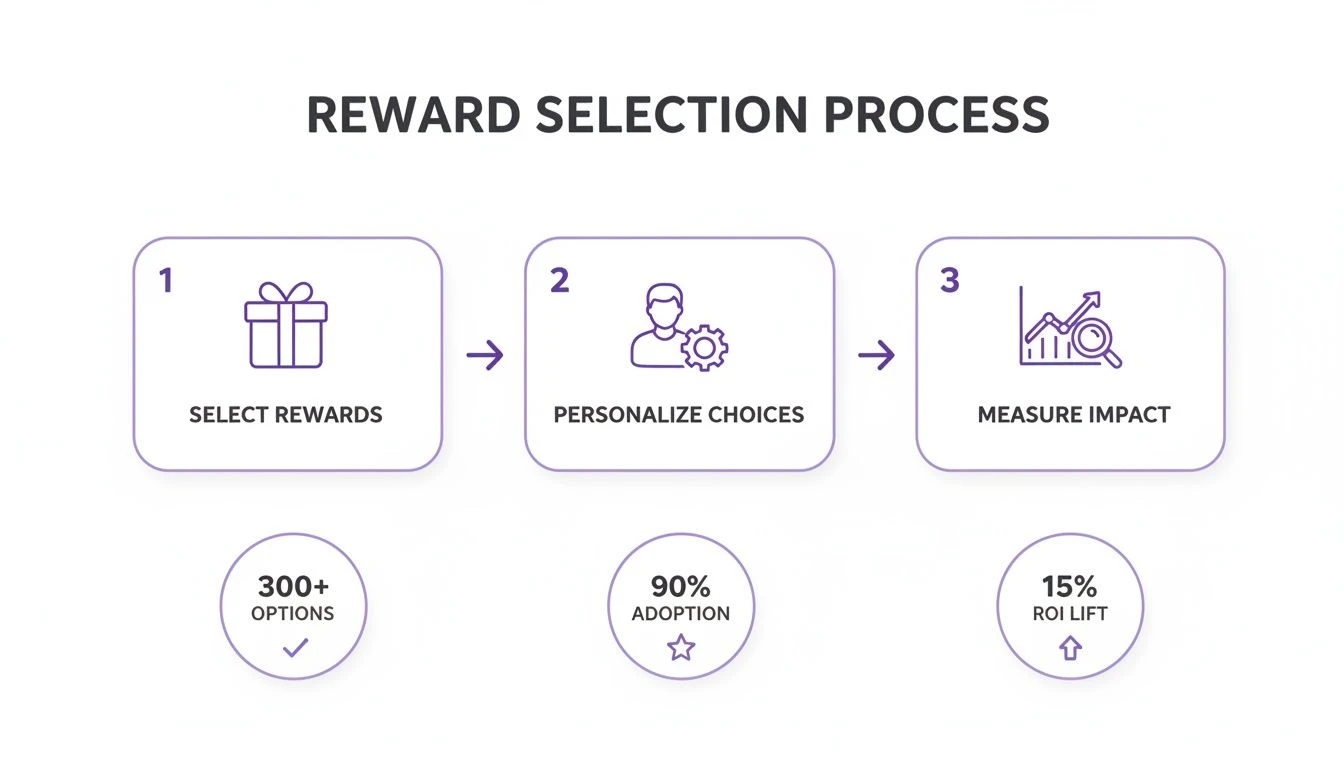
The key takeaway is that a strong program is a continuous loop. You must constantly measure what’s working and tweak your offers based on real customer behavior.
Empowering Your Team to Drive Sign-Ups
Your staff are your program's front line, and their enthusiasm is contagious. Before you go live, hold a quick team meeting to get everyone excited. Explain why you're launching the program-to reward the customers who keep your business thriving.
Give them a simple, natural script:
"Would you like to join our free rewards program? You get a [free coffee] on your next visit just for signing up. Just scan this QR code-it takes less than 30 seconds!"
This works because it's quick, highlights an immediate benefit, and removes hesitation by emphasizing how easy it is.
Place a simple sign with a large QR code right at your checkout counter. This visual cue prompts the conversation and makes sign-up seamless. To learn more about this process, check out our complete guide to digital customer loyalty cards.
Spreading the Word Beyond Your Store
Once your in-store plan is solid, it's time to generate digital buzz. Start with your existing customers.
- Email Announcement: Send a short, punchy email to your subscriber list announcing the new program and its benefits.
- Social Media Blitz: Post about the launch across your social channels. Use an eye-catching visual and a clear call-to-action, like "Join our new loyalty program today and start earning rewards!"
For small businesses, easy management is key. Loyalty programs now claim their highest budget share in four years, making up about 27% of marketing spend. A smart launch maximizes this investment by targeting your most profitable customers first-the 75% of program members who are already loyal to your brand.
Is It Working? How to Measure and Tweak Your Program
Launching your loyalty program is a huge first step. But the real magic happens next. How do you know if it's actually working? By watching a few key numbers, you can gain the clarity needed to make smart decisions that grow your business.
Modern tools make this incredibly simple. You don't need a data science degree to see what's resonating. By focusing on a handful of Key Performance Indicators (KPIs), you get an honest picture of what's a hit and where you can improve.
Key Metrics Every Business Owner Should Watch
You don’t need to track dozens of metrics. Get a powerful snapshot by keeping an eye on these three essentials. With the right digital platform, they are a breeze to monitor.
- Enrollment Rate: What percentage of your customers are signing up? A high number means your offer is compelling and your team is promoting it well. If it's low, simplify the sign-up or boost the initial reward.
- Redemption Rate: How many members are actually using their rewards? A low rate is a major red flag. It often means your rewards aren't exciting enough or the process is too complicated. Remember, 73% of shoppers want to redeem rewards. If they aren't, it’s time to rethink your offers.
- Purchase Frequency: Are loyalty members visiting more often than non-members? This is the ultimate test. An increase here is direct proof that your loyalty card for business is successfully driving repeat sales.
Tracking metrics isn't about getting a "pass" or "fail." It's about getting feedback. A low redemption rate isn't a bad grade; it's a valuable tip from your customers telling you exactly what to adjust.
From Data to Decisions: The Optimization Loop
Looking at numbers is the first step. Acting on them is what fuels growth. Think of it as a constant cycle of listening and responding. For example, if purchase frequency has stalled, try a limited-time "double points weekend" to get people back in the door.
This is where platforms like BonusQR shine. They are built to show you these key metrics on a clean, easy-to-read dashboard. You can see your return on investment at a glance, allowing you to make quick, confident tweaks.
This approach transforms your loyalty program from a static offer into a dynamic tool that adapts to your customers' behavior, ensuring it remains a powerful investment that delivers measurable results.
Common Questions About Loyalty Cards for Businesses
Even with a solid plan, it's natural to have questions. Launching a loyalty program is a big step, but clearing up these final concerns is often the last hurdle before you start building a stronger, more profitable customer base.
How Much Does a Loyalty Card Program Cost for a Small Business?
This is the number one question. The great news is that costs have plummeted. Gone are the days of needing expensive custom software or hardware.
Modern digital solutions are designed for small business budgets. Platforms like BonusQR operate on a low-cost monthly subscription, eliminating the high overhead of printing and managing physical cards. The goal is a massive return on investment, where the increase in customer spending and retention easily covers the small monthly fee.
Will My Customers Actually Use a Digital Loyalty Card?
Absolutely-if it's simple and valuable. The key to adoption is removing all friction.
A QR code-based system is perfect. Customers just scan it with their phone's camera. No app to download, no clunky sign-up form.
Place a clear sign at your checkout and offer a small, instant reward for joining. People understand loyalty programs; they will embrace yours if it's convenient and feels like a good deal.
"A loyalty program's success hinges on ease of use. If a customer can sign up in less than 30 seconds and see an immediate benefit, they're in. The less you ask of them, the more they'll engage."
How Do I Know if My Loyalty Program Is Working?
You don't need to be a data wizard. Success comes down to tracking a few straightforward metrics:
- Enrollment Rate: Are people joining? This shows your offer is compelling.
- Purchase Frequency: Are members buying more often than non-members? This is the clearest sign of success.
- Redemption Rate: Are people cashing in rewards? A low number means your rewards may need a refresh.
A good digital platform will provide a simple dashboard with this data, so you can see exactly what’s working.
Is a Punch Card Just as Good as a Digital Program?
While paper punch cards are familiar, they're riddled with problems. They get lost, damaged, or forgotten. Worse, they provide zero customer data and can be easily faked.
A digital loyalty card for business solves all these issues. It lives on your customer's phone, so it’s always accessible. It allows you to see purchase history, enabling personalized offers they’ll actually want. It provides the insights you need to make smarter business decisions. It’s a modern upgrade that delivers a much bigger, more measurable impact.


