Launching a rewards program is one of the smartest moves a small business can make, but it feels daunting. Is it expensive? Complicated? Will it slow down my checkout line? The truth is, it’s simpler and more affordable than you think. You can set up a program that turns casual visitors into devoted regulars in just an afternoon.
This guide will walk you through four simple steps: setting a clear goal, picking rewards customers actually want, choosing a platform that’s easy for everyone, and telling your customers about it. Forget clunky punch cards and expensive software. We're focused on modern, scannable solutions that get results without the headache.
Why a Rewards Program is Your Secret Weapon for Growth
Before we get into the how, let’s talk about the why. A loyalty program isn't just about giving away freebies; it's a powerful engine for real, sustainable growth. It's your direct line to turning a first-time visitor into a daily regular. For small businesses, you're not just competing on price-you're competing on connection and community. A smart rewards program builds that genuine relationship.
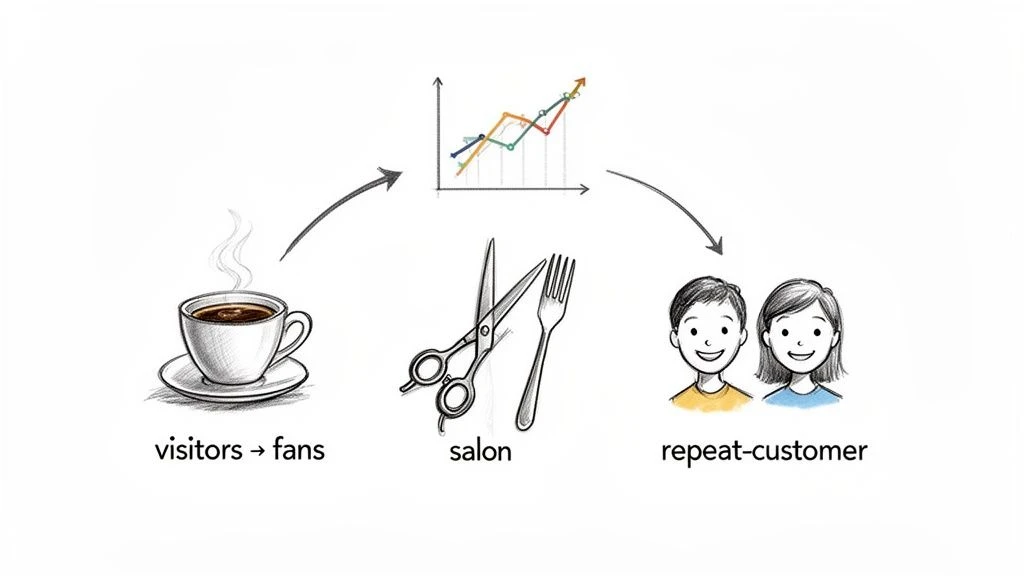
This is your roadmap to a successful launch.
Your Quick-Start Rewards Program Roadmap
Use this cheat sheet to get a clear picture of the path ahead before we dive into the details of each step.
| Milestone | Your Key Action | Why It Matters |
|---|---|---|
| Set Clear Goals | Decide what you want to achieve (e.g., more visits, higher spending, promoting a new item). | A clear goal ensures your program solves a real business problem instead of just giving away discounts. |
| Choose Your Rewards | Pick rewards that are desirable for customers and profitable for you. | The right incentive is what motivates customers to choose you over the competition, again and again. |
| Pick a Platform | Select a tool that's fast and easy for your team and your customers to use. | Simplicity is non-negotiable. If it's a hassle for your staff or customers, no one will use it. |
| Launch & Promote | Announce your program everywhere-at the counter, on your tables, and online. | A great program is useless if nobody knows it exists. A strong launch builds momentum from day one. |
| Track & Adjust | Monitor sign-ups, reward redemptions, and member spending habits. | Data tells you what's working, so you can make smart tweaks and get even better results. |
This is your game plan. Let’s get into the nitty-gritty.
Drive Repeat Business and Higher Spending
The core benefit is beautifully simple: rewards encourage customers to come back. When someone knows their tenth coffee is free or their fifth visit gets them 50% off, they have a tangible reason to choose you over the shop down the street.
This directly boosts two metrics that matter most:
- Visit Frequency: Customers have a built-in incentive to return sooner and more often.
- Average Spend: Loyal customers tend to spend more. 43% of consumers admit to spending more with brands they feel loyal to.
The global loyalty market is projected to hit $93.79 billion in 2025, with small businesses driving much of that growth. With over 90% of companies now offering some kind of loyalty program, it's quickly becoming a must-have to stay competitive.
A Modern, Friction-Free Approach
In the past, launching a rewards program meant clunky punch cards, expensive hardware, or complicated software. Those days are over.
Tools like BonusQR have leveled the playing field by using simple QR codes. You can create a seamless, mobile-first experience that's a breeze for both your staff and your customers. No apps to download, no cards to lose. A customer can sign up with a quick scan while waiting for their order.
A rewards program acts as a bridge between a single transaction and a long-term relationship. It tells your customers, "We see you, we value you, and we want you to be part of our community."
This is how you build a program that not only keeps customers around but actually fuels your growth. For a deeper dive on strategy, this strategic guide to Shopify loyalty programs can provide a solid foundation.
Step 1: Set Clear, Actionable Goals
Before you even think about points or freebies, answer one question: What business problem do I want this program to solve? Vague ideas like “increase loyalty” aren't goals; they're wishes. A great program starts with a specific, measurable goal tied directly to your business's health.
For example, a local coffee shop's biggest problem might be dead weekday mornings. Their goal could be: "Increase customer visits between 7-10 a.m. on weekdays by 15% in the next quarter." That’s a target you can measure.
A salon with a new, high-margin skincare service could set a goal like: "Boost bookings for our new facial treatment by 20% within 60 days." These goals give your program a clear purpose and a way to know if it's actually working.
Define Your Primary Objective
Zero in on your most pressing challenge or biggest opportunity. What would make the most significant impact on your bottom line right now?
- Increase Visit Frequency: Motivate customers to come back more often. A simple "buy 5, get 1 free" structure is a direct way to tackle this.
- Boost Average Transaction Value (ATV): Encourage customers to spend a little more each time. Offering bonus points on purchases over a certain amount (e.g., "Earn double points when you spend $50") can be the perfect nudge.
- Drive Repeat Purchases of a Specific Product: Have a high-margin item or a signature product? Build a reward around it. A bakery could offer: "Buy 4 specialty cupcakes, get the 5th free."
The most powerful goal for any loyalty program is to increase Customer Lifetime Value (CLV). This metric is the total revenue you can expect from a single customer over time. By increasing visit frequency and average spending, you are directly boosting CLV.
Understanding the long-term potential of your customers is a game-changer. A solid customer lifetime value calculation helps you see how a small investment in rewards today pays off massively over the next few months and years.
Add Valuable Secondary Goals
Beyond the main financial drivers, your rewards program can achieve other powerful objectives that support your business.
- Gather Customer Feedback: Offer points to members who complete a short survey. This gives you direct insights from your most engaged customers.
- Increase Off-Peak Traffic: Design special promotions that are only valid during your slowest hours to smooth out revenue.
- Promote a New Service or Location: Give loyal members an exclusive first look or a special discount to generate initial buzz.
- Build Your Marketing List (Ethically): A simple loyalty program sign-up is one of the easiest ways to build your email or SMS marketing list. Platforms like BonusQR make this effortless with a quick QR code scan.
Step 2: Design Rewards That Genuinely Motivate
The rewards you offer are the heart of your program. They must feel both achievable and exciting. That balance is what keeps customers engaged long after they sign up. A generic, uninspired offer just won't cut it.
Your rewards need to solve a customer pain point or fulfill a desire. Is it saving money on their daily coffee? Or is it feeling like a VIP with early access to a new product?
Explore Compelling Reward Structures
There's no one-size-fits-all solution. The best structure for your business depends on your goals, your products, and how your customers shop.
- Points-Based Systems: A classic for a reason. Customers earn points for every dollar spent. This model is incredibly flexible and great for encouraging higher spending. A coffee shop could let customers redeem 100 points for a free pastry or save up 500 points for a bag of coffee beans. For a deep dive, check out our guide to a points-based system that actually works.
- Tiered Programs: Tiers create a sense of status and exclusivity. Customers unlock new perks as they spend more. A boutique could offer Bronze members a birthday discount, while Gold members get early access to new collections and a personal styling session. This gamifies the experience.
- Surprise and Delight: This isn't a formal structure, but it’s a powerful tactic. Occasionally sending a loyal customer an unexpected reward-like a free dessert for a restaurant regular-creates a memorable experience that builds deep emotional loyalty.
Create Value Beyond Discounts
Discounts are popular, but experiential rewards often create a much stronger connection because they feel less transactional.
Think creatively about what you can offer that your competitors can’t:
- Exclusive Access: Early access to sales or new product drops is a fantastic low-cost, high-value perk.
- Unique Experiences: A restaurant could offer a private cooking class with the chef. A bookstore could host a members-only author meet-and-greet.
- Convenience: A local grocer might offer priority checkout or free local delivery to its top-tier members.
These rewards make customers feel like insiders, strengthening their bond with your business in a way a simple 10% off coupon never could.
Make Rewards Feel Achievable
This is critical. If earning a freebie feels like it will take a year, most people will lose interest before they even get started.
A key principle is to make the first reward relatively easy to achieve. This provides an early win, demonstrates the value of the program, and hooks the customer into participating long-term.
The data backs this up. 74% of consumers feel more loyal to brands that offer positive loyalty experiences-which starts with getting that first valuable reward. Members who redeem points have a 6.3 times higher lifetime value than non-members.
This is where simple tools like BonusQR shine. By making earning and tracking seamless with a quick QR code scan, customers can see their progress in real-time on their phones. The easier it is for them to see how close they are, the more likely they are to chase that next reward.
Step 3: Choose a Simple Platform That Just Works
You've designed a killer rewards structure-now you need the right tech to bring it to life. For a small business, the best tool is always the one that makes your life easier, not harder. Your goal should be simplicity, speed, and a smooth experience for everyone.
Forget clunky, enterprise-level systems with a million features you'll never touch. You need a platform that is fast for your staff, effortless for your customers, and affordable for your budget.
What to Look For in a Small Business Platform
Cut through the marketing fluff and focus on what actually matters for your day-to-day operations.
- Effortless for Staff and Customers: A cashier should be able to enroll a new member in seconds. A QR code-based system is the clear winner here because it puts the process on the customer's phone, eliminating manual data entry for your team.
- Transparent, Flat-Rate Pricing: Are there hidden fees? Some platforms tack on charges per transaction or member. Look for a provider with clear, flat-rate monthly pricing so you can budget without any nasty surprises.
- Actionable, Simple Data: You don't need a mountain of data. You just need to know who your best customers are, how often they visit, and which rewards are getting them excited.
The 30-Second Rule: Can a brand-new customer sign up for your program in less than 30 seconds while standing at the counter? If the answer is no, it's too complicated.
This flowchart can help you visualize the decision-making process for your reward structure, which will directly inform your platform choice.
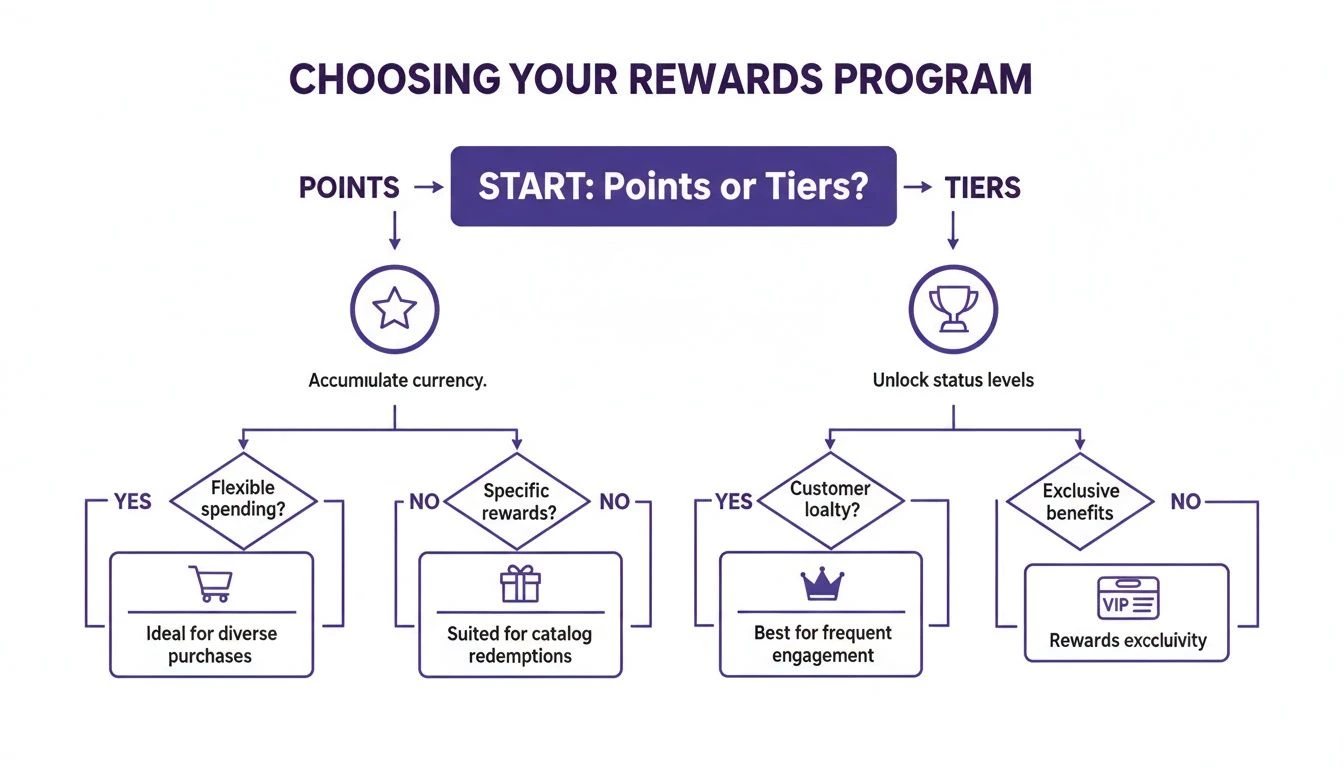
Not sure which program type is right for you? This table breaks it down.
Comparing Loyalty Platforms for Small Businesses
| Platform Type | Best For | Pros | Cons |
|---|---|---|---|
| Digital Punch Cards | Coffee shops, cafes, quick-service spots with frequent, low-cost purchases. | Super simple for customers. Clear goal (e.g., "Buy 9, get 1 free"). Low-cost setup. | Limited data collection. Can feel basic. Harder to offer varied rewards. |
| Points-Based Systems | Retail stores, restaurants, businesses with varied purchase values. | Flexible rewards. Encourages higher spending. Gathers valuable customer data. | Can be complex if the math isn't simple. Requires clear communication. |
| Tiered Programs | Brands with a strong community, service businesses (salons, gyms), high-value retail. | Makes top customers feel like VIPs. Encourages long-term loyalty. | Can feel unattainable for casual customers. Requires more management. |
| QR Code Platforms | Any modern brick-and-mortar business looking for speed and simplicity. | Ultra-fast, app-free signup. No hardware needed. Integrates with Apple/Google Wallet. | Relies on customers having a smartphone. May require some education at first. |
Why QR Codes Are a Game-Changer for SMBs
Let's be real: physical punch cards get lost and asking for a phone number at a busy checkout slows everything down. This is where a modern, mobile-first approach completely changes the game.
QR code-based platforms like BonusQR get rid of that friction instantly.
- Instant, App-Free Sign-Up: A customer scans a code with their phone's camera. That's it. No app to download, no password to create.
- No Lost Cards: Their loyalty "card" lives right in their phone's digital wallet, which they always have with them.
- Zero Hardware Costs: You don't need special scanners or tablets. The system works with the devices your customers already own.
This makes joining your program effortless for the customer, which is exactly what you want. For a deeper dive, check out our complete guide on choosing your first customer loyalty software.
Step 4: Launch and Promote Your Program
You’ve designed a killer program and picked the perfect platform. Now for the fun part: telling your customers all about it. A strong launch isn't about flipping a switch; it's about building real excitement and making it dead simple for people to join from day one. Your goal is to get that initial momentum rolling.
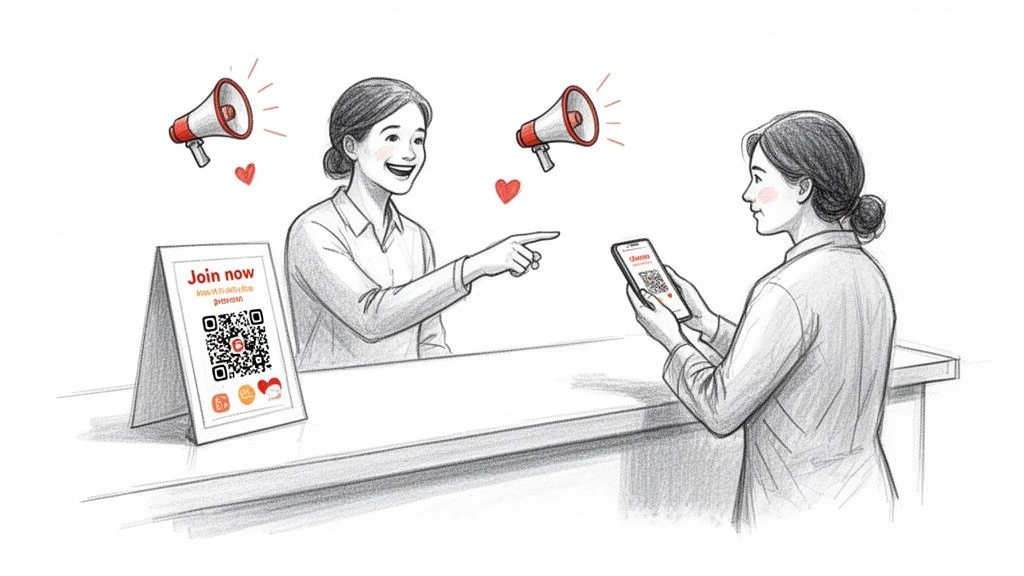
Turn Your Team into Your Biggest Promoters
Your staff is your most powerful marketing tool. An enthusiastic employee at checkout is far more persuasive than any poster. But they can only sell it if they genuinely understand its value.
Before you go live, gather your team. Explain why the program is great for them, the business, and the customer.
Give them a simple, one-sentence pitch they can use. Something like: "Hey, have you joined our new rewards program? Just scan this QR code to start earning points toward a free coffee today."
Give your team a simple script that's all about the customer's benefit. Arm them with something like, "It only takes 10 seconds to sign up, and you'll get points for today's purchase."
That single sentence turns a routine transaction into a personal invitation.
Create In-Store Signage They Can't Miss
Your physical space is prime real estate. You need clear, eye-catching signs that make joining a no-brainer. This is where QR codes are your best friend.
A tool like BonusQR can generate a unique QR code for your program. Plaster it everywhere a customer has a spare moment.
- At the Register: This is non-negotiable. A small sign or table tent right by the payment terminal is your number one spot.
- On Tables or Menus: For a cafe or restaurant, a sticker on the menu gives customers something to do while they wait.
- In the Window: A decal on your front door catches the eye of people passing by, signaling that you value loyalty before they even step inside.
Your signs should have a simple, punchy call to action, like "Scan to Join & Earn Rewards!" The QR code makes the next step obvious and frictionless.
Spread the Word Online
Your online channels are perfect for building pre-launch hype and reaching customers who haven't stopped by in a while.
- Send a Dedicated Email: Draft an email to your existing customer list with an exciting subject line like "It's Here! Introducing [Your Brand] Rewards." Highlight the top benefits and include the QR code so they can join from their inbox.
- Do a Social Media Blitz: Create posts for Instagram, Facebook, etc. Use great visuals and short, sweet copy: "Your loyalty now comes with perks! ✨ Scan the QR code in our bio to join our new rewards program."
Hitting your audience from a few different angles ensures they see the news whether they’re in your store, checking their email, or scrolling their feed.
Step 5: Track, Adjust, and Improve
Your loyalty program is live! But the launch is just the beginning. The real magic happens now, in tracking what’s working and making smart tweaks along the way. For a small business, this means focusing on a few key numbers that tell a clear story.
Find Your North Star Metrics
Instead of getting overwhelmed by data, zero in on the numbers that tie directly back to your original goals.
- Enrollment Rate: What percentage of your customers are signing up? If this is low, your sign-up process might be too complex or your in-store signage isn't visible enough.
- Redemption Rate: How many members are actually using their rewards? If people are piling up points but never cashing them in, your rewards might not be motivating enough or the process is clunky.
- Purchase Frequency (Members vs. Non-Members): The ultimate test. Are your loyalty members coming back more often than regular customers? If the answer is "yes," your program is working.
Don't look at these numbers in a vacuum. A sky-high enrollment rate paired with a rock-bottom redemption rate points to a problem with your rewards, not your marketing.
Let Your Customers Show You What They Want
The data you're collecting is a direct line into the minds of your most valuable customers. Modern platforms like BonusQR make this easy, showing you at a glance who your top members are and what they’re buying. This is pure gold.
If you run a coffee shop and notice your top members all buy your new cold brew, that’s a business opportunity. Run a "double points" weekend on that specific drink or feature it in your next newsletter. You’re no longer guessing what customers want; they’re showing you with every scan.
A Simple Rhythm for Getting Better
You don’t need to reinvent the wheel every month. A simple quarterly check-in is all it takes to keep your program fresh and effective.
Set aside an hour every three months and ask these questions:
- What’s a Hit? Look at your most-redeemed rewards. Lean into what’s already popular.
- What’s a Miss? If a reward is gathering dust, it’s not motivating anyone. Don’t be afraid to pull it and test something new.
- What Should We Try Next? Based on spending patterns, what’s one small thing you can test? Maybe a new "surprise and delight" reward or a limited-time bonus to get people in during a slow week.
This simple cycle of measure, learn, and adjust is the secret sauce. It’s how you ensure your loyalty program grows right alongside your business and keeps delivering real results.
Got Questions? We've Got Answers
Thinking about launching a rewards program? Most small business owners have a few key questions. Here are the most common ones we hear, with straightforward answers.
How much will a rewards program cost?
A lot less than you think. While custom-built programs can run into thousands, modern digital solutions have made loyalty programs incredibly affordable. QR-code based apps like BonusQR let you get started with a professional-grade system for a small monthly fee, with no expensive hardware or plastic cards required.
Will this slow down my checkout line?
No. The best programs are virtually invisible at checkout. Modern systems are designed for speed. With a QR code, a customer can sign up or check in with a quick phone scan that takes seconds. It’s seamless for your staff and painless for your customers, so your line keeps moving.
How do I know if it's actually working?
Focus on a few simple metrics. Keep an eye on your sign-up rate (how many people are joining) and your redemption rate (how many are using their rewards). But the most important metric is this: compare the spending and visit habits of your members versus non-members. If your members visit more often and spend more money, your program is a winner. It's as simple as that.


