For small business owners, from a thriving coffee shop to a bustling local salon, a branch manager is more than just an employee. They are the heart of your daily operations, the guardian of your customer relationships, and the driver of your future growth. A bad hire can sink morale and lose loyal customers you've spent years winning over. A great one can transform your location into a profitable community hub.
But how do you spot a true leader in a 30-minute interview? It starts with asking the right questions. This guide goes beyond generic queries to give you a strategic hiring advantage. We’ll cover 10 critical branch manager interview questions that reveal a candidate's true potential to drive customer loyalty, leverage simple technology, and motivate a team-skills essential for turning your business goals into reality.
To get the most out of your hiring process, it helps to understand different types of interview question. Knowing how to use situational, behavioral, and technical questions will help you gather more insightful answers.
This article gives you more than just a list. We provide the "why" behind each question, what a strong answer looks like, and the red flags to watch for. This is your framework to hire a manager who will not just run your branch but grow it, one loyal customer at a time. Let's find your next leader.
1. Tell me about your experience managing multiple locations or teams
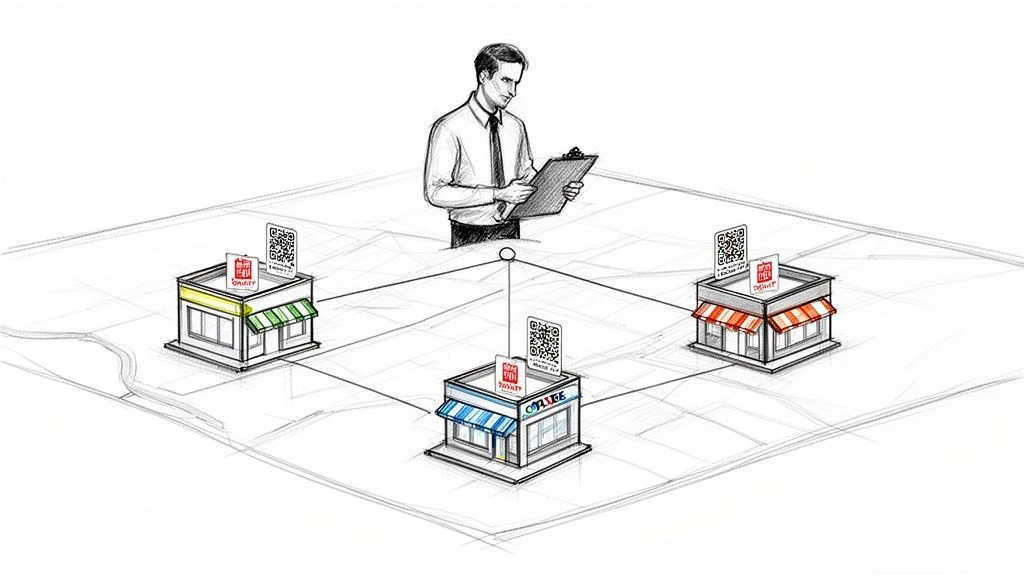
This question immediately separates candidates who can manage from those who can scale. For a small business with aspirations for a second or third shop, this question reveals if a candidate can replicate your brand’s magic consistently. You need someone who ensures a customer receives the same great service whether they visit your flagship location or a new branch across town.
A candidate's answer should address common pain points like:
- "How do I standardize operations across different locations?"
- "How can I track performance when I'm not always on-site?"
- "How do I maintain a consistent brand feel everywhere?"
A strong candidate will provide concrete results, not just a list of duties. To broaden your evaluation, consider using various essential job interview practice questions to observe their thought processes in different scenarios.
What to Listen For
- Consistency: How did they ensure every location delivered a uniform customer experience and upheld brand standards?
- Performance Metrics: Did they track sales, customer satisfaction, or employee turnover per location? Look for specific numbers.
- Problem-Solving: Ask how they handled a situation where one branch was underperforming. Did they diagnose the root cause and implement a targeted solution?
Example Strong Answer
"At my previous restaurant group, I expanded our presence from two to five locations. My first step was creating a standardized operations playbook. To unify our customer experience, I implemented a simple QR code-based loyalty system across all branches. This helped us spot that our new suburban location had 20% lower repeat business. By analyzing the data and visiting the site, I discovered a staff training gap. After some targeted coaching, their repeat customer rate matched our other locations within a single quarter."
2. How do you approach improving customer retention and loyalty?
This is one of the most critical branch manager interview questions because it cuts straight to profitability. For a small business, repeat customers are your financial bedrock. This question reveals if a candidate thinks beyond single transactions and can build a loyal community around your brand. It addresses the owner's pain point: "How do I stop losing customers and get them to come back more often?"
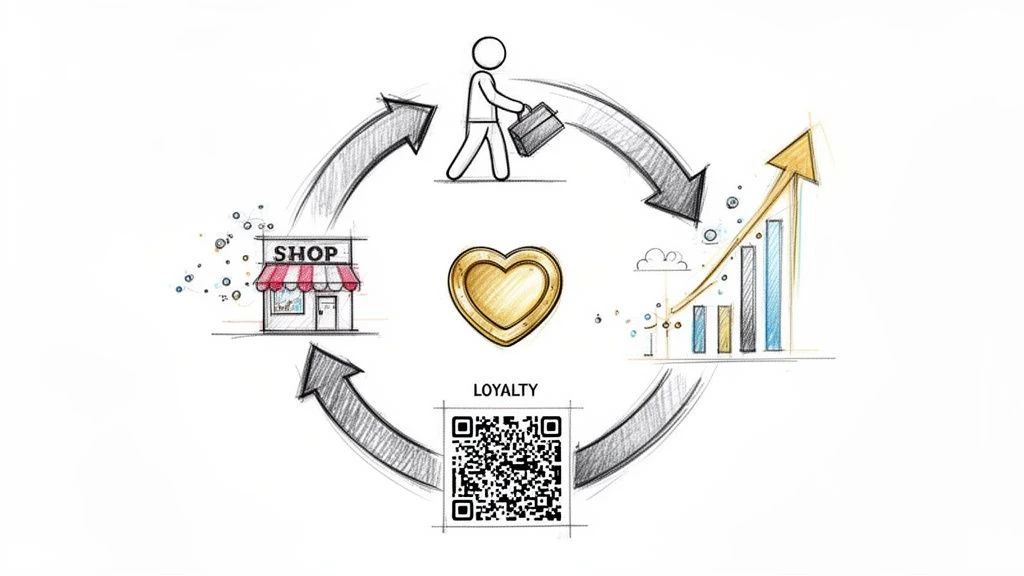
A top-tier applicant will talk about specific strategies they’ve used. They should be comfortable with customer data and show enthusiasm for using simple, cost-effective tools to make smart decisions. They understand the difference between a one-off discount and a true loyalty-building program.
What to Listen For
- Specific Metrics: Did they increase customer lifetime value (CLV) or visit frequency? Look for hard numbers, like "increased repeat visits by 30% in six months."
- Tools and Technology: What systems have they used? Experience with simple loyalty platforms like BonusQR, CRM software, or email marketing is a huge plus.
- Customer-Centric Mindset: Do they see loyalty as more than just discounts? A great manager knows excellent service is the foundation.
Example Strong Answer
"In my last role as a salon manager, I wanted to increase our client retention. The old punch cards weren't working. I introduced BonusQR, a simple QR code loyalty app, because it was affordable and easy for both staff and clients. We created a tiered system: after five visits, clients unlocked a 10% product discount. We saw a 35% increase in retention over one year, and our average client visit frequency went from every eight weeks to every six. It proved that a simple, modern tool can build powerful customer habits."
3. Describe your experience with technology and point-of-sale systems
Modern management is about data, not just people. This question gauges a candidate's comfort with the digital tools that drive efficiency and growth. For a small business owner, a manager who sees technology as an opportunity, not a burden, is essential. They will be the one to successfully implement a tool like a digital loyalty program that boosts retention without creating headaches for your team. This addresses the common fear: "Will my team be able to handle a new system?"
A candidate's answer reveals their learning agility and their ability to champion new systems. You want a leader who can not only learn a platform but also get the entire team excited and proficient.
What to Listen For
- Learning Agility: How have they learned new software in the past? Look for examples of proactive, self-directed learning.
- Teaching Ability: Can they explain a technical process in simple terms? Ask how they would train a non-technical employee.
- Problem-Solving with Tech: Listen for stories where they used technology to solve a business problem, like identifying sales trends or improving efficiency.
- Attitude: Do they speak about technology with curiosity and enthusiasm, or do they sound hesitant and resistant to change?
Example Strong Answer
"As a coffee shop manager, we introduced a new digital loyalty program using BonusQR. I became the in-house expert, learning the platform in a day. I then created a one-page guide with screenshots for my team and held a short, hands-on workshop. To drive adoption, I ran a friendly competition for the first month to see which barista could sign up the most customers. We hit our 90-day adoption target in just 30 days because the system was simple and the team felt confident using it."
4. How do you balance short-term revenue goals with long-term customer relationship building?
This question separates strategic thinkers from purely transactional managers. It assesses whether a candidate understands that building a loyal customer base is the key to sustainable growth. A manager focused only on this week's numbers might resist a loyalty program because it offers discounts. A forward-thinking manager knows that a small, initial investment in a loyalty program like BonusQR can create customers with 4x the lifetime value. This is a critical branch manager interview question for gauging business maturity.
This addresses the owner's dilemma: "Should I offer discounts to get sales now or invest in a program for later?"
What to Listen For
- Patience and Planning: Do they talk about a multi-month plan? A candidate who invested time to set up a system and waited for results shows foresight.
- Customer Lifetime Value (CLV): Does the candidate mention CLV? This shows they understand the financial benefit of repeat business.
- Metrics and Timelines: They should be able to speak about specific metrics, like repeat purchase rate, and the timeline it took to see an impact.
- Communicating ROI: How did they justify the short-term cost to leadership? A great manager can articulate why an initial investment will pay off.
Example Strong Answer
"In my last role, we were under pressure to increase weekly revenue. Instead of a one-off discount, I proposed a long-term strategy with a simple QR code-based loyalty program. For the first two months, our margins on enrolled clients were slightly lower. However, I tracked our progress and showed the owner that their visit frequency increased by 30%. By month four, the repeat business generated an 18% lift in overall revenue, far exceeding the original goal and building a much more stable customer base for the future."
5. Walk me through how you would handle a customer complaint or negative review related to your loyalty program
A loyalty program is only as good as the customer's experience. This question tests a candidate's crisis management, empathy, and problem-solving skills. For a small business, a confusing loyalty system can do more harm than good. This question reveals if a potential manager will defend and improve your program or simply dismiss complaints. It speaks to the fear: "What if my loyalty program backfires and upsets customers?"
A great candidate sees a complaint as free, valuable feedback. Their response should show a commitment to fixing the immediate issue for the customer while also looking for the root cause to prevent it from happening again.
What to Listen For
- Systematic Thinking: Do they just offer a quick fix, or do they investigate why the problem occurred?
- Emotional Tone: Do they sound defensive and blame the user, or do they show empathy and take ownership?
- Relationship Repair: Do they mention following up with the customer to ensure they're satisfied and to rebuild trust?
- Turning a Negative into a Positive: The best candidates will talk about using the feedback to improve the system.
Example Strong Answer
"First, I'd thank the customer for bringing the issue to our attention. I'd apologize for their frustrating experience and assure them I'm going to personally resolve it. My immediate priority is making it right for them-manually adding rewards and maybe offering a small bonus for their trouble.
Next, I'd investigate the 'why.' Was it a staff training error, a tech glitch, or confusing rules? I'd try to replicate the issue. Once I identify the root cause, I'd work on a permanent fix, like creating a simple guide for staff or reporting a bug. Finally, I'd follow up with the original customer to let them know what we've done. This shows we value their feedback."
6. How do you train and motivate your staff to actively promote customer loyalty programs?
A loyalty program is only as effective as the team promoting it. This question reveals a candidate's ability to execute on the ground. You need a manager who can turn staff into genuine advocates for your program. The success of a simple tool like a QR code loyalty system depends entirely on cashiers and servers encouraging sign-ups. This question answers the vital concern: "How do I get my team to actually care about and promote our programs?"
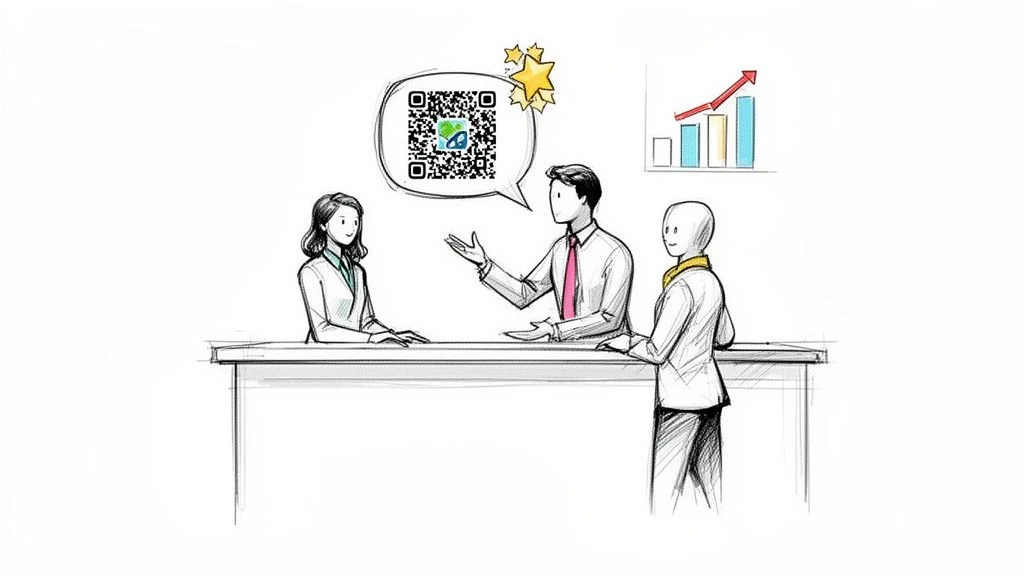
A top candidate will describe a complete system of training, motivation, and belief-building. They understand that for staff to sell a program, they must first believe in it. This is one of the more telling branch manager interview questions for assessing internal marketing and leadership skills.
What to Listen For
- Training Methods: Did they use role-playing, create scripts, or hold regular huddles? Specific methods show they are a hands-on trainer.
- Motivation & Incentives: Look for creative incentives. Did they use team competitions, individual bonuses, or non-monetary rewards?
- Belief Building: How did they get staff to "buy in"? A great manager explains the "why"-connecting it to job security, business growth, and customer benefits.
- Problem-Solving: Ask how they handled resistant staff members. Did they offer coaching or find the root of the resistance?
Example Strong Answer
"In my last role, adoption for our new QR code loyalty app was stuck at 20%. I realized the staff saw it as just another task. I held a team meeting and explained how more repeat customers lead to more hours and better tips for everyone. Then, I launched a simple incentive: a $25 gift card for the most sign-ups each week. I also trained them on a simple script: 'Are you on our loyalty program yet? You get every 10th coffee free.' Within three months, our adoption rate jumped to over 65%."
7. Tell me about a time you analyzed customer data to make a business decision. What did you learn?
This question assesses a candidate's data literacy. For a small business, data from a simple loyalty program is a goldmine. This question determines if a potential manager can find actionable patterns and turn them into profitable decisions. It tackles the business owner's question: "How can I use the customer information I'm collecting to actually make more money?"
A skilled candidate will connect data analysis directly to a business outcome. They will explain not just what they found, but how they used that finding to make a tangible change, like adjusting staffing or refining a promotion.
What to Listen For
- Specific Metrics: Did they analyze visit frequency, average spend, or item popularity?
- Tools and Process: What tools did they use? Even simple spreadsheets are fine if they can explain their thought process.
- Business Impact: Can they quantify the result? Look for figures like an 8% increase in margins or a 15% boost in customer retention.
- Communication: How did they present these findings? A manager must be able to translate data into a compelling story.
Example Strong Answer
“At my last salon, our BonusQR loyalty app showed a wealth of data. I noticed that clients who visited on Wednesdays had a lifetime value nearly double that of our weekend clients, but our staffing was heaviest on Saturdays. I dug deeper and found our Wednesday regulars were often booking multiple high-margin services. Based on this, I shifted one of our top stylists to work Wednesdays and created a 'Wellness Wednesday' promotion. Over the next six months, our Wednesday revenue increased by 30%.”
8. How do you stay informed about industry trends and best practices in your field?
This question reveals whether a candidate is proactive or reactive. You need a branch manager who is curious and committed to continuous learning. Their answer shows if they will simply maintain the status quo or actively seek improvements. For a small business, staying ahead of customer expectations is a major competitive advantage. This question uncovers a candidate's passion and engagement with their profession.
This is one of the more telling branch manager interview questions because it shows they won't let your business become stagnant.
What to Listen For
- Specific Sources: Do they name specific industry blogs, publications, or podcasts? Vague answers are a red flag.
- Applied Learning: Look for evidence of them putting knowledge into action. How did something they learned translate into a tangible improvement?
- Knowledge Sharing: A great manager doesn't just learn; they teach. Ask how they share insights with their team.
- Customer Focus: Do their learning habits connect back to improving the customer experience?
Example Strong Answer
"I follow several hospitality blogs and am an active member of a regional restaurant association. Last year, I read about the trend in contactless rewards and personalized offers. At the time, we were using punch cards. I pitched moving to a QR code system that could also capture customer birthdays. After getting approval, I led the implementation with BonusQR. We used it to send automated birthday rewards, which customers loved. This single change, inspired by industry reading, led to a 15% increase in visits during customers' birthday months."
9. Describe a time you had to implement a new company policy or initiative you weren't initially convinced about. How did you handle it?
This question tests professionalism and adaptability. You need a manager who can execute a directive with commitment, even with personal reservations. For a small business owner, this might involve rolling out a new digital loyalty program. This question reveals if a candidate will become a roadblock or a champion for your vision.
A top-tier answer will demonstrate maturity. The candidate should acknowledge their initial skepticism but focus on how they professionally committed to the rollout. This question is one of the more insightful branch manager interview questions for gauging how a candidate handles top-down directives.
What to Listen For
- Professionalism: Did they express doubts constructively but present a united front to their team? Avoid candidates who bad-mouthed the policy.
- Execution Strategy: How did they translate the policy into actionable steps for their team? Did they create a training plan?
- Mindset Shift: Did they give the initiative a fair shot and track its success, eventually seeing its value?
Example Strong Answer
"Corporate decided to switch to a new, more expensive organic product line. I was worried it would price out our clients. I voiced my concerns to my regional director, who explained the long-term brand strategy. After that, I fully committed. I held a team meeting to explain the 'why' behind the change, focusing on the superior quality. We created scripts to handle price questions and offered a small discount on the first purchase. After two months, we found that we attracted a new, higher-spending demographic, and our retail sales increased by 15%."
10. What metrics do you track to measure branch success, and how would you add loyalty program metrics to that mix?
This is one of the most revealing branch manager interview questions because it separates managers who just track sales from those who understand what drives sustainable growth. It shows whether they will treat your loyalty program as an integral part of your business strategy or just a side project. It answers the owner's core question: "How will I know if my new loyalty program is actually working and making me money?"
A candidate's answer reveals their business acumen. A manager who can connect loyalty program engagement directly to an increase in average ticket size is invaluable.
What to Listen For
- Core KPIs: Do they immediately list critical business metrics like profit margin, average transaction value, and customer retention rate?
- Integrated Thinking: How do they connect loyalty metrics to those core KPIs? They should explain how tracking repeat visits impacts overall revenue.
- Value-Driven Metrics: Instead of just "enrollment numbers," a strong candidate will suggest tracking the spending difference between loyalty and non-loyalty customers.
- Customer Lifetime Value: Listen for any mention of customer lifetime value (CLV). A manager who thinks in terms of CLV is focused on long-term relationships.
Example Strong Answer
"My current dashboard focuses on daily gross revenue, profit margin, average ticket size, and customer retention rate. I see a loyalty program as a direct lever to improve at least three of those. I would integrate metrics by tracking the repeat visit frequency of program members versus non-members to directly measure impact on retention. I’d also analyze the average transaction value of members. The goal is to prove ROI by showing that as loyalty engagement goes up, so do our core profit and retention metrics."
Turn Interviews into Insights, and Insights into Growth
Hiring the right branch manager is one of the most important decisions you will make. This role isn't just about managing schedules; it's about leading your team, connecting with your community, and driving real growth. Using these targeted branch manager interview questions, you can dig deeper into a candidate's actual experience and problem-solving abilities. You can assess not just what they have done, but how they did it and why it mattered.
Your Actionable Next Steps
- Prioritize Problem-Solvers: Look for candidates who tell stories of real-world challenges, detailing their thought process, actions, and lessons learned.
- Seek a Tech-Forward Mindset: A modern manager must be comfortable with technology. Their attitude toward new tools like loyalty platforms is a strong indicator of adaptability.
- Insist on a Loyalty Focus: The most valuable managers understand that success is about building a base of loyal, repeat customers. This is a non-negotiable skill.
Ready to Empower Your Next Leader?
The hiring process doesn't end when the offer letter is signed. The most common pain point for new managers is being handed ambitious goals without the right tools. Your next great hire will be eager to boost customer loyalty and team morale. Empower them from day one.
BonusQR is the simplest, most cost-effective QR code loyalty program designed for small businesses. It's easy for your staff to learn, simple for your customers to use, and provides the data your new manager needs to make smart decisions.
Start your free trial today and give your new branch manager the tool they need to succeed from day one. Build loyalty, not complexity.


