As a small business owner, you're facing a tough reality: your customers have endless choices, and the old paper punch card isn't enough to keep them coming back. You pour your heart into your business, but watch one-time visitors and even regulars drift away to competitors. Your core problem isn't just about rewards; it's about creating a genuine connection that makes customers excited to choose you, every single time. How do you build that deep, lasting loyalty without the budget of a big corporation?
This guide provides the answer. A gamified loyalty program turns customer engagement into a fun, interactive experience. It uses simple game mechanics-like points, challenges, and badges-to tap into the human desire for achievement and make supporting your business genuinely rewarding. It’s the secret to transforming passive buyers into an active, enthusiastic community.
Why Your Punch Cards Are Failing and What to Do About It
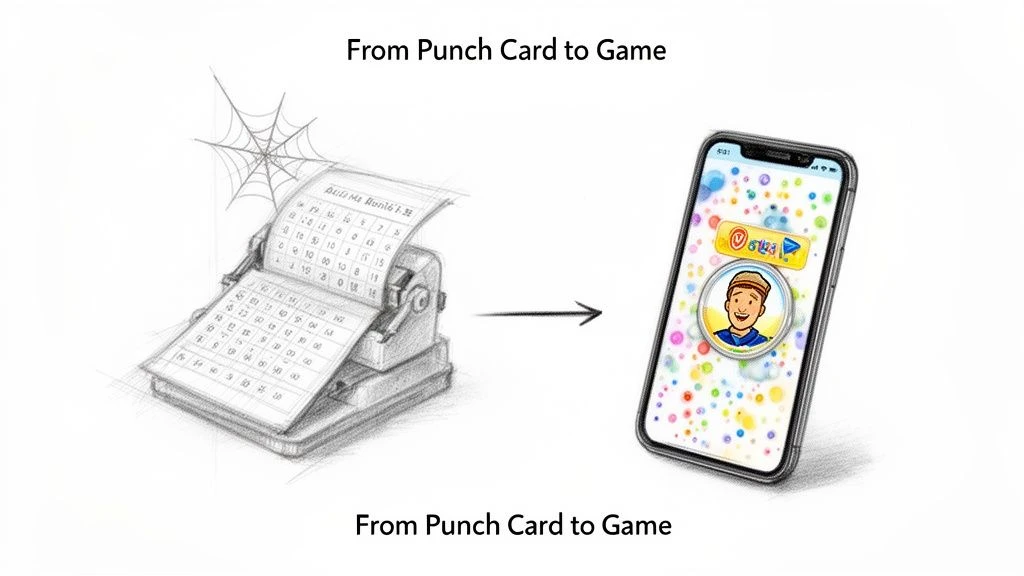
That crumpled, forgotten punch card at the bottom of a wallet? It’s a symptom of a loyalty strategy that's passive, transactional, and disconnected from today's customer. Traditional methods fail because they don’t forge an emotional connection or make a customer feel valued beyond the sale. They're a one-way street in a world that demands a two-way conversation.
The central challenge for small businesses is cutting through the noise. You need more than discounts; you need to create an experience. Customers crave recognition and a sense of belonging. They want to feel like part of something special, not just another transaction.
The Shift From Transaction to Interaction
This is where a gamified loyalty program changes everything. It’s an active, dynamic strategy that reframes the customer experience from a simple purchase into a fun, rewarding journey. By weaving in game mechanics, you tap into your customers' natural drive for progress, achievement, and recognition.
This modern approach bridges the engagement gap and turns one-time visitors into regulars who can’t wait to tell their friends about you. The numbers are compelling: businesses using gamified loyalty programs see a remarkable 22% jump in customer retention. More importantly, 87% of loyalty programs that use gamification retain more customers than those that don't.
Your customers are already playing games on their phones. A gamified loyalty program simply meets them where they are, transforming their support for your business into an activity they enjoy.
Let's look at a quick comparison to see just how different these two approaches are.
Traditional vs. Gamified Loyalty Programs
| Feature | Traditional Loyalty Program (e.g., Punch Card) | Gamification Loyalty Program (e.g., BonusQR) |
|---|---|---|
| Engagement | Passive & Transactional | Active & Interactive |
| Customer Feeling | Acknowledged | Valued & Excited |
| Motivation | Delayed Gratification (buy 10, get 1 free) | Instant Feedback (points, badges, streaks) |
| Memorability | Low (easy to forget or lose) | High (fun, memorable interactions) |
| Data & Insights | Minimal to None | Rich Data on Customer Behavior |
| Personalization | One-Size-Fits-All | Highly Customizable Challenges & Rewards |
The difference is clear. While traditional methods check a box, gamification creates a vibrant, two-way relationship that keeps people coming back.
Making Gamification Simple and Affordable
The word "gamification" might sound complex or expensive, but for a small business, it's about using simple, cost-effective tools to create moments of delight. The goal isn't to build a video game; it's to make loyalty fun.
This is precisely where a solution like BonusQR comes in. It delivers all the powerful benefits of a gamified system without the hefty price tag or technical headaches.
Instead of a boring punch card, imagine your customers:
- Building a "visiting streak" for coming in every week.
- Unlocking a "Secret Menu" badge after trying five different items.
- Getting a surprise bonus reward on a slow Tuesday.
These are the small, interactive moments that build lasting loyalty and give customers a real reason to choose you. It’s time to move beyond paper and learn how to fix your broken punch card loyalty program without breaking the bank.
Designing Your Game for Fun and Retention
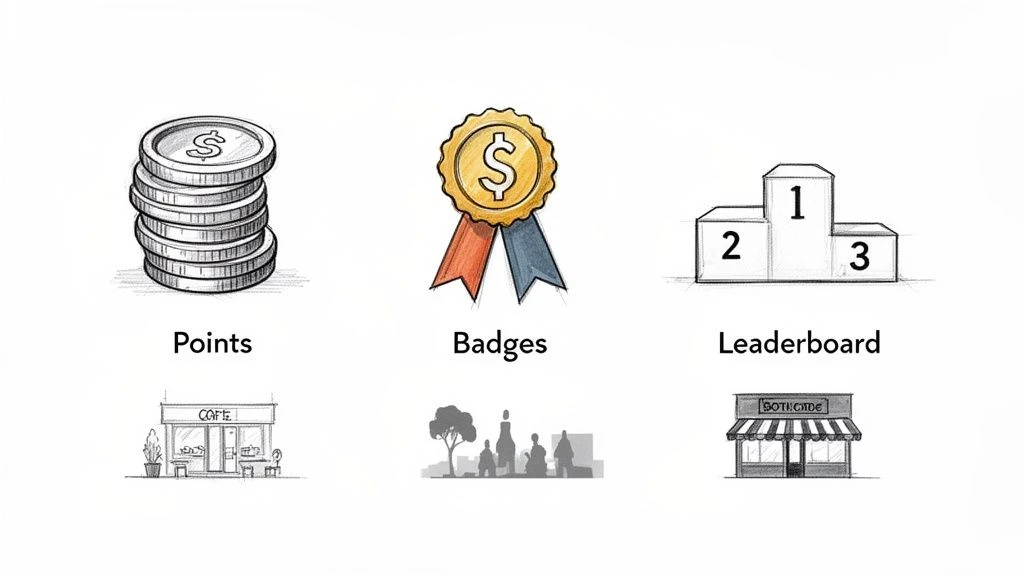
Ready to build a program that captivates customers and keeps them coming back? The secret isn't complicated marketing theory. It’s about leveraging three powerful pillars that create a cycle of motivation and repeat business: Points, Badges, and Leaderboards. Let's break down how to use these elements to create a system that feels exciting and rewarding.
The Foundation: Points That Actually Matter
Points are the currency of your loyalty game, offering immediate, satisfying feedback. But a poorly designed system feels like a slow, uninspiring grind. The trick is to make earning points feel both achievable and worthwhile.
Move beyond the basic "one dollar equals one point" model. Get creative and tie points to specific actions that help your business grow.
- Local Boutique? Offer double points for shopping a new collection during launch week to drive buzz and immediate sales.
- Salon or Service Business? Award bonus points when a client pre-books their next appointment, locking in future revenue.
- Neighborhood Cafe? Give extra points for purchases during your slowest hours to even out daily customer traffic.
You’re no longer just rewarding spending-you're actively guiding customer behavior in a way that benefits everyone.
Badges: Unlocking That Feeling of Accomplishment
While points provide tangible value, badges deliver emotional value. They are digital trophies that celebrate a customer's achievements, tapping directly into our need for recognition and status. A thoughtfully designed badge makes a customer feel seen and special, creating a sense of pride a point balance can never replicate.
Badges turn routine actions into celebrated milestones. They give customers a story to tell about their relationship with your brand-a story of mastery, exploration, and belonging.
Think about the possibilities for your business:
- "Weekend Warrior" Badge: For a hardware store customer who visits every Saturday for a month.
- "Menu Explorer" Badge: For the restaurant guest who has tried every appetizer.
- "Early Bird" Badge: For a gym member who consistently checks in before 7 AM.
These personal milestones forge a deeper connection. To dive deeper into the psychology, check out our article on how cafe rewards programs keep customers coming back.
Leaderboards: Building Community Through Friendly Competition
Leaderboards are your secret weapon for making loyalty a social, shared experience. By introducing a dose of friendly competition, you can massively drive engagement. The key is to keep it light and accessible, giving everyone a fair shot at the top spot. A vibrant community is often at the heart of the best programs, and a resource on building an online community can offer great ideas.
Try mixing up leaderboards to keep things fresh:
| Leaderboard Type | How It Works | Why It's So Effective |
|---|---|---|
| Weekly Points Leader | Ranks customers by points earned in the last 7 days. | Resets weekly, giving new and infrequent customers a chance to win. |
| Referral Champion | Tracks who has brought in the most new members. | Turns your biggest fans into your most effective marketing team. |
| Challenge Conqueror | Highlights who has completed the most unique challenges this month. | Rewards deep engagement and exploration, not just high spending. |
When you bring these three elements together-rewarding Points, celebratory Badges, and engaging Leaderboards-you’re no longer just retaining customers. You're building an enthusiastic community invested in your success.
Crafting Challenges and Rewards Customers Actually Want
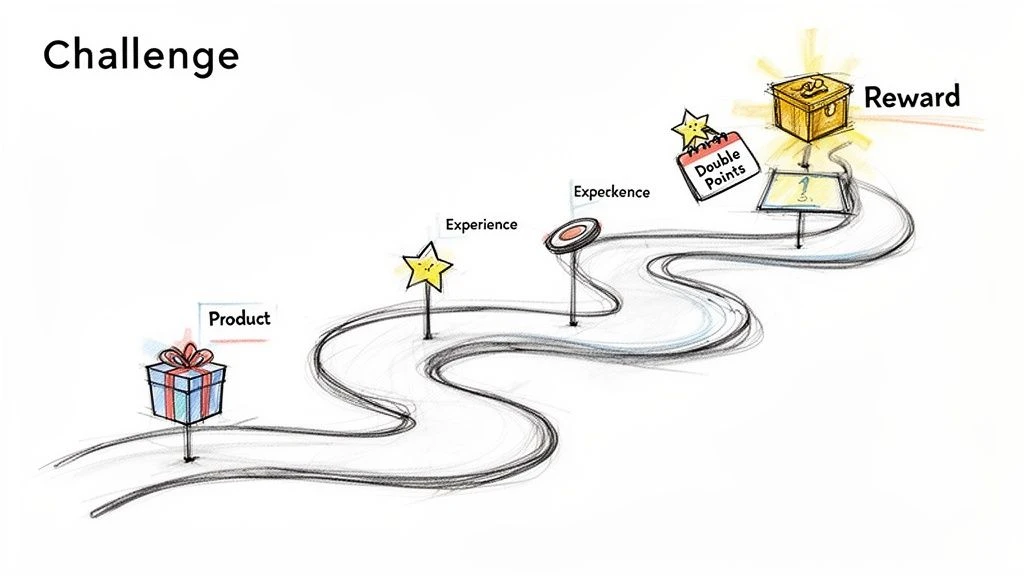
The secret to a loyalty program people love? It’s the chase. The real excitement is a journey filled with challenges and rewards that are genuinely worth the effort. Generic discounts are easy to ignore, but a clever, personalized perk can turn a casual customer into a devoted fan. Your goal isn't just to reward loyalty-it's to inspire it by ditching the one-size-fits-all approach.
Moving Beyond the Standard Discount
Let's think bigger than the simple "10% off" coupon. The key is to blend different types of rewards to keep the experience fresh and motivating.
We break rewards into two categories:
- Transactional Rewards: Tangible perks with clear monetary value (e.g., a free product, a dollar-off coupon). They are the reliable workhorses of any program.
- Experiential Rewards: The magic happens here. These rewards offer status, exclusive access, or unique experiences money can't buy (e.g., VIP access, members-only events).
The most successful programs weave them together. A customer might redeem points for a free coffee (transactional) while working toward a "Coffee Connoisseur" badge that unlocks early access to seasonal drinks (experiential).
Designing Challenges That Drive Business Goals
Challenges are your secret weapon for guiding customer behavior in ways that directly help your business. Instead of just waiting for people to spend money, you can actively encourage actions that solve real problems, like slow weekdays or low awareness of high-margin products.
The best challenges reward engagement, not just spending. They make customers feel like smart players unlocking special achievements, not just opening their wallets.
Here are a few real-world ideas:
- For a Salon: Launch a "Try a New Service" challenge with bonus points to nudge clients toward higher-margin services like coloring or treatments.
- For a Cafe: Create a "Pastry Passport" where customers earn a stamp for trying every pastry, driving sales across your entire baked goods range.
- For a Retail Boutique: Introduce a "Weekday Style-Up" challenge with double points from Tuesday to Thursday to boost foot traffic on quiet days.
These feel less like sales tactics and more like fun missions, making every interaction more memorable.
The Power of Personalization in Rewards
Personalization elevates a good program to a great one. It’s about using purchase data to offer challenges and rewards that make your customers feel seen. The financial impact is staggering: members who redeem personalized rewards spend 4.3 times more annually than those who redeem generic ones. It's no surprise that top loyalty programs can boost revenue by 15-25% each year, with personalization as a key driver.
This doesn't require complex technology. It can be as simple as:
- Noticing a customer always buys dark roast and offering a challenge to "Try Our New Espresso Blend for a Surprise Reward."
- Seeing a client only books afternoon appointments and sending an offer for bonus points if they book a morning slot.
This personal touch is a massive competitive advantage. Explore more strategies in our guide to using a loyalty program app for smart rewards.
With a tool like BonusQR, setting up these dynamic challenges and personalized rewards is incredibly straightforward. You can transform your loyalty program from a simple expense into a powerful engine for building a true community.
Launch Your Program and Get Your First 100 Members
You've built a fantastic gamified loyalty program, but a brilliant program no one knows about is just a great idea. The real challenge is getting those first crucial members signed up without a huge marketing budget. A powerful launch is about creating infectious energy and making it ridiculously easy for people to join. Here's your practical, low-cost playbook for getting your first 100 members excited to play.
Empower Your Staff to Be Program Ambassadors
Your team is your single greatest asset for a successful launch. Their genuine excitement is contagious, and a personal invitation from a trusted staff member is more powerful than any poster.
Your goal is to turn them into confident evangelists.
- Train them on the "why." Explain why the program is great for the customer-the surprise rewards, the fun challenges, the insider feeling.
- Weave it into the conversation. A simple, friendly question like, "Are you playing our rewards game yet? You can start earning points right now with a quick scan," works wonders.
- Spark some friendly competition. Offer a small bonus for the employee who signs up the most members in the first week to add a jolt of energy.
Promote Smart Inside Your Four Walls
Your physical location is prime promotional real estate. Every surface is a chance to invite customers into the game. With a tool like BonusQR, the entire sign-up is a single, frictionless scan of a QR code. Your job is to put that QR code everywhere.
Think of your QR code as a doorway. Your mission is to place that doorway at every key touchpoint in the customer's journey.
Place your QR code on:
- The checkout counter: A small sign next to the payment terminal is non-negotiable.
- Receipts: Add the QR code with a line like, "Scan to turn this purchase into points!"
- Table tents or menus: Let customers join while they wait.
- Shopping bags or product packaging: This gives them a reason to connect again after they've left.
Create a Buzz with Your Digital Channels
Now, bring in the people who already love you online. Your email subscribers and social media followers are your most enthusiastic audience. For a deeper dive, see our guide on effective loyalty program onboarding and promotion.
Here’s a simple digital launch sequence:
- The Teaser (3 days before launch): Post an intriguing graphic on social media: "Something fun is coming. Get ready to play."
- The Big Announcement (Launch Day): Go live with a vibrant post explaining the program. Focus on the fun: "It's LIVE! Our new rewards game is here. Scan to join and get 100 bonus points on us!"
- The "Insider" Email: Send an email with a subject line like, "Your Invitation to the [Your Brand] Rewards Game." Clearly list the top 3 benefits and include a can't-miss QR code or button.
By combining an enthusiastic team, smart in-store signage, and a targeted digital push, you create an unstoppable launch. Hitting that first 100-member milestone doesn't just feel possible-it feels inevitable.
Measure Success and Optimize for Long-Term Growth
You’ve designed an exciting experience, but as a savvy business owner, you know the real question is: is it actually moving the needle?
The magic of a modern gamified loyalty program is in the ongoing cycle of measuring, learning, and fine-tuning. This isn't about getting lost in spreadsheets; it's about zeroing in on a few key numbers that tell the story of your program's health. By understanding that story, you can make small tweaks that lead to massive long-term results.
Key Metrics That Truly Matter
Forget vanity metrics. Success comes down to tracking numbers that directly impact your bottom line. A simple, clear dashboard-like the one in BonusQR-is all you need.
Focus on these key performance indicators (KPIs):
- Member Engagement Rate: What percentage of your members are actively earning or redeeming points? This is your program’s heartbeat.
- Reward Redemption Rate: Are people cashing in their points? If not, your rewards may not be compelling enough.
- Visit Frequency: Are loyalty members visiting more often than non-members? This is a direct measure of retention.
- Average Customer Spend: Are members spending more per visit? This shows if your program is increasing customer lifetime value.
To get these numbers growing, you need a solid launch strategy.
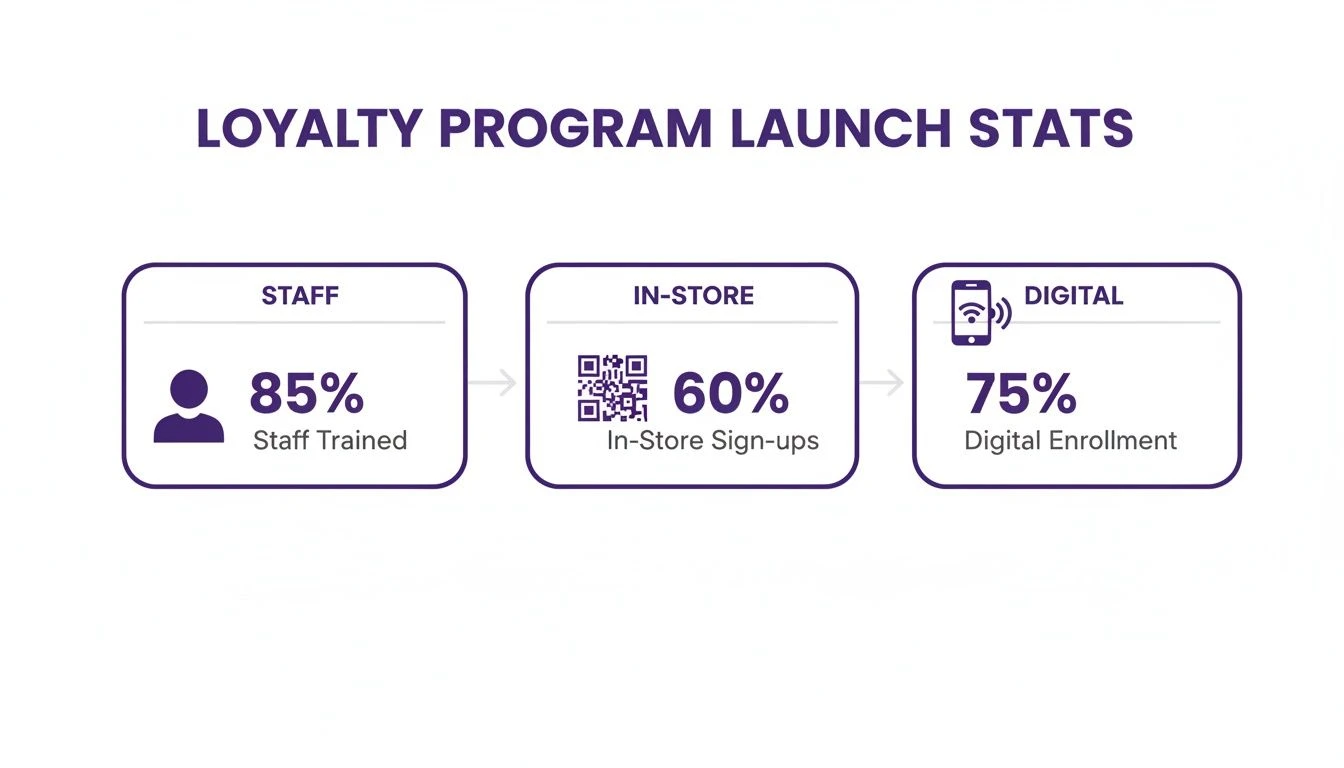
As you can see, a multi-channel launch approach-empowering your team, using in-store signage, and engaging customers online-creates the strong foundation you need for growth.
Key Metrics for Your Gamified Loyalty Program
This table breaks down the most important metrics for a small business and why they are so critical for understanding if your gamified program is working.
| Metric (KPI) | What It Measures | Why It Matters for a Small Business |
|---|---|---|
| Member Engagement Rate | The percentage of active members (earning/redeeming) in a given period. | This is your program's pulse. It tells you if your game is fun and compelling enough to keep people playing. |
| Reward Redemption Rate | How many earned rewards are actually being used by customers. | Low redemption can mean your rewards aren't desirable. High redemption means you’re successfully driving repeat visits. |
| Visit Frequency | How often loyalty members visit compared to non-members. | This is the ultimate proof of retention. An increase here directly impacts your revenue and proves the program's ROI. |
| Average Spend Per Visit | The average transaction value of a loyalty member versus a non-member. | This shows if your program is encouraging customers to spend more. It’s a clear indicator of increased customer lifetime value. |
| New Member Sign-Up Rate | The speed at which you are acquiring new loyalty program members. | A steady stream of new members is essential for long-term growth and ensures your program's reach continues to expand. |
By keeping a close eye on these numbers, you can spot trends early and make informed decisions to keep your program thriving.
Turning Data Into Actionable Insights
Once you have the data, it's time to interpret what it’s telling you and make smart adjustments. This creates a powerful feedback loop where every customer action informs your next move.
Your data isn't a report card; it's a treasure map. It shows you exactly where the friction points are and where the biggest opportunities for growth are hiding.
Here’s how to translate those numbers into real-world improvements:
- If engagement is low: Launch a surprise "Double Points Weekend" or introduce a simple challenge anyone can complete to reactivate dormant members.
- If redemption rates are poor: This is a huge opportunity. Members who redeem rewards spend 3.1 times more annually. Survey top members or add a lower-tier, high-value reward-like a free coffee-to get the ball rolling.
- If visit frequency hasn't budged: Create urgency with a "Visit 3 Times This Month" challenge or a "Weekday Warrior" badge to build a new habit.
This process of continuous improvement is what separates programs that fizzle out from those that become legendary. To truly master retention, explore broader high-impact customer retention strategies to complement your gamified approach.
Have Questions About Gamified Loyalty Programs? Let's Talk.
Stepping into the world of gamified loyalty can feel like a big move. You see the potential, but you’re also thinking about your time, budget, and whether this will truly connect with your customers. Let's walk through the most common questions from business owners just like you. The great news? Modern tools have made this powerful marketing accessible to everyone.
Is This Going to Be Overly Complicated?
This is the biggest-and most valid-worry. You're already juggling a thousand things. A well-designed gamified program should feel like fun, not a chore. The magic is in its simplicity. With a platform like BonusQR, everything runs off a simple QR code scan. For your customers, joining is as easy as pointing their phone's camera. No apps, no passwords, no friction.
And for your team? It's a lifesaver.
- No clunky hardware taking up counter space.
- No long training sessions.
- It doesn't slow down the checkout line.
Your staff can stay focused on delivering fantastic service while the system does the heavy lifting.
What’s This Going to Cost Me?
A gamified loyalty program does not have to break the bank. While corporations spend thousands on custom systems, today’s solutions are built with small business budgets in mind. Platforms like BonusQR typically run on a low-cost monthly subscription, removing the need for a huge, risky upfront investment.
When you look at the return, a smart, affordable gamified program is one of the best marketing decisions you can make. It's almost always cheaper than the constant grind of finding brand-new customers.
How Do I Dream Up Fun Challenges and Rewards?
You don't need to be a game designer. The best ideas come from your business goals and how customers already interact with you. Start simple and build from there. A perfect first challenge could be based on visit frequency, like "Visit us 3 times this month to unlock a 10% discount."
Then, look at what you offer:
- A coffee shop could run a "Pastry Passport" challenge.
- A salon could give bonus points to clients who "Book Their Next Appointment Before Leaving."
When it comes to rewards, variety is your friend. Mix in high-margin freebies, exclusive perks, and surprise bonuses. Launch with a few solid ideas, watch what people love, and get creative over time. For more mechanics, explore our complete guide to successful loyalty gamification.
What's the Real Difference Between a Digital Punch Card and Gamification?
They might both live on a phone, but their impact is worlds apart. A digital punch card is passive and predictable-the digital version of "buy 10, get one free." It doesn't inspire new habits.
A gamified program is active and dynamic. It keeps customers engaged on multiple levels:
- Progress bars give a satisfying visual of their progress.
- Surprise bonuses add a dash of fun and unpredictability.
- Badges and status levels speak to our desire for achievement.
- Varied challenges nudge customers to visit on a slow Tuesday or try a new product.
This layered approach builds a much deeper emotional connection. It’s a more powerful way to influence behavior, boost visit frequency, and grow the lifetime value of every customer.
Ready to turn loyal customers into true fans? BonusQR makes it incredibly simple and affordable to launch a powerful gamified loyalty program in minutes. Stop letting great customers walk away-start building a community that comes back for more.
Start Your Free Trial with BonusQR Today and See the Difference


