
Many small to medium business owners believe stamp card systems are relics of the past, outdated by flashy digital rewards platforms. In reality, stamp card systems remain one of the most effective loyalty tools in 2026, especially when enhanced with digital capabilities. This guide will clarify what stamp card systems are, explain why they continue to drive customer retention, and show you how to implement them effectively in your retail, hospitality, or service business to boost repeat visits and revenue.
Key takeaways
| Point | Details |
|---|---|
| Stamp cards reward repeat customers | Customers collect stamps per purchase or visit until they earn a free product or discount |
| Digital and physical options available | Modern systems offer app-based tracking alongside traditional physical cards |
| Higher retention than complex programs | Simple mechanics drive faster purchase cycles and stronger emotional engagement |
| Low implementation cost | Digital platforms require minimal setup and no POS integration |
| Measurable business impact | Analytics track redemption rates, visit frequency, and customer lifetime value |
Understanding what a stamp card system is
A stamp card loyalty program is a loyalty program where customers collect stamps or marks for repeated purchases until they earn a reward. Each time a customer makes a qualifying purchase or visit, they receive a stamp on their card. Once they collect the required number of stamps, typically ranging from five to ten, they redeem their completed card for a free item, discount, or special offer.
Traditional physical stamp cards are paper or plastic cards that businesses hand to customers. Staff members physically stamp or mark the card after each transaction. Digital stamp cards work identically but live on a customer’s smartphone through an app or digital wallet. The digital version automatically tracks stamps, eliminating lost cards and providing businesses with valuable customer data.
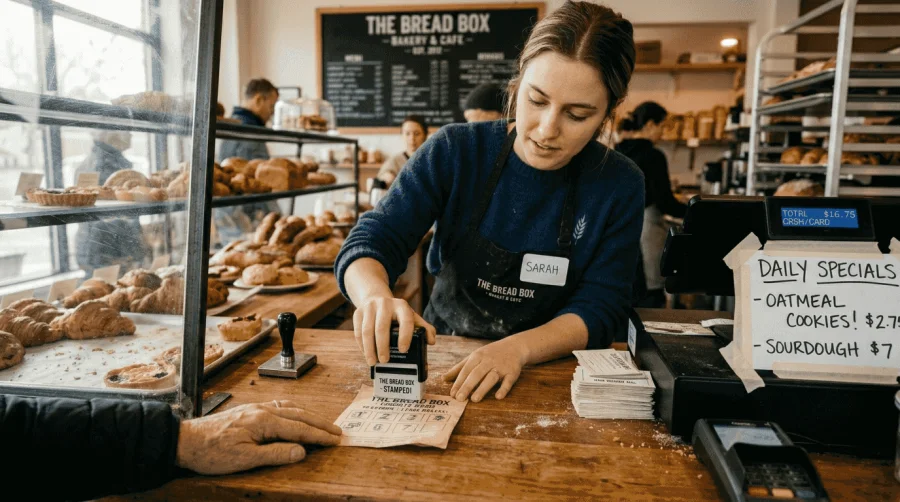
Customers earn stamps through various qualifying actions depending on your business model. Coffee shops might award one stamp per beverage purchase. Retail stores could give stamps based on dollar thresholds, such as one stamp for every twenty dollars spent. Service businesses often award stamps per visit regardless of transaction size. The flexibility allows you to design a system matching your specific business goals and customer behavior patterns.
Rewards vary widely across industries and business sizes. Common options include:
- Free product after collecting a set number of stamps
- Percentage discount on the next purchase
- Upgraded service or premium product at no charge
- Exclusive access to new products or special events
- Bonus stamps during promotional periods
Most stamp card programs include validity periods to encourage regular visits. Cards might expire after three months or six months of inactivity. Some businesses allow customers to maintain multiple active cards simultaneously, while others limit participation to one card at a time. Clear communication of these rules prevents customer frustration and ensures program effectiveness.
Benefits and comparisons of stamp card systems
Stamp card systems deliver measurable increases in customer retention and visit frequency. The visual progress of a partially filled card creates psychological momentum, encouraging customers to return sooner than they might otherwise. This gamification element taps into completion bias, where people feel compelled to finish what they started. You’ll notice customers making extra trips specifically to fill their cards rather than visiting competitors.
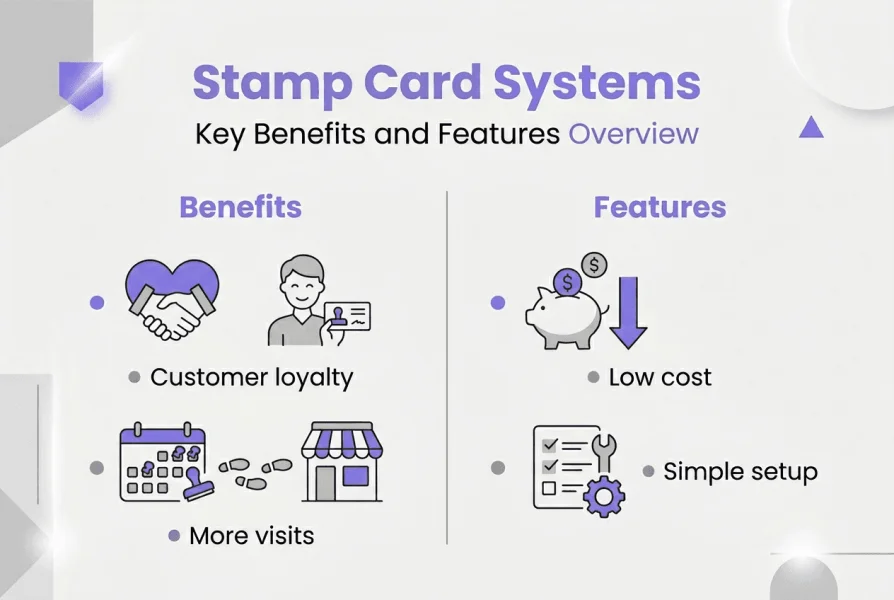
Implementation costs remain remarkably low, especially for digital solutions. Physical cards require only printing expenses, typically pennies per card. Digital platforms eliminate even this minimal cost while adding tracking capabilities. Unlike complex points systems requiring expensive POS integration, stamp cards work independently of your existing technology infrastructure. Staff can manually award stamps through a simple app interface, making the system accessible to businesses of all technical skill levels.
Stamp card loyalty programs drive repeat visits more effectively than cashback programs in certain retail and hospitality contexts. The comparison reveals important distinctions:
| Feature | Stamp Card | Cashback | Points System |
|---|---|---|---|
| Customer understanding | Immediate and intuitive | Requires calculation | Complex accumulation rules |
| Reward visibility | Visual progress on card | Abstract percentage | Opaque point values |
| Purchase motivation | Strong completion drive | Moderate savings appeal | Weak unless high spender |
| Implementation cost | Very low | Moderate to high | High |
| Data collection | Basic to advanced | Advanced | Advanced |
The emotional satisfaction customers derive from stamp cards exceeds that of percentage-based rewards. Receiving a physical or digital stamp provides immediate gratification and tangible acknowledgment of loyalty. Cashback feels distant and abstract until redemption. Points systems confuse customers who struggle to understand point values or redemption thresholds. Stamp cards eliminate this cognitive load through simple one-to-one correspondence between actions and progress.
Stamp cards compress purchase cycles by creating artificial urgency. A customer with eight stamps on a ten-stamp card will visit sooner to complete their reward than a customer with 800 points in a 1000-point system. The proximity to completion triggers action. You can amplify this effect through strategic design, such as offering double stamp days or bonus stamps for specific products, accelerating the reward cycle and increasing transaction frequency.
Pro Tip: Set your stamp requirement based on your average customer visit frequency. If customers typically visit once per week, a ten-stamp card creates a ten-week engagement cycle. Adjust the number to match your desired loyalty timeline and ensure rewards feel achievable but valuable.
How to implement a stamp card system effectively in your business
Start by assessing your customer base and business objectives. Calculate your average transaction value, typical customer visit frequency, and current retention rate. These metrics determine your optimal stamp earning structure and reward value. A coffee shop with daily customers needs a different approach than a salon with monthly clients. Your reward should represent genuine value, typically equivalent to 10-15% of the total stamps collected, ensuring profitability while motivating participation.
Choose between physical, digital, or hybrid systems based on your customer demographics and operational capacity. Physical cards work well for older demographics or businesses where customers prefer tangible items. Digital solutions appeal to tech-savvy customers and provide superior tracking capabilities. Digital stamp card programs can be customized to fit various industries including retail, cafes, grocery stores, and services. Hybrid approaches offer both options, maximizing participation across diverse customer segments.
Follow these implementation steps for maximum impact:
- Design your reward structure with clear, simple rules that staff can explain in under 30 seconds
- Create visually appealing card designs that reinforce your brand identity and stand out in wallets or phone screens
- Set up tracking systems whether paper logs for physical cards or digital dashboards for app-based programs
- Train every staff member on program mechanics, emphasizing enthusiasm when awarding stamps to enhance customer experience
- Launch with promotional incentives such as bonus stamps for sign-ups or double stamps during the first week
- Promote the program through in-store signage, social media, email newsletters, and receipt messaging
- Monitor redemption rates and customer feedback, adjusting reward values or stamp requirements as needed
Digital platforms transform stamp cards from simple retention tools into comprehensive customer intelligence systems. You gain insights into peak visit times, popular products, customer lifetime value, and redemption patterns. This data informs inventory decisions, staffing schedules, and marketing campaigns. Retail loyalty applications and coffee shop loyalty solutions demonstrate how industry-specific customization enhances program effectiveness.
Integrate your stamp card program with broader marketing initiatives. Send push notifications when customers are one stamp away from rewards, driving immediate visits. Offer birthday bonus stamps to celebrate special occasions. Create seasonal stamp card variations with limited-time rewards generating urgency. The service industry loyalty application shows how service businesses leverage these features to maintain consistent customer engagement between longer purchase cycles.
Pro Tip: Award the first stamp immediately upon enrollment, even before the first qualifying purchase. This “endowed progress effect” increases program completion rates by giving customers a head start and reducing perceived effort required to earn rewards.
Key success factors and common pitfalls to avoid
Simplicity and clarity separate successful stamp card programs from abandoned ones. Your entire program should fit on a business card-sized explanation. Customers should never need to ask questions about earning or redemption rules. Complex tiering systems, exclusions, or conditional stamps create friction that kills participation. The best programs use consistent earning mechanisms: one purchase equals one stamp, every time, no exceptions.
Reward redemption must be effortless and immediate. Customers completing their cards expect instant gratification. Staff should celebrate redemptions enthusiastically, reinforcing positive associations with your brand. Delays, restrictions, or complicated redemption processes destroy the goodwill you built through the earning phase. Many businesses fail to engage customers long-term due to lack of easy redemption processes or unclear reward structures.
Avoid these common mistakes that undermine program effectiveness:
- Setting stamp requirements too high, making rewards feel unattainable and discouraging participation
- Offering rewards with insufficient perceived value, failing to motivate repeat visits
- Neglecting staff training, resulting in inconsistent stamp awarding and customer confusion
- Implementing expiration policies without clear communication, creating negative customer experiences
- Failing to track program performance, missing opportunities to optimize reward structures
- Overcomplicating rules with exclusions, blackout dates, or product restrictions
Staff buy-in determines program success more than any other factor. Team members who understand the program’s business value and their role in customer retention become enthusiastic ambassadors. Share performance metrics showing how the program increases sales and tips. Recognize staff members who excel at enrollment and engagement. When your team believes in the program, customers feel that authenticity and participate more readily.
Customer awareness requires ongoing effort beyond launch promotions. New customers need program introductions at every interaction. Regular participants need reminders about their progress and proximity to rewards. Digital systems enable automated communications, but physical card programs require proactive staff engagement. Train your team to mention the loyalty program during checkout, turning routine transactions into enrollment opportunities.
“The most effective loyalty programs balance simplicity with genuine value. Customers should understand the program instantly and feel the reward justifies their repeat business. Complexity kills participation faster than any other factor.”
Regularly evaluate program effectiveness through redemption rates, new enrollment trends, and customer feedback. Healthy programs show redemption rates between 20-40%, indicating rewards are valuable and attainable. Lower rates suggest rewards lack appeal or stamp requirements are too high. Higher rates might indicate rewards are too generous, eroding profitability. Survey customers about their program experience and adjust based on their input, demonstrating responsiveness that strengthens loyalty beyond the transactional reward structure.
Explore BonusQR’s digital stamp card solutions
BonusQR offers customizable digital stamp card loyalty programs designed specifically for small to medium businesses in retail, hospitality, and service industries. The platform eliminates technical barriers with rapid setup requiring no POS integration, allowing you to launch your program within days rather than months. Advanced analytics track customer behavior, redemption patterns, and program ROI, providing insights that inform business decisions beyond loyalty program management.
The loyalty system features include automated marketing campaigns, push notifications for customer engagement, and branded mobile apps that keep your business top of mind. Whether you operate a cafe, retail store, or service business, BonusQR tailors solutions to your industry-specific needs while maintaining the simplicity that makes stamp cards effective. Flexible pricing tiers accommodate businesses at every stage, from free starter plans to enterprise solutions with white-label customization.
Frequently asked questions
How does a digital stamp card differ from a physical one?
Digital stamp cards live on customers’ smartphones through apps or digital wallets, automatically tracking stamps without physical cards that can be lost or forgotten. They provide businesses with customer data, purchase history, and analytics while enabling automated marketing like push notifications. Physical cards offer tangible reminders and work for customers who prefer non-digital solutions, but they lack tracking capabilities and require manual record-keeping.
What types of rewards work best for stamp card programs?
Free products matching your average transaction value work best, such as a free coffee after purchasing nine or a free service after ten visits. Percentage discounts on future purchases also motivate participation, typically ranging from 20-50% off. The reward should feel valuable enough to justify the effort while maintaining profitability, generally representing 10-15% of the total value of stamps collected.
Can stamp card systems integrate with other loyalty tools?
Modern digital stamp card platforms integrate with email marketing, SMS campaigns, customer relationship management systems, and analytics dashboards. You can combine stamp cards with birthday rewards, referral bonuses, or seasonal promotions within a unified loyalty ecosystem. This integration creates comprehensive customer engagement strategies while maintaining the simplicity that makes stamp cards effective as the core retention mechanism.
How can small businesses track the effectiveness of their stamp cards?
Monitor key metrics including enrollment rate, active participation rate, redemption rate, average time to completion, and customer lifetime value of program participants versus non-participants. Digital platforms provide automated dashboards tracking these metrics in real time. For physical card programs, maintain manual logs of cards distributed, completed, and redeemed, then calculate monthly trends to identify program strengths and opportunities for optimization.


