Being a restaurant manager is one of the toughest, most rewarding jobs in the world. You’re a leader, a problem-solver, a marketer, and an accountant, all before the first customer walks in. But the old ways of managing are no longer enough. The difference between a struggling restaurant and a thriving one often comes down to the systems and strategies you implement. Forget generic advice. This guide provides 8 proven, actionable restaurant manager tips designed for modern challenges.
We’ll cover everything from data-driven menu design to creating a customer loyalty engine that practically runs itself. Each tip is built to be implemented today, helping you reduce costs, empower your team, and turn first-time guests into lifelong regulars. To truly transform your restaurant from a chaos coordinator to a profit leader, implementing smart operational decisions is key. For a deeper dive into financial tactics, you can explore detailed strategies to increase restaurant revenue and boost profits.
This playbook is more than just a list; it's a roadmap to building a more efficient and profitable operation. Let's transform your restaurant's future, one strategic tip at a time.
1. Implement a Customer Loyalty Program That Actually Works
The Pain Point: "How do I get customers to come back more often instead of trying my competitor next door?" High customer acquisition costs and low repeat business are silent killers for restaurants.
A customer loyalty program is your most powerful tool for turning one-time visitors into regulars. It's not about giving away free stuff; it's a system to reward repeat business, build relationships, and gather priceless data on your best customers. Instead of hoping they return, you give them a compelling reason to choose you every time.
This is the foundational tip for any restaurant manager focused on sustainable growth. You don't need the budget of Starbucks or Chipotle to succeed. The key is simplicity and accessibility for both your customers and your staff.
How to Implement a Loyalty Program Without the Headaches
Getting started is easier than you think. Avoid complex apps that require downloads or clunky paper punch cards that get lost.
- Start with Simplicity: Begin with an easy-to-understand system, like "buy 5 coffees, get the 6th free." The goal is clarity, not complexity.
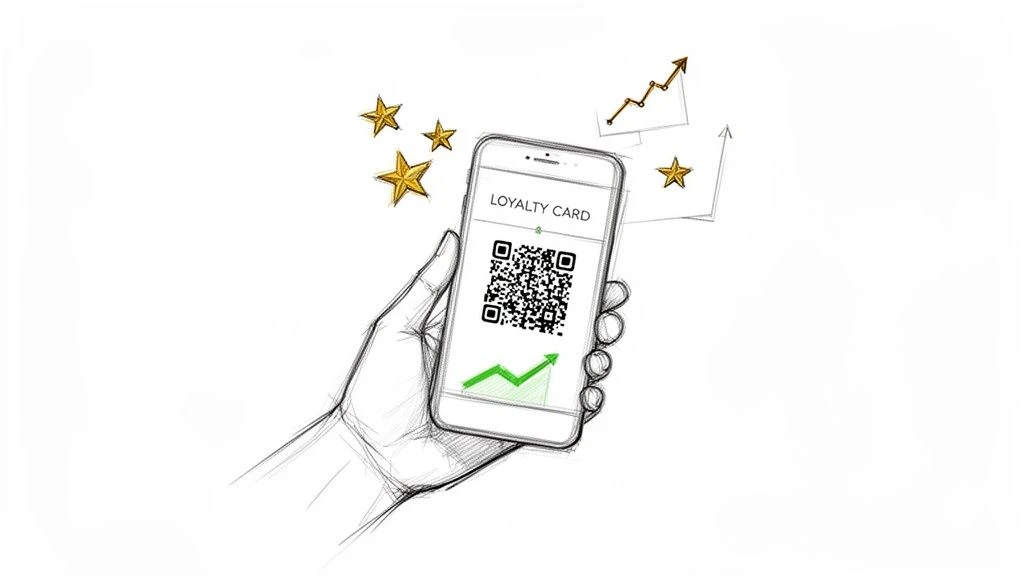
- Go Digital with QR Codes: This is the game-changer for small businesses. A platform like BonusQR lets you launch a QR-code-based loyalty program in under 5 minutes. Customers just scan a code with their phone-no app downloads, no sign-up friction. It's the simplest, most cost-effective way to get started.
- Make Rewards Feel Achievable: Customers lose interest if a reward seems too far away. Ensure they can earn their first reward within 3-5 visits to keep them engaged and motivated.
- Train Your Team to Enroll: The enrollment process should take less than 10 seconds. Instruct staff to say, "Want a free coffee on your next visit? Just scan this QR code." It’s that easy.
Analyzing loyalty data helps you identify your VIPs and drive repeat visits. For more ideas, explore the best loyalty programs for restaurants that win customers and find a model that fits your business.
2. Master Staff Scheduling and Labor Cost Management
The Pain Point: "I'm constantly overstaffed on slow nights and understaffed during a rush. My labor costs are out of control."
Effective staff scheduling means matching your team's hours to customer demand precisely, controlling one of your largest expenses. It's about using data, not guesswork, to optimize shifts. This reduces labor costs (typically 25-35% of revenue), prevents staff burnout, and guarantees you always have the right people on the floor to deliver great service.
This is one of the most critical restaurant manager tips for protecting your bottom line. Instead of creating a schedule based on "how it feels," you use historical sales data to predict your needs, shift by shift.
How to Build a Smarter Schedule
The goal is a schedule that's both cost-effective and respects your team's time. This directly leads to a smoother operation and a happier, more reliable staff.
- Use Your POS Data: Analyze your sales data by the hour. Identify your true peak and slow periods for each day of the week to staff accordingly.
- Schedule in Advance: Post schedules at least two weeks out. This gives your team predictability, reduces last-minute call-outs, and shows you respect their lives outside of work.
- Cross-Train Your Team: A server who can also handle the host stand or a cook who can work the prep station is invaluable. Cross-training builds flexibility to cover unexpected absences without chaos.
- Leverage Scheduling Software: Use tools that allow staff to easily swap shifts (with your approval). This empowers them and cuts your administrative time dramatically.
- Track Labor vs. Sales in Real-Time: Don't wait for the weekly report. Monitor your labor cost percentage throughout the day. If sales are slower than expected, you can make the call to send someone home early.
3. Leverage Data Analytics for Menu Engineering
The Pain Point: "My food costs are high, but I don't know which menu items are actually making me money and which are losing it."
Menu engineering is the science of making your menu as profitable as possible. It involves analyzing sales data to understand which dishes are popular (high sales) and which are profitable (high margin). This allows you to make strategic decisions on pricing, item placement, and promotion to guide customers toward your most profitable choices.
This is one of the highest-impact restaurant manager tips because your menu is your number one sales tool. By understanding the data behind it, you can turn it into a profit-generating machine.
How to Engineer Your Menu for Maximum Profit
You don't need to be a data scientist. Your POS system has all the information you need. The goal is to move from assumptions to facts.
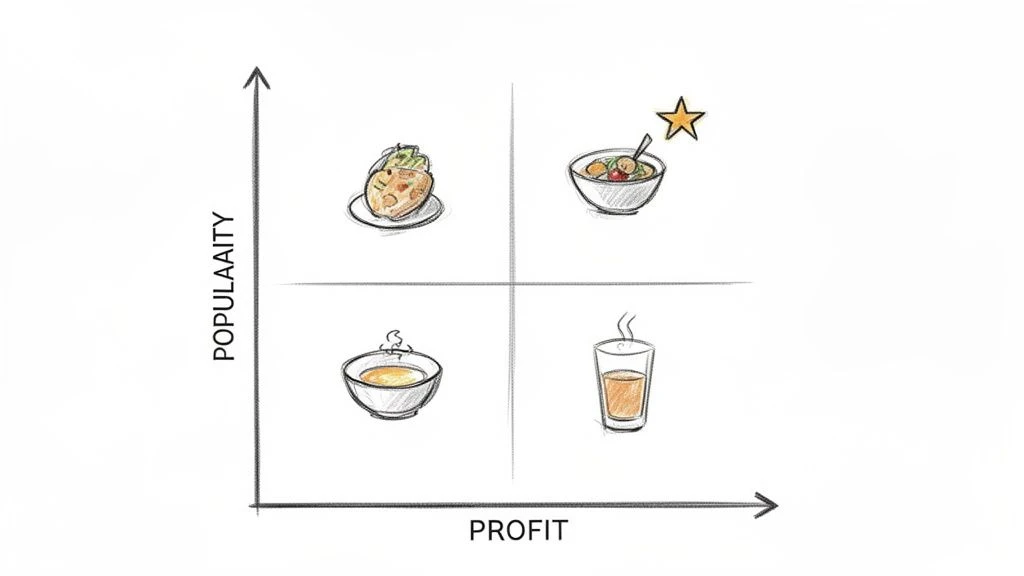
- Create a Menu Matrix: Categorize every dish into one of four quadrants:
- Stars: High profit, high popularity. (Promote these heavily!)
- Plowhorses: Low profit, high popularity. (Can you increase the price slightly or reduce its cost?)
- Puzzles: High profit, low popularity. (Why aren't they selling? Rename it, describe it better, or have staff recommend it.)
- Dogs: Low profit, low popularity. (Consider removing these from the menu.)
- Feature Your Stars: Place your most profitable and popular items where the eye naturally falls first-the top right or center of the menu. Use boxes, photos, or bold text to draw attention.
- Re-engineer Your Plowhorses: For popular but low-margin items, look for ways to decrease food cost without sacrificing quality or consider a small price bump.
- Rethink Your Dogs: These items are taking up valuable menu space and potentially increasing inventory costs. Be ruthless and remove them.
Accurate costing is crucial. Use a restaurant profit margin calculator to master your numbers to ensure you know the true cost of every plate.
4. Prioritize Staff Training and Development
The Pain Point: "Employee turnover is killing my budget and consistency. New hires take forever to get up to speed."
A well-trained team is the engine of your restaurant. Prioritizing training means creating a culture of continuous improvement that extends far beyond day one. It involves developing skills in customer service, product knowledge, and operational efficiency, which leads to better service, higher morale, and lower turnover.
This is a critical restaurant manager tip because great staff don't just serve food; they sell experiences and create regulars. Investing in your people is a direct investment in your guest experience and your bottom line.
How to Implement Training That Sticks
A great training program is built on structure and consistency, not a big budget.
- Create a Structured Onboarding Plan: Have a clear 30-day plan for every new hire, with specific goals and check-ins for each week. This ensures no one falls through the cracks.
- Use a Buddy System: Pair new hires with a trusted, high-performing veteran. This mentor provides on-the-job guidance and helps them acclimate to your culture.
- Hold Daily Pre-Shift Huddles: These 10-minute meetings are invaluable. Use them to discuss daily specials, recognize great performance, and run quick role-playing scenarios on topics like upselling or handling a complaint.
- Train for Loyalty Enrollment: Your staff is your #1 tool for loyalty sign-ups. Teach them a simple, benefit-driven script like, "Joining our rewards is free and gets you a discount on your next visit. Can I sign you up?"
5. Optimize Online Ordering and Delivery Integration
The Pain Point: "Third-party delivery apps are eating my profits with high commissions, and managing multiple tablets during a rush is a nightmare."
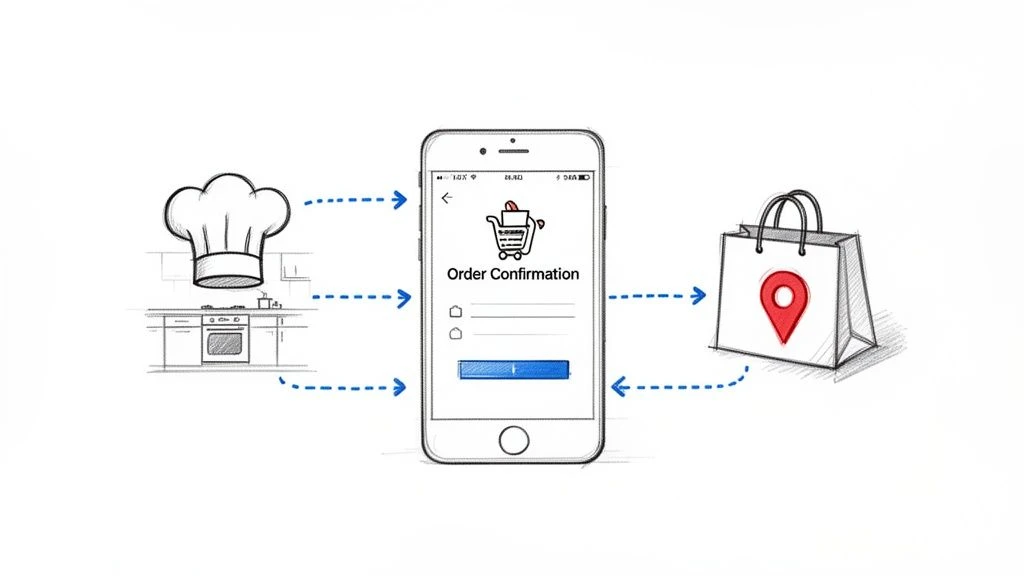
Optimizing online ordering means creating a seamless system for customers to order digitally, whether for pickup or delivery. It's about expanding your reach beyond your four walls and meeting the modern demand for convenience. Crucially, it also means finding ways to drive orders through your own channels to protect your profit margins.
This has become a non-negotiable tip for any modern restaurant. While third-party apps provide visibility, a smart manager focuses on converting those customers to their own, more profitable ordering system.
How to Master Your Digital Storefront
A successful online presence is about control and profitability. The goal is to own the customer relationship, not rent it from a delivery app.
- Prioritize Commission-Free Ordering: Set up an ordering system directly on your website using tools like Toast or Square Online. This is your most profitable channel.
- Incentivize Direct Orders: Offer a small discount or an exclusive menu item only available to customers who order directly from your site. Use flyers in your third-party delivery bags to promote your website.
- Integrate Loyalty with Online Orders: Connect your rewards program to your online ordering system. Remind customers they can earn points by ordering direct, giving them another reason to skip the big apps.
- Streamline Your Operations: If possible, integrate online orders directly into your POS/KDS. This eliminates the "tablet farm" and reduces the risk of manual entry errors during a busy service.
6. Foster a Customer-Centric Culture and Gather Feedback
The Pain Point: "A single bad online review can hurt my business, and I often don't know a customer was unhappy until I see it on Yelp."
A customer-centric culture means every decision is made with the guest experience in mind. It's about being proactive, not reactive. This involves systematically collecting feedback through surveys and online reviews, then using that data to fix problems before they escalate and to double down on what you do well.
This is one of the most vital restaurant manager tips because it builds a powerful reputation that drives new business. A happy customer tells a friend; an unhappy customer tells everyone. Your goal is to turn feedback into your greatest tool for improvement.
How to Build a System for Listening
Creating easy ways for customers to share their thoughts is key. You want to hear from them directly before they turn to public review sites.
- Make Surveys Simple and Rewarding: Use your loyalty program or receipts to link to a 2-3 question survey. Ask the Net Promoter Score (NPS) question: "How likely are you to recommend us?" and offer a small incentive, like 10 bonus points, for completion.
- Respond to Every Online Review: Monitor and respond to all reviews-good and bad-within 24 hours. A thoughtful response to a negative review shows you care and can even win back an unhappy customer.
- Empower Staff to Solve Problems: Give your front-line staff the authority to fix issues on the spot. A manager's visit to the table is great, but a server empowered to offer a free dessert for a long wait time is even better.
- Share Feedback in Huddles: Discuss customer comments during pre-shift meetings. Celebrate positive mentions by name and use constructive criticism as a training opportunity for the whole team.
7. Implement Effective Inventory and Food Cost Management
The Pain Point: "My food costs are creeping up every month, and I feel like I'm losing money to waste and spoilage."
Effective inventory management is the disciplined process of tracking ingredients from purchase to sale. This system is designed to minimize waste, prevent theft, and ensure you're pricing your menu profitably. With food costs making up 28-35% of revenue, even small improvements here can have a huge impact on your bottom line.
Ignoring inventory is like trying to run a business with a hole in your pocket. This is a foundational operational tip for any manager serious about profitability.
How to Control Your Food Costs
A strong inventory system brings clarity and control to your kitchen's finances.
- Establish Par Levels: For every key ingredient, determine the minimum amount you need on hand to get through a busy period and the maximum you should hold to avoid spoilage. Order to these levels, not just to fill shelves.
- Standardize Recipes and Portions: Every single menu item must have a detailed recipe with exact measurements. Use portioning tools (scales, scoops) and train your kitchen staff to use them consistently. This is the #1 way to control food costs.
- Track Waste Daily: Place a "waste sheet" in the kitchen where staff must log every item that's thrown away (spoiled, dropped, burned, customer return) and the reason. Reviewing this log reveals expensive problems in your operations.
- Implement "First In, First Out" (FIFO): Train your team to always place new stock behind old stock. This simple organizational principle ensures older ingredients are used first, dramatically reducing spoilage.
- Use Smart Purchasing: Understand your vendors and when to implement wholesale & bulk buying strategies for non-perishable items to reduce costs.
8. Build a Strong Brand and Marketing Strategy
The Pain Point: "We have great food, but we're not well-known in the community. I struggle to attract new customers consistently."
A strong brand is your restaurant's story and personality. It's how customers perceive you. A smart marketing strategy communicates that story to the right people, attracting new guests and building a loyal community. In a crowded market, great food isn't enough-a memorable brand is what makes customers choose you over the competition.
Your brand is what makes you memorable. This tip is critical for standing out and building a business that isn't just reliant on word-of-mouth.
How to Market Your Restaurant Effectively on a Budget
Building a brand is about consistency and connection, not big ad spends.
- Define Your Unique Selling Proposition (USP): What is the one thing you do better than anyone else? Is it the freshest local ingredients, the fastest lunch service, or the best family-friendly atmosphere? Build your marketing around this core message.
- Master Local Social Media: Focus on 1-2 platforms where your customers are. Post high-quality photos of your food, share behind-the-scenes stories, and run contests. Use local hashtags and tag your city to increase visibility.
- Build an Email/SMS List: Your loyalty program is the perfect tool for this. A direct line to your customers is your most valuable marketing asset. Use it to announce specials, events, or slow-day promotions.
- Partner with Local Businesses: Team up with a nearby brewery, boutique, or office building for a cross-promotion. This is a powerful, low-cost way to tap into a new customer base.
8-Point Comparison of Restaurant Management Strategies
| Initiative | Implementation complexity | Resource requirements | Expected outcomes | Ideal use cases | Key advantages |
|---|---|---|---|---|---|
| Implement a Customer Loyalty Program | Low - with a QR code system like BonusQR | Low: affordable SaaS, minimal staff training time | Higher retention (≈25-30%), increased avg. check, richer customer data | Any restaurant, cafe, or QSR aiming for repeat business | Boosts lifetime value; simple to manage; cost-effective vs acquisition |
| Master Staff Scheduling and Labor Cost Management | Medium - scheduling software and forecasting | Moderate: scheduling tools, historical sales data, managerial time | Lower labor costs (≈10-15%), improved service consistency, reduced burnout | High-volume outlets, QSRs, multi-location operations | Reduces labor spend; improves coverage; lowers turnover |
| Leverage Data Analytics for Menu Engineering | Medium-High - POS data integration and analysis | Moderate-High: analytics tools, POS data access, analyst/manager time | Increased menu profitability (≈10-20%), less waste, better pricing | Restaurants with diverse menus, chains, those seeking margin optimization | Identifies high-margin items; informs pricing and placement |
| Prioritize Staff Training and Development | Low-Medium - program creation and ongoing sessions | Low-Moderate: training materials, manager time, occasional certifications | Higher customer satisfaction (≈15-25%), better retention, more upsells | Service-driven venues, fine dining, franchises focused on experience | Improves service quality; boosts check size; reduces errors |
| Optimize Online Ordering and Delivery Integration | High - multi-platform integrations, KDS and POS sync | High: tech development, third-party fees, ongoing support | Revenue growth (≈20-30%), broader reach, more digital transactions | Delivery-heavy businesses, pizza/fast-casual chains, ghost kitchens | Expands market reach; integrates with loyalty; lowers order errors |
| Foster a Customer-Centric Culture and Gather Feedback | Low-Medium - set up surveys and review monitoring | Low-Moderate: survey/review tools, staff time to respond and act | Better reputation, higher loyalty, early issue detection | Any restaurant prioritizing repeat business and reputation | Produces actionable insights; strengthens customer relationships |
| Implement Effective Inventory and Food Cost Management | Medium - systems, processes and regular audits | Moderate: inventory software or manual systems, disciplined staff time | Reduced food costs (≈10-15%), less spoilage, improved pricing accuracy | High food-cost operations, fine dining, establishments with variable menus | Improves margins; reduces waste; enables accurate cost control |
| Build a Strong Brand and Marketing Strategy | Medium - brand development and ongoing content | Moderate-High: marketing team/agency, content budget, time | Increased recognition (≈30-50%), attracts premium customers, better acquisition | New concepts, competitive markets, restaurants seeking differentiation | Raises perceived value; improves customer acquisition and loyalty |
The Simple System for Turning Guests into Regulars
Becoming a truly effective restaurant manager isn't about memorizing a long list of duties. It's about building a sustainable system where operational efficiency and customer loyalty work hand in hand. The restaurant manager tips we've covered, from mastering staff schedules and engineering your menu to optimizing inventory, all contribute to a smoother, more profitable business. But the ultimate goal is not just to survive the day-to-day grind; it's to build a thriving establishment with a dedicated community of regulars.
The most successful managers understand that operational excellence creates the opportunity for loyalty, but it doesn't guarantee it. A perfectly prepped kitchen and a flawlessly managed floor mean nothing if guests don't feel a compelling reason to return. This is the final, crucial piece of the puzzle: creating a direct, rewarding connection with your customers.
From Tips to Transformation: Your Action Plan
The common thread linking all these strategies is the guest experience. Every decision, from staff training to marketing, ultimately shapes how a customer feels about your brand. Your next step is to make that connection tangible and repeatable. While implementing all these tips is important, the single most impactful action you can take today is to start actively rewarding your customers for their business.
Many managers hesitate here, worried about complex software, expensive hardware, and confusing point systems. But modern tools have eliminated these barriers. The key is to find a solution built for simplicity and immediate impact. This is where a loyalty app like BonusQR becomes a game-changer. It’s not just another task to add to your plate; it’s a tool that automates the process of turning first-time visitors into lifelong fans.
Key Takeaway: The difference between a good manager and a great one is the ability to shift focus from constantly fighting operational fires to proactively building a loyal customer base.
By implementing a simple, QR-code-based system, you can immediately begin to:
- Identify your regulars and understand their visit frequency.
- Encourage repeat business with rewards they actually want.
- Gather valuable feedback to continuously improve the guest experience.
- Build a direct marketing channel to announce specials and events.
Mastering these restaurant manager tips will undoubtedly make you more efficient and your establishment more profitable. But creating a simple, effective system for guest loyalty is what will secure your restaurant’s future. Stop just serving customers and start building a community. The tools are simpler and more accessible than ever, and the rewards are immeasurable.


