
 Deutsch
 Español
 Français
 Italiano
 Magyar
 Polski
 Slovenčina
 Čeština
That sinking feeling when a great employee quits? It’s more than just frustrating-it's a direct hit to your bottom line and your sanity. For a small business, high staff turnover isn't a minor headache; it's a silent killer that drains cash, crushes morale, and steals your focus from growing the business.
But what if you could stop the revolving door? What if you could build a team that’s so engaged they wouldn’t dream of leaving? This guide provides unique, actionable advice to help you do just that.
Why Your Best People Are Really Quitting (It's Not Just About Money)
Let's be honest. Every time someone walks out, it triggers a costly chain reaction.
Productivity plummets as your remaining team gets stretched thin. Morale takes a nosedive, and suddenly your other top performers start polishing their résumés. Worst of all, your time gets hijacked by an endless cycle of hiring and training instead of strategy and growth.

The Hidden Reasons Behind Resignations
People rarely leave for a small pay bump. The real reasons are almost always deeper, especially for your most motivated and skilled employees. Are you struggling with how to reduce staff turnover? It likely boils down to one of these core issues:
- Feeling Invisible: When hard work goes unnoticed, employees feel like a number, not a valued team member. A simple "thank you" is powerful.
- Stuck in a Dead-End Role: Ambitious people crave progress. If they don't see a future with you, they'll find one with someone else.
- Toxic Management: This is the big one. People don't quit jobs; they quit bosses. A lack of support, trust, or clear communication is a primary driver of turnover.
- Burnout is Real: Inconsistent scheduling, overwhelming workloads, and a poor work-life balance are a fast track to resignation, particularly in service industries.
A recent Gallagher survey of over 4,000 organizations found that 66% of HR executives still see retention as their biggest challenge. It's a universal pain point for businesses of all sizes.
The True Cost of Losing an Employee
Let's make this tangible. The financial hit of losing just one employee is often far bigger than most owners realize. When you add up the direct and indirect costs, the numbers get scary fast.
The Cost Breakdown for Replacing One Employee
| Cost Category | Estimated Financial Impact (for a $15/hr employee) | What This Covers |
|---|---|---|
| Recruitment Costs | $500 - $1,500 | Ad placements, background checks, and the hours you spend screening and interviewing. |
| Training & Onboarding | $1,000 - $2,500 | Time spent by managers and peers, plus any formal training materials. |
| Lost Productivity | $2,000 - $4,000 | The cost of a vacant role, plus the 3-6 months it takes a new hire to reach full productivity. |
| Impact on Morale | $500+ | Decreased output from remaining staff who are overworked and demoralized. |
| Total Estimated Cost | $4,000 - $8,000+ | The conservative, all-in cost to replace a single frontline employee. |
Seeing it laid out like that puts things in perspective, doesn't it? That's a huge chunk of profit walking out the door.
This problem is especially brutal for frontline businesses. Annual turnover can hit a staggering 87% in quick-service restaurants and 81% in retail. This constant churn makes it impossible to build an experienced team. You can dig deeper into these frontline work trends to see the full impact.
By getting to the root of these issues, you can finally stop the bleeding and build a team that’s invested in your success.
Find Out Why People Really Leave
You can't fix a problem you don't understand. Before you throw money at solutions, you must uncover the real reasons your people are leaving. Think of it as a simple “retention audit,” minus the corporate jargon.
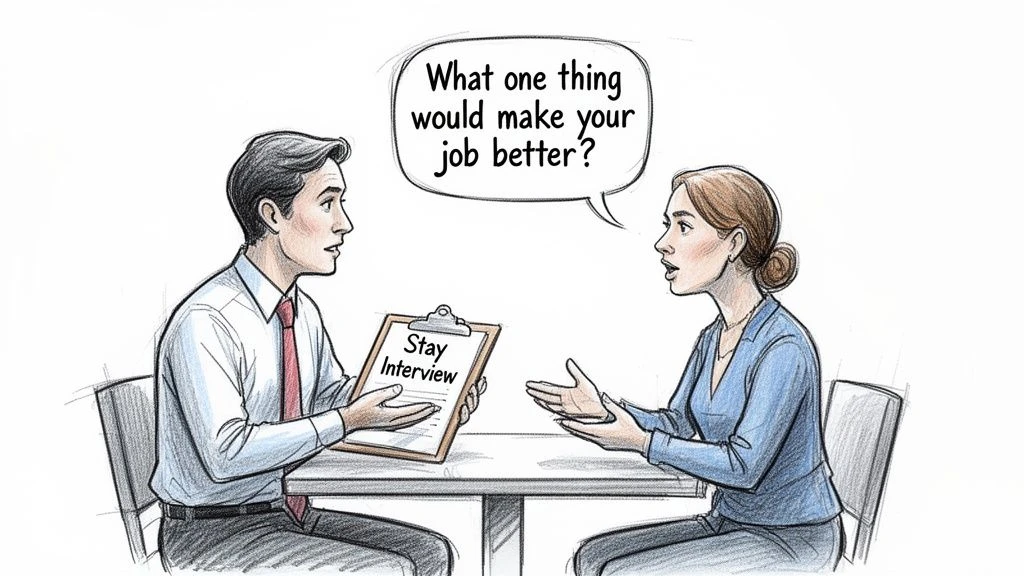
This starts with gathering honest feedback. How do you get straight answers without making things awkward? By asking the right questions at the right time.
Master the Exit Interview
When an employee resigns, flip your frustration into a learning opportunity. An exit interview is your chance to get uncensored feedback from someone with nothing to lose.
Keep it short and informal. The goal isn't to change their mind; it’s to understand their decision.
- "What was the main reason you started looking for a new job?"
- "Was there a specific moment that made you decide to leave?"
- "What is the one thing we could have done differently that might have made you stay?"
That last question is pure gold. It cuts through generic complaints to give you actionable information.
The power of exit interviews is in pattern recognition. If three people in a row mention chaotic scheduling or feeling unappreciated by a manager, you’ve found a major clue to solving your turnover problem.
The Power of the Stay Interview
Waiting for people to quit before asking for feedback is reactive. A stay interview is proactive. It's a casual chat with your current top performers to find out what keeps them happy and engaged.
This isn’t a performance review. To get a wider pulse, a modern staff satisfaction survey can also be a fantastic tool for gathering honest feedback anonymously.
Effective stay interview questions include:
- "What did you love most about your job when you first started?"
- "What was the best day you had at work last month, and why?"
- "If you had a magic wand, what's one thing you would change about your role?"
These conversations reveal what you’re doing right so you can double down on it. More importantly, they flag potential issues before they become reasons to leave.
Build a Culture People Don't Want to Leave
Culture isn't about ping-pong tables. For a small business, it's the feeling your team gets when they clock in. It's your most powerful-and affordable-tool to reduce staff turnover.
It boils down to building a place where people feel respected, valued, and seen.
Often, the workplace mood hinges on the direct manager. Gallup data shows that a staggering 50% of employees who quit do so because of their boss. Investing in leadership practices changes everything. Learn more in our guide on the essential duties of a branch manager.
Simple actions that show you value employees as people can slash turnover by up to 30%, according to C-Suite Analytics.
Low-Cost Ways to Build a Positive Environment
You don’t need a huge budget. Here are high-impact strategies you can roll out this week:
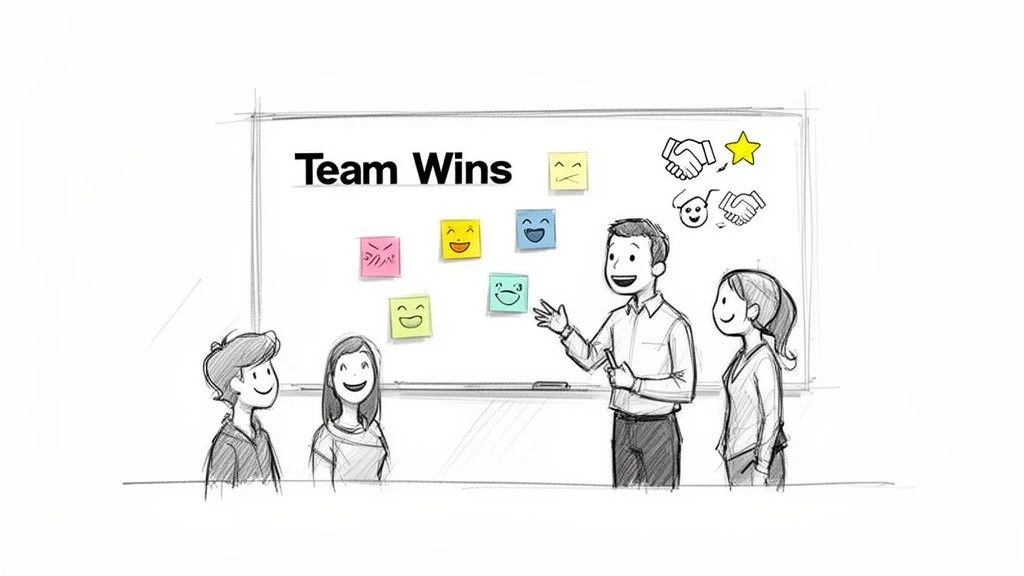
- Launch a 'Team Wins' Board: Dedicate a small whiteboard in a break area for anyone to write down a win-big or small. Did Sarah get a great customer review? Did the kitchen crush a massive lunch rush? Celebrate it publicly.
- Start 10-Minute Weekly Check-Ins: This isn't a performance review. It’s a quick chat where a manager asks: "How are you feeling?", "What went well this week?", and "What support do you need from me?" This simple habit builds incredible trust.
- Empower Them with Small Decisions: Let your barista choose the next seasonal drink. Ask retail staff for input on the new store layout. Giving employees ownership, even in small ways, shows you trust their expertise.
A great culture is about consistency, not grand gestures. A daily "thank you" means more than an annual party. It proves you're paying attention every single day.
The Easiest Way to Systematize Recognition
Saying "thank you" is a start, but a simple, visible system makes appreciation a core part of your operation. This is where you can get creative and cost-effective.
Take a tool like BonusQR. It’s designed for customer loyalty, but it's the simplest, most affordable way to create an internal employee recognition program.
Here's how it works in 3 simple steps:
- Create an Employee Loyalty Card: Give each team member their own digital card on their phone.
- Reward Key Behaviors: Award a digital stamp for perfect attendance, a positive customer shout-out, or mastering a new skill.
- Offer Meaningful Rewards: When they collect enough stamps, they can cash them in for something they'll actually appreciate-like picking their shift for a week, a $20 gift card, or a paid afternoon off.
This turns recognition from a random act into a fun, predictable system. It’s a powerful, cost-effective way to make your team feel consistently valued and slash your turnover rate.
Create Growth Paths (Even Without Promotions)
"Career growth" feels like a corporate luxury for many small business owners. When you can’t offer a ladder of promotions, it's easy to assume your best people will eventually leave.
This is a costly misconception. Growth isn't always a new title. For most employees, it means gaining skills, tackling interesting challenges, and feeling like their boss is invested in their future.
An Amazon Workplace Intelligence study found that a lack of growth is a top reason for quitting. 74% of Millennials and Gen Z will walk if they aren't given opportunities to learn. See more on these workforce turnover trends.
You can create these opportunities without blowing your budget. Shift your mindset from promotions to progression.
Foster Skill Development with Creative Programs
Get creative with the resources you already have. Here are practical, low-cost ideas to start building skills now:
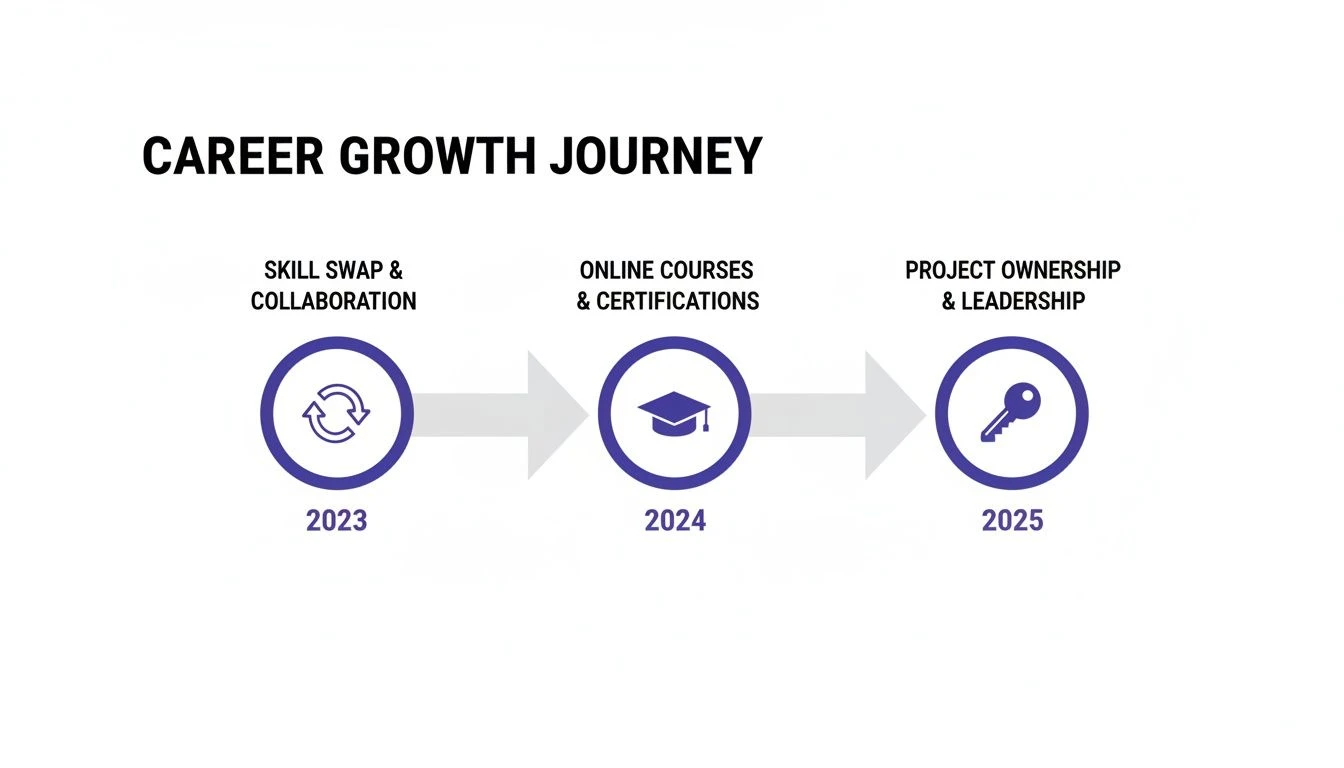
- Launch a 'Skill Swap' Program: Is your head barista a latte art wizard? Is your lead server a master of upselling? Dedicate an hour a week for them to teach that skill to a junior employee. It costs nothing but time.
- Fund a Relevant Online Course: Ask an ambitious employee what they'd love to learn. A $50 course from a platform like Coursera shows you believe in their future and brings new knowledge into your business.
- Assign Project Ownership: Put your most creative retail associate in charge of the store's Instagram. Let a detail-oriented line cook lead weekly inventory ordering. This lets them stretch their abilities and feel a greater sense of contribution.
An employee with a clear development plan is 34% less likely to leave, according to Gallup. Simply showing you have a plan for their future makes them far more invested in yours.
The One-Page Growth Plan
The most powerful tool for this is an Individual Growth Plan (IGP). This isn't a complex HR document. It's a simple, one-page agreement you create with an employee that answers three questions:
- Where are you now? (Current skills and responsibilities)
- Where do you want to go? (What new skill do you want to master in six months?)
- How will we get there? (What specific actions will you both take?)
For example, a salon receptionist wants to learn client retention. Their IGP could involve them leading a customer feedback project, with your guidance and a small budget. These plans turn vague ambition into concrete action. For more ideas, check out our guide on creative incentive marketing strategies that work.
Your 90-Day Plan to Reduce Staff Turnover
Trying to fix turnover all at once is overwhelming. Instead, use this scannable 90-day plan to build momentum, earn trust, and create changes that stick.
We'll move from diagnosis to action, and finally, to making improvements a permanent part of your culture.
Month 1: The Listening Phase (Days 1-30)
Your first 30 days are about one thing: listening. Before you solve the problem, you need to understand where the pain is coming from, straight from your team.
- Conduct 3-5 Stay Interviews: Sit down with key people for an informal chat. Ask, "What was the best day you had at work last month, and what made it great?"
- Audit Schedules for Burnout: Pull the last month's rota. Are the same people always closing or working weekends? Find the imbalances that breed resentment.
- Run a Quick, Anonymous Survey: Use Google Forms to ask 3-5 brutally honest questions about management, communication, and workload.
Month 2: Implement Quick Wins (Days 31-60)
Now you have data. Month 2 is about visible, immediate action. Focus on low-cost, high-impact changes that show your team you were listening.
- Fix One Major Scheduling Issue: Based on your audit, make one significant change to create a fairer schedule. Announce it and explain why you're doing it.
- Launch a "Team Wins" Board: Get that whiteboard up and start celebrating small victories publicly.
- Act on One Piece of Survey Feedback: Pick one common complaint from your survey and fix it. This builds instant goodwill and proves their feedback matters.
The goal isn’t to solve every issue overnight. It’s to show your team you've listened and are committed to making things better. That alone is a powerful motivator. As you plan, explore more practical strategies for preventing employee turnover.
Month 3: Build Lasting Systems (Days 61-90)
The final 30 days are about turning quick wins into permanent systems. This is how you make retention a core part of your culture.
- Launch a Simple Recognition Program: Formalize your appreciation. Start using a tool like BonusQR to celebrate milestones and reward great work consistently.
- Create Individual Growth Plans: For your top 2-3 performers, sit down and map out their next six months using the IGP framework.
- Standardize Weekly Check-ins: Make the 10-minute check-in a non-negotiable part of every manager’s weekly routine. Consistency is key.
Following a structured plan like this shows people they have a real future with your company, making them far more likely to stay for the long haul.
Still Have Questions? Your Top Concerns Answered
Tackling staff turnover brings up tough questions. Here are straightforward answers to what small business owners ask most.
"I can't afford to pay more. How can I reduce turnover?"
This is the #1 question. While competitive pay matters, it's rarely the only reason people leave. You can make a massive difference with low-cost strategies that build a culture of respect.
Focus on what you can control: flexible scheduling, asking for their input on operational decisions, and-most importantly-acting on their suggestions. Investing a little time to train them on a new skill shows you're invested in their growth. These actions build a loyalty that a bigger paycheck alone can't buy.
"How do I know if my retention strategies are working?"
Track your progress. First, calculate your current turnover rate. This is your baseline. Check it again in three and six months to see how the needle is moving.
Next, make this simple question part of your weekly check-ins: "On a scale of 1-10, how happy are you working here this week?" Your goal is to see that average number climb.
Don't forget the qualitative signs: Is the team more collaborative? Is there more positive chatter? A drop in last-minute call-outs? These are powerful signals that you’re building a stronger, happier team.
A positive shift in your team's day-to-day vibe is often the very first sign that your efforts to reduce staff turnover are paying off.
"How can a customer loyalty app help with employee retention?"
It’s a clever shift in perspective: treat your employees like your most important customers. A simple tool like BonusQR can be repurposed into the easiest and most cost-effective internal rewards program on the market.
Think about it: issue digital "stamps" for hitting key milestones like 90 days on the job, mastering a new skill, or getting a great customer review. Once an employee collects enough stamps, they cash them in for a reward they actually want-a gift card to their favorite coffee shop, a paid day off, or first pick of shifts.
This simple system automates recognition and weaves it into your culture. It sends a powerful message that you value your team as much as your paying customers-a massive boost for morale and a simple, powerful solution for how to reduce staff turnover.