Are you juggling rising food costs, unpredictable staffing, and intense local competition? Running a restaurant often feels like solving a new crisis every day, leaving little time to focus on what really matters: growth and profit. You know there must be a better way, but most advice is either too generic or designed for massive chains with huge budgets.
This guide is different. It's packed with 10 powerful, yet practical restaurant management tips created specifically for independent owners like you. We’re moving past vague ideas and giving you scannable, actionable strategies you can implement this week to solve your most pressing problems-from slashing food waste to building a base of loyal regulars who choose you every time.
Each tip is a mini-action plan designed for immediate results. Whether you're struggling with high labor costs or wondering how to get more repeat customers, you'll find clear steps to turn your biggest challenges into your greatest competitive advantages. Let's build a more profitable, efficient, and beloved restaurant, starting now.
1. Implement a Simple, Cost-Effective Digital Loyalty Program
Problem: How do you stop one-time visitors from becoming strangers? Paper punch cards get lost, and custom apps are too expensive. You need a simple way to identify and reward your regulars.
Solution: A QR code-based digital loyalty program is the simplest, most powerful way to turn casual diners into loyal fans. It tracks visits and rewards repeat business directly on customers' smartphones-no apps to download, no hardware to buy. This modern approach is not only convenient for guests but also gives you priceless data on their visit habits and preferences.
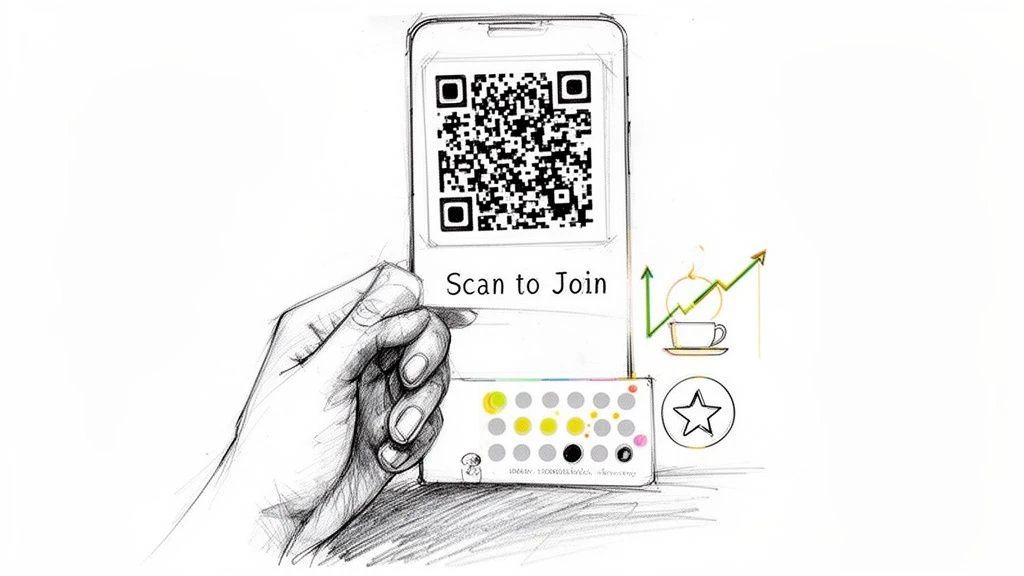
Small restaurants and cafes that use a simple system see a dramatic lift in customer retention because it makes every guest feel valued. Platforms like BonusQR are designed for this exact need, letting you launch a custom loyalty program in minutes without the complexity or cost of traditional systems. It’s the easiest win for boosting repeat business.
How to Get Started
- Offer a Clear Reward: Start with something simple and compelling, like "Buy 5 coffees, get the 6th free." Clarity drives participation.
- Place a QR Code at Checkout: Make it impossible to miss. Train staff to ask every customer, "Want to join our rewards program? You get a free item just for signing up."
- Give an Instant Sign-Up Bonus: An immediate reward (e.g., a discount on today's purchase) provides instant gratification and encourages sign-ups.
- Use Data to Improve: Check your analytics. Are more people redeeming free appetizers than desserts? You now know what truly motivates your customers.
Key Insight: A digital loyalty program turns anonymous transactions into relationships. It identifies your most valuable customers, allowing you to send targeted offers-like a birthday discount-that make them feel like true VIPs and keep them coming back.
Rewarding regulars builds a powerful defense against competition. For a complete blueprint, explore this digital loyalty strategy guide for restaurant retention.
2. Optimize Staff Scheduling to Cut Labor Costs
Problem: Labor is your biggest expense, but cutting hours risks poor service. How do you schedule enough staff for rushes without wasting money during slow periods?
Solution: Stop guessing and start using data. Strategic scheduling means aligning your staff hours with your actual customer traffic patterns. By analyzing your sales data, you can pinpoint your busiest and slowest times, ensuring you have the right number of people on the floor at all times. This data-driven approach is one of the most impactful restaurant management tips for instantly boosting profitability.
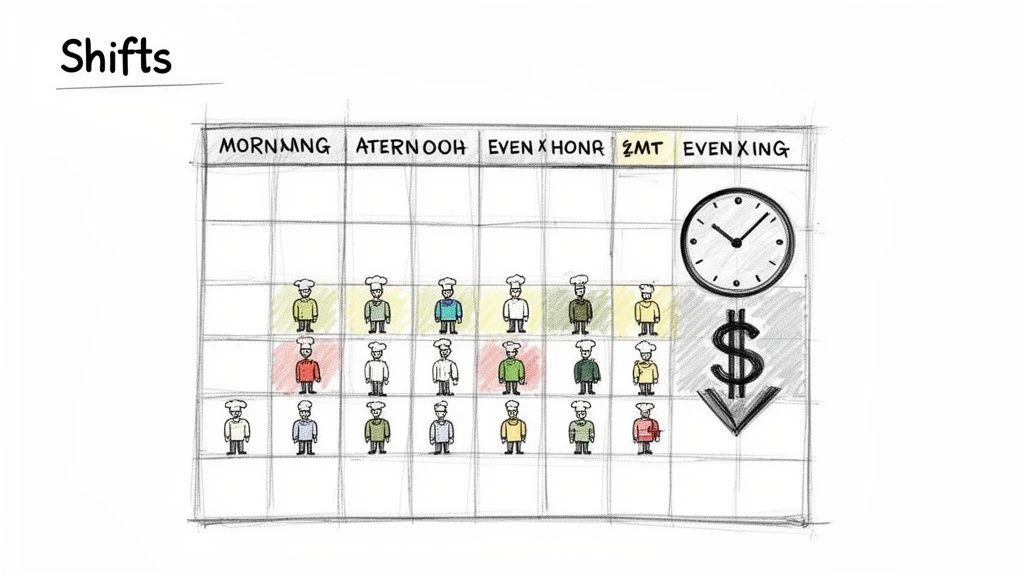
Restaurants that master this balance often reduce labor costs by 10-15% without sacrificing the guest experience. For example, a cafe's POS data might show a massive rush from 8-10 AM and a dead zone from 2-4 PM. The solution? Schedule an extra barista for the morning and create a shorter mid-day shift to avoid paying staff to stand around.
How to Get Started
- Identify Your Power Hours: Use your POS data to map out sales by the hour. This reveals your true peak times.
- Schedule Your A-Team for Peaks: Put your most efficient, experienced employees on during your busiest shifts to handle the rush flawlessly.
- Cross-Train for Flexibility: A host who can take to-go orders or a server who can jump behind the bar allows you to run leaner shifts without creating service bottlenecks.
- Publish Schedules in Advance: Give your team schedules at least two weeks out. It shows respect for their time, reduces call-outs, and boosts morale.
- Track Labor Costs Weekly: Calculate your labor cost percentage every week. This simple habit helps you spot negative trends and adjust quickly.
Key Insight: Smart scheduling is a profit-driver, not just an administrative task. It prevents overspending during lulls and protects your reputation by ensuring you're never understaffed during a rush.
To build a solid foundation for managing labor, a strategic staffing plan template can help you forecast needs and control expenses from day one.
3. Build a Strong Customer Retention Strategy
Problem: You spend money on ads to get new customers, but many never return. How do you create a steady flow of business without constantly chasing new people?
Solution: Focus on keeping the customers you already have. A customer retention strategy is about making your current guests so happy they can't imagine going anywhere else. It’s 5x cheaper to retain an existing customer than to acquire a new one, and loyal customers spend 67% more on average. This is the secret to sustainable, profitable growth.
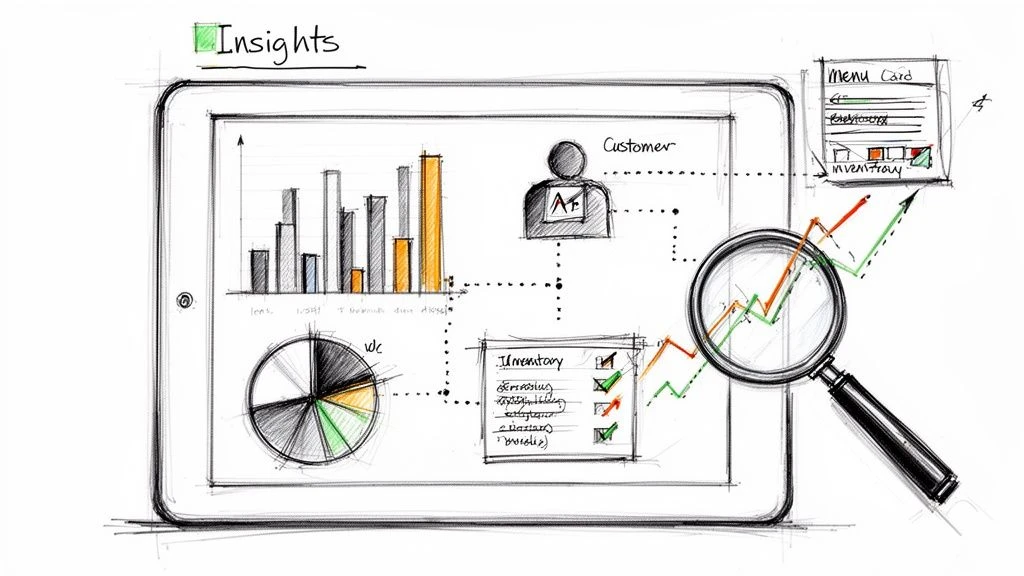
The key to modern retention is understanding your customers' behavior. A digital loyalty program shows you who your top customers are, how often they visit, and what they buy. This allows for simple, powerful actions: a coffee shop can train staff to remember a regular's order, or a pizzeria can send a special offer to a customer who hasn't visited in a while.
How to Get Started
- Segment Your Customers: Use your loyalty data to group guests. Create a "VIP" segment for your top 25% of spenders and send them exclusive offers.
- Celebrate Milestones: Automatically reward a customer on their 10th visit or their one-year anniversary. A simple "Thanks for being a regular!" message with a freebie makes a huge impact.
- Train Staff for Recognition: Empower your team to greet repeat customers by name. A simple "Welcome back, Sarah!" turns a transaction into a personal connection.
- Act on Feedback: Use simple surveys to ask your regulars for their opinions. When you implement a suggestion, let them know. It shows you value their input.
Key Insight: Customer retention isn't about discounts; it's about making people feel like they belong. Data from a loyalty program helps you identify your best customers and even flags those at risk of leaving, giving you a chance to win them back before they're gone.
A strong retention strategy creates a reliable revenue stream and insulates your business from market volatility.
4. Leverage Data Analytics for Decision Making
Problem: How do you know if your new menu item is a hit or a flop? Are you making decisions based on gut feelings or on hard evidence?
Solution: Use data to get clear answers. Data analytics means using the information from your POS and loyalty systems to understand what’s really happening in your business. This evidence-based approach helps you stop guessing and start making strategic moves that increase profit and reduce waste. It's one of the most crucial restaurant management tips for long-term success.
For a small restaurant, this can be simple. Your POS data might reveal your "Happy Hour" special is losing money because the food cost is too high. Your loyalty data might show that customers who buy coffee are 80% more likely to return if they also buy a pastry. These are actionable insights you can use immediately.
How to Get Started
- Focus on Key Metrics: Don't get overwhelmed. Track 3-5 critical numbers: Cost of Goods Sold (COGS), labor cost percentage, and customer visit frequency.
- Run a Weekly Business Review: Spend 30 minutes every Monday looking at the previous week's numbers. This allows you to spot and fix problems fast.
- Analyze Menu Performance: Identify your "stars" (high profit, high popularity) and your "dogs" (low profit, low popularity). Promote the stars and consider removing the dogs.
- Share Insights with Your Team: Show your kitchen staff which dishes are best-sellers. Tell your servers that customers who join the loyalty program spend 30% more. When your team understands the "why," they perform better.
Key Insight: Loyalty data is a goldmine. It can prove that your regulars spend 3x more than new visitors over a year, demonstrating the massive ROI of your retention efforts and justifying your focus on keeping them happy.
By making data a part of your weekly routine, you turn information into a powerful strategic advantage for growth.
5. Create Personalized Customer Experiences
Problem: In a crowded market, good food isn't enough. How do you stand out and create a memorable experience that prevents customers from trying the new place down the street?
Solution: Make every customer feel like a VIP. Personalization means using what you know about your guests to tailor their experience. Modern customers crave recognition, and restaurants that deliver it build an emotional connection that commodity competitors can't touch. This is one of the most effective restaurant management tips for building a fiercely loyal following.
For a small restaurant, this is your superpower. Greeting a customer with, "The usual oat milk latte, Mark?" creates a powerful moment. A digital loyalty program is the key to scaling this, as it tracks order history and preferences automatically.
How to Get Started
- Track Order History: Your loyalty program should log what customers buy. This gives you a clear picture of their tastes without any manual work.
- Note Key Preferences: Train your staff to add simple notes to customer profiles, like "allergic to nuts" or "loves extra spicy."
- Empower Your Team with Information: Show staff how to quickly view a customer's profile. This allows them to make personalized recommendations, like, "I see you love our spicy dishes, you have to try our new ghost pepper tacos!"
- Send Targeted, Relevant Offers: Instead of blasting a generic email, send personalized promotions. Notify your vegan customers about a new plant-based special or send your top 20 regulars an exclusive invitation to a tasting event.
Key Insight: Personalization shows you're paying attention. When you remember a customer's favorite dish or send them a birthday reward, you prove they are more than just a number. This emotional connection is your strongest defense against competitors.
By making customers feel seen and valued, you dramatically increase their lifetime value. You can learn how to build a loyalty program that captures this essential data.
6. Monitor and Control Food Costs
Problem: Ingredient prices are always rising, squeezing your already tight margins. How can you protect your profitability without sacrificing quality?
Solution: Get obsessive about tracking your food costs. This is one of the most fundamental restaurant management tips for survival. While great service brings people in, managing your cost of goods sold (COGS) is what keeps the lights on. The industry standard is to keep food costs between 28-35% of revenue. The only way to hit that target is through disciplined monitoring.
Small changes have a huge impact. A pizzeria that implements strict portioning for cheese can save thousands of dollars a year. A cafe that tracks waste and discovers its staff is brewing too much coffee in the afternoon can adjust its process and immediately boost its bottom line.
How to Get Started
- Calculate Food Cost Weekly: Don't wait for a monthly P&L statement. A weekly check allows you to spot and fix issues (like a price hike from a supplier) in near real-time.
- Use Standardized Recipes & Portioning Tools: Every menu item needs a precise recipe. Use scales and standardized scoops to ensure consistency and control costs on every plate.
- Implement "First-In, First-Out" (FIFO): This simple inventory rule ensures older stock is used before new stock, drastically reducing spoilage.
- Track Every Gram of Waste: Use a "waste sheet" in the kitchen. When something is dropped, spoiled, or returned, log it. This data will reveal hidden problems in your operations.
- Engineer Your Menu for Profit: Regularly analyze which dishes have the best profit margins (not just the lowest food cost). Feature these items more prominently.
Key Insight: Food cost control isn't about being cheap; it's about being smart and efficient. By meticulously tracking everything from supplier prices to portion sizes, you eliminate hidden waste and build a more resilient, profitable business.
7. Develop a Referral and Word-of-Mouth Program
Problem: You need more new customers, but traditional advertising is expensive and often ineffective. How can you attract new business without breaking the bank?
Solution: Turn your happiest customers into your marketing team. A structured referral program incentivizes your regulars to spread the word, creating a powerful, low-cost customer acquisition channel. A recommendation from a friend is far more trusted than any ad you could run.
Integrating this with your digital loyalty system makes it effortless. You can automatically give both the referrer and the new customer a reward when they sign up. This frictionless process encourages sharing and provides you with perfect tracking.
How to Get Started
- Create a "Give-Get" Offer: Reward both the existing customer and their friend. For example: "Give a friend a free coffee, get one for yourself when they redeem it." This dual incentive is highly motivating.
- Make Sharing Simple: Use unique referral QR codes or links that customers can easily share via text message. No complex codes to remember.
- Promote the Program Everywhere: Put it on table tents, receipts, and in your loyalty program. Train staff to say, "By the way, you can get a free appetizer just by referring a friend. The link is right in your rewards wallet."
- Recognize Your Top Advocates: Your loyalty dashboard will show who your top referrers are. Send them a personal thank you or a bonus reward to supercharge their advocacy.
Key Insight: A referral program doesn't just bring in new customers-it brings in the right kind of customers. People referred by a friend arrive with built-in trust and are far more likely to become loyal regulars themselves.
By systemizing word-of-mouth, you create a sustainable engine for growth. Learn how to build a referral program that drives new business and integrates with your loyalty efforts.
8. Streamline Operations with Technology Integration
Problem: Your team wastes time manually entering online orders into the POS, your inventory system doesn't talk to your sales data, and everything feels disconnected.
Solution: Make your technology work together. Integrating your Point of Sale (POS), loyalty program, online ordering, and inventory systems is a game-changer. It automates tasks, reduces human error, and gives you a single, unified view of your business. This is a critical restaurant management tip for improving efficiency and saving precious time.
When your systems are integrated, an online order is fired directly to the kitchen, the sale is recorded in your POS, the inventory is updated, and the customer automatically earns loyalty points-all without a single manual keystroke. By streamlining business processes, you free up your team to focus on what matters: the guests.
How to Get Started
- Make Your POS the Hub: Choose a modern, cloud-based POS system that is known for its ability to integrate with other software. This is the foundation of your tech stack.
- Connect Your Biggest Time-Sinks: Start with the most impactful integrations. Connecting your online ordering platform to your POS is often the biggest win for reducing labor and errors.
- Choose Cloud-Based Tools: Cloud-based software is typically more affordable, updates automatically, and allows you to manage your business from anywhere.
- Train Your Team on the Workflow: Technology is only effective if your team uses it correctly. Hold a training session to walk through the new, streamlined workflow before you go live.
Key Insight: Tech integration isn't about adding complexity; it's about removing it. When your loyalty program and POS are connected, you can track customer behavior and reward them automatically, creating a seamless experience for both staff and guests.
Connecting your core software creates a more efficient, data-driven operation that can scale as you grow. For help choosing tools, check out this practical guide to restaurant management software.
9. Improve Staff Training and Customer Service Excellence
Problem: You have high staff turnover, and service quality is inconsistent. One day it's great, the next it's a disaster, leading to bad reviews and lost customers.
Solution: Invest in continuous training. Your team is the face of your brand, and their performance directly impacts your bottom line. A well-trained, motivated staff delivers consistent, excellent service that turns first-time visitors into regulars. This is one of the highest-ROI restaurant management tips you can implement.
Exceptional service is a marketing tool. A server who can expertly recommend a wine pairing or a barista who remembers a customer's name creates a memorable experience that drives loyalty and positive word-of-mouth far more effectively than an ad.
How to Get Started
- Create a "Service Bible": Document your standards for every step of the guest experience, from the initial greeting to the final farewell. Make it part of your onboarding process.
- Hold 10-Minute Pre-Shift Huddles: Use this time to focus on one service standard, share a positive customer review, or role-play a common scenario.
- Train for Upselling and Program Promotion: Teach staff how to suggest add-ons naturally ("Would you like to add avocado to that?"). Also, give them a simple script to promote your loyalty program ("You can get a free coffee just for joining our rewards club today.").
- Empower, Then Trust: Give your team the authority to solve problems on the spot. Empowering a server to comp a dessert for an unhappy customer can save that relationship and turn a negative experience into a positive one.
Key Insight: Your team's happiness directly translates to your customers' happiness. Investing in their training and creating a positive work environment reduces turnover and builds a team of brand ambassadors who genuinely care about the guest experience.
When your staff feels confident and valued, they deliver the kind of service that builds a legendary reputation.
10. Build Community and Create Local Brand Loyalty
Problem: You're just another restaurant in a sea of options. How do you build a brand that people feel a genuine, personal connection to?
Solution: Become the heart of your neighborhood. One of the most potent restaurant management tips is to weave your business into the fabric of your local community. This transforms you from a place that sells food into a cherished local institution that people are proud to support. This deep connection is a competitive advantage that chains can never replicate.
A coffee shop that hosts a weekly knitting club, a bar that sponsors the local softball team, or a restaurant that features art from local painters becomes more than just a business-it becomes a community hub.
How to Get Started
- Partner with Other Local Businesses: Co-host an event with the boutique next door or create a special dish using ingredients from the local farmers' market. This cross-promotion benefits everyone.
- Host Small, Consistent Events: It doesn't have to be a huge festival. Think open mic nights, trivia, or a "meet the brewer" evening with a local brewery.
- Sponsor a Hyper-Local Cause: Instead of a generic charity, sponsor the local high school's drama club or the neighborhood park cleanup. This shows you're invested in the immediate community.
- Feature Your Community on Social Media: Don't just post pictures of your food. Post photos from your events, shout out your local partners, and celebrate the regulars who make your place special.
Key Insight: Community engagement makes your brand feel human. When customers see you actively supporting the neighborhood they love, their loyalty shifts from transactional to emotional. They support you not just because your food is good, but because you're their spot.
10-Point Restaurant Management Strategies Comparison
| Initiative | Implementation complexity | Resource requirements | Expected outcomes | Ideal use cases | Key advantages |
|---|---|---|---|---|---|
| Implement a Digital Loyalty Program | Low-Medium - platform setup and customer onboarding | POS/QR platform, mobile access, minimal staff time | +20-35% retention, real-time customer data | Small cafes and independent restaurants seeking repeat visits | Low cost, personalized marketing, actionable analytics |
| Optimize Staff Scheduling and Labor Costs | Medium - forecasting and scheduling rules | Scheduling software, traffic data, manager time | −10-15% labor costs, improved service consistency | High-variance demand outlets, peak-hour operations | Reduces overtime, better payroll control, improved staff balance |
| Build a Strong Customer Retention Strategy | Medium - ongoing programs and personalization | Loyalty tools, targeted marketing, staff effort | Lower acquisition cost, higher CLV, predictable revenue | Businesses focused on long-term growth and repeat customers | Higher margins, stable revenue, stronger word-of-mouth |
| Leverage Data Analytics for Decision Making | Medium-High - data integration and analysis skills | POS/analytics tools, trained staff, regular review time | Better menu/inventory decisions, higher likelihood of revenue growth | Restaurants seeking evidence-based optimization | Identifies trends, reduces waste, improves forecasting |
| Create Personalized Customer Experiences | Medium - collect/use preference data responsibly | CRM/loyalty data, staff training, messaging channels | +30-40% CLV, ~40% higher satisfaction | Customer-focused concepts with frequent repeat visits | Targeted upsells, stronger emotional connection, differentiation |
| Monitor and Control Food Costs | Medium - inventory discipline and tracking | Inventory systems, supplier management, staff adherence | Improved margins (+2-5%), target food cost 28-35% | Cost-sensitive operations, menu-heavy restaurants | Reduces waste, improves pricing, enhances profitability |
| Develop a Referral and Word-of-Mouth Program | Low-Medium - set incentives and tracking | Referral links/QRs, rewards budget, promotion channels | Lower acquisition cost, higher-quality referrals, +16-25% LTV | Businesses with existing satisfied customers and networks | Cost-effective acquisition, organic growth, brand advocates |
| Streamline Operations with Technology Integration | High - system integrations and change management | Multiple SaaS, IT support, training, subscriptions | ~30% operational efficiency improvement | Growing restaurants needing scale and unified data | Reduces manual work, unified insights, scalable operations |
| Improve Staff Training and Customer Service Excellence | Medium - program design and continual delivery | Training materials, manager time, regular workshops | +25% satisfaction, −30% turnover, higher check averages | Service-driven and high-touch dining concepts | Consistent service, fewer complaints, engaged employees |
| Build Community and Create Local Brand Loyalty | Medium-High - sustained engagement and events | Time, event budget, partnerships, social media | +35% local loyalty, more organic reach and advocacy | Neighborhood restaurants and community hubs | Authentic relationships, reduced ad spend, local advocacy |
Your Next Step: Turn These Tips into Profit
You now have a playbook of proven restaurant management tips to tackle your biggest challenges. But reading is the easy part. The real growth happens when you move from information to implementation. So, how do you start without getting overwhelmed?
Don't try to fix everything at once. Choose one or two strategies that address your most urgent pain points. Is unpredictable revenue stressing you out? Start with a loyalty program. Are food costs eating your profits? Make inventory control your top priority this week.
Your 3-Step Action Plan
- Choose Your Focus: Pick just one tip from this article. Let’s say it's "Implement a Digital Loyalty Program."
- Define a Simple First Goal: What does a small win look like? Aim to sign up your first 50 loyalty members in the next 30 days. Make it specific and achievable.
- Take the First Step Today: The most important step is the first one. Your action today could be signing up for a free trial of a loyalty platform or designing the simple "Buy 5, Get 1 Free" offer you'll launch with.
The Easiest and Most Impactful Place to Start
If you're looking for the single strategy that delivers the biggest bang for your buck, start with customer loyalty.
Why? Because a simple digital loyalty program acts as a force multiplier for all your other efforts. It directly drives repeat business-the lifeblood of any restaurant-and gives you the customer data you need to make smarter decisions about marketing, menu design, and staffing. It helps you solve the "who are my best customers?" problem, which is the foundation of a resilient business.
This is exactly why tools like BonusQR exist. It was built for busy small business owners who need a loyalty solution that is incredibly simple to set up, affordable, and requires zero technical skill. It’s not just a digital punch card; it’s a powerful, cost-effective tool to build relationships, increase visit frequency, and grow your revenue predictably.
The journey to a thriving restaurant is built on small, consistent improvements. Pick one strategy from this guide. Start small. But start today. That single action is the first step toward building the more profitable, less stressful business you deserve.


