Tired of juggling customer details on sticky notes and messy spreadsheets? Finding the best free CRM for small business is your first step toward getting organized without adding another monthly bill. A good CRM acts as a central hub for every customer relationship, helping you track conversations, remember key details, and build the kind of loyalty that turns one-time visitors into regulars.
What Is a Free CRM and Why Do You Really Need One?
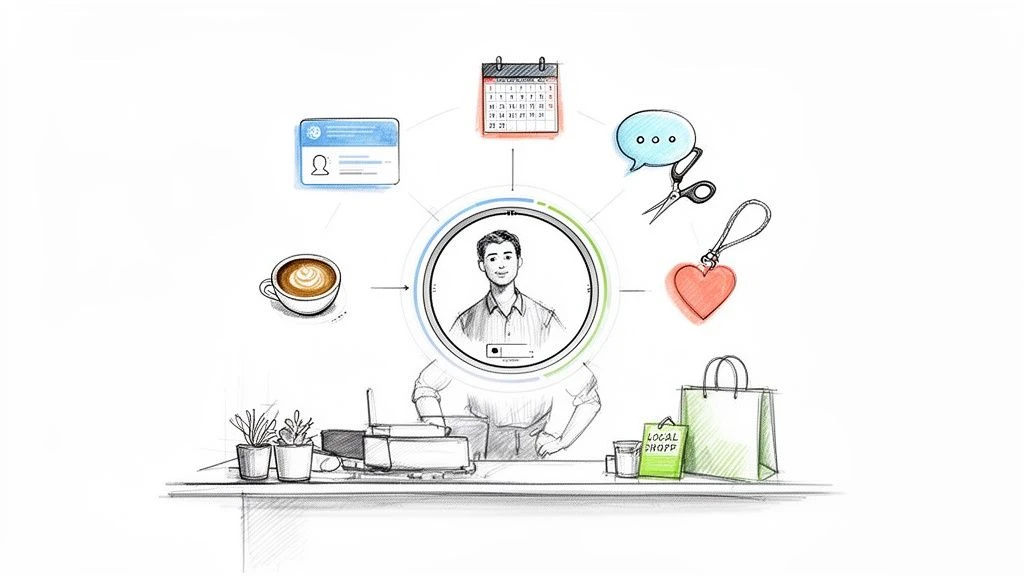
If you run a small business like a cafe, salon, or local retail shop, you know that every interaction counts. But managing names, past purchases, and personal preferences can quickly become chaotic. This is where a Customer Relationship Management (CRM) tool changes everything.
A CRM is a system designed to pull all your customer data into one clean, organized place. It's much more than a digital address book; it's a smart database that remembers every conversation, purchase, and touchpoint.
Imagine a regular walks into your coffee shop. Instead of just seeing them as another sale, your CRM reminds you: it’s their birthday next week, and they always order an oat milk latte. That's the power of having organized data.
This level of personalization turns a simple transaction into a memorable experience, which is the foundation of genuine loyalty. Instead of guessing who your best customers are, a CRM shows you with clear data.
Bridging the Gap for Small Businesses
For a long time, CRMs were complex tools for large corporations. That’s no longer the case. While 91% of companies with 10 or more employees use a CRM, only about 50% of businesses with fewer than 10 employees do. That gap is a massive opportunity for small businesses to gain a competitive edge. You can find more stats on this at kixie.com.
For a small business, a free CRM solves critical pain points:
- Centralize Customer Information: Finally, one place for all contact details, purchase histories, and important notes.
- Improve Customer Service: Access a customer’s entire history in seconds to provide faster, more personal support.
- Identify Sales Opportunities: Easily see who hasn't visited in a while and send them a targeted offer to win them back.
- Save Precious Time: Automate simple follow-ups and reminders so you can focus on running your business.
How a Free CRM Drives Real Business Growth
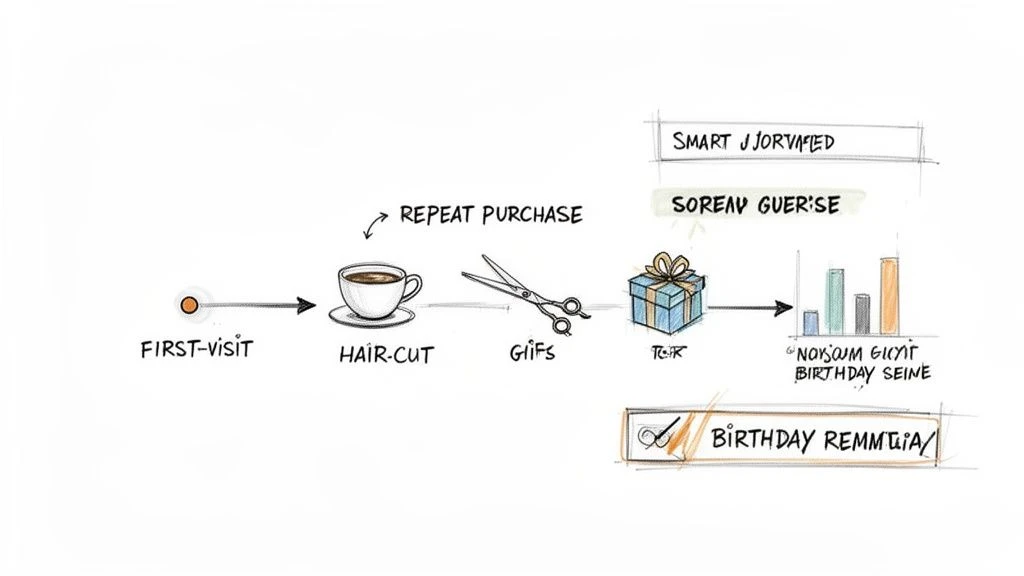
So, what can a free CRM actually do for your bottom line? Think of it as a smart assistant that remembers everything about your customers so you don't have to. It transforms your operations from reactive to proactive, letting you make decisions based on data, not just hunches.
Instead of wrestling with spreadsheets, you get a clear map of every customer’s journey. It's the difference between guessing what people want and knowing.
Personalize Every Customer Interaction
A free CRM is where one-size-fits-all service ends and genuine connection begins. It becomes the hub for all the small details that make a customer feel like a VIP.
For a coffee shop, that means remembering a regular's usual order and automatically sending a free latte offer on their birthday. For a salon, it's knowing a client's appointment history and sending a friendly reminder when they’re due for a trim.
These simple, personal touches build unbreakable loyalty. You stop being just another business and become a welcome part of their routine.
By consolidating customer data, you uncover hidden trends. Who are your most loyal regulars? Who is at risk of churning? This is the strategic insight that drives growth.
Boost Sales and Save Time
Adopting the best free CRM for small business isn’t just about organization-it’s about measurable growth. These tools automate tedious tasks like follow-up reminders and data entry, freeing you up to focus on the human side of your business.
Even the free plans from tools like HubSpot deliver a powerful impact. The data is clear: a well-implemented CRM can boost sales by 29%. For nearly half of businesses, it also cuts customer acquisition costs by 11-20%. Dive into more CRM statistics to see the full potential.
This newfound efficiency directly translates into more repeat visits and a healthier bottom line. A free CRM helps you achieve three critical goals:
- Increase Repeat Visits: Identify customers who have gone quiet and re-engage them with a targeted promotion.
- Improve Customer Retention: Make people feel seen with personalized messages that keep them coming back.
- Streamline Operations: Reclaim hours each week by automating administrative tasks.
Must-Have Features in a Free CRM Platform
Not all free CRMs are created equal. When searching for the best free CRM for your small business, it's easy to get sidetracked by flashy features you'll never use. To find the right fit, focus on the core tools that solve real-world problems for businesses like cafes, salons, and local shops.
Think of these features as the foundation. Without them, a CRM is just a digital rolodex. With them, it's a powerful engine for growth.
Core Contact Management
At its heart, a CRM must excel at managing contacts-far beyond just storing names and emails. A great free CRM should provide a complete history for every customer in one clean view.
- Unified Profiles: Every interaction, from their first purchase to their latest visit, is logged in one central profile.
- Custom Fields: Add details specific to your business, like a customer's favorite coffee order, go-to stylist, or even their pet's name.
- Simple Segmentation: Group customers based on purchase history, visit frequency, or birthdays to send personalized offers.
A strong contact database is the brain of your business. It remembers every detail so you can deliver experiences that make customers feel valued. Learn more in our guide to customer database software.
Sales Pipeline and Basic Automation
You might not have a dedicated sales team, but a simple, visual sales pipeline is still a game-changer. It helps you track potential customers (or "deals") from initial interest to final purchase, giving you a clear snapshot of your revenue pipeline.
Equally important is basic automation. A good free CRM can handle repetitive tasks for you, like sending a welcome email to a new contact or creating a follow-up reminder. This frees you up to focus on what really matters: building relationships.
Integrations and Reporting
Your CRM shouldn't operate in a silo. It needs to connect with the other tools you use daily. Integrations allow your CRM to share data with your email marketing platform, calendar, or accounting software. For example, a telephony CRM integration can automatically log calls and notes in a customer's profile, saving you time.
Finally, you need simple reporting. You don't need complex charts, but a basic dashboard should show key metrics at a glance, like how many new contacts you've added or which products are selling best. This data helps you make smarter decisions.
Cloud-based CRMs are now the standard, with 87% adoption-a huge leap from 12% in 2008. This makes them perfect for busy owners who need to access customer data on the go.
Free CRM Evaluation Checklist
Before you commit, use this checklist to compare platforms and ensure they meet the essential needs of your small business.
| Feature | What to Look For | Check If Included (Yes/No) |
|---|---|---|
| Contact Management | Unified customer profiles, custom fields, and activity timelines. | |
| Segmentation | Ability to create customer groups based on behavior, tags, or custom data. | |
| Sales Pipeline | A simple, visual way to track deals or potential sales from start to finish. | |
| Basic Automation | Can it automate simple tasks like welcome emails or follow-up reminders? | |
| Email Integration | Connects to your email (e.g., Gmail, Outlook) to log conversations. | |
| Third-Party Integrations | Does it connect with other key tools you use (e.g., accounting, marketing)? | |
| Reporting & Dashboards | Simple, easy-to-read reports on key metrics like contacts and sales. | |
| Mobile Access | A functional mobile app or mobile-friendly website for access on the go. | |
| User Limits | How many users can you have on the free plan? Is it enough for your team? | |
| Contact/Data Limits | Is there a cap on how many contacts or how much data you can store? |
This checklist isn’t about finding a CRM that does everything. It's about finding the one that does the right things for your business, right now.
Comparing the Top Free CRM Software Options
Choosing the right free CRM for a small business means finding the perfect balance between powerful features and ease of use. A busy cafe owner or salon manager needs an intuitive tool, not one designed for a massive sales corporation. The goal is to organize your customer data without a steep learning curve or hidden costs.
Some free plans are generous with unlimited contacts, while others hit a paywall quickly. Some have clean, modern dashboards perfect for a quick glance, while others feel clunky. We'll explore these differences to help you find the best fit. For a broader perspective, you can also check out comparisons of the best CRM for small business UK.
Key Differentiators Among Free CRMs
The biggest differences usually boil down to limitations and user experience. A coffee shop owner needs a CRM that’s fast and mobile-friendly, while a small service business might prioritize email integration and project tracking.
Ask yourself these critical questions as you evaluate each option:
- Contact & User Limits: How many customers can you add before you're forced to upgrade? How many team members can use the free plan?
- Ease of Use: Is the dashboard clean and easy to navigate? Can you find what you need in a few clicks, or is it a maze of confusing features?
- Core Feature Set: Does the free version provide the essentials? For most small businesses, a visual sales pipeline, basic automation, and simple reporting are non-negotiable.
This decision tree can help you visualize your priorities. It guides you through whether you truly need a sales pipeline or advanced automation from the start.
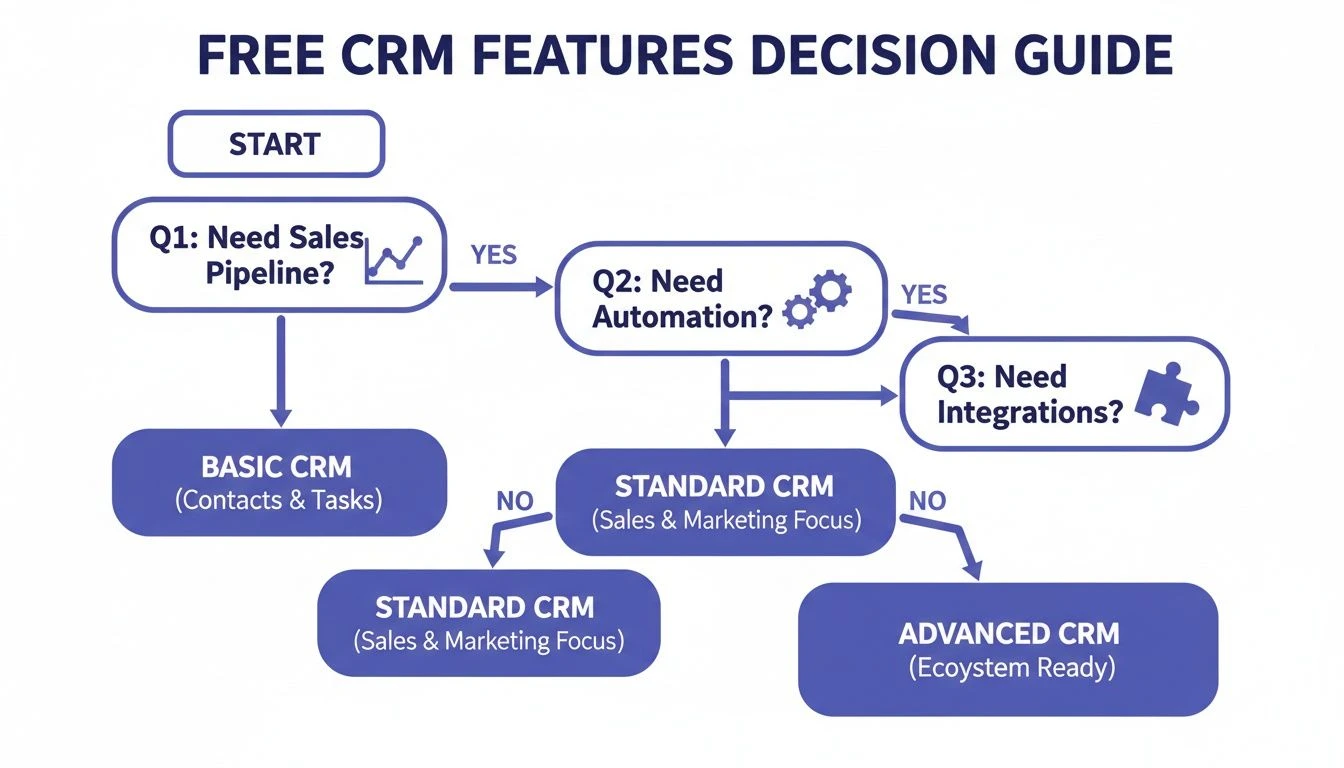
As the flowchart shows, your core needs-like tracking sales or connecting other tools-should guide your choice. This is the best way to avoid picking a tool that doesn't align with your goals.
Making a Confident Choice
Ultimately, the best platform is the one you and your team will actually use. Data shows that early adopters win: 65% of businesses adopt a CRM within their first five years, leading to 34% better sales productivity and 42% more accurate forecasts. By choosing a tool that fits your workflow now, you're setting yourself up for sustainable growth.
The most effective free CRM for a small business isn’t the one with the most features-it’s the one that solves your biggest organizational headache with the least friction. Prioritize simplicity.
Don't get distracted by a long list of features you don't need. Pinpoint your top one or two challenges, whether it's remembering customer birthdays or managing follow-ups. Then, test drive a couple of the top free options. The one that feels like a natural extension of how you already work is the winner.
Turn Your CRM Data into Customer Loyalty
A free CRM is great for organizing customer information, but its real power is unlocked when you use that data to make people feel appreciated. The numbers tell a story-who your regulars are, what they love, and when they might be drifting away. This is where a simple, modern loyalty program becomes your CRM's best friend.
Think of your CRM as the brain and a digital loyalty tool like BonusQR as the hands. The brain spots an opportunity, flagging a customer who hasn't visited in 60 days. The hands then take action, automatically sending a personalized "We Miss You" offer via a digital punch card directly to their phone. This seamless connection turns your static database into an active engine for repeat business.
You're no longer just storing information; you're using it to build relationships. This simple integration transforms your CRM from a passive filing cabinet into a proactive engine for customer retention.
Bridging CRM Insights with Loyalty Actions
When you connect your CRM to a loyalty app, you create a powerful feedback loop. Your CRM tracks customer behavior, and your loyalty program rewards it. For businesses using BonusQR, this is how you turn one-time buyers into lifelong fans. This strategy aligns with a broader trend: 45% of companies see revenue growth of up to 245% after adopting a CRM.
Here’s how this powerful partnership works in the real world:
- Spot At-Risk Customers: Use your CRM to create a list of customers who haven't made a purchase in over a month.
- Launch a Win-Back Campaign: Export that list and use your loyalty app to send a targeted "Come Back & Get a Free Drink" offer.
- Reward Your Best Customers: Identify your top 10% of spenders in the CRM and send them an exclusive "VIP" reward to say thanks.
Build a Community, Not Just a Customer List
This approach does more than just boost sales-it builds a genuine community. When customers receive timely, relevant offers based on their habits, they feel recognized and valued. They become part of an exclusive club, not just another number in a spreadsheet. Our guide on maximizing customer retention with a small business loyalty program explores these strategies in more detail.
This simple connection is the heart of a modern customer relationship strategy. It's about using smart, affordable tools to create personal experiences that keep people coming back, turning your small business into their favorite spot.
Your Simple Plan for Getting Started
Starting with a CRM can feel overwhelming, but it doesn't have to be. Let's break it down into a simple, actionable plan. The best free CRM is the one you actually use, so the key is to start small and solve one problem at a time.
Here is a simple, four-step plan to get you up and running without the headaches.
Step 1: Define Your Primary Goal
Before looking at any software, ask yourself: What is the #1 problem I need to solve right now? Don't try to fix everything at once.
Maybe you're tired of forgetting customer birthdays, or you need a better way to see who hasn't visited in a while. Pick one clear goal. This focus will be your guide, helping you ignore unnecessary features and stay on track.
Step 2: Test Drive One or Two Options
With your goal in mind, choose just one or two free CRMs that seem like a good fit. Resist the urge to try them all-limiting your options makes the decision faster and less stressful.
Sign up for your top choice and spend 30 minutes exploring. Does the layout make sense? Can you add a new contact without consulting a manual? If it feels clunky, move on to your second option.
Step 3: Run a Small-Scale Test
Once you find a CRM that feels right, don't import your entire customer list. That's a classic recipe for frustration. Instead, manually add a small group of 5-10 contacts.
Use this small group to test the core features. Can you add a quick note about a conversation? Can you create a task to follow up next week? This low-stakes test lets you learn the ropes without the pressure of managing your entire database.
Step 4: Connect One Daily Tool
Finally, make the CRM a part of your daily routine by connecting it to one tool you already use, like your email. This simple integration makes it easy to log conversations and keep your CRM updated without adding another chore to your to-do list.
The goal isn’t to become a CRM expert overnight. It's about building a small, consistent habit. Start by solving one problem, and as you get comfortable, you can explore more features.
When you're ready, pairing your new CRM with a simple loyalty tool like BonusQR is the fastest way to turn that organized data into measurable results. This simple combination helps you bring customers back again and again, building the loyal community your business deserves.
Answering Your Questions About Free CRMs
If you’re exploring free CRMs, you probably have a few questions. Are they really free? Are they just glorified spreadsheets? When's the right time to pay for one? Let's clear the air and tackle the most common questions we hear from small business owners just like you.
Is a Free CRM Really Free?
Yes, the best free CRMs for small businesses offer a genuine "forever-free" plan. These aren't just 30-day trials that leave you high and dry.
So, what's the catch? There isn't one, really. Companies offer these plans hoping that as your business grows, you'll eventually need more horsepower and upgrade to a paid tier. But for many small shops, the free version is more than enough to get organized and stay that way-without ever pulling out a credit card. Just be sure to check the fine print for limits on contacts, users, or specific features to make sure it fits.
How Is a Free CRM Different From a Spreadsheet?
Thinking of a CRM as just a fancy spreadsheet is like comparing a bicycle to a car. Sure, they both get you places, but one is built to go a lot further, a lot faster.
A spreadsheet is a static list of names and numbers. A CRM, on the other hand, is a dynamic, living system that works for you.
A good CRM automatically logs every touchpoint-emails, calls, purchases-giving you a complete history for every single contact. It can nudge you with follow-up reminders and lay out your deals in a visual pipeline so you know exactly where everything stands. A spreadsheet needs you to do all that work manually, which is a recipe for mistakes and a total bottleneck as you grow.
When Should I Upgrade to a Paid CRM?
The time to upgrade is when your free plan starts feeling less like a helpful tool and more like a roadblock to your growth. This moment is different for every business, but you'll know it's time when you start running into these walls:
- You're Hitting the Limits: You've maxed out your contacts or can't add a new team member.
- You Need Smarter Automation: You want to build out multi-step marketing campaigns or sales workflows that the free plan just can't handle.
- You're Flying Blind: You need deeper reports and sales forecasts to make smarter decisions about the future.
- You Need More Connections: Your business relies on a specific tool (like accounting or e-commerce software) that doesn't integrate with the free tier.
The goal is to upgrade because your business is thriving, not because the tool failed you. Start strong with a free CRM, and when you’re consistently bumping up against its ceiling, that’s the sign you’ve earned the right to invest in more.
Can a CRM Help with Customer Loyalty?
Absolutely. In fact, a CRM is the command center for any smart loyalty strategy. It’s where you can see who your regulars are, how often they visit, and what they love to buy.
This is where things get really powerful when you connect your CRM to a simple loyalty tool like BonusQR. You can dive into your CRM data, segment customers into groups (like "VIPs" or "at-risk customers"), and then use BonusQR to send them the perfect offer.
Imagine sending a special thank-you reward to a loyal regular or a friendly "we miss you" discount to someone who hasn't stopped by in a while. That’s how you turn raw data into real relationships that keep people coming back.


