You’ve built your small business from the ground up, and you know the gut-wrenching feeling: a star employee, someone you’ve trained and trust, hands in their notice. It’s not just an inconvenience; it’s a direct hit to your bottom line, your team’s morale, and the institutional knowledge that keeps your business running smoothly. You're losing more than a pair of hands; you're losing momentum.
The core problem for small business owners isn't just that people leave-it's that replacing them is a costly, time-consuming cycle that drains resources you can't afford to waste. The good news? You can break that cycle, not with a huge budget, but with smarter, more human-centric strategies.
Why Your Best People Are Quietly Looking for the Exit
Bad management is often the culprit behind those unexpected resignations. Think about it: trust in leadership, not just the paycheck, is what keeps people around for the long haul.
It's a staggering statistic, but 50% of employees actively looking for a new gig say their direct manager is the main reason they're leaving. The financial fallout from that is massive. Replacing a single employee can cost about 20% of their annual salary, and for senior or highly skilled roles, that number can balloon to over 200%.
The Real Reasons Your Team Is Draining Away
Beyond a difficult manager, there are a few common frustrations that quietly push your best talent out the door. Getting a handle on these is the first real step toward building a team that actually wants to stick with you.
Here’s what’s likely going through their heads:
- "I'm Stuck in a Rut." Your most ambitious people need to see a future. If they can't picture where they're going next-whether that's learning a new skill or taking on more responsibility-they'll start looking for a place that has a map for them.
- "Does Anyone Even Listen?" Nothing kills engagement faster than feeling like you're talking to a brick wall. When good ideas get dismissed or feedback goes into a black hole, your team stops trying to help you solve problems. Instead, they start polishing their resumes.
- "I Feel Invisible." When hard work goes unnoticed, morale plummets. People need to feel seen and appreciated. Without that simple recognition, burnout isn't far behind, along with the nagging feeling that their effort just doesn't matter.
Creating a culture of loyalty is about more than just plugging leaks; it's about building an environment where people feel genuinely connected and valued. The psychology behind what makes people stay is remarkably similar whether they're customers or employees, which is something we explore in the psychology behind loyalty programs.
Before you start throwing solutions at the wall, take a moment to diagnose your own retention health. By taking an honest look at these key areas, you can figure out why your best people might be quietly planning their departure. Only then can you start making the changes that truly make them want to stay.
Your First 90 Days to Better Retention
Feeling the pressure to stop the revolving door of employees? I get it. The good news is you don’t need a massive budget or a complete corporate overhaul to make a real difference. Let's talk about what you can do right now.
This is your playbook for low-cost, high-impact moves you can make in the next three months to boost morale and bring some much-needed stability to your team. These are tangible actions designed for busy entrepreneurs like you to see real results, fast.
The first move is often the simplest: listen. But instead of waiting for exit interviews when it's already too late, you need to get ahead of the problem. This is where "stay interviews" come in.
Conduct Proactive Stay Interviews
Stay interviews are your secret weapon. They’re just informal, one-on-one chats designed to uncover what keeps your best people showing up every day and, just as importantly, what might push them to leave.
The goal here is to solve frustrations before they boil over into resignations. These aren't performance reviews; they're open dialogues about how your team is really doing.
Try asking a few of these questions tomorrow:
- "When you're heading to work, what part of your day are you actually looking forward to?"
- "What's one thing about your job that just completely drains your energy?"
- "If you had a magic wand and could change one thing about your role or our team, what would it be?"
The path to an employee quitting often starts long before they hand in their notice. It usually begins with them feeling like no one is listening.
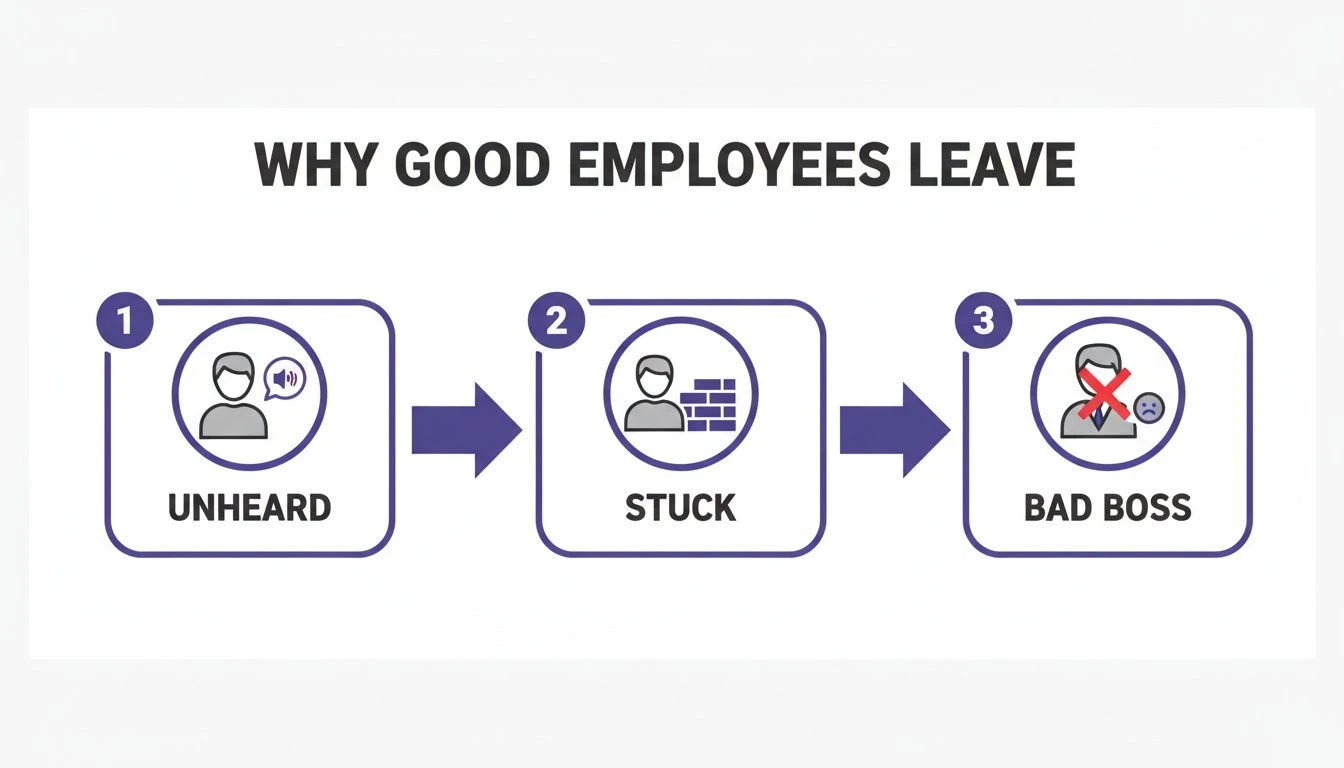
As you can see, turnover is rarely a sudden event. It’s a slow burn that starts with unheard feedback, leads to feeling stuck, and often ends because of a disconnect with management.
Amplify Recognition and Communication
Recognition is one of the most powerful-and most overlooked-tools in your retention toolkit. And it doesn't have to cost a dime. In fact, a staggering 79% of employees cite a lack of appreciation as a key reason they quit their jobs.
A simple, specific "thank you" for a job well done can resonate more deeply than a generic annual bonus. It shows you’re paying attention to the daily grind and the effort your team puts in.
You can start weaving recognition into your culture with small, consistent habits. Think about a peer-to-peer shoutout system, maybe on a shared message board, where team members can publicly praise each other's work. Or, how about a surprise afternoon off after a particularly brutal week? Little things go a long way.
For new hires, making a great first impression is critical. You can learn more about making them feel welcome and valued from day one with a solid employee onboarding promotion strategy.
Finally, throw open the lines of communication. A simple weekly huddle that isn’t just about the to-do list, but also about celebrating small wins, can completely shift the energy of your team. Ask for their ideas, and-this is the crucial part-act on them. When your team sees their feedback leads to real change, their investment in your business deepens. These are the immediate actions that start turning the tide on turnover.
Building a Culture People Refuse to Leave
Let's be honest, lasting loyalty isn't built on grand, one-off gestures. It’s forged in the thousand tiny interactions that make up the daily experience of working for you. A magnetic company culture is what turns a simple job into a place where people feel seen, respected, and genuinely excited to contribute.
It’s the single most powerful tool you have to stop the revolving door of employee turnover for good.
This isn’t about installing a ping-pong table or offering free snacks you can't afford. It's about being incredibly intentional with the environment you create, day in and day out.
Rethink Your Compensation and Benefits
As a small business owner, I know you can't always throw money at problems or match the salaries of corporate giants. And that's okay. Your real goal is to be competitive, fair, and, most importantly, creative.
Start by doing a little homework. Use sites like Glassdoor or Payscale to benchmark salaries for similar roles in your specific area. This ensures you’re at least in the ballpark with a fair wage.
But compensation is so much more than just the hourly rate. It’s the full package. Often, the benefits you offer have a much bigger impact on someone's daily life than a small pay bump ever could.
Think about what truly matters to your team:
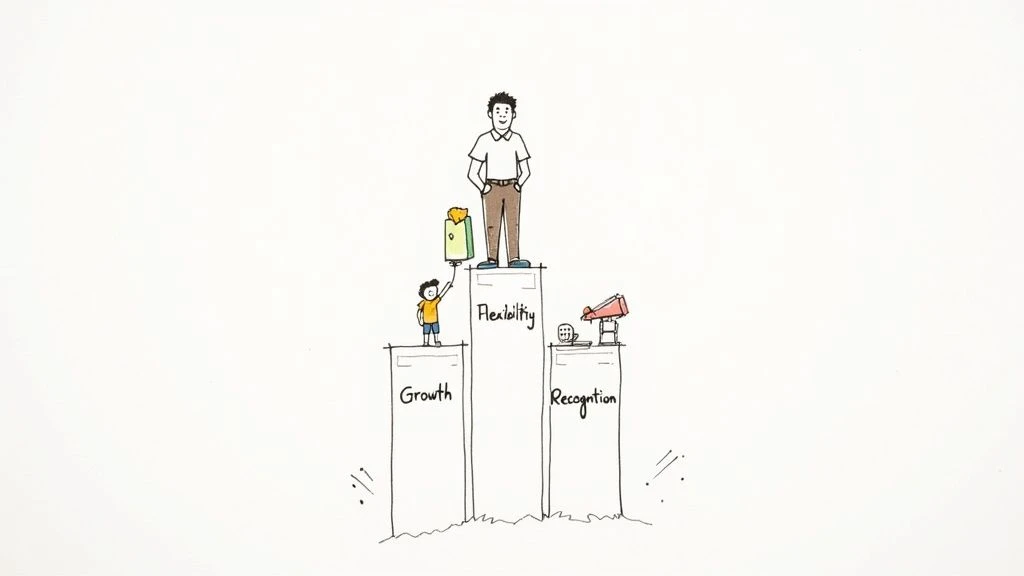
- Flexible Scheduling: Could you offer a compressed four-day work week? Or allow a parent to adjust their hours to handle school drop-offs without stress? This costs you nothing but buys you immense goodwill.
- Wellness Stipends: Even a small monthly amount for a gym membership or a mental health app sends a powerful message: "We care about you as a person."
- Generous Paid Time Off: Don't just stick to the legal minimums. Offering an extra personal day or two can be the difference between a valued employee and a burnt-out one.
Boosting salaries and benefits is still a cornerstone strategy. Organizations lose an unbelievable $2.9 trillion every year to voluntary turnover, and replacing a single employee can cost around $35,700. Yet, even after giving raises, 68% of companies still see people leave. Why? Because pay alone isn't enough. You can dig into the real cost of turnover on C-SuiteAnalytics.com.
Your ability to offer creative, life-friendly benefits isn't a weakness; it's your competitive advantage. It shows you see your employees as whole people, not just cogs in a machine. This human-centric approach is something larger corporations often struggle to replicate.
Create Real Career Paths, Not Just Jobs
One of the biggest-and most heartbreaking-reasons great employees leave small businesses is the fear of hitting a dead end. If they can't see a future with you, they'll inevitably start looking for one somewhere else. You have to show them a path forward, even if your team is small.
This doesn't mean you need to create a complex, rigid corporate ladder. It's about fostering a learning environment where a job can naturally evolve into a career.
Start by sketching out some potential growth opportunities. For a barista, the next step could be "Lead Barista," then "Shift Supervisor," and maybe even "Assistant Manager." Define the skills needed for each step and, crucially, help them get there.
- Invest in Low-Cost Training: Fund an online course in coffee grading, bring in a local marketing expert for a workshop, or have a senior employee formally mentor a junior one.
- Delegate Real Ownership: Give a team member full responsibility for a key area, like managing inventory or running the shop's social media. This not only builds their skills but also deepens their investment in your success.
When you invest in your team's growth, they invest right back in you. They stop being just employees and become genuine advocates for your business. This creates a powerful, self-sustaining cycle of loyalty that's very similar to how you build strong relationships with customers. In fact, you can explore some of those same principles in our guide on proven strategies to grow your business and build customer loyalty. This is how you stop the churn and start building a team that’s in it for the long haul.
How Smarter Hiring Reduces Future Turnover
Let’s be honest: great retention doesn't start with a farewell party. It starts way back in the hiring process. The seeds of long-term loyalty are sown the moment you post a job opening, turning a simple skills assessment into a strategic search for people who will genuinely thrive on your team. It’s a shift from asking what a candidate can do to discovering who they are.
Many small businesses get caught in a frustrating cycle: hiring for an urgent need, only to watch that person walk out the door a few months later. This is what happens when you hire a resume instead of a person. You fill the role, but you don't build the team.
Smarter hiring is your first, best defense against the revolving door.
Hire for Culture and Mindset
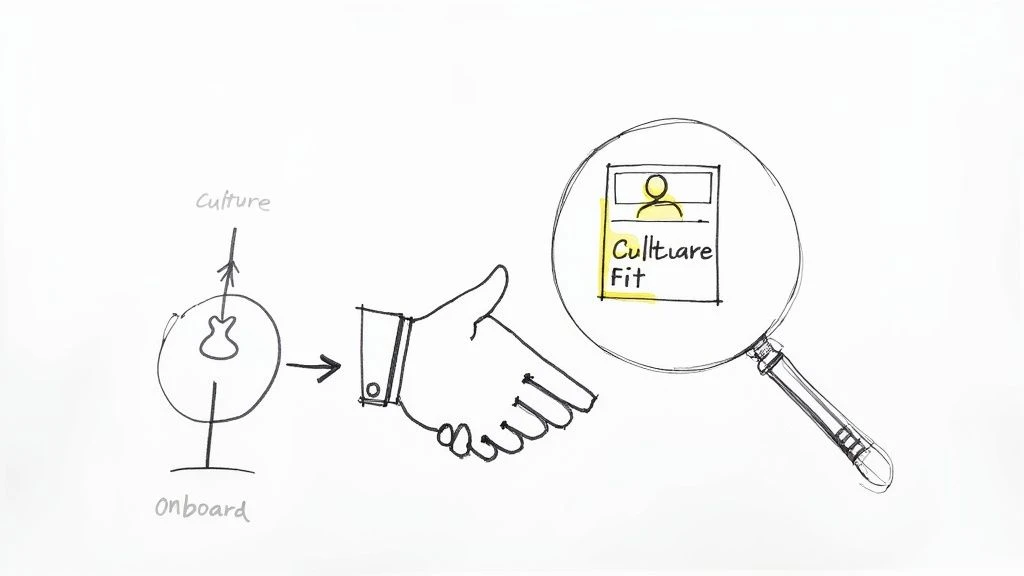
You can teach someone how to use a new piece of software, but you can’t teach them to have a positive attitude or a collaborative spirit. That stuff is deeply ingrained. So, before you hire for culture, you need to get crystal clear on what your culture actually is. Are you fast-paced and all-hands-on-deck? Or are you meticulous, quiet, and detail-obsessed?
Once you know your vibe, you can design interview questions that get past the canned answers and reveal how a candidate truly operates. Ditch the generic stuff and get behavioral.
- To Test Resilience: "Tell me about a time you got tough feedback from a manager or customer. How did you handle it in the moment, and what did you do afterward?"
- To Assess Growth Mindset: "Walk me through a project that didn't go as planned. What was your role, and what was the biggest lesson you took away from it?"
- To Gauge Teamwork: "Describe a disagreement you had with a coworker. What was the root of the problem, and how did you two work it out?"
These kinds of questions force people to tell real stories, revealing how they handle stress, learn from failure, and navigate relationships-the very things that will determine if they stick around for the long haul.
A stellar onboarding experience is your best chance to confirm they made the right choice in joining your team. It solidifies their decision and sets a positive tone for their entire tenure.
Design an Unforgettable Onboarding Experience
Onboarding is not a one-day paperwork marathon. A well-structured 90-day plan is your single greatest opportunity to welcome a new hire, build their confidence, and prove that they absolutely belong with you. Get this wrong, and you might lose them; a poor onboarding experience can convince one in five new hires to leave within the first 45 days.
Your goal here is simple: connection and confidence.
- Assign a Work Buddy: Pair your new person with a friendly, seasoned team member who isn't their boss. This gives them a safe person to ask the "silly" questions and helps them build social roots from day one.
- Set Up Early Wins: Don't just throw them into the deep end. Create a 30-60-90 day plan with small, achievable goals. That first successful task, no matter how minor, is a massive confidence boost.
- Schedule Meaningful Check-Ins: For the first month, set aside 15 minutes every week to connect. Ask them what's clicking, what's confusing, and what they need to succeed. This proactive support stops small frustrations from turning into big reasons to leave.
A thoughtful onboarding process makes new team members feel both competent and connected-two pillars of great retention. Part of this is ensuring they have the right tools from the get-go. Exploring solutions for staff access control can help you manage system permissions effectively, avoiding that classic first-day friction and making their integration even smoother.
Targeted Retention Strategies for Your Industry
Let's be honest: a cookie-cutter approach to keeping your people happy just won't cut it. The day-to-day reality of a slammed coffee shop is worlds away from the vibe of a client-focused salon or a small, project-driven office.
Your challenge isn't just about keeping people-it's about keeping your people thriving within the unique pressures and rhythms of your business. To truly tackle turnover, you have to get specific and apply fixes that actually make sense for your team's work life.
For Restaurants and Retail Shops
In these high-energy, customer-facing roles, burnout is the silent killer. The relentless pace of peak hours, coupled with schedules that can feel totally random, will wear down even the most passionate employee. Your mission here is to build stability and a genuine team-first culture.
- Offer Fair, Predictable Schedules: This is huge. Use scheduling software that lets your staff easily swap shifts or book time off. Getting schedules out at least two weeks in advance gives them the breathing room to actually plan their lives.
- Foster Teamwork During the Rush: Kick off each shift with a quick huddle. Get everyone on the same page about daily goals and specials. Nurture that "all-hands-on-deck" mentality by cross-training staff-so a host can jump in to bus tables or a barista can restock without needing to be asked.
In the whirlwind of food service or retail, feeling like your team has your back is everything. A positive, collaborative floor doesn't just make customers happier; it makes those tough shifts bearable-and even rewarding-for your crew.
For Salons and Professional Services
In a business built on personal connections-think salons, spas, or even your local auto shop-your staff is the brand. When that go-to stylist or trusted technician walks out the door, a chunk of your client base often goes with them.
The secret here is to invest in their craft and empower them to build their own success right where they are. This could mean paying for specialized training on a new technique or product line. It shows you're committed to their career, not just filling a slot.
And when a client leaves a glowing review naming a specific employee? Share it with everyone! That simple act of recognition connects their personal wins directly to the business's growth and makes them feel seen.
For Small Office Teams
In a tight-knit office, people tend to wear many hats and see the company's wins and losses up close. A big reason they leave? Feeling micromanaged or disconnected from the end result of all their hard work. Your strategy needs to be all about autonomy and purpose.
- Promote True Ownership: Stop just assigning tasks. Start delegating whole projects. Give your team the freedom to make decisions and figure things out on their own. This builds incredible confidence and a real sense of ownership.
- Connect the Dots to the Mission: Make it a habit to show your team how their individual work made a difference. Did their report help land a new client? Did their code fix a major customer frustration? Show them-don't just tell them-that their work truly matters.
At the end of the day, knowing how to reduce employee turnover starts with understanding what makes your industry tick. For a deeper look at this, check out these proven strategies for reducing employee turnover. For restaurants, the right tech can be a game-changer; see how a dedicated restaurant loyalty application can help create a more stable, rewarding environment for everyone.
Your Top Questions About Employee Turnover, Answered
Even with the best game plan, navigating the world of employee retention brings up a lot of questions. It's completely normal to wonder about the specifics. Let's dig into some of the most common things I hear from small business owners and give you some straight-up, practical answers.
As a small business owner, you know that losing a team member isn't just about filling a vacant spot. It's the lost knowledge, the extra strain on your remaining crew, and the quiet costs that chip away at your bottom line. Every question you ask is another step toward building a team that's stronger, more stable, and truly committed.
How Much Turnover Is Too Much?
Everyone wants a magic number, but the truth is, it depends. While an annual turnover rate consistently creeping over 20% should definitely get your attention in most industries, context is everything. A seasonal coffee shop will naturally see more churn than a year-round salon.
Instead of getting hung up on a universal benchmark, look at your own story. Is your rate trending up year after year? Are your top performers heading for the door, or is it mainly the folks who weren't a great fit anyway? Those answers will tell you far more about the health of your business.
The most painful turnover isn't just about the number of people leaving. It's about who is leaving. Losing one incredible team member who lives and breathes your culture can do more damage than losing three who just punch the clock.
Is It Always About the Money?
Pay is always part of the conversation, but it's almost never the whole story. If you're paying well below what the market demands, you've got a fire to put out, and you need to do it now. But once you're offering fair, competitive pay, other things become much, much more important.
Think of it like this: fair pay is the ticket to the dance. But a fantastic culture, a manager who has your back, and a real chance to learn and grow? That's what makes people want to stay all night. An employee who feels seen, respected, and has a future with you won't be easily tempted by a few extra bucks somewhere else. For a deeper dive on this, check out this comprehensive guide on reducing employee turnover in the UK.
What's the Fastest Way to Stop People From Leaving?
Want the quickest win? Focus on your managers. Nothing sends good people running for the hills faster than a bad boss. Seriously. A little bit of time spent training your shift leads, supervisors, or managers on how to give real feedback, celebrate wins, and actually listen can change the game almost overnight.
You can start with a few simple, powerful actions:
- Make weekly one-on-ones a non-negotiable. Just 15 minutes to connect.
- Create a simple way to give shout-outs. A dedicated Slack channel or a bulletin board works wonders.
- Teach managers to do "stay interviews." Find out what people love (and what they don't) before they start looking elsewhere.
These aren't expensive, complicated initiatives. They’re small shifts that directly fix the day-to-day frustrations that make great employees quit, turning your business into a place they’re genuinely proud to be a part of.
At BonusQR, we believe building loyalty shouldn't be complicated. While you focus on creating a five-star employee experience, our platform provides the simplest, most cost-effective way to build that same loyalty with your customers. Designed specifically for busy small business owners, BonusQR helps you turn first-time visitors into devoted regulars, effortlessly.
Ready to stop losing customers and start building a loyal following? Explore the simplest loyalty solution at https://bonusqr.com.


