Reward punch cards are a classic, powerful tool for turning first-time customers into loyal regulars. By offering a simple, visual path to a reward-like a free coffee after ten purchases-they build repeat business without complicated tech or confusing points systems. Their magic lies in tangible progress and straightforward value.
Why Punch Cards Still Win in a Digital World
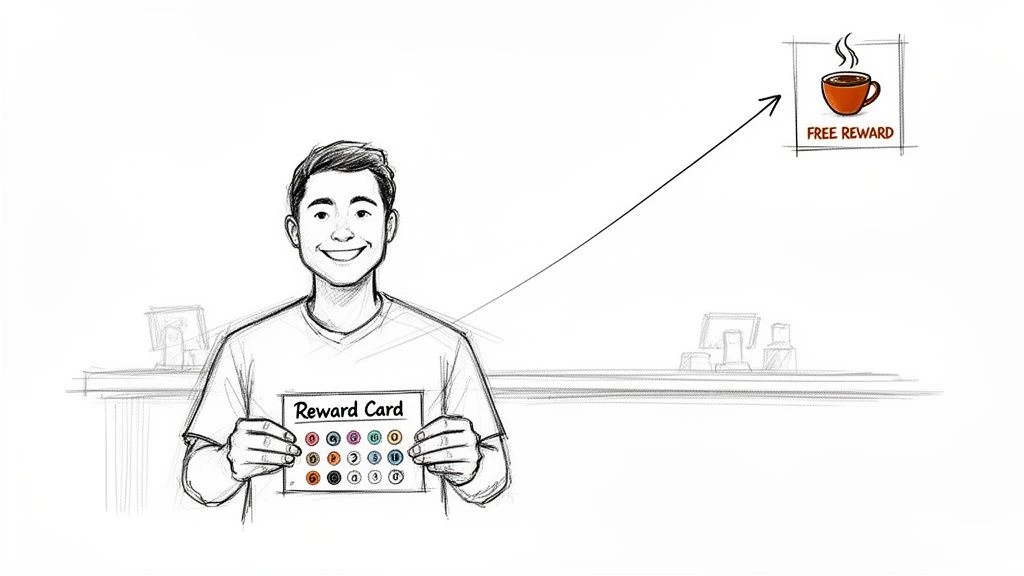
To put this approach into practice without printing cards, explore digital stamp cards for your small business. See how customers collect stamps, how staff issue them and how rewards are redeemed in BonusQR.
Let's be honest: in a world of apps and notifications, a paper card can feel a bit old-school. But its simplicity is its greatest strength. Instead of asking customers to download another app or create a password they'll forget, you just hand them a card. It's direct, frictionless, and instantly understood.
This simple act taps into powerful human psychology. Researchers call it the goal-gradient effect-the closer people get to a reward, the more motivated they become to complete it. Every punch is a mini-win, a visual reminder that keeps your business top-of-mind.
The Power of Simplicity and Tangibility
Are your customers tired of digital-only everything? A physical punch card offers a tangible connection to your brand. It’s a real object that sits in their wallet, a constant, subtle advertisement that can’t be swiped away and forgotten like a digital notification.
This isn't a new marketing gimmick. One of the earliest examples dates back to 1890, when photographers issued cards to reward repeat visits with premium photos. It was a brilliantly simple way to drive repeat business long before apps existed.
Key Takeaway: A punch card isn't just a discount tool; it's a customer retention engine. It builds a simple, rewarding relationship that encourages customers to choose you over a competitor, time and time again.
Bridging the Gap with Modern Solutions
For all their charm, paper cards have their classic problems. They get lost, forgotten, or even faked with a hole punch from home. This is where modern solutions come in, keeping the simplicity you love while ditching the drawbacks that cost you money.
A modern digital punch card system like BonusQR gives you the best of both worlds.
- Convenience: The card lives right on the customer's phone, so it’s never left behind.
- Security: Fraud-proof digital stamps mean no more fake punches.
- Insight: You get valuable data on visit frequency without complex software.
This approach keeps the easy, scannable experience your customers and staff appreciate. You can learn more in our complete digital punch card guide. It’s all about keeping what works-simplicity and clear rewards-while solving the problems that hold traditional programs back.
Designing a Loyalty Program Customers Will Love
Let's get one thing straight: a good punch card program isn't just about giving away free stuff. It’s about strategically changing customer behavior to grow your business. If you’re stuck on the "buy 10, get one free" model for your core product, you're missing a huge opportunity.
Your goal is to create an offer that feels genuinely valuable to customers but also works for your bottom line.
Think about it:
- Coffee Shop: Instead of a free coffee, why not a high-margin specialty pastry? This introduces customers to your food menu and increases their average spend on future visits.
- Salon: Instead of a discount on another haircut, offer a free product upgrade like a deep conditioning treatment. This drives trial for a new service and opens the door to retail sales.
Structuring Your Rewards for Maximum Impact
Your program's structure is everything. You need to find the sweet spot between a reward that feels attainable and one that protects your profits. If the goal is too high, customers won't even bother starting.
An achievable goal is the cornerstone of a great loyalty program. If customers feel the reward is out of reach, they won't even try. Aim for a target that feels like a satisfying journey, not an impossible marathon.
Here are a few principles for structuring rewards that work:
- Set Achievable Goals: For most small businesses, 5 to 10 punches is the sweet spot. A coffee shop might use 10 punches for frequent, low-cost purchases, while a boutique could use 5 punches for higher-value items to make the reward feel more accessible.
- Offer Strategic Rewards: Don't just give away your best-seller. Pick rewards with a high perceived value but a lower cost to you. This could be a new menu item you want to promote, a service upgrade, or a product with a great margin.
- Keep It Simple: The rules must be dead simple-understood in seconds and easy for your staff to explain. "One punch per visit" or "one punch per item" is all you need. Complexity is the enemy of participation.
Need some inspiration? Here are a few ideas tailored to different businesses.
Reward Structure Ideas for Different Businesses
| Business Type | Punch Trigger (What gets a punch?) | Reward (What do they get?) | Pro Tip |
|---|---|---|---|
| Coffee Shop | Any handcrafted beverage purchase | A free specialty pastry or baked good | Pushes customers to try food items, increasing their average ticket size on future visits. |
| Bookstore | Every $15 spent | 20% off a new release hardcover | Drives sales of higher-margin new titles instead of just giving away a free paperback. |
| Car Wash | Each "Premium" or "Ultimate" wash | 50% off a full interior detailing service | Encourages trial of a high-value, less common service, converting wash customers into detailing clients. |
| Salon / Barber | Each haircut or color service | A free product upgrade (e.g., deep conditioner, scalp treatment) | Introduces clients to retail products in a low-pressure way, often leading to future product sales. |
| Frozen Yogurt | Purchase of a medium or large cup | A free topping on their next 5 visits | Low-cost reward that encourages multiple repeat visits in a short timeframe. |
Ultimately, the best reward is one that feels generous to the customer while being smart for your business. Don't be afraid to test a few different ideas to see what gets the best response.
Crafting a Card That Represents Your Brand
Whether you go with a physical card or a digital one, its design is a handshake with your customer. A flimsy, poorly designed card screams "low-value program." On the other hand, a clean, professional design instantly reinforces your brand's quality and makes the program feel more premium.
Make sure your card clearly features your logo, brand colors, and easy-to-read fonts. Most importantly, the rules and punch spaces must be obvious. A great card feels like a small gift, not just another coupon.
You don't need a graphic designer. A user-friendly tool like Canva can help you create professional-looking designs in minutes. It’s a small detail that makes a huge difference in how customers perceive your program.
Choosing Your Toolkit: Paper vs. Digital Punch Cards
So, you're ready to start. The first big decision is whether to go with classic paper cards or a modern digital solution. This isn't just about old-school vs. new-school; it's about what genuinely fits your business, your customers, and your daily workflow.
Let's break down the hidden costs and benefits.
Paper cards seem cheap and easy. A quick design, a trip to the printer, and you're good to go. There’s zero learning curve for your staff or your customers.
But that simplicity comes with serious headaches that cost you money:
- Fraud: It’s shockingly easy for someone with a cheap hole punch to give themselves unearned rewards, which comes directly out of your pocket.
- Lost Progress: Customers lose cards, forget them at home, or run them through the wash. When that happens, their progress-and motivation-is gone.
- Zero Data: You have no idea who your regulars are, how often they're really visiting, or if your program is actually increasing visit frequency.
The Shift to Smarter, Digital Solutions
This is where digital reward punch cards change the game. By moving the system to your customer's phone, you instantly solve the most frustrating and costly problems of paper.
The data shows a clear shift. 59% of customers now prefer mobile loyalty programs, recognizing the convenience and real-time tracking. Starbucks, for example, used its app to drive an 18% increase in visit frequency and a 15% lift in average order value. It’s no surprise that 80% of shoppers say they are more likely to shop at stores that offer rewards.
This decision tree can help you visualize which path is right for your business.
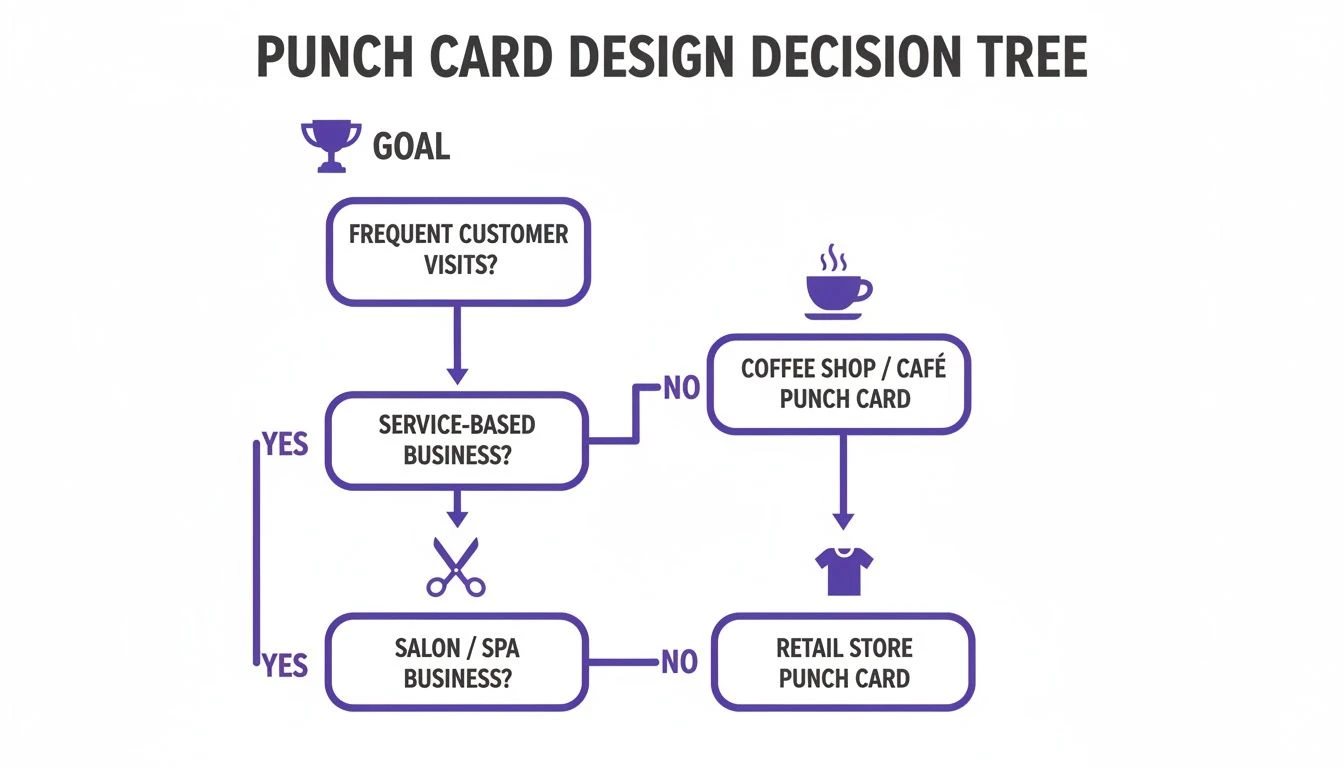
While the end goal is always loyalty, the path for a coffee shop with daily regulars looks different from a boutique with less frequent, higher-value purchases.
Finding the Perfect Middle Ground
"Going digital" shouldn't mean expensive, complicated software that takes weeks to learn. The best solution for a small business is one that feels as simple as paper but works as smart as an enterprise system.
Key Takeaway: The sweet spot is a solution that keeps the dead-simple feel of a paper card but adds the security and insights of a digital system. You get all the benefits without the enterprise-level price tag.
This is precisely the gap a tool like BonusQR was designed to fill. It offers fraud-proof digital stamps, automated tracking, and priceless insights into customer behavior, all while being incredibly easy for your team to use. See just how straightforward it is in our guide on how to set up a stamp-based loyalty program.
Still want to try physical cards first? No problem. The key is to make them look professional. For great DIY tips, this guide on printing on cardstock is a fantastic resource to get you started.
How to Get the Word Out About Your New Program
The most brilliant loyalty program is useless if no one knows about it. The good news? Promoting your reward punch cards doesn't require a massive marketing budget. The best promotion is woven right into your daily operations.
It all starts with your team. They are the face of your program. If they aren’t genuinely excited, your customers won't be either.
Get Your Team to Be Your Biggest Fans
Before you launch, get your staff completely on board. Explain the why-this isn’t about giving away free stuff, it’s about thanking regulars and giving new visitors a reason to come back.
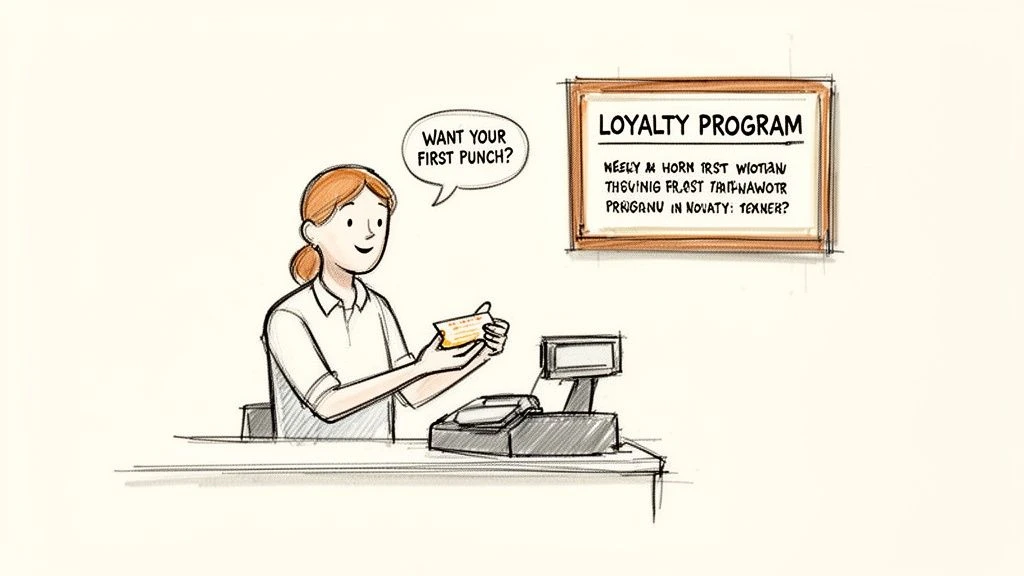
Train them with simple, conversational lines to use at checkout. Instead of a robotic, "Want to join our rewards program?" they can try something more engaging:
- "Hey, want to get your first punch toward a free coffee today?"
- "We just launched a new loyalty card. You get a punch just for signing up-it's super simple."
- "Just a heads-up, you're only two punches away from your next reward!"
This small shift in language turns a generic offer into an immediate, benefit-driven invitation.
Use Your Space for Simple, Effective Signage
Your physical space is prime advertising real estate. Use it! You don't need fancy banners. Simple, clear signs in high-traffic spots work wonders.
My Favorite Tip: Put a small, eye-catching sign right at the point of sale. A simple message like "Ask Us How to Earn Free Stuff!" is often all you need to spark curiosity and start a conversation.
Place a small flyer on each table or a clean decal on the front door. The goal is to make the program impossible to miss but incredibly easy to understand.
Don't Forget Your Digital Channels
Even if you’re using paper punch cards, your online presence is a powerful promotional tool. Announce the launch on your social media channels with a crisp photo of the card and a quick rundown of how it works.
Consider these low-cost digital moves:
- Add a banner to your website's homepage.
- Send a note in your next email newsletter.
- Create a post on your Google Business Profile.
With a digital solution like BonusQR, this process is even easier. Customers sign up with a quick QR code scan, and you can start tracking participation from day one. This gives you instant feedback on which promotional efforts are working best.
Keeping Tabs on Your Punch Card Program
Is your loyalty program actually working? Without tracking a few key numbers, you're flying blind. You don’t need an analytics degree to figure this out.
First, look at your adoption rate: the percentage of customers who take a card. If it's low, your team might need more training on explaining the benefits, or the offer itself isn't compelling enough.
Next is the most important metric: your redemption rate. How many people are actually filling their cards and claiming a reward? A low redemption rate is a huge red flag that your program's design isn't clicking. The ultimate goal is to see a lift in visit frequency. Are your loyalty members coming back more often than your average customer? That's the real win. Learning how to measure marketing ROI is key to seeing the true financial impact.
Sidestepping Common Punch Card Pitfalls
Even the best plans can go sideways. Here are the most common mistakes I see small businesses make and how to fix them.
The Reward is Boring. If people aren't turning in completed cards, the prize is the problem. A "free regular coffee" might not be exciting enough. Try offering something with a higher perceived value, like a specialty latte or a popular pastry. Make it a genuine treat.
The Goal is a Marathon. A card with 20 punches is daunting. If you see lots of abandoned cards with only one or two punches, your goal is too high. Stick to a target between 5 and 10 punches to keep the finish line in sight and maintain motivation.
The Promotion Dies Out. So many businesses launch with a bang and then go silent. A loyalty program needs constant, low-level promotion. Make it a non-negotiable step in your checkout process for every customer and keep clear signage up at all times.
Key Takeaway: Your loyalty program isn't "set it and forget it." It needs consistent attention and small tweaks based on what the data-and your customers-are telling you.
This is where a simple digital system transforms your efforts. Instead of guessing how many paper cards are lost, a tool like BonusQR automatically tracks adoption, redemption, and visit frequency. You get clear insights, letting you make smart adjustments and ensure your program is a profitable engine for growth.
Common Questions About Reward Punch Cards
Even with a solid plan, questions pop up. Here are straightforward answers to what I hear most from small business owners.
How Many Punches Should My Reward Card Have?
The magic number is usually between 5 and 10 punches. Too few, and the reward can feel cheap. Too many, and customers lose interest before they even get started.
Let your business type be your guide:
- For frequent, smaller purchases (coffee, smoothies), aim for 8-10 punches.
- For less frequent, bigger-ticket services (haircuts, car washes), 5-6 punches is the sweet spot.
Are Digital Punch Cards Really Better Than Paper?
For most businesses today, the answer is a resounding yes. Paper cards seem cheap, but they come with hidden costs: they get lost, forgotten, and are easy to cheat with a fake stamp. Worst of all, they give you zero customer data.
Digital punch cards, especially a simple system like BonusQR, solve all these problems:
- They live on your customer's phone, so they're always there.
- They use secure codes, eliminating fraud.
- They automatically track visit frequency, giving you real business intelligence without any extra work.
The biggest win with digital is that it turns a simple loyalty tool into a smart business asset. You can finally see what's working and who your true regulars are.
What's the Biggest Mistake I Could Make?
The #1 reason punch card programs fail is a lack of promotion and staff training. You can have the best program in the world, but if your team isn't excited to mention it at checkout and you don't have signs at the counter, it will quietly fade away. Your staff must be your program's biggest champions.
A close second is making the reward either boring or too hard to earn. If the prize isn't something people genuinely want or the goal feels like a marathon, they won't participate.
How Do I Switch from Paper to a Digital System?
Frame the switch as an exciting upgrade for your loyal customers, not a chore. Announce the "new and improved" loyalty program everywhere-in-store, on social media, and on your website.
When customers come in with their old paper cards, make the switch a no-brainer:
- Honor their progress. Manually add their existing punches to their new digital card. This is non-negotiable; it shows you respect their loyalty.
- Toss in a small bonus. Give them something extra for making the switch. A simple, "Go digital today and we'll add two free bonus punches!" works wonders.
This approach transforms a process change into a positive event, rewarding your customers and kick-starting your new digital program with your best people from day one.


