
Every restaurant owner has faced the challenge of keeping guests coming back, especially with growing competition across North America. Creating a truly effective loyalty program means more than offering discounts—it demands a clear focus on customer engagement goals that turn one-time diners into regular supporters. This guide walks marketing managers through the tailored strategies, measurable objectives, and creative program features needed to build loyalty systems that reflect your brand and drive meaningful customer retention.
Step 1: Assess your customer engagement goals
Building an effective digital loyalty strategy starts with understanding and defining your specific customer engagement objectives. By setting clear, measurable goals, you can transform your restaurant’s retention approach from guesswork to a data-driven strategy.
Successful restaurants recognize that engagement goals go beyond simple transactions. Restaurant loyalty programs now focus on capturing comprehensive customer insights that drive repeat business and enhance long-term relationships. Your primary objectives should typically include:
- Increasing visit frequency
- Boosting average spending per customer
- Collecting meaningful customer behavior data
- Building personalized customer relationships
To develop precise engagement goals, analyze your current customer base and identify key performance indicators. Track critical metrics such as:
Here’s a summary of key metrics to track for a successful digital loyalty program:
| Metric Name | Why It Matters | How To Measure |
|---|---|---|
| Visit Frequency | Reveals repeat customer habits | Average days between visits |
| Average Ticket Size | Tracks increased customer spend | Total revenue per transaction |
| Customer Lifetime Value | Measures long-term value growth | Revenue over customer lifetime |
| Retention Rate | Indicates loyalty program impact | Returning customers vs new |
- Customer visit intervals
- Average ticket size
- Customer lifetime value
- Retention rates
By aligning loyalty program investments with targeted retention metrics, you can create a strategic framework that transforms casual diners into loyal brand advocates.
Pro tip: Start by establishing baseline metrics before implementing your loyalty program to accurately measure future improvements and engagement growth.
Step 2: Select loyalty features tailored to your brand
Designing a digital loyalty program requires strategic selection of features that resonate with your restaurant’s unique identity and customer base. Restaurant loyalty programs can be customized to complement your specific operational capabilities and create meaningful customer connections.
Your loyalty program features should align with your restaurant’s core strengths and customer preferences. Consider implementing a mix of engaging options such as:
- Point accumulation systems
- Membership tier rewards
- Personalized birthday offers
- Referral bonus programs
- Digital stamp cards
- Exclusive menu preview privileges
Independent restaurants can differentiate themselves by offering locally tailored rewards that reflect community preferences and dining habits. The key is selecting features that feel authentic to your brand’s personality and provide genuine value to your customers.
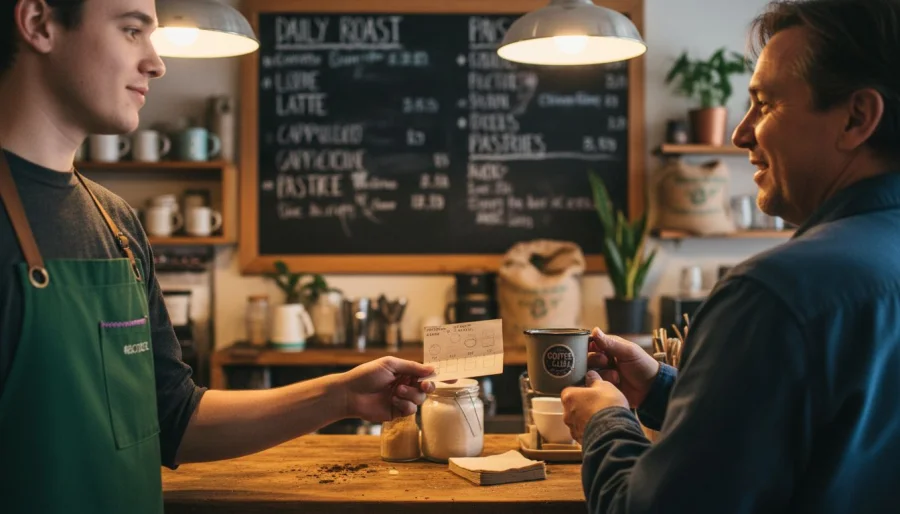
When choosing features, evaluate your technological infrastructure and ensure seamless integration across ordering platforms, point-of-sale systems, and mobile applications. Track customer engagement metrics to continuously refine your approach and identify which features generate the most enthusiasm.
Compare how different digital loyalty features contribute to restaurant success:
| Loyalty Feature | Customer Impact | Brand Benefit |
|---|---|---|
| Tiered Rewards | Motivates frequent engagement | Differentiates brand experience |
| Referral Bonuses | Boosts word-of-mouth marketing | Expands customer base efficiently |
| Birthday Offers | Creates personal connections | Builds emotional brand loyalty |
| Exclusive Menu Previews | Makes guests feel valued | Promotes special items or launches |
Pro tip: Start with 3-4 core loyalty features and gradually expand based on customer feedback and participation rates.
Step 3: Customize digital program settings and branding
Transforming your digital loyalty program from generic to extraordinary requires thoughtful customization that reflects your restaurant’s unique personality. Personalization strategies can dramatically enhance customer experience by creating more engaging and emotionally resonant interactions.
To effectively customize your digital loyalty program, focus on these key branding and settings elements:
- Color palette matching your restaurant’s visual identity
- Custom logo integration
- Personalized welcome messages
- Tailored reward redemption interface
- Adaptive communication preferences
- Branded digital loyalty card design
Consider the specific touchpoints where you can inject your restaurant’s personality. This might include developing unique reward structures that align with your menu, creating themed challenges that reflect your cuisine, or designing communication flows that sound like your brand’s voice.
The most successful digital loyalty programs go beyond transactional interactions. They create emotional connections by understanding individual customer preferences and delivering experiences that feel uniquely crafted for each guest. Continuously collect and analyze customer feedback to refine your customization approach and ensure your program remains dynamic and engaging.
Pro tip: Implement a quarterly review of your loyalty program settings to ensure they remain aligned with evolving customer expectations and your restaurant’s brand evolution.
Step 4: Launch and promote your loyalty program
Launching a successful loyalty program requires selecting user-friendly technology that seamlessly integrates with your existing operations. Your promotional strategy will be critical in driving initial adoption and sustained customer engagement.
To effectively launch and promote your digital loyalty program, implement these strategic approaches:
- In-store visual promotion with signage and table tents
- Staff training on program benefits
- Social media announcement campaigns
- Email marketing to existing customer base
- First-time signup incentives
- Cross-channel marketing integration
Your promotion should highlight unique program features and communicate clear, compelling benefits. Effective marketing emphasizes experiential and emotional engagement strategies, such as exclusive access, personalized offers, and VIP treatment that make customers feel genuinely valued.
Consider gamification elements like milestone rewards, surprise bonuses, and tiered recognition to maintain enthusiasm. Track initial engagement metrics closely during the first 90 days, adjusting your approach based on customer response and participation rates.
Pro tip: Launch with an attractive initial bonus that creates immediate excitement and encourages rapid program adoption.
Step 5: Track performance and optimize continuously
Continuous optimization of your restaurant’s loyalty program requires systematic performance tracking and data-driven refinement. Implementing a robust monitoring strategy will help you understand customer engagement, identify improvement opportunities, and ensure your program remains dynamic and effective.
Focus on these critical performance metrics and optimization strategies:
- Customer retention rate
- Average visit frequency
- Total points redeemed
- Member signup conversion
- Revenue per loyalty member
- Reward redemption patterns
Establish a quarterly performance review process that includes:
- Analyzing comprehensive engagement data
- Surveying member satisfaction
- Comparing performance against initial goals
- Identifying underperforming program elements
- Developing targeted improvement strategies
Utilize advanced analytics tools to track granular details about member behavior. Pay special attention to segments that show declining engagement, and be prepared to adjust rewards and communication strategies proactively.
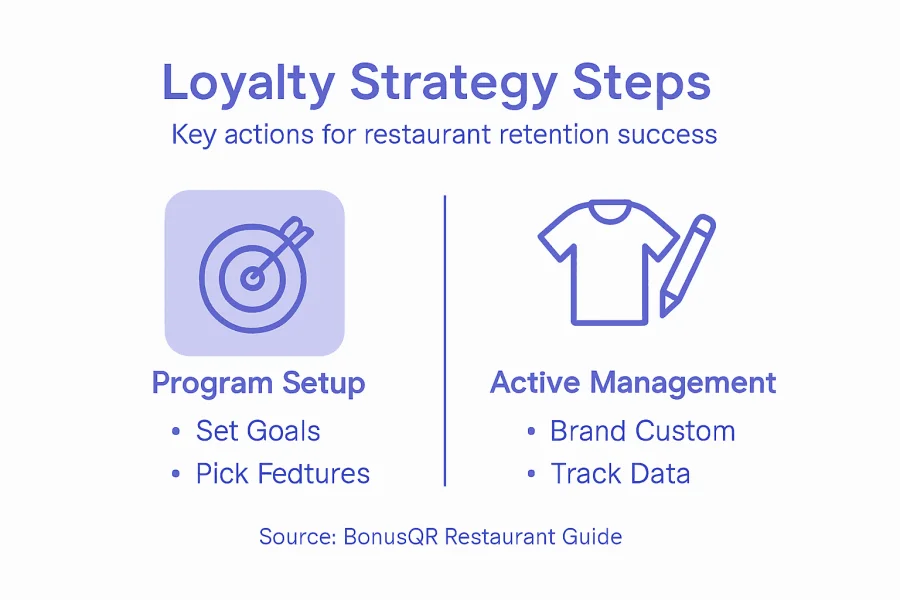
Pro tip: Create a dedicated dashboard that provides real-time insights into your loyalty program’s key performance indicators, enabling swift and informed decision-making.
Unlock the Power of a Custom Digital Loyalty Strategy for Your Restaurant
Are you ready to transform casual diners into loyal brand advocates by implementing a data-driven digital loyalty program? The “Digital Loyalty Strategy Guide for Restaurant Retention Success” highlights key challenges restaurants face like boosting visit frequency, increasing average spend, and creating personalized customer connections. Managing these goals can feel overwhelming without the right tools to track retention rates, reward redemption, and customer lifetime value effectively.
At BonusQR, we understand these challenges and provide a flexible SaaS platform tailored to help you design, launch, and manage your unique loyalty program with ease. Whether you want point accumulation, digital stamp cards, birthday offers, or referral rewards, our system supports seamless branding customization and real-time analytics that empower you to optimize continuously. Start building emotional loyalty with your guests through features like automated campaigns, mobile app integrations, and easy onboarding promos — all without complicated POS integration.
Take the next step in elevating your restaurant retention success with BonusQR and experience how an expertly crafted digital loyalty program drives genuine customer engagement. Explore how our platform supports every part of your strategy from setup to ongoing optimization by visiting our website and start creating memorable dining experiences today.
Frequently Asked Questions
What are the main customer engagement goals for a digital loyalty strategy?
To effectively engage customers, focus on goals such as increasing visit frequency, boosting average spending, collecting meaningful customer behavior data, and building personalized relationships. Start by assessing your current metrics to identify areas for improvement within the next 60 days.
How can I select the right loyalty features for my restaurant?
Choose loyalty features that align with your restaurant’s identity and customer preferences, such as point accumulation systems, tier rewards, or personalized offers. Begin by considering 3-4 core features that directly resonate with your audience and evaluate their effectiveness through customer feedback within the first quarter.
How do I customize my digital loyalty program to reflect my restaurant’s brand?
Customization involves incorporating your restaurant’s visual identity through elements like logos, color palettes, and personalized messaging. Review your branding settings quarterly to ensure they remain relevant and appealing to your customers.
What steps should I take to launch and promote my loyalty program effectively?
Launch your loyalty program with clear promotional strategies like in-store signs, social media campaigns, and staff training. Apply initial incentives to encourage sign-ups and track engagement metrics closely during the first 90 days to refine your approach.
How do I track performance and continuously optimize my loyalty program?
Establish a quarterly review process to analyze critical performance metrics such as customer retention rates and average visit frequency. Use this data to identify underperforming elements and develop targeted strategies for improvement, aiming to increase customer engagement by approximately 20%.


