
Every hospitality manager knows that relying on just one reward system often falls short of creating lasting customer loyalty. The push for more adaptable solutions makes hybrid loyalty programs appealing, blending points, tiered benefits, and experiential rewards in ways that truly fit guest expectations. By combining multiple reward structures and integrating personalized features across digital and physical channels, these programs deliver multi-dimensional engagement opportunities for small and medium-sized businesses aiming to retain and excite guests from Canada to Singapore.
Defining Hybrid Loyalty Program Models
Hybrid loyalty programs represent a sophisticated strategy for businesses seeking to enhance customer engagement across multiple channels and reward structures. Innovative marketing strategies demonstrate how integrating traditional and digital approaches can transform customer relationships.
At their core, hybrid loyalty programs blend multiple reward mechanisms to create a more flexible and personalized customer experience. These models typically combine elements such as:
- Point-based rewards systems
- Tiered membership levels
- Digital and physical reward redemption options
- Personalized promotional campaigns
- Cross-channel engagement tracking
The primary objective of hybrid loyalty models is to transcend traditional one-dimensional reward structures. Instead of limiting customers to a single type of interaction or reward, these programs offer multi-dimensional engagement opportunities that adapt to individual preferences and behaviors.
Successful hybrid loyalty programs recognize that modern customers expect personalized, seamless experiences across digital and physical touchpoints. By integrating different reward mechanisms, businesses can create more compelling and dynamic loyalty strategies that feel tailored to each customer’s unique needs and preferences.
Pro tip: Start by mapping your customer’s journey and identifying potential reward touchpoints across different channels to design a truly integrated hybrid loyalty program.
Types of Hybrid Loyalty Structures Explained
Hybrid loyalty structures represent a nuanced approach to customer engagement, blending multiple reward mechanisms to create more dynamic and responsive programs. Data-driven loyalty strategies have revolutionized how businesses design comprehensive customer retention approaches.
Businesses can implement several distinct types of hybrid loyalty structures, each with unique characteristics:
-
Points-Based Hybrid Model
- Combines traditional point accumulation with experiential rewards
- Allows customers to earn points through multiple channels
- Enables flexible redemption across digital and physical platforms
-
Tiered Experience Hybrid Model
- Integrates membership levels with personalized reward options
- Provides escalating benefits based on customer interaction and spending
- Tracks engagement across different business touchpoints
-
Multi-Channel Reward Hybrid Model
- Synchronizes rewards across digital, mobile, and in-store experiences
- Creates seamless redemption pathways
- Adapts rewards to individual customer preferences
The most sophisticated hybrid loyalty structures leverage advanced data analytics to create personalized engagement ecosystems. These models move beyond simple transactional rewards, focusing on creating meaningful, long-term customer relationships that adapt to changing consumer behaviors and preferences.

Successful hybrid loyalty programs recognize that modern customers expect more than traditional one-dimensional reward systems. By integrating multiple reward mechanisms and tracking customer interactions across various channels, businesses can design more responsive and compelling loyalty experiences.
Here’s how different hybrid loyalty structures compare in terms of complexity and customer impact:
| Loyalty Structure Type | Implementation Complexity | Customer Impact |
|---|---|---|
| Points-Based Hybrid Model | Moderate | Broad earning flexibility |
| Tiered Experience Hybrid Model | High | Strong engagement boost |
| Multi-Channel Reward Model | High | Seamless integration |
Pro tip: Continuously analyze your customer data to refine and personalize your hybrid loyalty structure, ensuring it remains relevant and attractive to your target audience.
Key Features and Customization Options
Hybrid loyalty programs offer businesses unprecedented flexibility in designing customer engagement strategies. Advanced loyalty program features have transformed how companies approach customer retention and personalization.
Key customization options for hybrid loyalty programs include:
-
Segmentation Capabilities
- Create targeted reward tiers based on customer behavior
- Develop personalized incentive structures
- Map customer journeys across multiple touchpoints
-
Reward Mechanism Flexibility
- Combine points, cashback, and experiential rewards
- Design dynamic earning and redemption rules
- Integrate cross-channel reward mechanisms
-
Data-Driven Personalization
- Analyze customer spending patterns
- Customize rewards based on individual preferences
- Track and adapt to changing customer behaviors
The most sophisticated hybrid loyalty programs leverage advanced analytics and machine learning to create truly personalized customer experiences. These systems go beyond traditional transactional rewards, focusing on building long-term relationships through intelligent, adaptive engagement strategies.
Businesses can now design loyalty programs that are as unique as their customer base, with granular controls that allow for unprecedented levels of customization. By integrating multiple reward mechanisms and tracking detailed customer interactions, companies can create loyalty experiences that feel individually crafted for each customer.
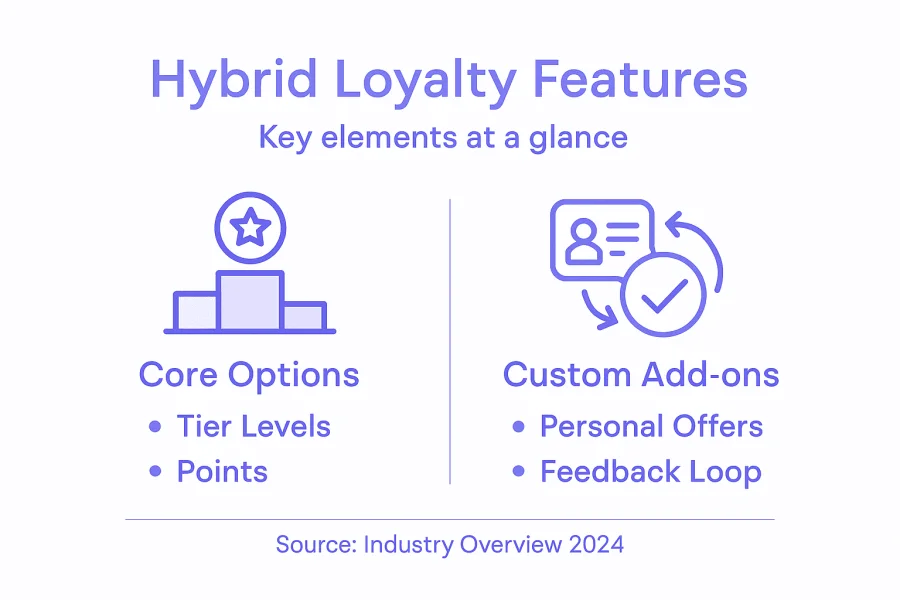
Key feature customization options and their potential business value are summarized below:
| Feature Type | Customization Possibility | Business Value |
|---|---|---|
| Segmentation | Behavior-based tiers | Precise targeting |
| Reward Mechanism | Mix of digital and physical | Enhanced redemption rates |
| Personalization | Adaptive offers via analytics | Increased customer loyalty |
Pro tip: Implement a continuous feedback loop that allows customers to provide input on their reward preferences, enabling ongoing optimization of your hybrid loyalty program.
Real-World Use in Hospitality Loyalty
Hospitality businesses are revolutionizing customer engagement through sophisticated loyalty program strategies. These innovative approaches go far beyond traditional reward systems, creating comprehensive experiences that deeply connect with guests across multiple touchpoints.
Typical hybrid loyalty implementations in the hospitality sector include:
-
Hotel Chain Loyalty Programs
- Tiered membership with escalating benefits
- Points redeemable across multiple brands
- Personalized room upgrades and amenities
- Partnerships with airlines and credit card companies
-
Restaurant Loyalty Networks
- Cumulative dining points across restaurant groups
- Birthday and anniversary special rewards
- Personalized menu recommendations
- Cross-platform reward redemption
-
Hospitality Experience Rewards
- Experiential incentives beyond monetary value
- Exclusive event invitations
- Customized local experience packages
- Priority services and early access
The most advanced hybrid loyalty models transform guest interactions from transactional exchanges to meaningful, personalized relationships. By leveraging detailed customer data, hospitality businesses can craft experiences that feel uniquely tailored to individual preferences and behaviors.
Modern hospitality loyalty programs recognize that different customer segments have varying expectations. Younger travelers might prefer digital convenience and unique experiences, while traditional guests may value consistency and recognizable reward structures. Successful hybrid models bridge these diverse preferences through intelligent, adaptable design.
Pro tip: Design your loyalty program with flexibility that allows customers to choose how they want to engage and be rewarded, creating a more personalized and appealing experience.
Common Challenges and Pitfalls to Avoid
Hybrid loyalty programs require careful navigation to avoid potential pitfalls that can undermine their effectiveness. Complex loyalty program challenges demand strategic planning and continuous refinement to maintain customer engagement and trust.
Key challenges businesses must address include:
-
Data Integration Complexity
- Synchronizing customer data across multiple platforms
- Ensuring data accuracy and consistency
- Preventing information silos
- Managing complex technical infrastructure
-
Customer Experience Barriers
- Avoiding overly complicated reward structures
- Maintaining seamless cross-channel experiences
- Preventing reward redemption friction
- Ensuring transparent communication
-
Personalization Risks
- Balancing personalization with privacy concerns
- Preventing intrusive data collection
- Creating meaningful, relevant rewards
- Avoiding generic or irrelevant incentives
Successful hybrid loyalty programs require intelligent design and continuous adaptation. Businesses must remain vigilant about potential disconnects between their intended customer experience and actual program implementation.
Technology plays a crucial role in mitigating these challenges. Advanced analytics and AI can help businesses understand complex customer behaviors, predict preferences, and create more nuanced, responsive loyalty strategies that feel genuinely personalized rather than mechanical.
Pro tip: Conduct regular customer feedback surveys and program performance audits to identify and address potential friction points in your hybrid loyalty program.
Unlock the Full Potential of Hybrid Loyalty Programs with BonusQR
The article highlights key challenges such as data integration complexity and the need for flexible, multi-channel reward mechanisms that drive customer retention. Today’s customers expect personalized, seamless experiences that adapt to their unique preferences across digital and physical touchpoints. With hybrid loyalty models, businesses must deliver tailored rewards with ease while avoiding confusing structures that reduce engagement.
BonusQR provides a powerful yet easy-to-use platform designed to meet these exact needs. This SaaS solution offers customizable modules like points collection, stamp cards, cashback, and special occasion promotions that let you build dynamic loyalty programs aligned to your customers’ behaviors. Whether you want to launch quickly without POS integration or develop fully branded, white-label loyalty apps, BonusQR brings flexibility and real-time analytics to create meaningful, data-driven experiences.
Ready to transform your customer retention strategy and build personalized hybrid loyalty programs that truly resonate? Explore how BonusQR’s features can elevate your efforts today at BonusQR. Take control of your loyalty program with a platform built for the complexities and opportunities described in the article. Learn more and start engaging your customers on all channels with confidence.
Frequently Asked Questions
What is a hybrid loyalty program model?
Hybrid loyalty program models combine multiple reward mechanisms, such as point-based systems and tiered memberships, to create a personalized customer experience across various channels.
How do I implement a hybrid loyalty program in my business?
To implement a hybrid loyalty program, start by mapping your customer journey to identify potential reward touchpoints, then integrate various reward mechanisms that can adapt to customers’ preferences.
What are the benefits of using a hybrid loyalty structure?
Hybrid loyalty structures enhance customer engagement by offering flexible rewards, personalized experiences, and seamless interactions across digital and physical platforms, ultimately fostering long-term relationships.
What challenges should I be aware of when creating a hybrid loyalty program?
Common challenges include data integration complexity, ensuring a seamless customer experience, and balancing personalization with privacy concerns. Regular feedback and performance audits can help address these issues.
Recommended
- Top Customer Service Retention Strategies to Boost Loyalty | BonusQR
- Customer Retention Strategies: 8 Ways to Improve Retention | BonusQR
- Top Strategies for Customer Retention to Grow Your Business | BonusQR
- 7 strategies of customer retention that work | BonusQR
- Role of Branding in Loyalty – Driving Long-Term Growth – Lind Creative


