As a small business owner, you're an expert at bringing customers in the door. But the real challenge-the one that quietly drains your profits-is stopping them from walking out and never coming back. The core problem for restaurants, salons, and local shops isn't just attracting new faces; it's the leaky bucket of one-time visitors. Every customer who doesn't return is a lost opportunity for predictable, sustainable growth.
Acquiring a new customer costs five times more than keeping an existing one. A tiny 5% increase in customer retention can boost your profits by a staggering 25% to 95%. Yet, most loyalty solutions feel built for big corporations-they're too expensive, too complex, and require too much time you simply don't have.
This guide is different. We're not just giving you a list of vague ideas. We're providing a strategic playbook of 10 actionable customer retention examples, each broken down into a practical, step-by-step plan you can implement today.
For each tactic, you’ll discover:
- The deep strategic reason why it works.
- Actionable step-by-step implementation tips.
- Clear metrics to measure your success.
- How a simple tool like BonusQR makes it cost-effective and easy.
This is your roadmap to turning casual visitors into passionate regulars. Let's build a business that thrives on loyalty, not just transactions.
1. Loyalty Points Programs
A loyalty points program is a structured rewards system that transforms every customer transaction into a step toward a future reward. Customers earn points for their purchases, which they can later redeem for discounts, free items, or exclusive perks. It's a foundational customer retention example because it directly gamifies the act of repeat business, making customers feel valued and invested in your brand.
This strategy works by tapping into a basic psychological principle: the goal-gradient effect. As customers get closer to a reward, their motivation to reach it increases. A simple "buy 9, get the 10th free" system, whether on a physical punch card or a digital app, gives patrons a tangible reason to choose your coffee shop or salon over a competitor.
Strategic Breakdown
- Why It Works: It creates a mutually beneficial cycle. The customer gets rewarded for their loyalty, and your business secures consistent, predictable revenue from repeat visits.
- Best For: Businesses with frequent, low-to-mid-cost transactions, like cafes, quick-service restaurants, car washes, and nail salons.
- Key Metrics to Track:
- Redemption Rate: What percentage of earned points are being used?
- Visit Frequency: Are program members visiting more often than non-members?
- Customer Lifetime Value (CLV): How much more do loyalty members spend over time?
Strategic Insight: The most successful programs make earning points feel effortless and redeeming them feel special. The goal isn't just to give a discount; it's to create a moment of delight that reinforces the customer's smart choice to be loyal.
How to Implement This Strategy
- Define Your Reward Structure: Decide what a point is worth. A common starting point is 1 point per dollar spent, with rewards available after 50-100 points. This encourages 5-10 visits before a meaningful redemption.
- Choose Your Platform: Ditch the easily lost paper punch cards. A QR code-based system like BonusQR allows for frictionless sign-ups and point tracking directly from a customer's phone, no app download required.
- Launch and Promote: Announce the program with in-store signage, on social media, and through your staff. Train employees to ask every customer, "Are you a member of our rewards program? You can earn points on today's purchase!"
For more detailed guidance on establishing customer loyalty, explore insights on setting up an effective loyalty program. To truly maximize your program's impact, discover the 6 golden rules for a successful loyalty program with points.
2. Personalized Email Marketing Campaigns
Personalized email marketing moves beyond generic blasts to deliver targeted messages based on customer purchase history, preferences, and behavior. Instead of a one-size-fits-all newsletter, customers receive communications that feel relevant to them, a powerful tool in any small business's arsenal of customer retention examples. This approach makes customers feel seen and understood, transforming an inbox notification into a valued conversation.
This strategy works because it leverages data to create a one-to-one connection at scale. A simple birthday discount email from a salon, a post-purchase follow-up from a restaurant asking for feedback, or a "we miss you" offer for a customer who hasn't visited in a while shows you're paying attention. It shifts the dynamic from a simple transaction to an ongoing relationship.
Strategic Breakdown
- Why It Works: Personalization cuts through the noise of a crowded inbox. It dramatically increases open rates and engagement because the content is directly relevant to the recipient's past interactions and interests with your business.
- Best For: Any business that collects customer data, such as cafes with loyalty programs, salons with appointment histories, and small retailers with customer accounts.
- Key Metrics to Track:
- Open Rate: What percentage of recipients are opening your emails?
- Click-Through Rate (CTR): How many are clicking the links inside?
- Conversion Rate: How many recipients completed the desired action (e.g., made a purchase, booked an appointment)?
Strategic Insight: The goal of personalization is not just to use a customer's first name. It's about delivering the right message at the right moment, like an automated reminder for a re-order or a special offer based on their favorite menu item, making them feel like a true VIP.
How to Implement This Strategy
- Segment Your Audience: Start simple. Group customers based on visit frequency (new, regular, lapsed) or by their last purchase. This allows you to tailor your messaging effectively.
- Automate Key Triggers: Set up automated emails for key moments. Focus on a welcome email for new loyalty members, a happy birthday offer, and a follow-up email after a purchase to request a review or suggest a related item.
- Craft Compelling, Concise Content: Keep subject lines under 50 characters for mobile visibility. Your message should be clear, direct, and have a single call-to-action (CTA), whether it's "Claim Your Birthday Reward" or "Leave Us a Review."
3. VIP and Tiered Membership Programs
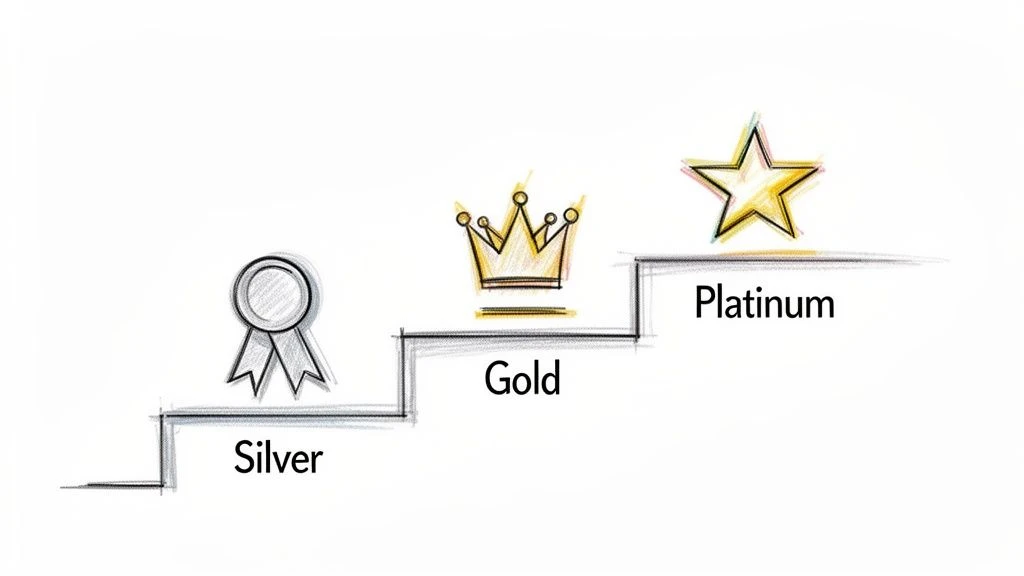
A VIP or tiered membership program elevates a standard loyalty system by segmenting customers into different levels, such as Silver, Gold, and Platinum. Progression through these tiers is based on spending or engagement, unlocking increasingly valuable and exclusive benefits. This is a powerful customer retention example because it gamifies loyalty, creating a sense of achievement and status that motivates customers to increase their spending and visit frequency to reach the next level.
This strategy appeals to our innate desire for recognition and exclusivity. When a customer reaches "Gold Status" at a salon, they don't just get a better discount; they gain a tangible marker of their loyalty. Programs like Sephora's VIB/Rouge tiers master this by offering early access to products and exclusive events, making top-tier members feel like true insiders.
Strategic Breakdown
- Why It Works: It creates aspirational goals. Customers are motivated not just by the immediate reward but by the desire to unlock the superior perks and status of the next tier.
- Best For: Businesses where a segment of customers demonstrates significantly higher spending, such as high-end restaurants, salons, boutique retail stores, and coffee shops with a dedicated daily following.
- Key Metrics to Track:
- Tier Migration Rate: How quickly are customers moving from a lower tier to a higher one?
- Spend Per Tier: What is the average transaction value for customers in each tier?
- Engagement by Tier: Do higher-tier members interact more with your brand (e.g., visit more often, open more emails)?
Strategic Insight: The most compelling tiered programs reward loyalty with experiences, not just discounts. Early access, priority booking, or a members-only tasting event can create far more value and emotional connection than a simple percentage off.
How to Implement This Strategy
- Design Your Tiers: Create 2-3 distinct levels. Start with an accessible entry tier (e.g., Silver) and make the top tier (e.g., Platinum) feel exclusive but achievable for your best customers.
- Define the Perks: Ensure benefits scale logically. Silver might offer a standard point-earning rate, Gold could add a birthday bonus and double-point days, and Platinum might unlock priority service or exclusive access.
- Automate with the Right Tool: A system like BonusQR can automatically manage tiers, track progress, and notify customers when they are close to leveling up or have unlocked a new status. This removes manual work and enhances the customer experience.
To get a complete blueprint for this powerful strategy, explore our guide on how to create levels of membership your customers will love.
4. Referral and Word-of-Mouth Programs
A referral program transforms your happiest customers into your most effective marketing team. It incentivizes existing patrons to refer friends and family by offering a compelling reward, often to both the referrer and the new customer. This is a powerhouse among customer retention examples because it leverages the unparalleled power of trusted personal recommendations to acquire new, high-value customers at a fraction of the cost of traditional advertising.
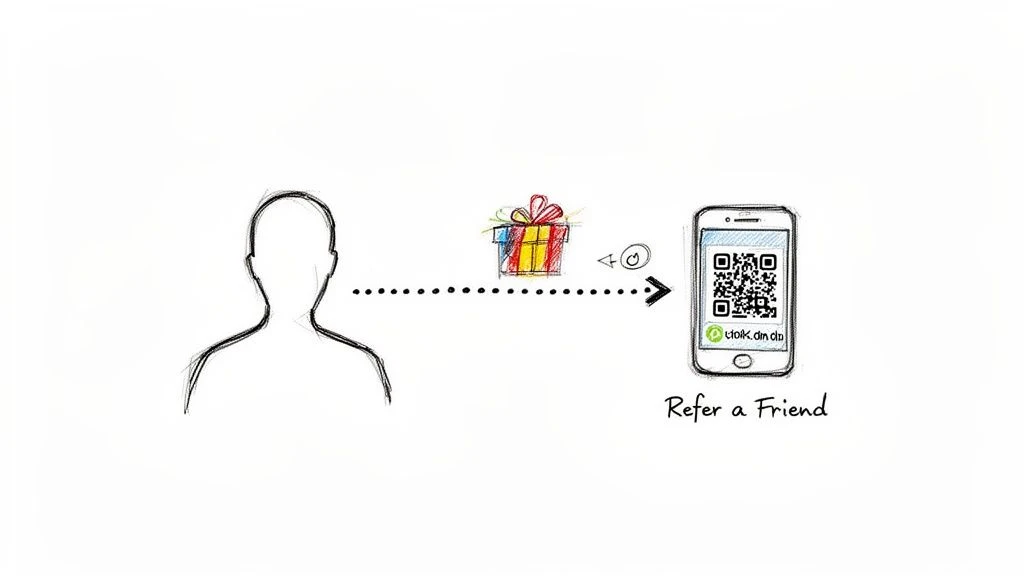
This strategy hinges on social proof and trust. A recommendation from a friend cuts through the marketing noise, creating an immediate sense of confidence in the new customer. For the existing customer, receiving a reward for their advocacy deepens their connection to your brand, making them feel like a valued partner in your success. It’s a win-win that builds community and drives sustainable growth.
Strategic Breakdown
- Why It Works: It generates warm leads with a higher conversion rate and lifetime value. Referred customers are often more loyal because they arrive with a pre-established positive perception of your business.
- Best For: Service-based businesses like salons, studios, and local shops where personal experience is a key differentiator. It also excels for businesses with a strong community feel, such as specialty coffee shops and boutiques.
- Key Metrics to Track:
- Referral Rate: What percentage of your customers are making referrals?
- Conversion Rate: How many referred leads become paying customers?
- Cost Per Acquisition (CPA): How does the cost of a referral compare to other marketing channels?
Strategic Insight: The magic of a referral program is in its authenticity. The goal is not just to acquire a customer but to welcome a friend. Make the reward generous for both parties to show you value both the existing relationship and the new one equally.
How to Implement This Strategy
- Craft a "Double-Sided" Offer: Create an irresistible reward that benefits both the referrer and the new customer. A "Give $10, Get $10" model is classic for a reason; it feels fair and encourages participation.
- Make Sharing Effortless: Equip your customers with a unique, easy-to-share link or QR code. A platform like BonusQR can generate individual referral codes that customers can access and share directly from their phones, eliminating friction.
- Promote and Gamify: Actively promote your program in-store, on receipts, and via email. Encourage friendly competition by featuring a "Top Referrer of the Month" to gamify the experience and boost engagement.
To dive deeper into what makes a program truly effective, explore these 7 examples of referral programs that actually work for small businesses.
5. Surprise and Delight Tactics (Random Rewards)
While structured loyalty programs build predictable habits, surprise and delight tactics forge powerful emotional connections. This strategy involves giving customers unexpected rewards, creating memorable moments that go far beyond a simple transaction. It might be a free dessert for a regular diner or a complimentary upgrade at a salon, but the effect is the same: a feeling of being genuinely seen and appreciated.
These random acts of kindness are one of the most potent customer retention examples because they short-circuit the brain's expectation of a purely transactional relationship. Instead of a predictable reward, the customer experiences a genuine, positive surprise. This creates a powerful story they are highly likely to share with friends and on social media, generating authentic word-of-mouth marketing.
Strategic Breakdown
- Why It Works: It leverages the psychological principle of reciprocity and positive reinforcement. An unexpected gift creates a strong positive association with your brand and a social obligation to reciprocate, often through continued loyalty and vocal advocacy.
- Best For: Any business that wants to build a strong community and brand image, especially those in hospitality (cafes, restaurants) and service industries (salons, spas) where personal connection is key.
- Key Metrics to Track:
- Social Media Mentions: Are customers sharing their surprise moments online?
- Customer Feedback/Reviews: Do reviews mention the exceptional, personalized service?
- Visit Frequency of Rewarded Customers: Do customers who receive a surprise return sooner or more often?
Strategic Insight: The magic of surprise and delight isn't in the monetary value of the gift, but in its unexpectedness and thoughtfulness. A small, personalized gesture can create more lasting loyalty than a large, predictable discount.
How to Implement This Strategy
- Allocate a 'Delight' Budget: You don't need a large budget. Dedicate a small percentage of monthly revenue (1-2%) specifically for these random acts of kindness. This empowers your team to act without complex approvals.
- Use Technology to Trigger Randomness: A digital system is crucial for managing this at scale. With BonusQR, you can configure your QR code system to occasionally award a "Lucky Scan," automatically giving a customer a surprise reward like a free coffee or a 25% discount on their next visit.
- Empower and Train Your Staff: Give your team the autonomy to identify opportunities. Train them to spot a regular customer having a bad day or celebrate a small milestone, like a customer's 10th visit, with a small, on-the-spot reward.
6. Community Building and Exclusive Events
Beyond transactions, true loyalty is built on a sense of belonging. Community building and exclusive events transform your customer base into a tribe of brand advocates who feel a genuine emotional connection to your business. This strategy shifts the relationship from transactional to relational, making customers feel like insiders who are part of a special group.
This powerful customer retention example works by fulfilling a fundamental human need for connection. When you host a member-only appreciation night, an educational workshop, or a first-look event, you are not just selling a product; you are offering an experience. Customers are no longer just patrons of your salon or coffee shop; they are members of an exclusive club, giving them a compelling social reason to return again and again.
Strategic Breakdown
- Why It Works: It creates powerful emotional bonds and a sense of exclusivity. Customers who feel like part of a community are far less likely to be swayed by a competitor's discount because the switching cost is emotional, not just financial.
- Best For: Businesses where a shared interest or lifestyle is central to the brand, such as specialty coffee shops, beauty salons, fitness studios, and boutique retail stores.
- Key Metrics to Track:
- Event Attendance Rate: What percentage of invited loyalty members attend your events?
- Social Media Engagement: Are members sharing photos and experiences from your events online?
- Referral Rate: Do community members actively bring new customers into the fold?
Strategic Insight: The goal is to make your business the "third place" for your customers - a social hub outside of home and work. Exclusive events should feel like a genuine 'thank you' for their loyalty, not just another sales pitch.
How to Implement This Strategy
- Identify Your Community's Interest: What do your best customers have in common? A salon could host a beauty workshop, while a coffee shop could offer a home-brewing masterclass. Start small with a quarterly event.
- Use Your Loyalty Program as the Gateway: Your rewards program is the perfect tool for managing your community. Use a system like BonusQR to segment your top-tier members and send them exclusive invitations directly to their phones.
- Promote the Exclusivity: Market your events as a special perk for "rewards members only." Frame it as a benefit of their loyalty. You can even award bonus points for event attendance to encourage participation and make members feel extra valued.
7. Personalized Communication and Customer Service Excellence
In an age of automation, personalized communication and excellent customer service stand out as powerful retention tools. This strategy moves beyond transactional interactions to build genuine human connections. By training staff to recognize regulars, remember their preferences, and engage in meaningful conversation, you make customers feel seen, known, and valued, creating loyalty that price or convenience alone cannot replicate.
This human-centered approach transforms a simple purchase into a memorable experience. It's the difference between a generic "hello" and a warm "welcome back, Sarah!" or the barista who remembers a customer's usual order. It’s a core customer retention example because it fosters a sense of belonging, making your business feel like a community hub rather than just a place to spend money.
Strategic Breakdown
- Why It Works: It taps into the fundamental human need for recognition and connection. Customers who feel personally valued are more forgiving of occasional mistakes and are far less likely to be swayed by a competitor's discount.
- Best For: Any business with direct customer interaction, especially salons, barbershops, local cafes, independent retail stores, and full-service restaurants.
- Key Metrics to Track:
- Customer Satisfaction (CSAT) Scores: Are customers consistently rating their service experience highly?
- Staff Mentions in Reviews: How often are employees mentioned by name in positive reviews?
- Repeat Customer Rate: What percentage of your customers are returning within a specific timeframe?
Strategic Insight: True personalization isn't about scripts; it's about empowerment. Give your team the tools and autonomy to create genuine moments of delight for customers. A single, memorable positive interaction can create a loyal customer for life.
How to Implement This Strategy
- Build a Simple Customer Profile System: You don't need complex CRM software. A system like BonusQR allows you to add notes to a customer's profile, accessible via a quick scan. Staff can see preferences like "prefers oat milk" or "last haircut was a #2 fade" right at the point of sale.
- Train for Recognition and Engagement: Implement the "10-foot rule" where staff acknowledge any customer within ten feet with a smile or a greeting. Hold short weekly meetings to share positive customer stories and recognize staff who delivered exceptional service.
- Empower Your Team to Solve Problems: Give your frontline staff the authority to fix minor issues on the spot without needing a manager's approval. A complimentary coffee or a small discount can turn a negative experience into a positive one and demonstrate trust in your team.
To ensure your personalized communication is truly seamless across all touchpoints, consider delving into the principles of an effective omnichannel customer experience. To dive deeper, discover more top customer service retention strategies to boost loyalty.
8. SMS and Push Notification Engagement
SMS and push notification engagement is a direct, high-impact strategy that leverages the device your customers carry everywhere: their smartphone. It involves sending timely, relevant messages to drive immediate action, whether it's announcing a flash sale, sharing a special offer, or reminding them of loyalty benefits. This method stands out as a powerful customer retention example because of its near-instant delivery and an astonishing 98% average open rate, making it ideal for creating urgency and driving immediate foot traffic.
This strategy works by cutting through the noise of crowded email inboxes and social media feeds. A well-timed text from a favorite coffee shop announcing a "2-for-1 espresso" during a slow afternoon can instantly change a customer's plans. Similarly, a salon sending an appointment reminder with a small discount for pre-booking their next visit not only reduces no-shows but also secures future business on the spot. It's personal, immediate, and action-oriented.
Strategic Breakdown
- Why It Works: It leverages the intimacy and immediacy of a customer's personal device. The high visibility and urgency of SMS and push notifications prompt quick decisions and actions, making it perfect for time-sensitive promotions.
- Best For: Any business that can benefit from immediate customer response, including restaurants, retail stores, salons, and appointment-based services.
- Key Metrics to Track:
- Click-Through Rate (CTR): What percentage of customers who receive the message click the link?
- Conversion Rate: How many recipients complete the desired action (e.g., redeem the offer)?
- Unsubscribe Rate: Are your messages providing value, or are they driving people away?
Strategic Insight: The power of SMS is in its conciseness and timing. The goal is to deliver a clear, valuable, and urgent message that feels like an exclusive insider tip, not an advertisement. Respecting the customer's inbox is paramount to long-term success.
How to Implement This Strategy
- Build Your Contact List Ethically: Collect phone numbers through your loyalty program sign-up process, making sure you have explicit consent (opt-in) to send promotional messages. A QR code-based system makes this seamless.
- Segment Your Audience: Don't send the same message to everyone. Group customers based on their visit history or purchase preferences. For instance, send a "We miss you!" offer to customers who haven't visited in 60 days.
- Craft and Schedule Your Message: Keep it short, create urgency ("Today only!"), and include a clear call-to-action with a link or QR code for easy redemption. Schedule messages for times when customers are most likely to act, like lunchtime for a cafe or Friday afternoon for a salon.
9. Feedback Loops and Customer Surveys
Actively seeking customer feedback isn't just about finding problems; it's a powerful retention strategy that makes customers feel seen, heard, and valued. By creating a feedback loop, you invite your patrons into a conversation, turning their opinions into your most valuable asset for improvement. This proactive approach shows you care about their experience beyond the point of sale, building a deep sense of community and investment in your brand.
This strategy capitalizes on the human desire to be understood. When a customer takes a moment to complete a survey after their meal or haircut and sees a change based on their input, they feel a sense of ownership. Simple QR codes on receipts linking to a brief survey, like those used by countless modern eateries, or Amazon's post-purchase rating requests, are prime examples of making feedback an easy, integrated part of the customer journey.
Strategic Breakdown
- Why It Works: It transforms a transactional relationship into a collaborative one. By closing the loop and acting on feedback, you demonstrate that your business is evolving for its customers, making them more likely to stick around to see those improvements.
- Best For: All businesses, but especially service-based ones where the customer experience is paramount, such as restaurants, salons, cafes, and professional services.
- Key Metrics to Track:
- Net Promoter Score (NPS): How likely are customers to recommend you?
- Survey Completion Rate: Are customers engaging with your feedback requests?
- Sentiment Analysis: Are comments trending positive or negative over time?
Strategic Insight: The magic isn't in just collecting feedback; it's in "closing the loop." Responding publicly to a positive Google review or privately contacting a detractor to resolve an issue shows every customer, and potential customer, that you are listening and you care.
How to Implement This Strategy
- Create a Simple Survey: Keep it short, aiming for 3-5 questions. Focus on specific aspects of their recent experience, like service speed, product quality, or cleanliness. The final question should always be an open-ended "How could we have made your experience better?"
- Make It Accessible: Use a system like BonusQR to create a simple landing page or form linked to a QR code. Print this QR code on receipts, table tents, or posters with a clear call to action: "Share your feedback and earn 50 bonus points!"
- Act and Respond: Monitor feedback daily. Empower your team to respond to online reviews promptly. Crucially, share the insights-both good and bad-with your staff to celebrate wins and collaboratively solve problems, ensuring your business constantly improves.
To go deeper, you need to understand how to measure customer satisfaction and stop losing your best customers. Acting on this data is one of the most effective customer retention examples you can implement.
10. Exclusive Early Access and Limited Edition Offerings
Exclusive access is a powerful strategy that transforms your loyal customers into insiders, rewarding their commitment with a sense of privilege and status. By offering them first dibs on new products, services, or limited-edition items, you create an exclusive club that people want to join. This customer retention example fosters a deep connection by making your best customers feel seen, valued, and special.
This approach works by leveraging the psychological principles of scarcity and exclusivity. When an item is limited or access is restricted, its perceived value skyrockets. For a salon, this could be offering a new, innovative treatment only to VIP members for the first month. For a coffee shop, it might be a limited-batch, single-origin roast available only to loyalty program members, creating buzz and driving immediate visits.
Strategic Breakdown
- Why It Works: It creates a powerful emotional reward. Customers don't just get a product; they get status, recognition, and the thrill of being part of an inner circle.
- Best For: Businesses with a passionate customer base and the ability to introduce new products or variations, like retail boutiques, specialty food shops, salons, and restaurants with seasonal menus.
- Key Metrics to Track:
- Early Access Sales: What percentage of total sales for a new item comes from the exclusive access period?
- Opt-in Rate: How many customers sign up for your loyalty program specifically to gain exclusive access?
- Social Media Mentions: Are members sharing their exclusive purchases or experiences online?
Strategic Insight: The goal of exclusivity isn't just to sell a product early; it's to make your loyal customers feel like they are part of your brand's journey. Their early feedback is invaluable, and their excitement becomes your most authentic marketing.
How to Implement This Strategy
- Identify Your Exclusive Offer: Choose something genuinely special. This could be a new seasonal menu item, a limited edition product collaboration, or early booking access for a popular service.
- Segment and Target: Use your loyalty system to identify your top customers. With a tool like BonusQR, you can easily filter for members with a high point balance or frequent visit history to create your VIP list.
- Create an Announcement Campaign: Build anticipation. Send targeted emails or SMS notifications to your exclusive list 1-2 weeks in advance. Use language like "As a valued member, you get first access" to reinforce their special status. Train staff to mention the upcoming perk to qualifying customers during checkout.
10-Point Customer Retention Comparison
| Approach | Implementation () | Resources & Cost () | Expected Outcomes ( ) | Ideal Use Cases () | Key Advantages () |
|---|---|---|---|---|---|
| Loyalty Points Programs | Easy-Moderate | Medium (platform + reward payouts) | - Increases repeat purchases; measurable engagement | Restaurants, retail, cafes, QSRs | Simple, scalable, provides behavioral data |
| Personalized Email Marketing Campaigns | Easy-Moderate | Low-Medium (ESP + data hygiene) | - High ROI; higher open/CTR and repeat buys | All small business types | Cost-effective, automatable, highly measurable |
| VIP and Tiered Membership Programs | Moderate | Medium-High (systems + exclusive perks) | - Raises AOV and loyalty; motivates progression | High-margin businesses, salons, retailers | Drives spend via exclusivity and gamification |
| Referral and Word-of-Mouth Programs | Easy-Moderate | Low-Medium (incentives + tracking) | - Low CAC; referred customers show higher LTV | All SMBs, service-based, high-satisfaction | Cost-efficient acquisition; strong viral potential |
| Surprise and Delight Tactics (Random Rewards) | Moderate | Low-Medium (occasional rewards) | - High emotional impact and shareability | Hospitality, F&B, salons, community retail | Creates memorable experiences; boosts advocacy |
| Community Building and Exclusive Events | Moderate-High | Medium-High (event logistics + moderation) | - Deep emotional loyalty; generates UGC and referrals | Fitness, wellness, F&B, lifestyle retail | Builds belonging; produces content and feedback loops |
| Personalized Communication & Service Excellence | Easy | Low-Medium (training + simple CRM) | - Strong satisfaction; reduced churn | Service businesses, retail with personal interaction | High-impact human touch with minimal tech |
| SMS and Push Notification Engagement | Easy | Low-Medium (platform + compliance) | - Immediate engagement and foot traffic; time-sensitive | QSRs, appointment-based businesses, mobile-first | Highest open rates; drives urgent actions quickly |
| Feedback Loops and Customer Surveys | Easy | Low (survey tools + response process) | - Actionable insights; identifies at-risk customers | All small business types | Direct improvement data; builds trust and social proof |
| Exclusive Early Access & Limited Editions | Moderate | Medium (inventory & planning) | - Generates buzz, urgency, premium revenue | Retail, fashion, salons, restaurants with seasonal items | Drives scarcity-based demand; tests new offers |
The Easiest Way to Turn These Examples Into Reality
You've just reviewed a playbook of powerful customer retention examples, from loyalty points that build habits to surprise rewards that build relationships. You've seen how to make a customer feel like your only one with personalized communication and how to make them feel like an insider with VIP tiers. The common thread is simple: make your customers feel seen and valued.
But knowing what to do and having the time to do it are two different things. Juggling points, tracking referrals, and sending offers feels like another full-time job.
This is why focusing on simplicity is key. The best solution is one that is:
- Easy to Start: You don't need to implement all ten strategies. Start with a simple digital punch card or referral program.
- Effortless to Use: For you and your customers. No apps to download. No complex software to learn.
- Affordable to Run: A tool should pay for itself in repeat business, not drain your budget.
These customer retention examples prove that loyalty isn't a transaction; it's a relationship built on trust and appreciation. By investing in that relationship, you build a thriving community of advocates who will champion your business and fuel its growth for years to come.
Ready to put these strategies into action without the complexity? BonusQR was designed specifically for businesses like yours, providing the simplest way to launch a powerful digital loyalty and referral program in minutes. Stop letting valuable customers walk away. Start building a loyal community that drives your success.
Visit BonusQR and launch your loyalty program today.


