Is your customer loyalty program feeling a little... flat? You’re not alone. Many small businesses struggle with punch cards and point systems that fail to keep customers excited between visits. The solution? Blending gamification and loyalty programs to turn passive point collection into an active, fun, and memorable experience.
By adding simple game-like elements-think challenges, badges, and spin-to-win wheels-you solve common problems like customer drop-off, low engagement, and declining repeat business. Best of all, it’s easier and more affordable than you think.
Your Loyalty Program Is Broken. Here’s How to Fix It.
Think about that paper punch card from your local coffee shop. Does it build a real connection, or is it just another piece of cardboard in a wallet? This highlights a massive pain point for small businesses: passive loyalty programs reward the transaction but do nothing to capture a customer's attention and loyalty between purchases.
This is where combining gamification and loyalty programs changes everything. It’s not about building a complex video game. It's about weaving simple, proven psychological triggers into your loyalty strategy to make customers want to engage.
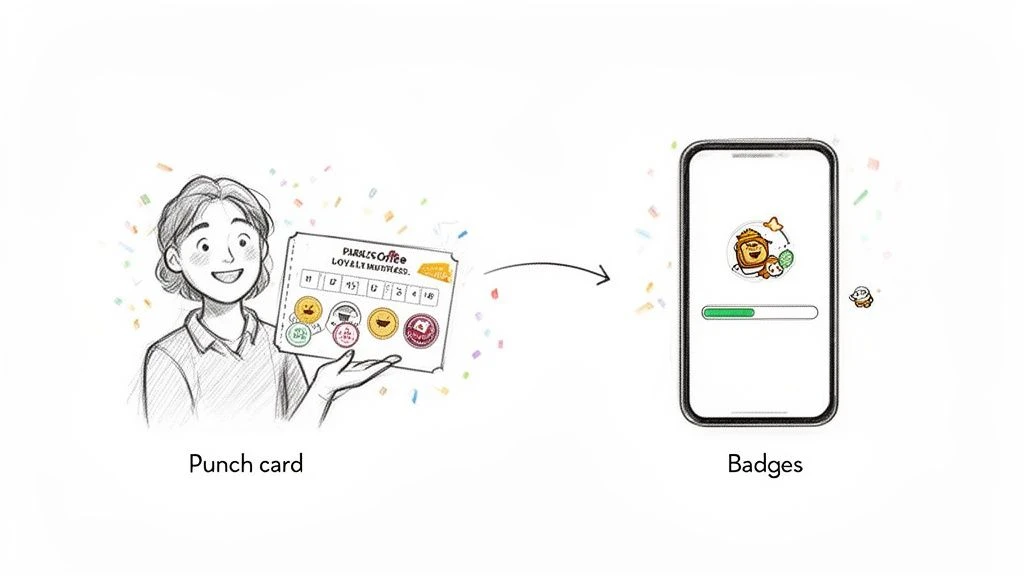
Go Beyond "Buy 10, Get 1 Free"
Traditional programs are transactional. A customer spends money, they get points. It lacks the emotional hook that turns a casual visitor into a loyal advocate. Gamification taps into powerful human motivators that make participation feel like an achievement.
Here’s how it works:
- Progress: Visual progress bars show customers exactly how close they are to their next reward, creating a powerful urge to close the gap.
- Achievement: Digital badges or a spot on a leaderboard offer social status and recognition, making customers feel valued beyond just their spending.
- Surprise & Delight: "Spin-to-win" wheels or digital "scratch-offs" provide instant, unpredictable wins that trigger excitement and keep your brand top-of-mind.
By rewarding engagement across the entire customer journey-not just the final purchase-you transform your loyalty program from a boring chore into an exciting adventure with your brand.
This shift creates a stronger value exchange. Your customers get a fun, memorable interaction, and you get their sustained attention and repeat business. Customers engaged in gamified challenges purchase far more frequently than those in traditional programs.
Myth: "Gamification Is Too Expensive and Complicated"
Many small business owners hear "gamification" and see dollar signs and technical headaches. That used to be true, but not anymore. Modern tools have made it incredibly accessible and affordable.
Solutions like BonusQR are designed specifically for small businesses, offering simple, ready-to-use game mechanics that you can launch in minutes. You can transform passive point-collecting into an active, rewarding experience without a big budget or a team of developers. It's the simplest, most cost-effective way to solve your loyalty challenges.
Here’s a quick comparison showing how adding game mechanics boosts customer behavior.
Traditional Loyalty vs. Gamified Loyalty
| Feature | Traditional Loyalty Program | Gamified Loyalty Program |
|---|---|---|
| Customer Interaction | Passive (earn points on purchase) | Active (complete challenges, earn badges) |
| Motivation | Transactional (discounts) | Emotional (achievement, progress, fun) |
| Engagement | Low between purchases | High and continuous |
| Rewards | Delayed (save up for a big reward) | Immediate and frequent (small wins) |
| Retention | Moderate | Significantly higher |
The data backs this up. Businesses with gamified loyalty programs see a stunning 22% increase in customer retention. For a deeper dive, you can learn more about how gamification is reshaping customer engagement at Amplifai.com.
How Do I Start a Gamified Loyalty Program? Define Your Goal First.
Before adding a single point or badge, you must answer one question: What specific problem am I trying to solve?
Adding gamification without a clear goal is like driving without a destination. Vague ideas like "increase loyalty" won't work. You need specific, measurable targets that align with your business's real-world challenges. Is your foot traffic slow on Tuesdays? Are customers only buying one item? Start there.
Set Specific, Measurable Business Goals
Get granular. A focused goal ensures every game mechanic you choose has a direct purpose.
Here are actionable goals real SMBs use:
- Problem: Low visit frequency. Goal: "Increase repeat customer visits from 1.5 to 2 times per month within Q3."
- Problem: Small basket size. Goal: "Boost average transaction value by 15% by encouraging add-on purchases."
- Problem: Poor customer retention. Goal: "Drive a 20% increase in customers making a second purchase within 30 days."
See the difference? Once you have a specific goal, picking the right game mechanic becomes simple. Your goal dictates the game.
Match the Game Mechanic to Your Business Goal
Not all games are created equal. Some drive frequency, while others boost spending. The key is to draw a straight line from the customer's action to your business outcome.
Goal: Increase Visit Frequency
Want customers to visit more often? Reward consistent check-ins to build a habit.
- Daily Check-in Bonus: Offer a small reward (e.g., 10 bonus points) just for scanning a QR code in your store each day.
- Spin-to-Win Wheel: Give customers one spin per visit. The element of chance and instant gratification is a powerful hook for return visits.
- Streaks & Challenges: Create a "Coffee Streak" challenge where customers earn a big bonus after visiting three times in one week. It gamifies consistency.
Goal: Boost Average Spend (AOV)
Want to encourage larger purchases? Reward customers for spending more in a single transaction.
- Tiered Rewards: Create levels like Bronze, Silver, and Gold based on spending. Higher tiers unlock better perks, making customers want to climb the ladder.
- Spend-Based Challenges: Launch a clear challenge, like, "Spend $50 this month and unlock a free dessert." It gives customers a concrete target.
- Points Multipliers: Offer 2x or 3x points on certain days or for purchasing specific high-margin items to nudge customers to add more to their cart.
The most effective gamification and loyalty programs reward the exact behaviors you want to see. If you want bigger sales, reward bigger baskets. If you want more visits, reward frequency.
Goal: Drive Specific Actions (e.g., Reviews, Referrals)
Need more Google reviews, social media shares, or new menu item trials? Gamification is perfect for this.
- Action-Based Badges: Award a unique digital badge for completing tasks. A "Review Rockstar" badge for leaving a Google review or an "Adventurous Eater" badge for trying the monthly special. People love collecting things.
- Referral Quests: Turn referrals into a game. Offer both the referrer and their friend a significant point bonus once the new customer makes their first purchase.
Choosing the right combination is key. For a deeper dive, explore options for loyalty program gamification and see what fits your brand. With a platform like BonusQR, you can implement these mechanics in minutes without any technical headaches.
Designing a Reward Structure That Actually Motivates
Even the best game will fail if the prizes aren't worth the effort. Your reward structure is the heart of your program. A great structure isn't just about giving away free stuff; it’s about creating a balanced system that appeals to different human desires.
The secret is to offer a mix of rewards. Not every customer is chasing a discount. Some crave recognition, others want exclusive access, and many just enjoy the thrill of an unexpected win.
Balance Tangible Perks with Intangible Status
Think of your reward system as a treasure chest. A well-rounded program needs a bit of everything:
- Tangible Rewards: The straightforward perks. A free coffee, a 15% discount, or a complimentary product. They offer clear, immediate value.
- Experiential Rewards: Something unique. VIP access to a special event, an invitation to a new product tasting, or a "skip the line" pass.
- Status-Based Recognition: Make your best customers feel seen. Award an exclusive "Top Customer" or "Founding Member" digital badge that gives them bragging rights.
This blend ensures there’s something for everyone, keeping a diverse customer base hooked for the long haul.
The Power of Small Wins and Big Goals
A classic mistake is making top rewards feel unreachable. If a customer thinks they’ll never earn the grand prize, they won't even try. Your reward structure needs a mix of small, frequent wins and larger, aspirational goals.
It’s just like a video game. You get small wins for daily quests, which keeps you playing, but you're also working toward an epic prize.
Small, instant rewards provide the dopamine hit that encourages daily engagement. Larger, aspirational rewards give customers a meaningful long-term goal to strive for. This dual approach keeps the program exciting at every level.
For instance, a "Spin-to-Win" wheel offers small daily prizes (instant gratification). At the same time, a major perk (like a free meal) unlocks after a customer spends $500 over the year (sustained loyalty).
Create Achievable Reward Tiers
Tiers build a ladder of achievement that feels both challenging and fair. Each step up should offer noticeably better perks.
Here’s a simple blueprint:
- Entry-Level (Bronze): Easy to hit after one or two purchases. Rewards are modest, like earning points at a standard rate.
- Mid-Level (Silver): Requires more commitment. Customers get a points multiplier (e.g., 1.25x points) and access to exclusive monthly offers.
- Top-Level (Gold/VIP): For your absolute best customers. They get the highest points multiplier, a special birthday gift, and first dibs on new products.
The global loyalty gamification market is projected to hit USD 3.5 billion by 2024 because customers demand more interactive experiences. With a tool like BonusQR, you can easily set up these motivating tiers without complexity. Explore more on the growth of loyalty gamification and see why customers are flocking to businesses that make loyalty fun.
How to Launch Your Gamified Loyalty Program: A Step-by-Step Plan
A brilliant program design is useless without a strong launch. Here is a simple, actionable playbook for busy business owners, focusing on low-cost, high-impact tactics that build excitement from day one.
A successful launch isn’t one big announcement. It’s a coordinated effort across your store, your team, and your digital channels.
Prepare Your In-Store Experience
Your physical location is the main stage. Before you tell the world, make sure your store is ready to capture customer interest at a glance. Clear, eye-catching signage is non-negotiable.
Design simple flyers or table tents that highlight the most exciting part of your program-like a "Spin-to-Win" or a "First-Visit Bonus." Make the QR code front and center so it's incredibly easy for customers to scan and join.
The global loyalty programs market is on track to hit $93.79 billion in 2025, heavily fueled by gamification. Younger shoppers like Millennials and Gen Z prefer brands that gamify loyalty by 3x more than traditional ones. You can read more about the growth of gamification in loyalty programs to see how big this opportunity is.
This simple flow shows how a balanced reward system keeps customers motivated.
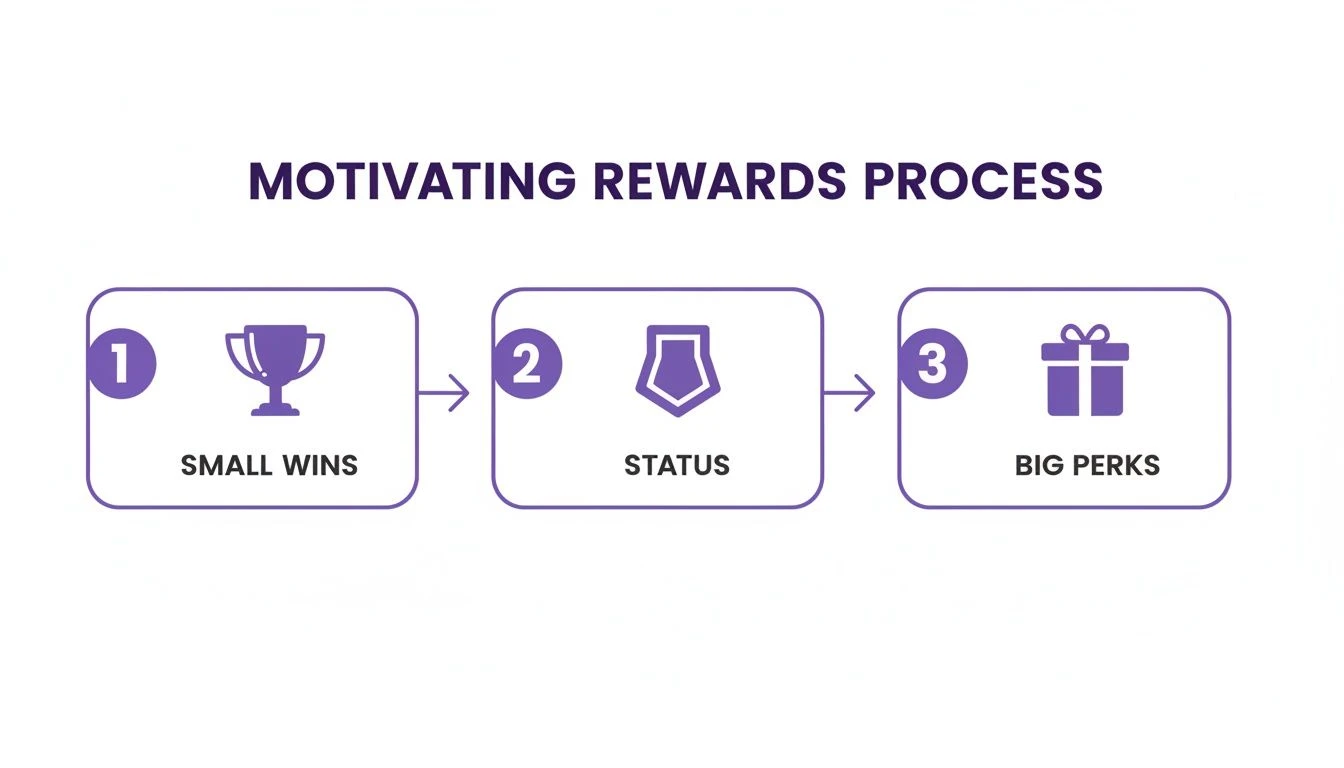
A mix of small wins, status recognition, and major perks creates a complete and engaging reward journey.
Empower Your Team to Be Advocates
Your staff are your most powerful marketing asset. An enthusiastic employee who can simply explain the program will drive more sign-ups than any poster. Arm them with a quick, benefit-driven pitch they can deliver in 15 seconds.
Hold a brief training session. Explain the "why" behind the program and have them sign up themselves. When they're excited, that energy is contagious.
Sample Staff Script: "Have you joined our new rewards game yet? You can scan this QR code to get a spin-to-win for a free coffee on your next visit. It only takes a second to sign up!"
This script is short, highlights an immediate benefit, and removes friction.
Craft Your Launch Week Promotion
Create a surge of initial interest with a special "Launch Week" promotion. Offering a bigger-than-usual incentive for signing up during the first week creates urgency.
Proven launch week ideas:
- Bonus Points: Give everyone who signs up in the first seven days 50 bonus points.
- Guaranteed Prize: Offer a guaranteed win, like a 10% off coupon, just for creating an account.
- Grand Prize Entry: Enter every new member from launch week into a drawing for a $100 gift card.
Platforms like BonusQR make managing a gamified program simple from a clean dashboard.
The right tool makes running a powerful gamification and loyalty program simple. Finally, spread the word online with compelling social media posts and emails that build anticipation.
How to Measure and Optimize Your Program for Better Results
You’ve launched. Now the real work begins: optimization. This isn't about getting lost in analytics. It’s about focusing on a few key metrics that tell you what's working so you can make smart tweaks that deliver results.
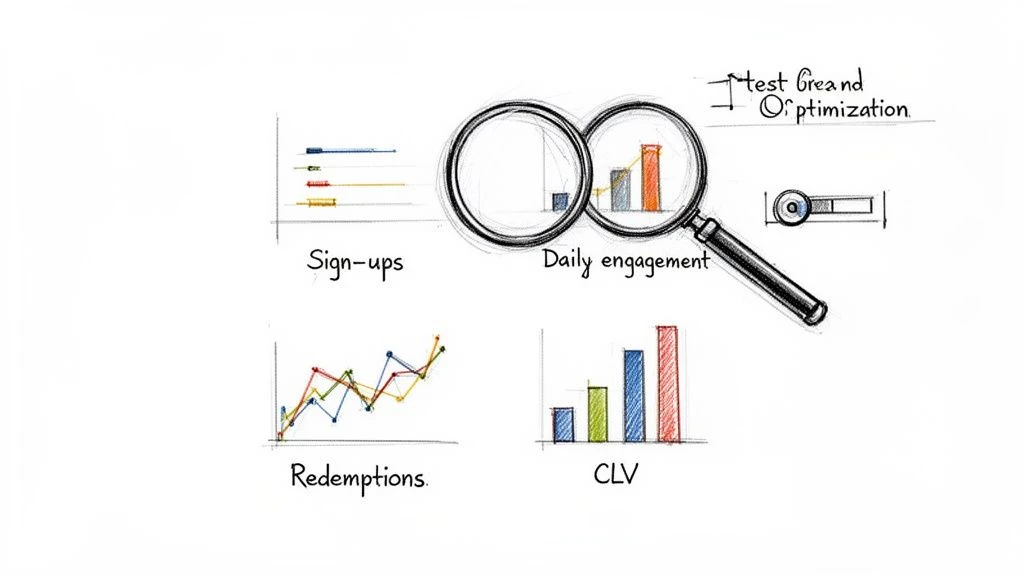
The Core Metrics That Actually Matter
Forget overwhelming spreadsheets. Track these four areas to get a clear picture of your program's health.
- Customer Sign-Up Rate: Are people actually joining? A strong rate means your in-store promotions and messaging are working.
- Daily Engagement Rate: How often do members interact between purchases? Are they spinning the wheel? A high rate proves your games are fun.
- Reward Redemption Rate: Are people cashing in their points? If not, your rewards might be unappealing or too hard to get.
- Customer Lifetime Value (CLV): The ultimate scorecard. When the CLV of program members increases, you know your efforts are directly boosting your bottom line.
Turning Data Into Action
Collecting data is easy. Knowing what to do with it is what matters. The magic is in spotting patterns.
Here's a classic scenario: your sign-up rate is high, but your redemption rate is flat. What does that mean?
A big gap between sign-ups and redemptions usually means your rewards feel out of reach. People are excited to join but lose motivation when the grand prize seems impossible.
The fix? Introduce more accessible mid-tier rewards. Adding a prize that someone can earn after just a couple of visits creates a crucial feeling of progress and keeps them in the game.
The Cycle of Testing and Refining
The best gamification and loyalty programs are always evolving. Get comfortable with a simple cycle: test, measure, refine.
- Form a Hypothesis: "I bet adding a 'Spin-to-Win' feature will boost daily engagement by 25%."
- Run the Test: Implement the change for one month. With a tool like BonusQR, adding a new game mechanic is simple.
- Measure the Results: Did you hit your goal?
- Refine or Scale: If it worked, keep it. If not, try another experiment.
This continuous improvement loop keeps your program fresh and effective. To really dig into what makes customers tick, exploring client engagement metrics for small businesses can offer a deeper understanding. To see how simple this can be, learn more about BonusQR's built-in analytics and stats, which make tracking these numbers a breeze.
Common Gamification Mistakes (and How to Avoid Them)
A gamified loyalty program can fall flat if you stumble into a few common traps. Knowing what to watch for is the first step to building something that truly works.
The biggest killer of engagement is complexity. If customers need a manual to figure out how to score points, they’ll quit.
If a new customer can't grasp the basic idea of your game in five seconds, it’s too complex. Simplicity always wins.
The fix is to stick to one or two core game mechanics. A classic "Spin-to-Win" or a simple points-for-purchase system is far more effective than a program with a dozen confusing rules.
Unbalanced Rewards and Fading Momentum
Another common mistake is creating an unbalanced reward structure. Either the rewards are so lame they aren't worth the effort, or the grand prizes are so hard to get that people give up.
The solution is to offer a mix of small, frequent wins and bigger, aspirational goals. Little wins deliver instant gratification, while achievable long-term prizes keep people motivated.
Finally, avoid the "set it and forget it" trap. Launching a program and then never promoting it is a recipe for failure.
To keep your program front and center:
- Talk about it constantly. Train your staff to mention it during every transaction.
- Create urgency. Run a "Double Points Weekend" or launch seasonal challenges to create fresh excitement.
- Celebrate winners. Post on social media about customers who won big. This provides social proof that real people are winning real prizes.
By dodging these common mistakes, you'll build a gamified experience that drives your business forward.
Got Questions About Gamified Loyalty? We've Got Answers.
Jumping into gamification for the first time? It's natural to have questions. Here are the most common things we hear from small business owners.
"I'm not tech-savvy. Is this hard to set up?"
This is the biggest concern for busy owners. The great news: with a tool like BonusQR, you can design and launch your entire gamified loyalty program in under 30 minutes. The process is guided, intuitive, and requires zero technical skills. It's built for you, the business owner, not a developer.
"Will this work for my service-based business?"
Absolutely. While cafes and retail get a lot of attention, gamification is a powerhouse for service businesses. The key is to reward the actions you want to encourage.
- Salon: Reward clients for pre-booking their next appointment or trying a new treatment.
- Auto Repair: Use a "Spin-to-Win" for a discount on the next oil change right after a customer pays.
- Consultant: Create tiers where loyal clients unlock exclusive content or a free 30-minute strategy call.
It all comes down to rewarding the behaviors that help your business grow.
"What if my customers have technical problems?"
Customer support is simpler than you think. Because platforms like BonusQR are web-based, there is no app for customers to download, which eliminates most tech headaches.
Most questions will be about your game rules or prizes. The best way to handle this is to empower your team.
Your most effective customer support is a well-trained employee who can explain how the 'Spin-to-Win' works in 15 seconds. Give them a quick script, and they'll handle 99% of questions.
A well-designed program is so simple that customers grasp it instantly. It should feel like a fun bonus, not a chore. That makes the experience smooth for them and for you.


