
 Deutsch
 Español
 Français
 Italiano
 Magyar
 Polski
 Slovenčina
 Čeština
Is that stack of paper punch cards behind your counter really creating buzz? Or does it feel like customers sign up for your "buy ten, get one free" loyalty program and then... nothing? This is a huge pain point for small businesses: your loyalty program becomes a forgotten, passive detail instead of a real driver of repeat business.

Old-school programs often fail because they lack an emotional hook. There's no sense of immediate progress or fun. The final reward feels miles away, and the journey to get there feels like a boring chore. Customers aren't engaged, so they aren't coming back more often.
This is where loyalty program gamification completely changes the game.
What is Loyalty Program Gamification?
Instead of just tracking purchases, gamification turns your loyalty program into an interactive experience. It taps into the basic human psychology of fun, competition, and achievement by adding game-like elements. It transforms your passive members into active, excited participants.
What does this actually look like for your customers?
- Points & Levels: Every purchase helps them "level up" to a new status.
- Badges & Achievements: Celebrating milestones like "Weekly Regular" makes them feel seen.
- Challenges & Streaks: Encouraging specific actions, like visiting three times in a week, builds profitable habits.
This isn't just about adding flashy features; it's a strategic shift to solve common business problems (like slow Tuesdays) and build a genuine connection. There's a ton of great info out there on gamification loyalty programs that dives deeper into how this boosts engagement.
Gamified vs. Traditional Loyalty Programs
Let's put them side-by-side. It quickly becomes clear why one approach builds lasting relationships while the other often gets left in a wallet.
| Feature | Traditional Loyalty Program | Gamified Loyalty Program |
|---|---|---|
| Customer Interaction | Passive (often forgotten) | Active and engaging |
| Motivation | Long-term, distant reward | Short-term achievements, constant progress |
| Emotional Connection | Low; purely transactional | High; builds a sense of fun & accomplishment |
| Behavioral Impact | Encourages only spending | Drives specific actions (visits, social shares, trying new items) |
| Customer Feeling | "I'm just a number." | "I'm a valued regular." |
The takeaway is simple: gamification transforms a boring process into a rewarding experience, giving customers a real reason to choose you over and over again.
The goal is to move beyond just offering discounts. You want to build a system where customers are genuinely excited to see what they can unlock next. That creates a bond that no paper punch card ever could.
The impact on your bottom line is real. Top-tier loyalty programs boost revenue by 15-25% annually from members alone. For a small cafe, salon, or retail shop, that's a serious lift. Even more telling, the lifetime value of members who actively redeem rewards is 6.3 times higher than non-participating customers.
The best part? You no longer need a huge budget or a dedicated tech team. Tools like BonusQR are designed specifically for small businesses, making loyalty program gamification simple, affordable, and incredibly effective.
The Core Mechanics of a Gamified Program
Let's be clear: gamifying your loyalty program isn't about building a complex video game. It's about borrowing simple, fun ingredients-what we call game mechanics-to make your program more interactive and satisfying for your customers.
Think of these as building blocks. You can mix and match them to create an experience that feels unique to your brand and solves your specific business challenges.
Make Your Point System Feel Valuable
Points are the foundation of most loyalty programs, but they often feel slow and unrewarding. Gamification flips that by making the act of earning points an immediate win. Instead of the old "spend a dollar, get a point" model, you create dynamic ways for customers to earn more, faster.
Suddenly, every interaction becomes a chance to gain something.
- Problem: Slow Afternoons? A cafe can offer double points for visiting during a slow Tuesday afternoon. This drives traffic when you need it most.
- Problem: Low Social Media Engagement? A boutique can reward points for sharing a photo of a new outfit on Instagram and tagging the store. This turns your best customers into authentic marketers.
With a tool like BonusQR, setting up these custom rules is effortless. You’re not locked into a rigid system; you can adapt it to fit your business goals.
Celebrate Milestones with Achievement Badges
Badges are digital trophies. They’re a visual way to recognize and celebrate customer loyalty, tapping into the natural human desire for status and appreciation. A simple badge can make a customer feel seen, turning a routine purchase into a celebrated milestone.
This creates an emotional connection that a simple discount can't touch.
A well-designed badge does more than just reward a transaction; it validates a customer's relationship with your brand. It's a small way of saying, "We see you, and we appreciate you," and that gesture builds serious goodwill.
Think about how you could use these in your business:
- Salon Scenario: Award a "Style Explorer" badge to a client who tries three different services. It encourages them to explore everything you offer.
- Cafe Scenario: Create a "Weekly Regular" badge for customers who visit three or more times in a single week. You’re reinforcing a profitable habit.
- Boutique Scenario: Design a "VIP Trendsetter" badge for top spenders, giving them early access to the next collection.
Motivate With Visual Progress Bars
Of all the tools in the gamification playbook, the progress bar might be the most powerful. It gives people instant visual feedback, showing them exactly how close they are to their next reward. This creates a powerful sense of momentum and makes the goal feel real and attainable.
Seeing you're just "two visits away" from a free coffee is far more compelling than knowing you have 80 abstract points. Progress bars turn the path to a reward into a clear, visual journey. That little visual cue is often the difference between a customer coming back tomorrow versus next month.
How To Design Your First Gamified Campaign
Ready to go from theory to practice? Building your first gamified campaign is easier than you think. You don't need a big budget or a marketing team to create something that gets customers excited and brings in real business.
The secret is starting with a clear, measurable goal and keeping the experience dead simple.
Let's walk through it with a real-world example. Imagine a local cafe that wants to solve its slow mid-week traffic. Their idea? A "Neighborhood Coffee Crawl" challenge. This is the kind of simple, effective campaign you can launch in an afternoon with a tool like BonusQR.
Start With A Clear Business Goal
Before you think about points or badges, ask yourself one critical question: What specific business problem am I trying to solve?
A vague goal like "increase loyalty" is a recipe for failure. You need something you can actually measure.
For our cafe owner, the goal is precise: increase mid-week (Tuesday-Thursday) sales by 20% over the next month.
This clarity is your North Star. Every decision you make-from the game mechanics to the rewards-should point back to this single goal.
Understand What Motivates Your Customers
Next, put yourself in your customers' shoes. What would they find fun? What do they actually value? It’s not always about a big discount. Often, it’s the feeling of being an insider, hitting a new status, or getting an exclusive perk.
The cafe owner knows their regulars are community-minded and love trying new things. So, the "Neighborhood Coffee Crawl" will focus on encouraging consistent visits and a sense of discovery.
The most effective rewards aren't always the most expensive. An exclusive "first taste" of a new seasonal drink or a branded mug can often create more excitement and feel more special than a generic 10% off coupon.
The best campaigns create a simple, satisfying loop: an action leads to visible progress, which leads to a reward, which encourages another action.
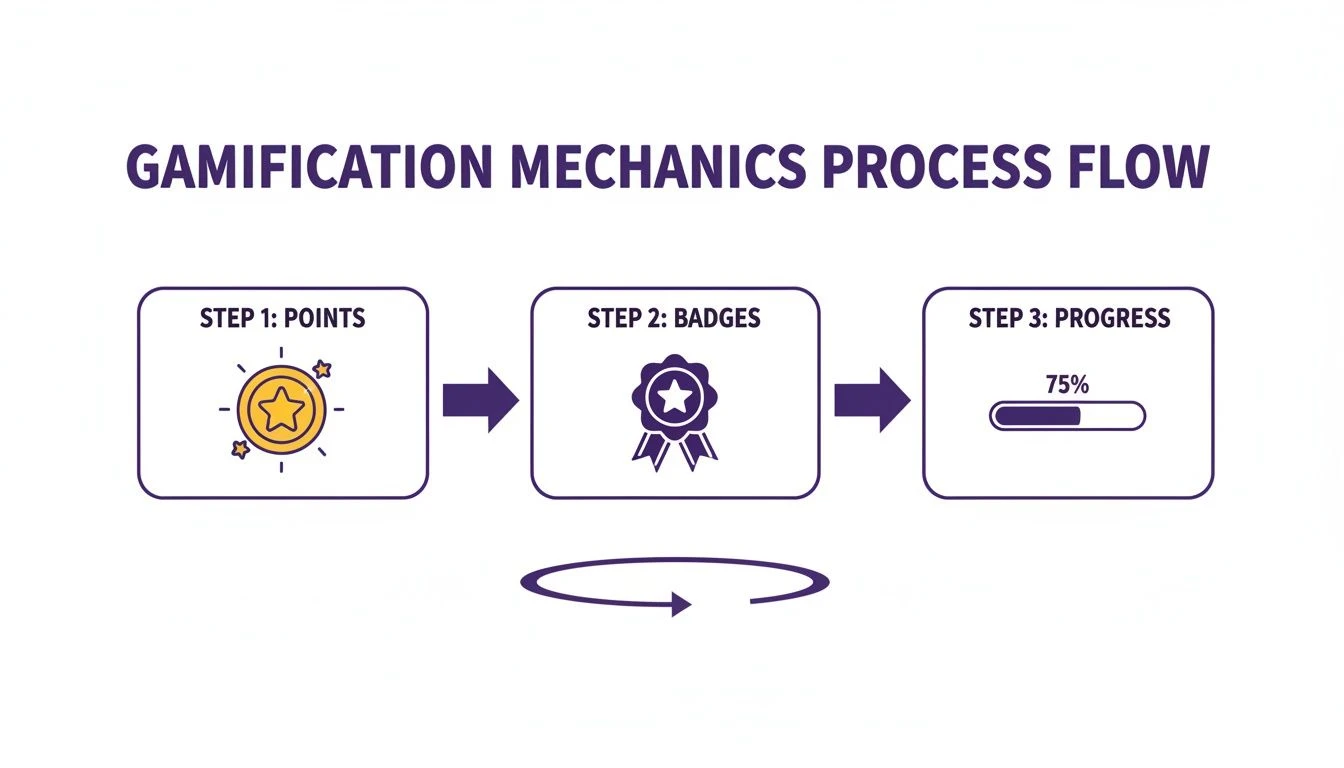
This cycle is powerful. Earning points leads to tangible achievements (like badges), which shows clear progress and makes people want to keep going.
Create Simple Rules And Desirable Rewards
With your goal set and your customer in mind, design the campaign itself. Keep it simple. Seriously. If your customers can't understand the rules in five seconds, they won’t play along.
Campaign Example: Neighborhood Coffee Crawl
- The Challenge: Visit the cafe three times from Tuesday to Thursday within a single week.
- The Mechanic: A digital punch card in the BonusQR app tracks their visits. Every visit earns a stamp.
- The Reward: After the third visit, they unlock a "Mid-Week Champion" badge and get a free pastry on their next visit.
This works because the goal is clear, progress is visible, and the reward is instant and satisfying. It directly solves the business problem of slow mid-week traffic.
The numbers back this up. Businesses that use game-like mechanics see, on average, a 22% increase in customer retention. For a small business where repeat visits are everything, that’s huge. The entire gamification market is exploding for a reason-this stuff works.
Finally, launch it. Announce the challenge on social media, put up a small sign at the counter, and have your team mention it. A little promotion goes a long way.
For more ideas, check out our ultimate guide to gamification in loyalty programs for small business owners.
Driving Real Results With Smart Engagement
Launching your gamified loyalty program is a huge first step, but the real work starts now. A successful program isn't a "set it and forget it" tool; it's an ongoing conversation with your customers. The key is keeping the experience fresh, rewarding, and tied directly to your business goals.

This is where smart engagement turns a nice idea into a genuine revenue driver. It’s not just about giving out points-it's about creating small, meaningful moments that make your customers feel seen and give them a reason to come back.
Create Compelling Missions And Challenges
Missions are your secret weapon for guiding customer behavior in a way that feels like a game, not a sales pitch. These are targeted, often time-sensitive tasks that encourage specific actions you need most, helping you solve real business problems while making things fun for customers.
The best missions are simple, clear, and solve a specific issue.
- Got a slow day of the week? A cafe can create a "Hump Day Hero" challenge, offering double points for visiting between 1 PM and 3 PM on a quiet Wednesday.
- Need to push a new product? A salon can launch a "Pamper Yourself" mission, rewarding clients with a special badge for trying a new add-on service.
- Trying to move old inventory? A boutique can create a "Spring Cleaning" challenge with bonus rewards for purchasing a sale item.
Build Habits With The Power Of Streaks
One of the most powerful mechanics in loyalty program gamification is the streak. It’s simple: a streak rewards customers for consistent behavior, like visiting your shop once a week for four weeks straight.
Streaks tap into a powerful psychological trigger called habit formation. By rewarding consistency, you're not just encouraging a single purchase; you're helping build your business into a regular part of your customers' routine.
This single feature can have an outsized impact on your business. It turns casual visitors into dedicated regulars by giving them a clear, motivating goal they don’t want to break. A platform like BonusQR makes tracking streaks completely automatic, so customers see their progress build in real-time without you lifting a finger.
Sample Gamified Campaign Ideas For Your Business
Getting started is often the hardest part, so here are a few actionable ideas you can adapt for your own business.
| Business Type | Campaign Goal | Gamification Mechanic | Example Campaign |
|---|---|---|---|
| Coffee Shop | Increase morning traffic | Streaks | The "Early Bird" Streak: Visit 3 times before 9 AM in one week to unlock a free pastry. |
| Retail Boutique | Boost average order value | Challenges | The "Style Maven" Challenge: Spend over $150 in a single transaction to earn a 20% off coupon for your next visit. |
| Restaurant | Encourage menu exploration | Missions | "Flavor Explorer" Mission: Try 3 different main courses over the next month and get your 4th one free. |
| Gym/Studio | Improve member retention | Levels & Badges | "Consistency King/Queen": Attend 12 classes in a month to level up from 'Rookie' to 'Regular' and unlock a special badge. |
| Salon/Spa | Drive new service trials | Bonus Points | "New You" Bonus: Earn 100 extra points when you book and complete a service you've never tried before. |
These campaigns work because they align a clear business goal with a fun, achievable target for the customer. It's a win-win.
Communicate And Celebrate Your Customers
Your program can't succeed in a vacuum. You have to talk about it! Ongoing communication keeps your challenges and rewards top-of-mind and makes your members feel like they’re part of an active community.
Announce new missions, celebrate winners, and make your regulars feel like local heroes.
- Social Media Shout-Outs: Post about new missions on Instagram or Facebook. Announce the "Top 5 Lunch Rush Champions" at the end of the month to spark friendly competition.
- Personalized Offers: Use the data from BonusQR to send timely messages. If a customer is one visit away from completing a streak, a friendly push notification might be all the encouragement they need.
The proof is in the results. When Duolingo rolled out its gamified leagues, it saw a staggering 65% increase in daily active users. The principle is the same for your business-game mechanics create a powerful pull that transforms passive members into active fans. Dive deeper into how you can gamify your loyalty program with these insights.
How Do I Know If My Gamified Program Is Working?
So, you’ve launched your gamified loyalty program. How do you know if it's actually working? Simply watching sign-ups tick up won't cut it. To see the real impact, you need to focus on a few key metrics that show you how customer behavior is changing for the better.
The right metrics tell a story. They reveal whether your challenges are hitting the mark and if your hard work is translating into more revenue. With a straightforward platform like BonusQR, you don’t need to be a data wizard to get these insights at a glance.
Key Metrics That Actually Matter
Forget getting bogged down in analytics. Concentrate on a handful of powerful KPIs that give you a clear picture of your program’s health.
- Participation Rate: What percentage of your members are actively engaging with your challenges and missions? A high rate means your program is fun and easy to use.
- Reward Redemption Frequency: How often are people cashing in their rewards? Frequent redemptions are a great sign that your incentives are valuable and motivating.
- Change in Visit Frequency: Are loyalty members visiting more often than non-members? This is a direct measure of your program's power to build habits.
These KPIs give you feedback you can act on. For a deeper dive, our guide on measuring customer engagement for real growth is a great next step.
Sidestepping Common Mistakes
Even the best-intentioned programs can stumble. By knowing the common pitfalls from the start, you can design a program that customers love-and that delivers a solid return on investment.
The single biggest mistake small businesses make is creating complicated rules for a tiny reward. Simplicity always wins. If a customer can't understand the rules in five seconds, they're out.
Here are the top three slip-ups to watch for:
- Overly Complex Rules: Keep challenges simple. A mission like "Visit 3 times this week" is far more effective than a convoluted point system with confusing exceptions.
- Uninspiring Rewards: A generic 5% discount is a snooze. Offer rewards that feel exclusive, like a free signature item, early access to a new product, or a unique experience.
- Forgetting to Promote It: Your program can't be a secret. Announce challenges on social media, put a sign on your counter, and get your staff excited about mentioning it to customers.
Ultimately, to grasp the impact of your gamified loyalty program, you have to measure its performance. Learning how to calculate your overall marketing ROI is crucial to ensure your efforts are paying off.
Still Have Questions About Gamified Loyalty?
We've covered the what, why, and how, but you probably still have a few questions. That's good. Jumping into loyalty program gamification is a smart move, so let's clear up the most common worries small business owners have.
How Much Is This Going to Cost Me?
This is always the first question, and for good reason. The answer is: a lot less than you think. A few years ago, building a gamified system required expensive developers. Not anymore.
Platforms like BonusQR have made powerful loyalty tools incredibly affordable-often for less than the cost of a few coffees each month.
But the real conversation isn't about cost; it's about return on investment (ROI). A smart loyalty program isn't an expense. It's an investment that pays for itself by bringing people back more often and encouraging them to spend more.
Is This Too Complicated for My Customers?
Nope, not if you do it right. The secret to great gamification is simplicity. Your customers already get it. They see progress bars, earn points, and unlock achievements in dozens of apps on their phones every single day.
The best gamified programs feel natural, not like a chore. If a customer can figure out the rules in five seconds, they'll play along. The goal is to make it effortless and fun.
This is exactly why we designed BonusQR to be clean and straightforward. Anyone can see their progress at a glance and know exactly what to do to earn their next reward. No confusion, just fun.
Will I Have Time to Manage Another System?
As a small business owner, you're already wearing a dozen hats. The last thing you need is another complicated piece of software. That's why modern loyalty tools are built around automation.
You set up your challenges, point values, and rewards once, and the system runs itself.
- Automatic Tracking: Points and visits are logged instantly when a customer scans their QR code. No manual entry.
- Set-and-Forget Campaigns: Schedule missions to kick in automatically during a slow month.
- Quick-Glance Analytics: Your dashboard gives you the highlights-what's working, who your top customers are-without forcing you to dig through spreadsheets.
This isn't about adding another task to your to-do list. It’s about putting a smart, automated customer retention machine to work for you. Launching a gamified loyalty program is the simplest, most cost-effective way to turn casual visitors into devoted regulars.
Ready to stop handing out boring punch cards and start building real, lasting loyalty? Try BonusQR today and see how easy it is to launch a loyalty program your customers will love.