
 Deutsch
 Español
 Français
 Italiano
 Magyar
 Polski
 Slovenčina
 Čeština
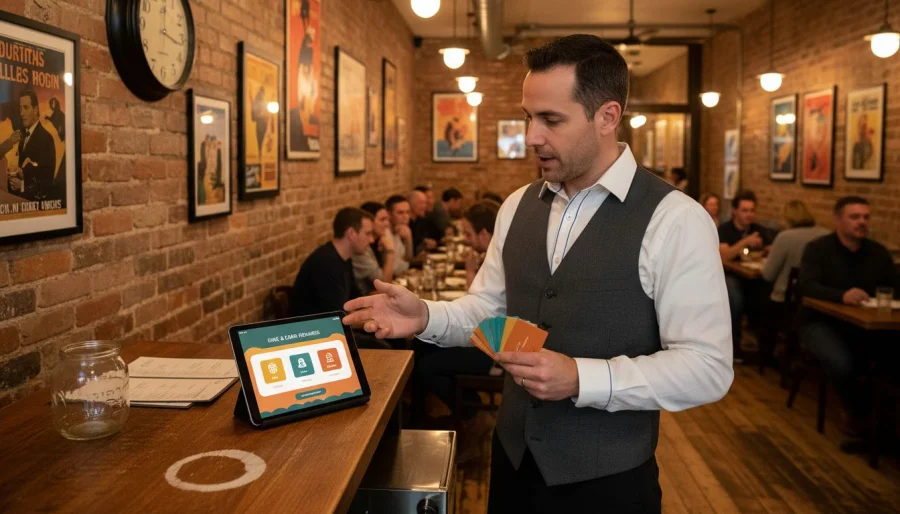
Building loyal regulars is tougher when every nearby restaurant is competing for attention in busy North American cities. Strong brand management significantly correlates with customer loyalty, giving restaurants a critical edge in crowded markets. By shaping loyalty programs that strengthen emotional connections, marketing managers can turn ordinary guests into true fans who return again and again. This article uncovers practical branding strategies to help you create loyalty programs that earn meaningful engagement and lasting retention.
Branding’s Role in Loyalty Program Success
Restaurant loyalty programs are more than just digital punch cards - they’re strategic brand experiences that transform casual customers into passionate advocates. Strong brand management significantly correlates with customer loyalty, creating emotional connections that drive repeat business in competitive markets.
Successful restaurant loyalty programs go beyond transactional rewards by integrating compelling brand narratives. These programs leverage psychological triggers that make customers feel uniquely valued and emotionally connected to the brand. Consider these key branding elements that elevate loyalty programs:
- Visual Consistency: Ensure loyalty program design matches restaurant’s visual identity
- Personalized Communication: Craft messaging that reflects brand personality
- Emotional Storytelling: Create rewards that connect beyond monetary value
- Seamless Digital Experience: Design intuitive, branded mobile interfaces
The most effective loyalty programs understand that emotional engagement trumps pure financial incentives. Brand loyalty emerges from deep consumer connections driven by perception, emotion, and cultural resonance. Restaurants can differentiate themselves by transforming routine transactions into memorable brand experiences.
Here’s a quick comparison of traditional versus advanced branding strategies in restaurant loyalty programs:
| Strategy Type | Customer Impact | Brand Differentiation |
|---|---|---|
| Basic Punch Card | Encourages repeat visits | Minimal, common approach |
| Visual Branding | Builds recognition and trust | Moderately strengthens |
| Personalization Tech | Fosters emotional engagement | High, feels unique |
| Narrative Storytelling | Connects to restaurant culture | Drives deep loyalty |
| Gamified Experience | Increases engagement and fun | Makes brand memorable |
Pro tip: Design your loyalty program as a narrative extension of your restaurant’s unique brand story, not just a transaction mechanism.
Types of Branding in Digital Loyalty Systems
Digital loyalty systems have revolutionized how restaurants create meaningful brand connections with customers. Digital branding strategies now leverage advanced personalization techniques that transform traditional reward programs into immersive brand experiences.
Modern digital loyalty systems encompass multiple branding approaches that go far beyond simple point accumulation. These sophisticated strategies focus on creating emotional resonance and personalized interactions:
- Visual Identity Branding: Consistent design across mobile apps, websites, and digital interfaces
- Personalization Branding: Customized rewards and communication based on individual customer preferences
- Narrative Branding: Storytelling that connects customers to the restaurant’s unique culture
- Interactive Branding: Gamification elements that make loyalty programs engaging
- Social Media Integration: Connecting loyalty experiences with broader digital brand presence
AI-powered personalization techniques are transforming digital loyalty systems by enabling hyper-targeted experiences. These advanced technologies analyze customer data to create predictive recommendations, chatbot interactions, and tailored communication strategies that make customers feel uniquely understood.

Pro tip: Design your digital loyalty system as an extension of your restaurant’s personality, not just a transactional platform.
Key Features That Strengthen Brand Identity
Building a powerful brand identity in restaurant loyalty programs requires strategic and intentional design. Personalization and value proposition clarity are critical components that transform ordinary reward systems into memorable brand experiences.
Successful brand identity in loyalty programs hinges on several key strategic features that create deep customer connections:
- Consistent Visual Language: Uniform design across all digital and physical touchpoints
- Authentic Storytelling: Communicating brand values through meaningful narratives
- Emotional Resonance: Creating experiences that trigger positive brand associations
- Transparent Communication: Clear, honest messaging about rewards and expectations
- Personalized Interactions: Tailoring experiences to individual customer preferences
Emotional connections drive customer brand identification by transforming transactional relationships into meaningful interactions. These connections go beyond simple point systems, creating a sense of belonging and shared values between the restaurant and its customers.
Pro tip: Design your loyalty program as a storytelling platform that reflects your restaurant’s unique personality and core values.
Customizing Rewards for Deeper Engagement
Restaurant loyalty programs are evolving beyond generic point systems into sophisticated personalization platforms. Customized rewards that align with customer self-identity create deeper emotional connections and dramatically improve long-term customer retention.
Effective reward customization requires a multi-dimensional approach that goes far beyond traditional transactional incentives:
- Behavioral Segmentation: Design rewards based on specific customer visit patterns
- Preference Mapping: Create personalized reward options reflecting individual tastes
- Tiered Experience Levels: Develop progressive rewards that motivate continued engagement
- Dynamic Reward Structures: Adapt incentives based on changing customer behaviors
- Emotional Value Alignment: Craft rewards that resonate with personal motivations
Data analytics enable precise reward customization by transforming raw customer information into targeted, meaningful experiences. Advanced tracking allows restaurants to understand individual preferences, creating loyalty programs that feel uniquely tailored to each customer’s desires.
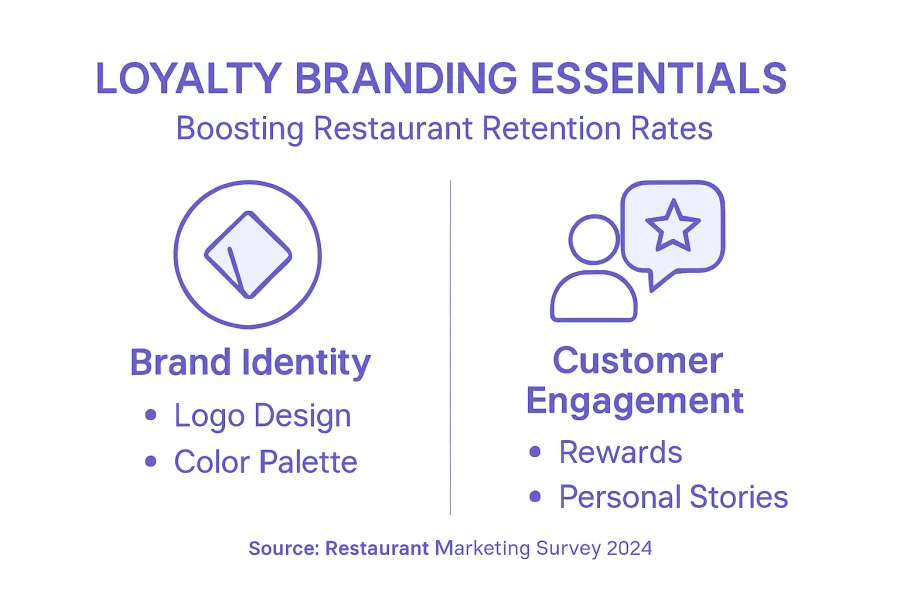
Pro tip: Treat your loyalty program as a personalized conversation with each customer, not a one-size-fits-all transaction.
Common Branding Mistakes to Avoid
Building an effective restaurant loyalty program requires strategic planning and avoiding critical pitfalls. Common branding errors can dramatically undermine customer trust, leading to decreased engagement and potential program failure.
Restaurants frequently fall into predictable traps that compromise their loyalty program’s effectiveness:
- Vague Value Proposition: Failing to clearly communicate program benefits
- Overly Complex Reward Structures: Creating rewards that are difficult to understand or earn
- Inconsistent Brand Messaging: Misaligning program communication with core brand identity
- Neglecting Customer Feedback: Ignoring user experience and suggestions
- Generic Reward Offerings: Providing non-personalized incentives that feel impersonal
Successful loyalty programs require continuous refinement and a deep understanding of customer expectations. Restaurants must move beyond transactional approaches and create meaningful connections that resonate with their target audience’s specific preferences and desires.
To help avoid common branding pitfalls, review this summary of mistakes and their consequences:
| Branding Mistake | Potential Consequence | Solution Approach |
|---|---|---|
| Vague Program Benefits | Customer confusion or apathy | Clarify value proposition |
| Overly Complex Rewards | Frustration, low participation | Simplify structure |
| Inconsistent Messaging | Weakens brand trust | Align communications |
| Ignoring Feedback | Missed improvement chances | Actively solicit input |
| Generic Incentives | Fails to inspire loyalty | Personalize offers |
Pro tip: Regularly audit your loyalty program’s performance through customer surveys and engagement metrics to identify and address potential branding weaknesses.
Elevate Your Restaurant Loyalty with Strategic Branding and BonusQR Solutions
Building emotional connections through your restaurant loyalty program leads to stronger customer retention and lasting brand loyalty. The article highlights key challenges like creating consistent visual branding, personalized rewards, and authentic storytelling to avoid common pitfalls that reduce customer engagement. If your loyalty program feels generic, complex, or disconnected from your brand personality, it could be time to transform your approach.
BonusQR offers a customizable SaaS platform designed to bring your loyalty branding to life. With features such as flexible reward modules, mobile and web app integration, and powerful customer engagement tools like push notifications and real-time analytics, you can create a loyalty experience that feels personal and memorable. Our platform supports seamless branding customization and marketing automation so your program becomes an emotional extension of your restaurant’s unique story.
Ready to turn every visit into a meaningful brand interaction and boost repeat business? Discover how BonusQR’s loyalty solutions can help you build a loyalty program that resonates deeply with your customers. Start your journey toward outstanding customer retention today with customizable loyalty features and scalable tools tailored for your brand. Visit BonusQR now to design your next-level loyalty experience.
Frequently Asked Questions
What elements enhance a restaurant loyalty program?
Successful restaurant loyalty programs integrate visual consistency, personalized communication, emotional storytelling, and a seamless digital experience to build customer loyalty.
How can restaurants personalize their loyalty programs?
Restaurants can personalize loyalty programs by using customer data to create customized rewards, engage in behavioral segmentation, and adapt rewards based on individual preferences and behaviors.
Why is emotional engagement important in loyalty programs?
Emotional engagement creates deeper connections between customers and the brand, making them feel uniquely valued and more likely to return, compared to programs that focus solely on monetary rewards.
What are common branding mistakes in loyalty programs that restaurants should avoid?
Common mistakes include having a vague value proposition, overly complex reward structures, inconsistent messaging, neglecting customer feedback, and offering generic rewards that fail to inspire loyalty.