
 Deutsch
 Español
 Français
 Italiano
 Magyar
 Polski
 Slovenčina
 Čeština
As a small business owner, you face a relentless challenge: how do you keep customers coming back when you're competing against big brands with massive budgets? You've likely tried discounts, but they just eat into your profits without building real, lasting loyalty. The core problem is finding a simple, affordable way to make your customers feel so valued that they choose you every single time, turning one-time buyers into profitable regulars.
You're stuck. Managing a loyalty program sounds complex, expensive, and time-consuming. How do you create an experience that feels personal and exciting without dedicating hours you don't have or a budget that doesn't exist? You need a system, not just a series of one-off promotions. The answer lies in smart, strategic incentives that build genuine connections.
This guide cuts through the noise to deliver 10 unique, actionable customer incentive ideas specifically for small businesses. We'll go beyond the obvious to give you practical, low-cost strategies that competitors overlook. More importantly, we'll show you how a simple, cost-effective tool like BonusQR can automate the entire process, making world-class loyalty achievable for any small business.
From points-based systems to gamified challenges and exclusive access, we’ll show you how to implement these concepts efficiently. To learn more about boosting retention and turning one-time buyers into loyal patrons, explore these Top Small Business Customer Loyalty Programs for additional strategies.
1. Points-Based Loyalty Programs
Imagine every dollar a customer spends with you feels like an investment in their next great experience. That's the power of a points-based loyalty program, one of the most effective customer incentive ideas available. It’s a simple system: customers earn points for purchases, which they redeem for discounts, free items, or other perks.
Why is this so powerful for a small business? It directly rewards repeat business, encouraging customers to consolidate their spending with you to earn their next reward faster. It's the modern, digital version of the classic punch card, turning every transaction into a step toward something special and building a powerful habit of choosing your brand.
How to Implement This Incentive
- Establish Clear Value: Decide what a point is worth. For example, 1 point for every $1 spent, with 100 points equaling a $5 discount. The key is to make the reward feel attainable and worthwhile.
- Offer Diverse Rewards: Don’t limit redemptions to just one thing. Allow customers to cash in points for a free coffee, a discount on a larger purchase, or even exclusive merchandise. Choice empowers the customer.
- Automate and Track: Manual tracking leads to mistakes and frustrates customers. Use a simple, cost-effective loyalty tool that automatically assigns points and lets customers see their balance on their phone.
- Promote Visibly: Continuously remind customers of their point balance on receipts, in email newsletters, and through in-store signage. An unseen balance is an unused incentive.
Small Business Pro-Tip: A well-structured points system doesn't have to be complex. Start with a simple "spend and get" model. You can learn more by exploring the 6 golden rules for setting up a successful points program to ensure your system is effective from day one.
A points program is your foundation for building a community of dedicated regulars. It's not just a discount; it's a relationship-building tool that makes every dollar a customer spends feel like an investment in their next great experience with you.
2. Tiered Membership Levels
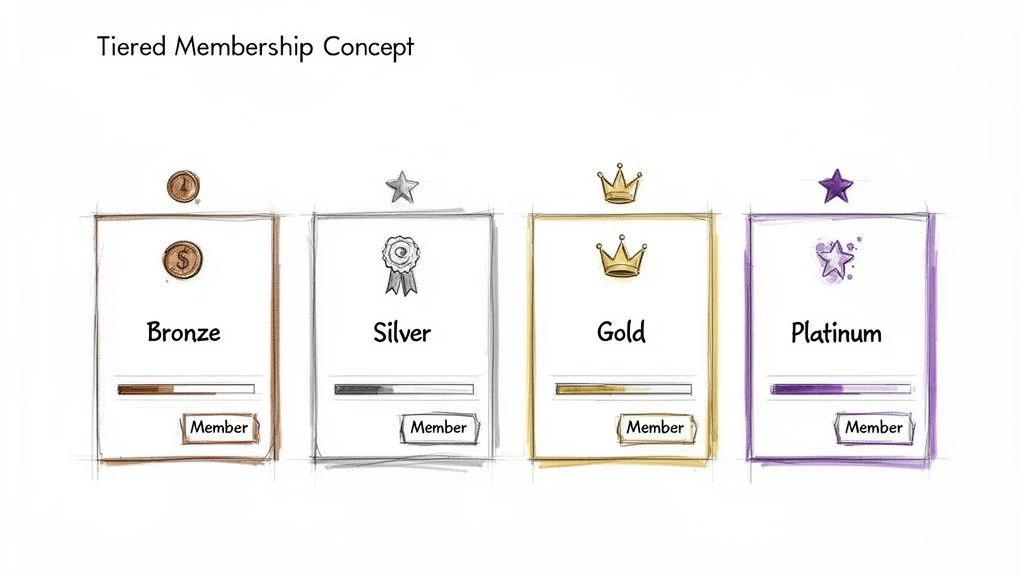
Go beyond a one-size-fits-all approach and give your best customers the VIP status they deserve. Tiered membership levels are a brilliant customer incentive idea that creates an aspirational journey, turning simple loyalty into a symbol of recognition. This system segments customers into levels (like Bronze, Silver, Gold) based on their spending, with each tier unlocking better, more exclusive perks.
This model is exceptionally powerful because it taps into the human desire for achievement and recognition. It gives customers a clear goal to strive for, motivating them to concentrate their spending at your business to "level up." This strategy was perfected by giants like Sephora (Insider, VIB, Rouge), but it’s now an incredibly simple and cost-effective tool for any small business wanting to create a community of elite brand advocates.
How to Implement This Incentive
- Design Aspirational Tiers: Create distinct levels with clearly defined benefits. For example, a "Silver" member might get a 5% discount, while a "Gold" member gets 10% off plus an exclusive annual gift. The top tier should feel truly special.
- Set Clear Progression Rules: Define how customers move up. This is typically based on annual spending (e.g., spend $500 to reach Gold) or points accumulated. Make the next level feel attainable to encourage that extra purchase.
- Automate Tier Management: Manually tracking who belongs in which tier is a logistical nightmare. Use a loyalty platform that automatically upgrades or downgrades customers based on your predefined rules, ensuring a seamless experience.
- Communicate Status and Benefits: Regularly remind customers of their current tier, the perks they have, and how close they are to the next level. Use emails, app notifications, and even on-receipt messaging to keep them engaged.
Small Business Pro-Tip: Your top-tier members are your VIPs, so treat them that way. Offer them exclusive access to new products, a private shopping event, or a special tasting menu. This reinforces their elite status and generates powerful word-of-mouth marketing. You can discover more strategies on how to create levels of membership your customers will love to get your program started right.
A tiered system doesn't just reward transactions; it builds a community and gives your best customers a reason to feel proud of their loyalty. It’s an incentive that fosters long-term commitment by turning repeat business into a rewarding climb to the top.
3. Birthday and Anniversary Rewards
Imagine creating a moment of pure delight for your customer-a personalized celebration that makes them feel truly seen and appreciated. That’s the power of birthday and anniversary rewards, a customer incentive idea that forges a strong emotional connection. This simple strategy involves automatically sending a special offer, like a free dessert or a significant discount, to celebrate a customer’s birthday or the anniversary of their first purchase.
This model is so effective because it’s deeply personal and time-sensitive. Unlike a generic promotion, a birthday offer feels like a genuine gift, creating goodwill and a powerful reason for the customer to visit you now. It’s a proven tactic used by brands like The Cheesecake Factory to draw customers in for a celebration, turning a simple gesture into a memorable brand experience and a profitable visit.
How to Implement This Incentive
- Collect Dates Respectfully: During loyalty program sign-up, ask for a customer’s birth month and day (the year is optional). Clearly state that this information will only be used to send them a special celebratory offer.
- Automate Your Outreach: Manually tracking hundreds of birthdays is impossible. Use a simple loyalty system to automatically trigger and send the reward via email or text before the big day, giving them time to plan a visit.
- Make the Offer Generous: A birthday reward should feel like a true gift, not just another minor discount. Consider offering a high-value item, like a free entrée, a complimentary service, or a significant percentage off their entire bill.
- Personalize the Message: Go beyond a generic "Happy Birthday." Use the customer's name and craft a warm, celebratory message that reinforces how much you value them. A little heartfelt effort goes a long way.
Small Business Pro-Tip: Don’t just stop at birthdays. Celebrate the anniversary of a customer’s first visit or when they joined your loyalty program. This “customer-versary” is a unique and unexpected way to show appreciation for their long-term loyalty. Find out how you can set up automated birthday and anniversary rewards to make every customer feel special without any extra work.
A well-executed birthday or anniversary reward does more than just drive a sale; it creates a positive memory that strengthens the customer relationship. It’s an investment in making your customers feel like cherished members of your community, not just numbers in a database.
4. Referral and Word-of-Mouth Incentives
What if your most loyal customers could become your most effective (and cheapest) marketing team? That's the core idea behind referral incentives, a strategy that turns happy customers into powerful brand advocates. This approach rewards your existing patrons for bringing new people to your business, leveraging the unmatched power of a personal recommendation.
This is the most cost-effective way to acquire new customers. A recommendation from a friend is far more persuasive than any ad you could ever buy. By rewarding both the referrer and the new customer, you create a win-win scenario that builds community and acquires highly-qualified leads for a fraction of the cost of traditional marketing. It's a system perfected by giants like Dropbox and Uber, now simple enough for any local business to implement.
How to Implement This Incentive
- Make Sharing Effortless: Provide customers with a unique QR code or a simple link they can share with one click. If it’s not incredibly easy to refer someone, they won't do it.
- Offer a Dual-Sided Reward: Motivate both parties. For example, give the existing customer a $10 credit and the new customer 15% off their first purchase. This gives the referrer a reason to share and the friend a compelling reason to act.
- Automate the Reward System: Manually tracking referrals is impossible. Use a digital loyalty platform to automatically track who referred whom and instantly issue rewards when the new customer makes their first purchase.
- Promote Your Program Actively: Your customers can't participate if they don't know the program exists. Announce it through email, social media, in-store signage, and on receipts. Remind them how simple it is to share and earn.
Small Business Pro-Tip: A powerful referral program is built on simplicity and clear value. The goal is to make your customers feel smart and generous for sharing your brand with their friends. You can explore more strategies by reviewing these top customer referral program ideas for small businesses to find the perfect fit for your brand.
A referral program is more than just a customer acquisition tool; it’s a way to harness the goodwill you’ve already built. It turns a single happy customer into a source of endless new business, creating a self-sustaining cycle of growth fueled by genuine enthusiasm.
5. Gamification and Challenges
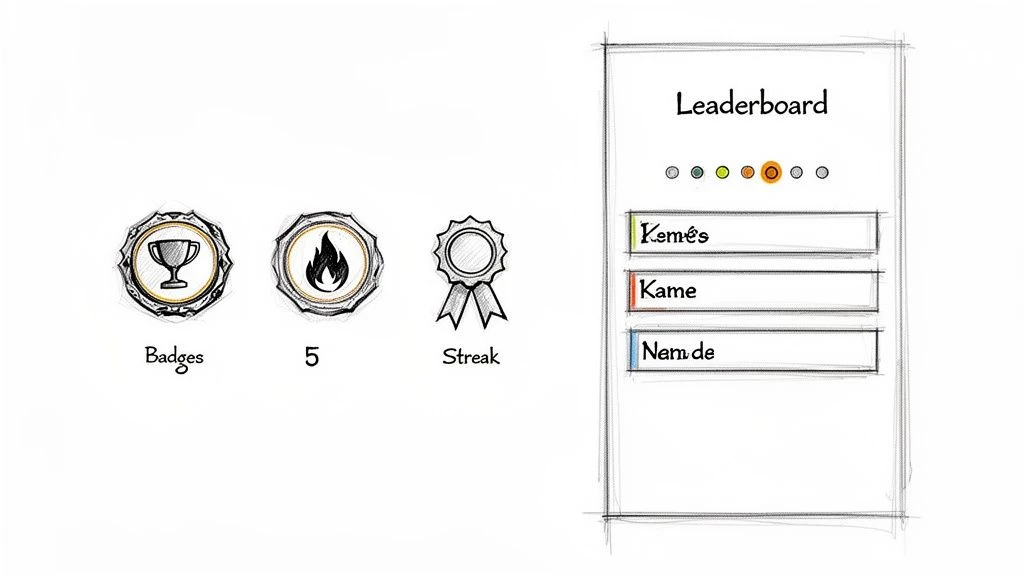
What if earning rewards felt less like a chore and more like a fun game? That’s the core of gamification, a powerful customer incentive idea that turns engagement into an interactive experience. By adding game-like elements such as badges, leaderboards, and challenges, you tap into your customers' natural desire for achievement and fun, making loyalty an exciting pursuit rather than a passive activity.
This strategy works because it creates an emotional connection and makes customers feel accomplished. Think of the satisfaction of completing a fitness challenge on an app. Gamification builds habits and gives customers compelling reasons to visit your business beyond just making a purchase, fostering a deeper, more memorable relationship.
How to Implement This Incentive
- Start with Simple Mechanics: You don't need a complex system. Begin with achievable goals like a "3-Visit Streak" for a free coffee or a "Lunchtime Regular" badge for visiting five times in a month.
- Create Themed Challenges: Align challenges with your business goals. A salon could run a "Summer Glow-Up" challenge, rewarding clients who try three different services. A cafe could launch a "Taste the World" challenge to encourage trying new menu items.
- Celebrate and Share: Publicly acknowledge winners on a leaderboard in your store or through social media shout-outs. This recognition fuels competition and makes the achievement feel more significant.
- Keep It Fresh: Refresh your challenges monthly or quarterly to maintain excitement and prevent customer fatigue. New goals give regulars a new reason to engage.
Small Business Pro-Tip: The key to successful gamification is making it feel fun, not forced. Use a mobile-first loyalty app to instantly display progress, award badges, and notify customers of new challenges. This creates a seamless and engaging experience right in their pocket.
By turning loyalty into a game, you create a dynamic and addictive experience that keeps customers coming back for more than just your products. To see how these mechanics can revolutionize your engagement strategy, discover more about gamified loyalty programs that win customers and build a system that excites and retains.
6. Flash Sales and Surprise Rewards
Imagine the thrill of an unexpected gift or a secret sale available only to a select few. That's the power of flash sales and surprise rewards, one of the most exciting customer incentive ideas for driving immediate action and creating delight. This strategy injects urgency and spontaneity into your customer relationships, turning a routine day into a memorable moment.
This model works by breaking the predictable cycle of earning rewards. Instead of a slow march toward a known goal, customers are treated to spontaneous offers that feel exclusive and time-sensitive. Popularized by brands like Amazon with their "Lightning Deals," this approach keeps your brand top-of-mind and gives customers a reason to stay connected, always wondering what surprise might come next.
How to Implement This Incentive
- Create Scarcity and Urgency: Frame your offers with time or quantity limits. Use compelling messaging like, "Today only: Double points on all purchases!" or "The first 20 customers get a free espresso shot with their order." This prompts immediate visits.
- Leverage Push Notifications: The element of surprise is lost if the message arrives too late. Use a loyalty app to send instant push notifications to your members' phones, ensuring they can act on the flash sale right away.
- Be Strategically Spontaneous: While the rewards should feel random to the customer, you should plan them strategically. Schedule flash sales during traditionally slow periods to boost traffic or use surprise rewards to move through excess inventory.
- Make it Genuinely Surprising: True surprise builds trust and excitement. Avoid patterns that make your "spontaneous" offers predictable. Mix up the timing, the type of reward, and the requirements to keep the experience fresh and authentic.
Small Business Pro-Tip: Use your loyalty platform to segment customers and send targeted surprises. A surprise free pastry could be sent to a customer who hasn't visited in a month, or a flash sale on retail beans could be sent to those who frequently buy them. This personalization makes the incentive even more powerful.
Flash sales and surprise rewards are your tools for creating a dynamic and engaging customer experience. They transform your loyalty program from a simple transaction-based system into an exciting relationship where customers feel genuinely appreciated and are always eager to see what you'll do next.
7. Exclusive Access and Early Bird Offers
What if you could make your best customers feel like true insiders, part of an exclusive club with special privileges? That’s the power of exclusive access, a customer incentive idea that rewards loyalty with status. This strategy gives your most dedicated patrons a first look at new products, services, or sales before they are available to the general public.
This approach builds a powerful sense of anticipation and makes your VIPs feel genuinely valued. It’s not just about a discount; it’s about the thrill of being first. By giving loyal customers a head start, you reinforce their importance and create an aspirational "inner circle" that encourages others to increase their loyalty to join.
How to Implement This Incentive
- Define Your "Insider" Group: Use your loyalty program data to identify top-tier customers based on points, visit frequency, or total spend. These are the people you want to reward.
- Create Time-Sensitive Urgency: Limit the early access window to 24-48 hours. This creates a sense of scarcity and importance that drives immediate action.
- Communicate the Privilege: Announce early access offers through targeted channels like exclusive email lists or push notifications. Use language that emphasizes their VIP status, such as "As a valued member, you get first access" or "Your exclusive preview is here."
- Gather VIP Feedback: Use the early access period as an opportunity to collect valuable feedback from your most engaged customers. This can help you refine your new offerings before a full-scale launch.
Small Business Pro-Tip: Segmenting your audience is key to making this work. A loyalty app can help you easily create a "VIP" tier. You can then send targeted campaigns directly to this group, ensuring your exclusive offers only reach the intended recipients and feel genuinely special.
Exclusive access is more than just a marketing tactic; it's a community-building tool. It turns your most loyal customers into brand ambassadors who feel a deep, personal connection to your business because you treat them like the insiders they are.
8. Spend-Based Bonuses and Milestone Rewards
Imagine giving your customers a finish line to race toward-one that boosts your sales in the process. That’s the power of spend-based bonuses and milestone rewards, a customer incentive idea designed to increase average transaction value. This system rewards shoppers when they reach a specific spending threshold, like getting a $15 bonus after spending $100.
This approach is highly effective because it gamifies spending by creating a clear, attainable target. It taps into our natural drive to complete a goal, encouraging customers to add one more item to their cart to unlock that valuable reward. It’s a direct and powerful way to lift your average sale while making customers feel like they've earned something extra.
How to Implement This Incentive
- Set Strategic Thresholds: Analyze your average transaction value and set the first milestone just above it. If your average sale is $40, a "Spend $50, get a $5 credit" milestone feels achievable and encourages a small upsell.
- Visualize the Journey: Use a digital loyalty platform to show customers a visual progress bar. Seeing they are only "$10 away" from their next reward is a powerful psychological nudge to spend a little more.
- Make the Reward Compelling: The bonus should feel substantial enough to change purchasing behavior, typically representing 10-15% of the spending threshold.
- Create Multiple Tiers: Cater to all your customers. Offer several milestones, such as a small reward at $50, a better one at $100, and an exclusive bonus at $250. This ensures everyone feels like a reward is within reach.
Small Business Pro-Tip: Don't let tracking become a headache. Use a loyalty app to automatically monitor customer spending and trigger milestone rewards in real time. This ensures a seamless experience for your customers and zero extra work for your staff. You can learn how to set up automatic triggers for your business and discover the perfect milestone-based loyalty program.
Milestone rewards transform ordinary transactions into exciting challenges. They give customers a clear reason to consolidate their spending with your brand, turning every purchase into a step toward a satisfying and well-earned bonus.
9. Social Engagement and Content Incentives
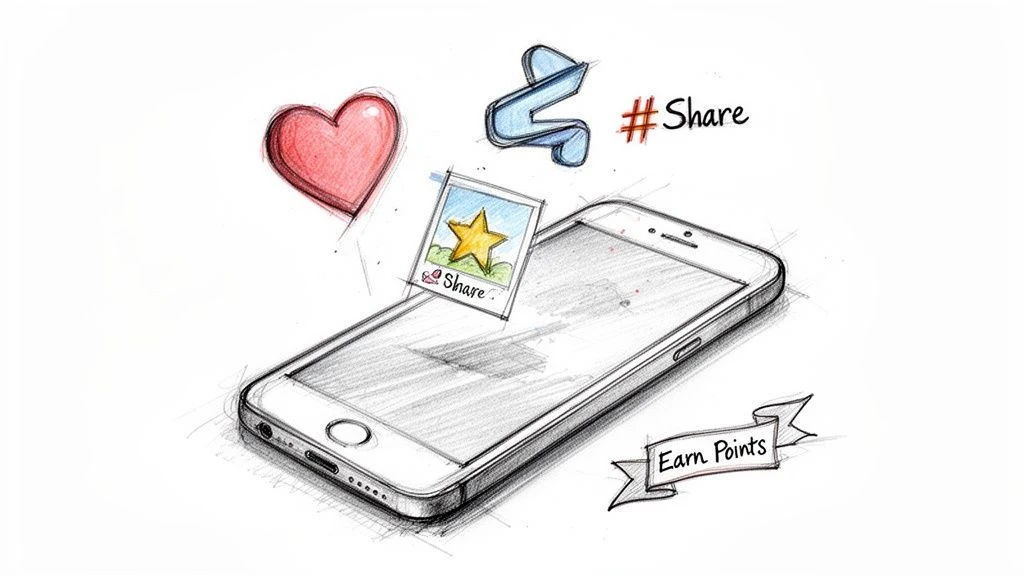
Turn your happiest customers into your most powerful marketing channel. Social engagement incentives reward customers for spreading the word about your business on their social media. It’s about inviting customers to become part of your brand's story by rewarding them for sharing posts, tagging you in photos, or writing reviews.
This approach generates authentic social proof that new audiences trust far more than traditional advertising. It extends your marketing reach organically, driven by the genuine enthusiasm of your community. It’s one of the most cost-effective ways to get your brand in front of hundreds of potential new customers.
How to Implement This Incentive
- Define Clear Actions and Rewards: Decide which actions you want to incentivize. For example, offer 50 points for a Google review, 25 points for an Instagram story tag, or a free coffee for the best user-submitted photo of the week.
- Create a Branded Hashtag: Launch a unique, memorable hashtag (e.g., #MyCafeVibes) to track user-generated content easily. Promote it online and in-store so customers know exactly how to participate.
- Make Sharing Effortless: The process must be simple. Use a digital loyalty program that allows customers to connect their social accounts or provides a one-click share button directly from their digital reward card or receipt.
- Showcase Customer Content: Regularly feature the best user-generated content on your official social media pages or even on digital screens in your store. Public recognition is a powerful, no-cost reward that encourages more participation.
Small Business Pro-Tip: To ensure your content incentives truly resonate, it's vital to apply practical strategies to improve social media engagement. Focus on creating posts that naturally inspire a response, making the reward feel like a bonus for an action customers were already excited to take.
By rewarding social sharing, you are not just offering another discount; you are building a vibrant community of brand advocates. This is one of the most cost-effective customer incentive ideas because it leverages your existing customer base to attract new ones through authentic, trusted recommendations.
10. Partnership and Cross-Business Rewards
Imagine offering your customers rewards not just from your business, but from a whole community of local favorites. That's the power of partnership rewards, an innovative customer incentive idea that expands your value proposition by collaborating with complementary, non-competing businesses to create shared offers.
This model is a game-changer for small businesses. It creates a local ecosystem where loyalty to one business is rewarded across others. It introduces your brand to a new, relevant audience while making your own loyalty program feel bigger and more valuable. A local coffee shop and a neighboring bookstore can create a combined experience that is far more compelling than what either could offer alone, driving mutual growth.
How to Implement This Incentive
- Find Complementary Partners: Identify businesses that share your target audience but don't directly compete. Think a gym partnering with a healthy smoothie bar, or a salon teaming up with a boutique clothing store.
- Create a Simple, Shared Offer: The value proposition must be crystal clear. For example, members of your loyalty program get 10% off at the partner store, and their members get the same at yours. Keep it simple.
- Establish Clear Terms: Define the partnership's duration, promotional responsibilities, and how you will track redemptions. Ensure both parties are aligned on the goals and execution before launching.
- Promote Jointly: Leverage each other's marketing channels. Announce the partnership on social media, in email newsletters, and with in-store signage at both locations. A co-hosted launch event can also generate significant buzz.
Small Business Pro-Tip: The key to a successful partnership is seamless execution. Start with one or two trusted local businesses to test the concept. You can use a digital loyalty app to create a special, trackable reward for your partner's customers, making it easy to measure the campaign's success without complex integrations.
A strategic partnership transforms your business from a standalone destination into part of a curated local experience. It’s a sophisticated yet accessible customer incentive idea that builds community, drives new traffic, and shows customers that you are invested in providing them value beyond your own four walls.
Top 10 Customer Incentive Ideas Comparison
| Program | Implementation Complexity | Resource Requirements | Expected Outcomes | Ideal Use Cases | Key Advantages |
|---|---|---|---|---|---|
| Points-Based Loyalty Programs | Low-Moderate - straightforward rules and tracking | Moderate - POS/integration + ongoing management | ↑ Repeat purchases; High when points feel meaningful | Frequent-transaction venues (coffee shops, casual restaurants, salons) | Simple to understand; scalable; good data for ROI |
| Tiered Membership Levels | High - multiple tiers, progression logic | High - advanced tracking, premium benefits cost | ↑ LTV and retention; Very high for premium customers | Upscale restaurants, specialty retail, salons | Creates status-driven motivation; supports premium pricing |
| Birthday and Anniversary Rewards | Low - date-triggered campaigns | Low - customer data + automated messaging | ↑ Conversion and satisfaction; High emotional impact | Restaurants, salons, coffee shops where personal touch matters | Personalized, low-cost, strong short-term lift |
| Referral and Word-of-Mouth Incentives | Moderate - tracking referrals and rewards | Moderate - referral links/codes and verification | New customer acquisition with lower CAC; High viral potential | All small businesses, especially service-based | Cost-effective acquisition; higher-quality referred customers |
| Gamification and Challenges | High - design, UX, ongoing content | High - technical infrastructure and content ops | ↑ Engagement & visit frequency; Very engaging for community | Gyms, coffee shops, restaurants focused on community | Drives repeat visits; strong social sharing and retention |
| Flash Sales and Surprise Rewards | Moderate - timing and fairness controls | Moderate - inventory planning + notification systems | Short-term sales spikes; Medium for long-term loyalty | Restaurants, coffee shops needing traffic boosts in slow periods | Creates urgency and excitement; effective inventory movement |
| Exclusive Access and Early Bird Offers | Moderate - segmentation and controlled access | Low-Moderate - customer segmentation + limited inventory | Improved VIP retention; High perceived value | Upscale restaurants, salons, boutique retailers | Builds exclusivity and gathers early feedback |
| Spend-Based Bonuses and Milestone Rewards | Moderate - threshold logic and tracking | Moderate - spend tracking and communications | ↑ Average transaction value; High for upsell behavior | Restaurants, coffee shops, salons aiming to raise AOV | Clear incentive to increase spend; measurable revenue impact |
| Social Engagement and Content Incentives | Moderate - monitoring and compliance | Moderate-High - community management + moderation | ↑ Reach and UGC; Medium for direct conversions | Instagram-friendly businesses (salons, trendy cafes, lifestyle brands) | Generates authentic UGC and social proof; extends reach |
| Partnership and Cross-Business Rewards | High - coordination, settlement rules | High - partner integrations and legal/data sharing | Extended reach and shared value; High network effects | Local business clusters, complementary service ecosystems | Expands value with low internal cost; access to partner audiences |
Your Next Step: Launch a Loyalty Program That Actually Works
You now have ten powerful customer incentive ideas, each capable of turning casual buyers into devoted fans. The goal isn't to implement all of them at once. The real magic is in choosing the one or two strategies that best fit your brand and your customers, then starting simple.
The biggest hurdle for any busy small business owner is complexity. You don't have time for confusing software or a program that requires constant manual work. This is where the right tool changes everything. A simple, affordable platform can automate point tracking, send birthday rewards, and manage referral bonuses for you, freeing you up to focus on what you do best: running your business.
A successful loyalty program is less about the discount and more about the relationship it builds. It makes your customers feel seen, understood, and valued. It’s the difference between a one-time sale and a customer who feels like a true member of your community. These incentives are your blueprint for building a more resilient and profitable business, fueled by a loyal customer base that champions your brand. Don't let your best customers become someone else's.
Ready to turn these ideas into reality without the headache? BonusQR was designed specifically for small businesses to launch a powerful, cost-effective, and incredibly simple loyalty program in minutes. Stop losing customers and start building lasting relationships that drive growth.
Visit BonusQR to start your free trial today and see how easy loyalty can be.