
 Deutsch
 Español
 Français
 Italiano
 Magyar
 Polski
 Slovenčina
 Čeština
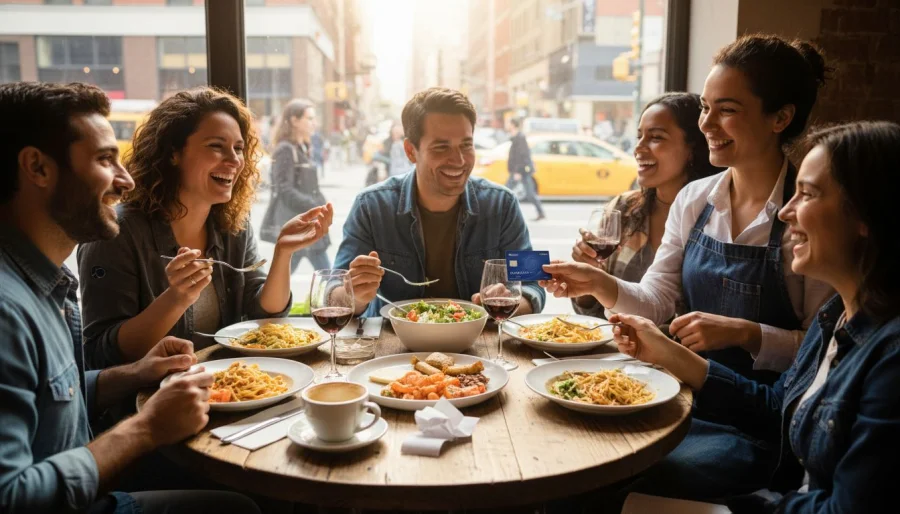
Restaurant competition in the United States and Canada can feel relentless when diners have endless options just a tap away. Each guest who chooses your spot again brings lasting value, yet turning one-time visitors into true regulars depends on more than tasty meals. Building customer loyalty becomes a strategic advantage, driving retention and profitability while creating real emotional connections that keep your tables full and your brand top of mind.
Table of Contents
- Defining Loyalty In Customer Retention
- Types Of Loyalty Programs For Restaurants
- How Loyalty Drives Repeat Business
- Personalization, Data, And Digital Engagement
- Common Pitfalls And Misconceptions To Avoid
Key Takeaways
| Point | Details |
|---|---|
| Customer Loyalty is Multifaceted | It involves emotional connections, trust, and perceived value, necessitating more than mere transactional interactions to cultivate dedication. |
| Effective Loyalty Programs are Diverse | Options include point-based systems, tiered rewards, and personalized offerings, each tailored to customer preferences and business goals. |
| Personalization is Essential | Utilizing data analytics to create tailored experiences increases customer engagement and long-term loyalty. |
| Avoid Common Pitfalls | Relying solely on discounts or implementing static programs can undermine loyalty; continuous evaluation and adaptation are crucial. |
Defining Loyalty in Customer Retention
Customer loyalty represents far more than repeat visits or occasional transactions. It signifies a deep psychological and behavioral commitment that transforms casual customers into dedicated restaurant patrons who consistently choose your establishment over countless alternatives. Customer loyalty emerges as a profound commitment to repeatedly selecting a specific restaurant based on positive experiences, emotional connection, and perceived value.
In the restaurant industry, loyalty encompasses multiple interconnected dimensions that go beyond simple transactional relationships. These dimensions include emotional attachment, consistent satisfaction, perceived value, and trust in the brand’s ability to deliver reliable experiences. Restaurants that successfully cultivate loyalty understand that customers are seeking more than just food - they want memorable interactions, personalized service, and a sense of belonging that makes them feel valued.
The strategic importance of customer loyalty becomes evident when examining its direct impact on business performance. Loyalty drives customer retention by fostering repeat patronage and contributing to business stability. Restaurants that prioritize building genuine connections can transform occasional diners into brand advocates who not only return frequently but also recommend the establishment to friends, family, and colleagues.
Pro tip: Track your customer retention rates and analyze repeat visit frequency to understand the true health of your restaurant’s loyalty ecosystem.
Types of Loyalty Programs for Restaurants
Restaurant loyalty programs have evolved far beyond traditional punch cards, offering sophisticated strategies to engage and retain customers. Modern establishments can leverage multiple program types, each designed to meet specific business goals and customer preferences. Innovative loyalty programs for restaurants provide flexible approaches to building long-term customer relationships.
The primary types of restaurant loyalty programs include point-based systems, tiered rewards, frequency programs, and value-based initiatives. Point-based systems allow customers to accumulate points with each purchase, which can be redeemed for free items, discounts, or special experiences. Tiered rewards create multiple membership levels where customers unlock progressively better benefits as they spend more, incentivizing increased engagement. Frequency programs focus on rewarding repeat visits, while value-based programs offer personalized rewards that align with individual customer preferences.
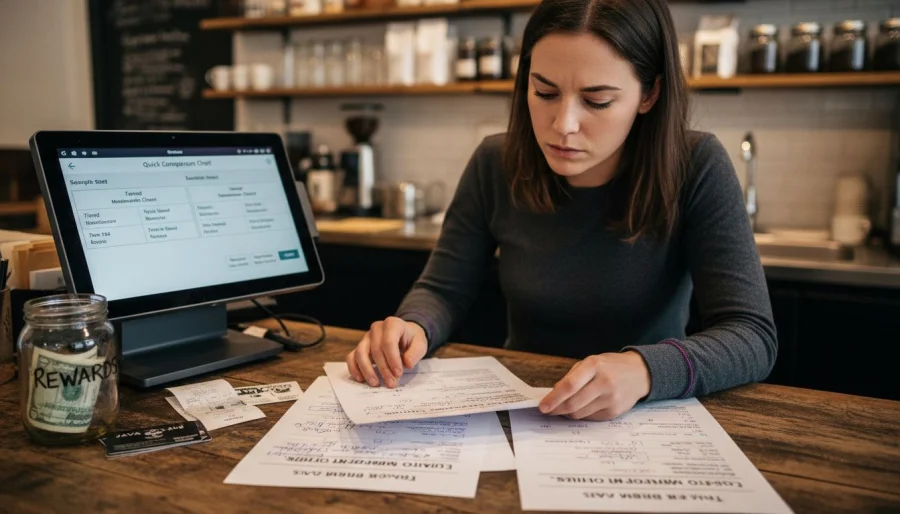
Digital loyalty platforms have transformed how restaurants design and implement these programs. Restaurant loyalty programs that drive revenue now incorporate advanced features like mobile app integration, real-time tracking, personalized promotions, and seamless redemption processes. These technology-driven solutions enable restaurants to collect valuable customer data, create targeted marketing campaigns, and provide a more engaging dining experience that goes beyond traditional transactional relationships.
Here’s a comparison of common restaurant loyalty program types and their strategic advantages:
| Program Type | Customer Appeal | Operational Complexity | Typical Rewards |
|---|---|---|---|
| Point-Based System | Easy to understand, flexible | Low to moderate | Free items, discounts |
| Tiered Rewards | Incentivizes higher spending | Moderate to high | Exclusive benefits, upgrades |
| Frequency Program | Rewards consistent visits | Low | Free meal after set visits |
| Value-Based Program | Highly personalized offers | High | Experiences, tailored gifts |
Pro tip: Choose a loyalty program type that matches your restaurant’s unique customer demographics and operational capabilities to maximize engagement and retention.
How Loyalty Drives Repeat Business
Loyalty transforms occasional dining into a consistent relationship that generates substantial long-term value for restaurants. Customer loyalty directly drives repeat business by creating emotional connections that transcend simple transactional interactions. When customers feel genuinely valued, they develop a psychological commitment that compels them to choose your restaurant repeatedly over competing alternatives.
The economic mechanics of loyalty reveal powerful retention advantages for restaurants. Loyal customers demonstrate significantly higher lifetime value compared to one-time visitors. They exhibit greater spending consistency, higher average transaction values, and increased willingness to try new menu items. Moreover, these customers become organic marketing channels, generating word-of-mouth recommendations that attract new patrons without additional marketing expenditures. Their tolerance for minor pricing adjustments and commitment to your brand create a stable revenue foundation that protects against market fluctuations.
Successful repeat business requires strategic approaches that go beyond superficial rewards. Restaurants must focus on creating memorable experiences, maintaining consistent food quality, delivering personalized service, and implementing adaptive loyalty programs that evolve with customer preferences. Customer loyalty fundamentals emphasize the importance of understanding individual customer motivations, tracking engagement metrics, and continuously refining interaction strategies to maintain strong emotional connections.
Pro tip: Develop a comprehensive customer feedback system that allows you to track and respond to individual preferences, transforming data into personalized loyalty experiences.
Personalization, Data, and Digital Engagement
Personalization has become the cornerstone of modern restaurant customer loyalty strategies. Digital engagement transforms customer experiences by enabling restaurants to leverage sophisticated data analytics and create hyper-targeted interactions. By collecting and analyzing individual customer preferences, dining habits, and behavioral patterns, restaurants can craft unique experiences that make each customer feel genuinely understood and valued.
The technological infrastructure supporting digital personalization offers unprecedented insights into customer behavior. Advanced data collection methods allow restaurants to track everything from favorite menu items to preferred dining times, enabling them to design tailored rewards and communications. Mobile apps and digital loyalty platforms serve as powerful tools for gathering granular data, creating seamless omnichannel experiences that bridge in-restaurant and digital interactions. These platforms enable real-time personalization, allowing restaurants to send targeted promotions, birthday specials, or customized recommendations based on individual customer profiles.
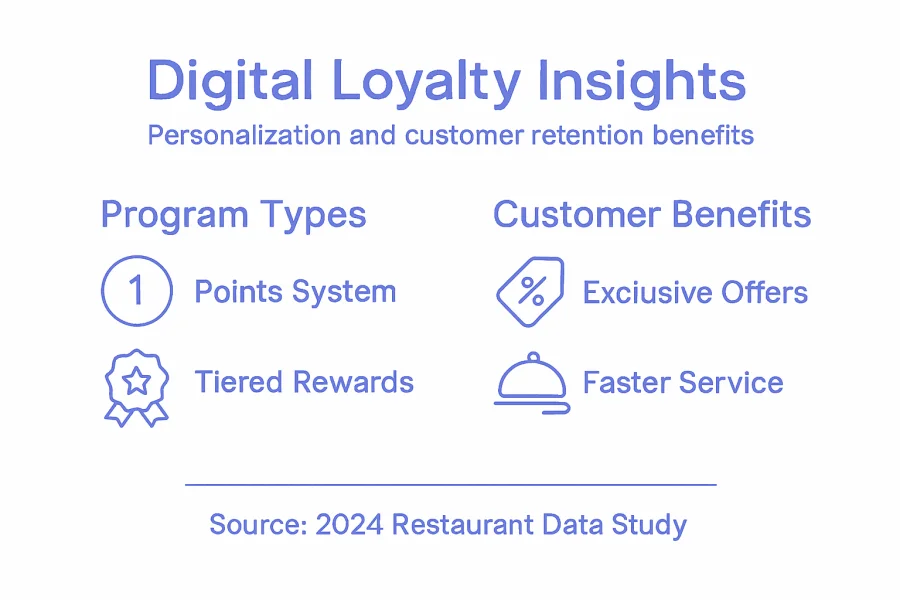
Customer relationship management through digital platforms represents a fundamental shift in how restaurants approach customer engagement. Artificial intelligence and machine learning technologies now make it possible to predict customer preferences, anticipate dining needs, and create dynamically personalized experiences. Restaurants can now move beyond generic marketing approaches, instead developing sophisticated, data-driven strategies that recognize each customer as a unique individual with specific tastes and preferences.
The table below summarizes how digital engagement enhances customer loyalty in restaurants:
| Digital Feature | Benefit to Restaurant | Benefit to Customer |
|---|---|---|
| Mobile App Integration | Real-time data collection | Seamless rewards access |
| Personalized Promotions | Higher marketing effectiveness | Relevant, targeted offers |
| CRM Analytics | Improved service adaptation | More personal experiences |
| Omnichannel Experience | Stronger brand connection | Consistent online/offline use |
Pro tip: Implement a comprehensive data collection strategy that prioritizes customer privacy while gathering actionable insights to drive personalized engagement.
Common Pitfalls and Misconceptions to Avoid
Loyalty programs require strategic thinking beyond simple transactional rewards. Misconceptions about customer loyalty programs can lead restaurants into ineffective retention strategies that ultimately undermine their long-term business goals. Many restaurant owners mistakenly believe that implementing a loyalty program automatically guarantees customer retention, when in reality, poorly designed programs can actually decrease customer engagement and brand perception.
One critical pitfall is the overreliance on discounts as the primary mechanism of customer loyalty. While price incentives can attract initial attention, they fail to create meaningful emotional connections with customers. Restaurants that focus exclusively on monetary rewards risk training customers to expect constant price reductions, which erodes profit margins and diminishes the perceived value of the dining experience. Relationship marketing strategies emphasize that true loyalty stems from consistent quality, personalized interactions, and genuine customer appreciation rather than transactional exchanges.
Another significant misconception involves treating loyalty programs as static, one-size-fits-all solutions. Successful restaurant loyalty strategies must be dynamic, adaptable, and tailored to specific customer segments. This requires continuous data analysis, willingness to experiment with different approaches, and a deep understanding of customer preferences. Restaurants must move beyond generic reward structures and create personalized experiences that recognize individual customer behaviors, preferences, and unique dining motivations.
Pro tip: Regularly audit your loyalty program’s performance by tracking key metrics like repeat visit rates, customer feedback, and redemption patterns to identify and address potential design weaknesses.
Unlock True Customer Loyalty With Tailored Digital Solutions
The article highlights how deep emotional connections and personalized experiences are essential to transforming casual diners into loyal patrons. If your restaurant struggles to keep customers returning or finds that traditional loyalty programs rely too much on discounts without meaningful engagement you are not alone. Many establishments face challenges in creating loyalty programs that resonate on a personal level and adapt to unique customer preferences while providing real business value.
bonusqr.com specializes in customizable, digital loyalty systems designed to help restaurants like yours build genuine, lasting customer relationships. Our flexible platform lets you combine points collection, stamp cards, cashback, and personalized rewards tailored to your customers’ dining habits and preferences. With seamless mobile and web app integration, real-time analytics, and marketing automation, you can evolve your loyalty program continually to meet your diners’ expectations and increase repeat visits.
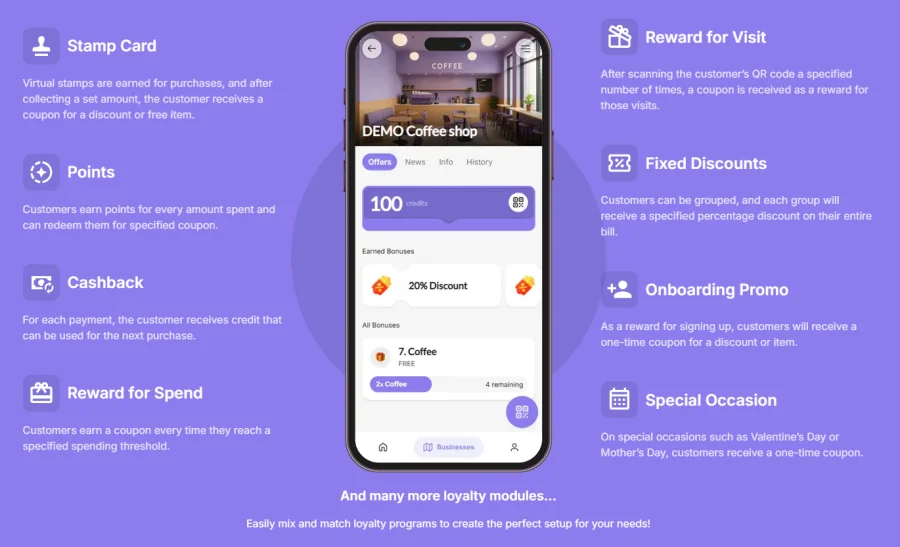
Take control of your customer retention today with a loyalty program that works beyond discounts. Visit bonusqr.com now to explore how easy it is to launch a dynamic, personalized loyalty system that can grow with your business and keep your customers coming back. Don’t wait to turn one-time guests into lifetime advocates.
Frequently Asked Questions
What is customer loyalty in the restaurant industry?
Customer loyalty in the restaurant industry refers to a deep psychological and behavioral commitment from customers to repeatedly choose a specific restaurant based on positive experiences, emotional connections, and perceived value.
How do loyalty programs impact customer retention?
Loyalty programs impact customer retention by fostering repeat patronage, creating emotional connections, and transforming occasional diners into brand advocates who not only return frequently but also recommend the restaurant to others.
What types of loyalty programs are effective for restaurants?
Effective loyalty programs for restaurants include point-based systems, tiered rewards, frequency programs, and value-based initiatives, each designed to meet various customer preferences and business goals.
Why is personalization important in restaurant loyalty strategies?
Personalization is important in restaurant loyalty strategies because it enhances customer engagement by creating tailored experiences based on individual preferences, ultimately leading to stronger emotional connections and increased retention.
Recommended
- Customer Retention Strategies: 8 Ways to Improve Retention | BonusQR
- Top Strategies for Customer Retention to Grow Your Business | BonusQR
- Restaurant Loyalty Programs That Drive Revenue | BonusQR
- Best Loyalty Programs for Restaurants That Win Customers | BonusQR
- 7 Types of Ecommerce Promotions to Boost Sales - Affinsy Blog | Affinsy